Comprehension skills Normal Grade 2 Reading Non-Fiction Worksheets
3 filtered results
Difficulty Level
Grade
Age
-
From - To
Subject
Activity
Standards
Enhance your second grader’s reading abilities with our Normal Grade 2 Reading Non-Fiction Worksheets! Designed to boost comprehension skills, these engaging worksheets offer diverse exercises that delve into real-world themes. Each worksheet encourages critical thinking, helping students to draw inferences, identify main ideas, and expand their vocabulary. Students will enjoy reading and analyzing a variety of non-fiction texts, including biographies, scientific articles, and historical passages. By connecting reading material to everyday experiences, your child can build a solid foundation for academic success. Explore our expertly crafted worksheets to support and elevate your child's reading comprehension journey today!
Favorites
With answer key
Interactive
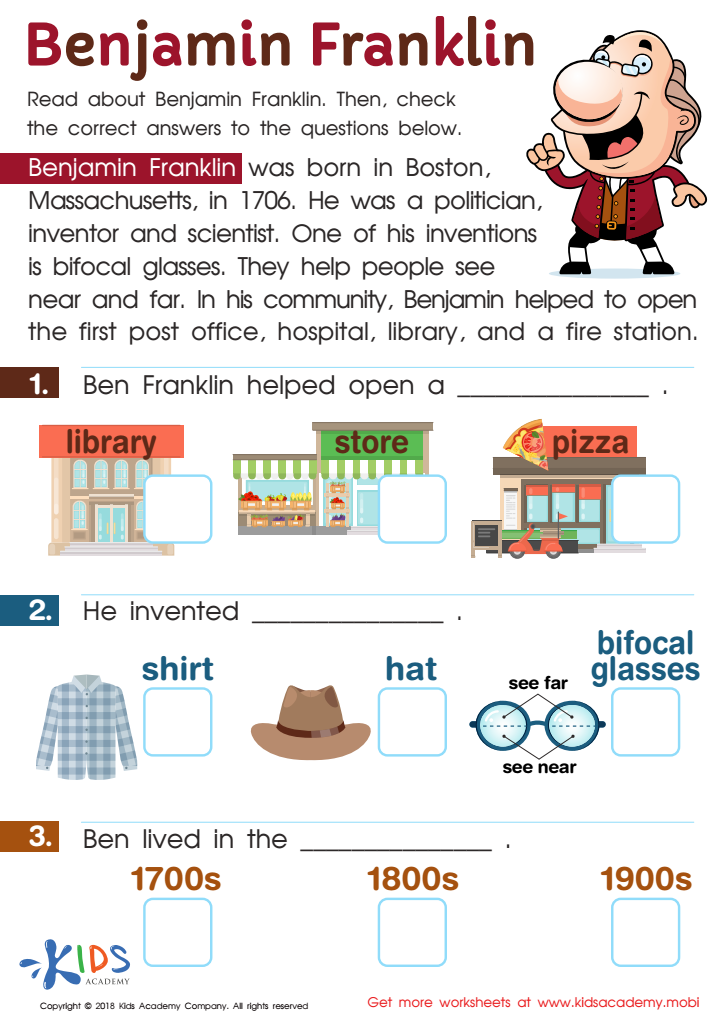
Benjamin Franklin Worksheet
Introduce your kids to one of history's most important figures - Benjamin Franklin! Tell them all about his remarkable contributions to the world and then use this worksheet to teach them even more. Read the text to them and check their answers against the questions afterwards.
 Assign to My Students
Benjamin Franklin Worksheet
Worksheet
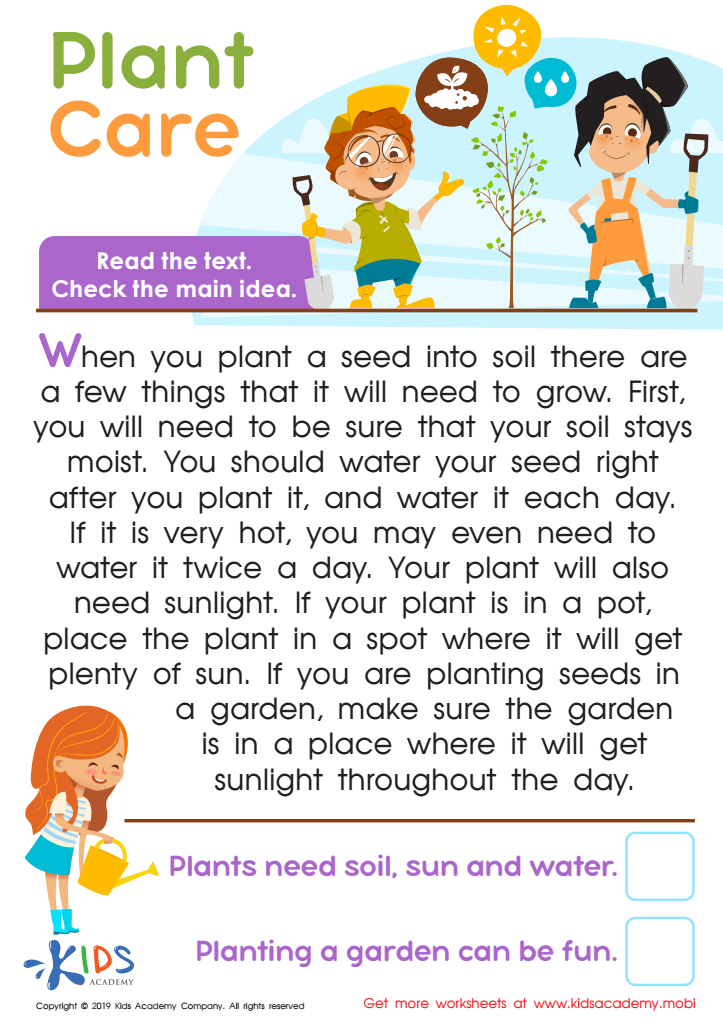
Plant Care Worksheet
Encourage your children to read by helping them practice. Print out the worksheet and read the text with them. Help them understand the words and find the main idea. This will improve their reading skills and prepare them for school.
Plant Care Worksheet
Worksheet
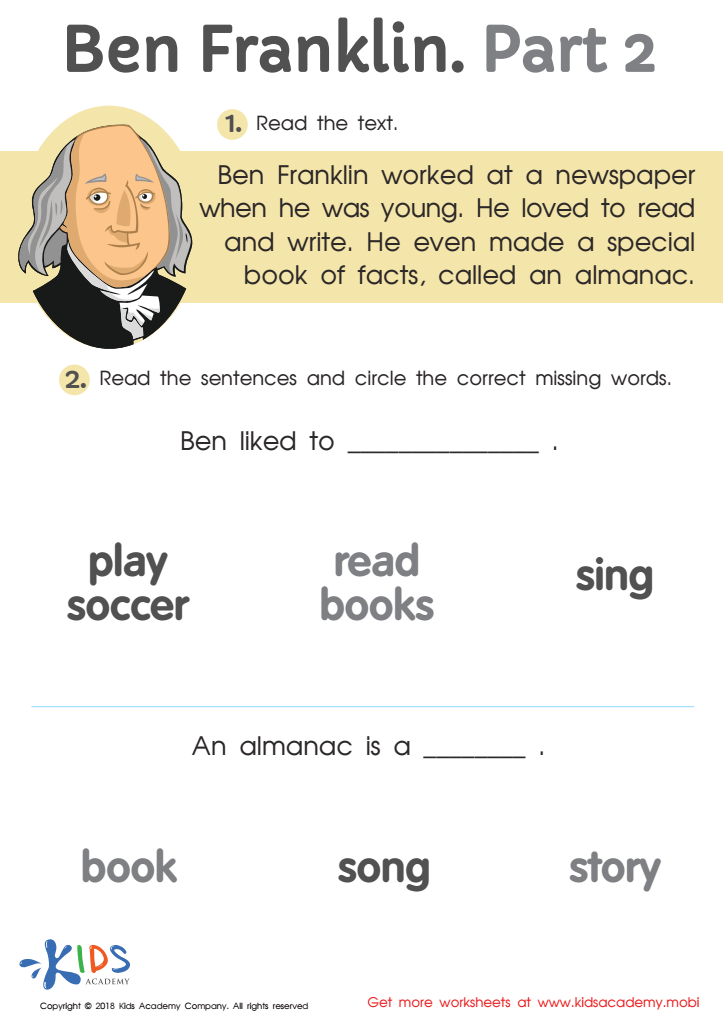
Ben Franklin Part 2 Worksheet
History is filled with great figures, like Benjamin Franklin. Let your kids in on the legacy by introducing them to the founder of the US fire department, diplomat, and inventor. Then, use a worksheet to have them fill in the blanks with the correct word to teach them more. Read the text, then read the sentences and have them circle the missing word.
Ben Franklin Part 2 Worksheet
Worksheet
Join Kids Academy for Free
Who is primarily going to use this learning content?



Parents and teachers should prioritize developing comprehension skills for Grade 2 students reading non-fiction because these foundational skills are crucial for academic success and lifelong learning. At this stage, children transition from learning to read to reading to learn, and non-fiction texts provide valuable opportunities to gain knowledge about the world around them. Comprehension skills enable children to understand, interpret, and engage with the text, fostering critical thinking.
A strong grasp of comprehension supports future learning across subjects like science, social studies, and history, where non-fiction is prevalent. Without these skills, students may struggle to process and retain information, hindering their academic progress. Additionally, proficiency in comprehension promotes curiosity and encourages independent exploration, transforming students into self-motivated learners.
Furthermore, good comprehension is linked to enhanced communication skills. It enables children to discuss, summarize, and question content effectively, fostering robust classroom participation and collaboration.
Supporting Grade 2 students in mastering comprehension ensures they build a solid literacy foundation. Parents and teachers can do this through guided reading sessions, discussions, and strategies like questioning and predicting. Investing in these skills not only boosts academic performance but also instills confidence and a love for reading that can last a lifetime.