Critical Thinking Normal Grade 2 Reading Non-Fiction Worksheets
3 filtered results
-
From - To
Enhance your second graders' reading skills with our engaging Critical Thinking Non-Fiction Worksheets! Designed specifically for Grade 2, these worksheets encourage students to analyze, interpret, and evaluate non-fiction texts. With a variety of activities, including open-ended questions, text-based discussions, and critical reflection prompts, your students will develop essential skills to better understand and process information. Our user-friendly worksheets cater to diverse learning styles, making them perfect for classroom use or homework assignments. Foster a love for reading while building the foundation for independent thinking. Explore our collection and empower your young learners to become confident critical thinkers today!
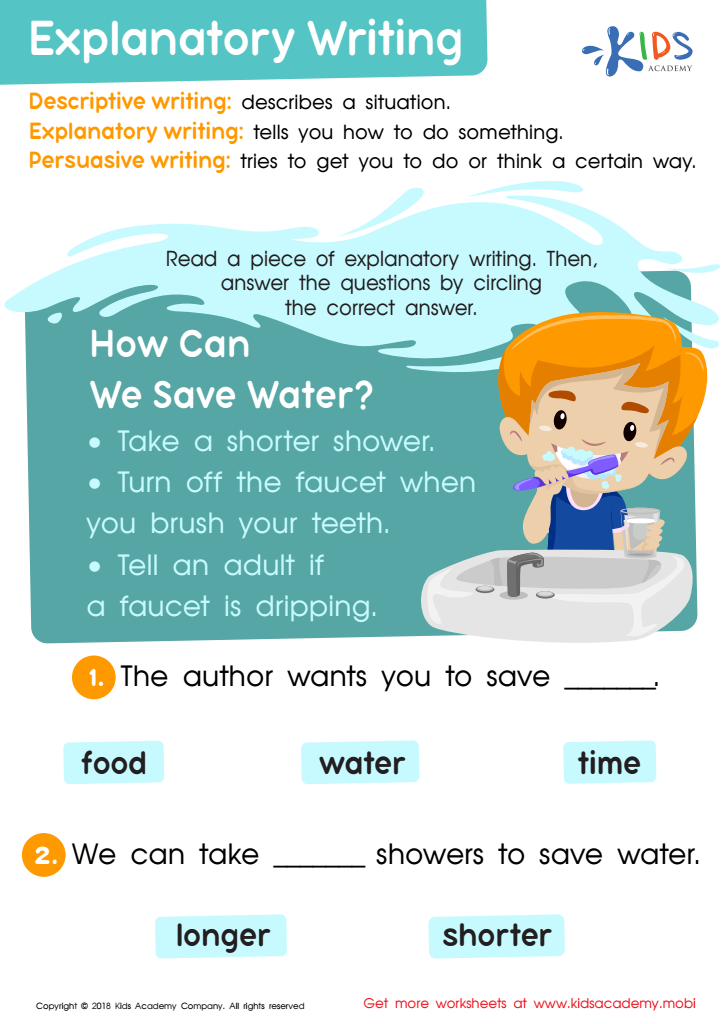
Explanatory Writing Worksheet
 Assign to My Students
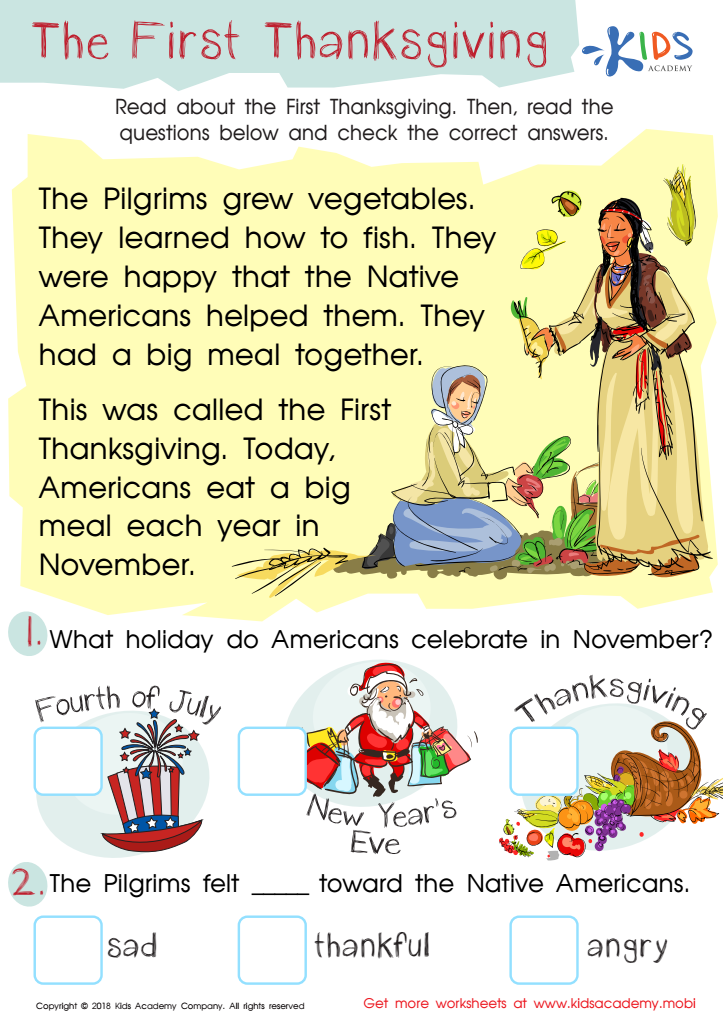
Assessment: First Thanksgiving Worksheet
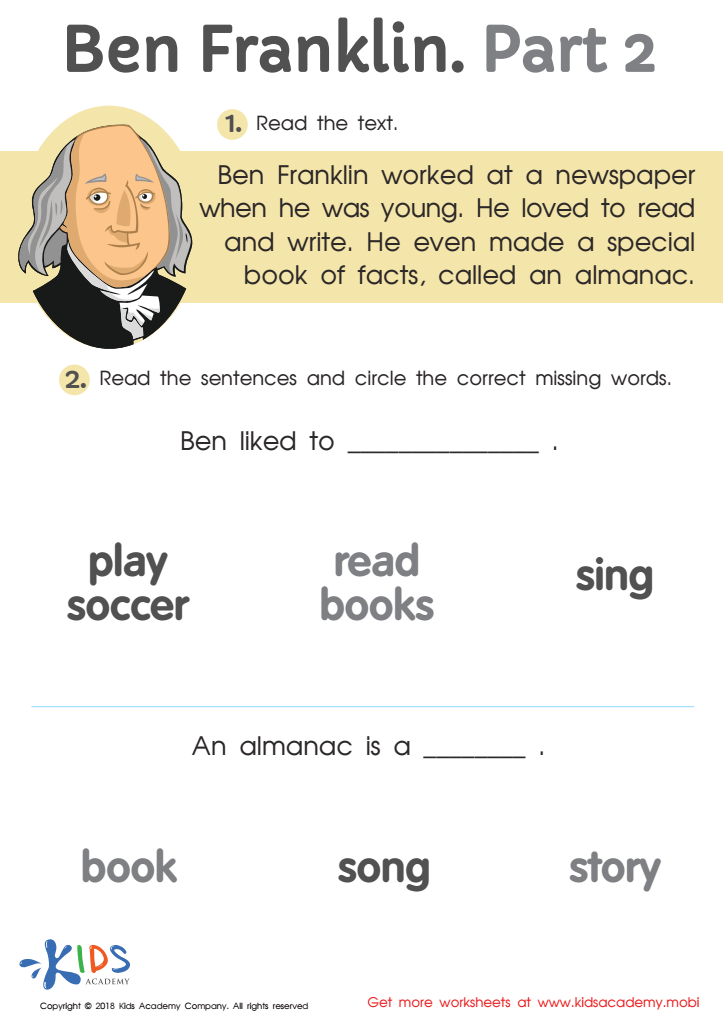
Ben Franklin Part 2 Worksheet



Critical thinking is crucial in early education, especially in Grade 2 when students begin to develop their analytical skills more deeply. When parents and teachers emphasize critical thinking in reading non-fiction, they equip children with the ability to assess information, make connections, and draw conclusions based on evidence.
At this age, children are naturally curious, and engaging with non-fiction materials stimulates their interest in the world around them. Through critical thinking, students learn to ask questions about what they read, evaluate the credibility of the information, and understand differing viewpoints. This not only enhances comprehension but also fosters independent learning and problem-solving skills.
Moreover, integrating critical thinking in reading practice can help children grasp the importance of evidence and reasoning. This is invaluable as they encounter more complex concepts in future education and as they navigate a world filled with information. Parents and teachers play a vital role in this journey by guiding discussions, encouraging inquiry, and modeling thoughtful questioning.
Ultimately, nurturing critical thinking in Grade 2 reading non-fiction sets a foundation for lifelong learning and helps ensure that children become informed, thoughtful, and engaged members of society. It prepares them not only for academic success but also for real-world challenges.