Map reading skills Normal Grade 2 Geography Worksheets
5 filtered results
-
From - To
Enhance your child's map reading abilities with our "Normal Grade 2 Geography Worksheets" focused on key map skills. Our expertly designed worksheets make learning fun and interactive, guiding second graders through essential concepts such as interpreting map symbols, understanding directions, and using simple grids. Through engaging exercises, children will develop spatial thinking and confidence in navigating maps, which are crucial skills for geography and beyond. Ideal for classroom use or at-home practice, our worksheets align with educational standards, ensuring your child builds a solid foundation in geography from an early age. Start their map-reading adventure today!
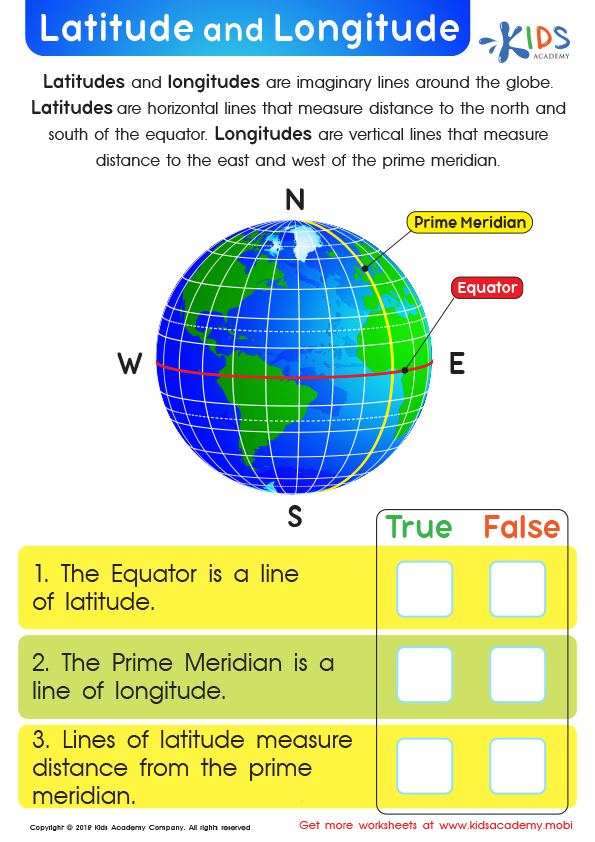
Latitude and Longitude Worksheet
 Assign to My Students
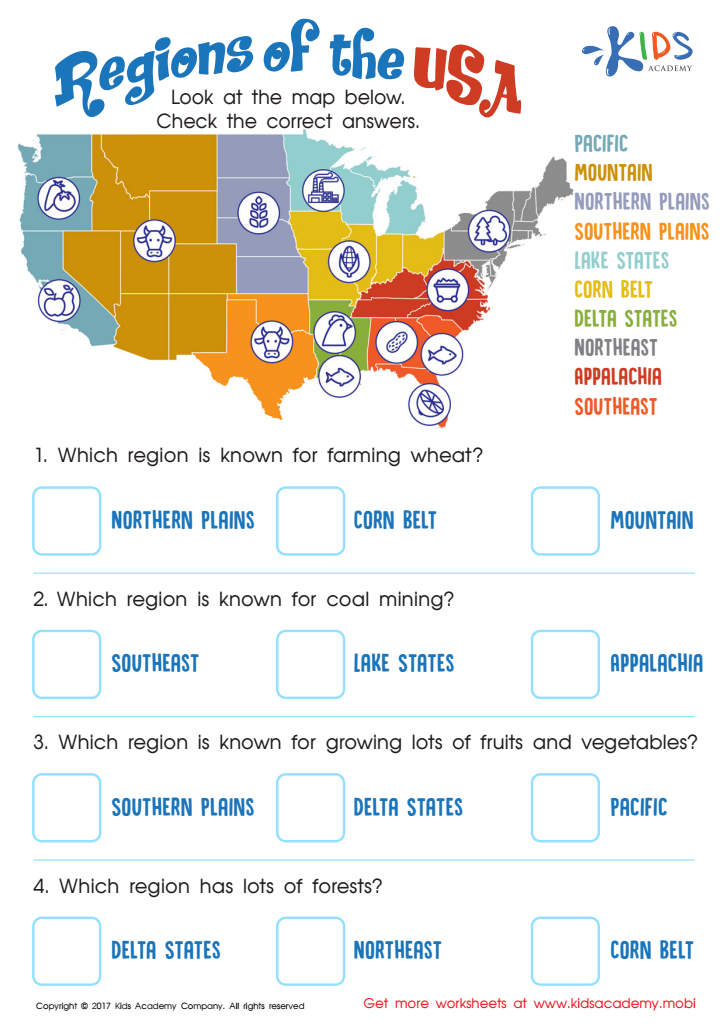
Regions of the USA Worksheet
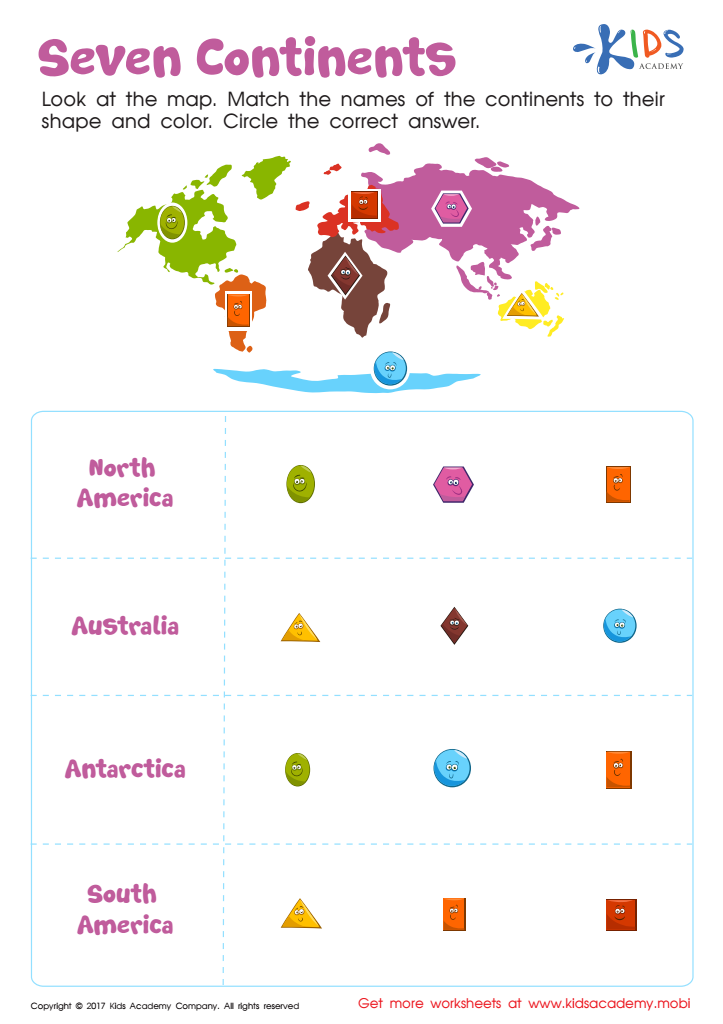
Seven Continents Worksheet
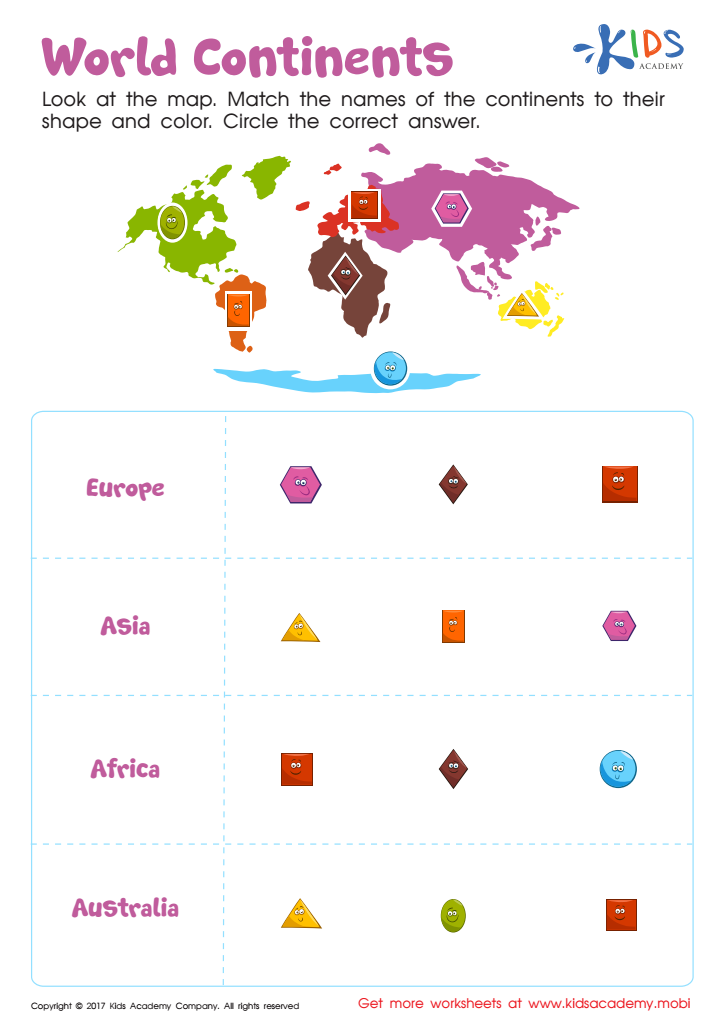
World Continents Worksheet
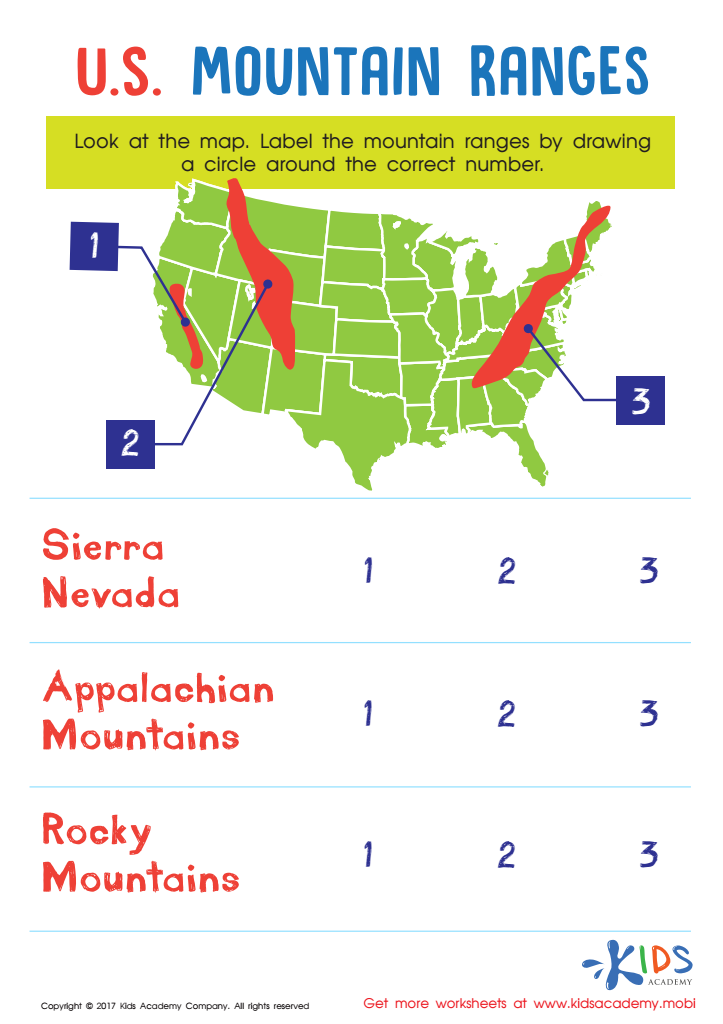
US Mountain Ranges Worksheet




Parents and teachers should pay attention to teaching map reading skills in Grade 2 geography because it fosters essential cognitive and practical skills vital for children’s development. At this early age, young learners are naturally curious about the world around them. Developing map reading skills helps channel this curiosity constructively. First, it strengthens spatial awareness and visual literacy, crucial for understanding geography. By interpreting maps, children learn to recognize places, directions, distances, and symbols, building a foundation for advanced geographical knowledge.
Additionally, map reading supports problem-solving abilities. Kids learn to use maps for navigation and understanding locations, encouraging logical thinking and critical reasoning. These skills are applicable beyond geography lessons, aiding in day-to-day decisions like finding routes or understanding space layouts in other contexts.
Early introduction to map reading can also enhance cultural awareness. As children learn about different places, they become more aware of the broader world, fostering respect and curiosity for diverse cultures and communities. Integrating this skill in Grade 2 ensures that developing brains are adept at these tasks from a young age, paving the way for a well-rounded education. These maps simplify complex concepts into understandable visuals, making learning engaging and expanding young learners' horizons effectively.