Understanding communities Normal Community Worksheets
4 filtered results
-
From - To
Discover our engaging "Understanding Communities" worksheets, designed to foster children's comprehension of social structures and interactions! These printable resources from Kids Academy offer fun and educational ways for kids to explore the diverse elements that make up communities. Through engaging exercises, young learners will develop crucial social studies skills while gaining deeper insights into community roles, rules, and the importance of working together. Perfect for reinforcing classroom learning, these worksheets support children’s understanding of their immediate surroundings and the world beyond. Spark your child's curiosity and love for learning with these expertly crafted community-themed activities!
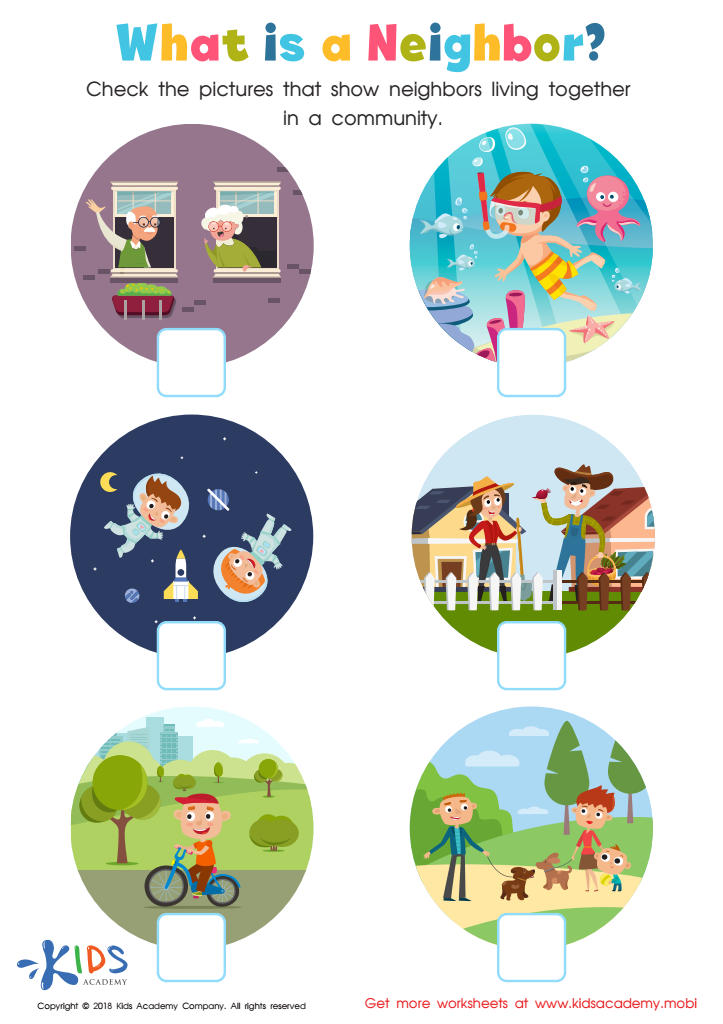
What is a neighbor Worksheet
 Assign to My Students
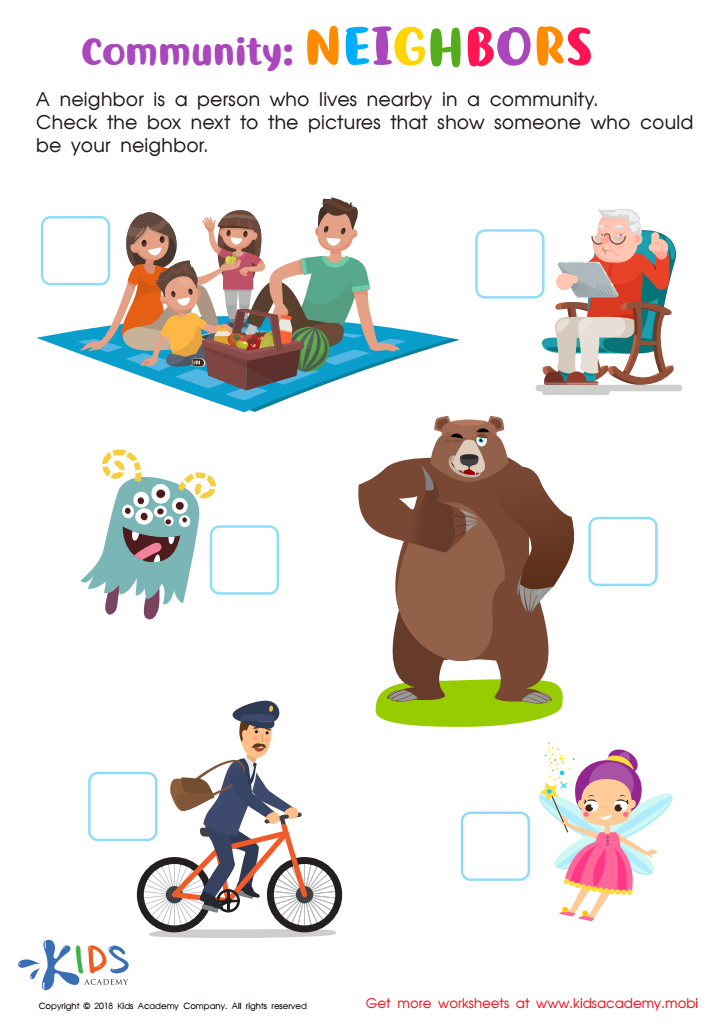
Community: Neighbors Worksheet
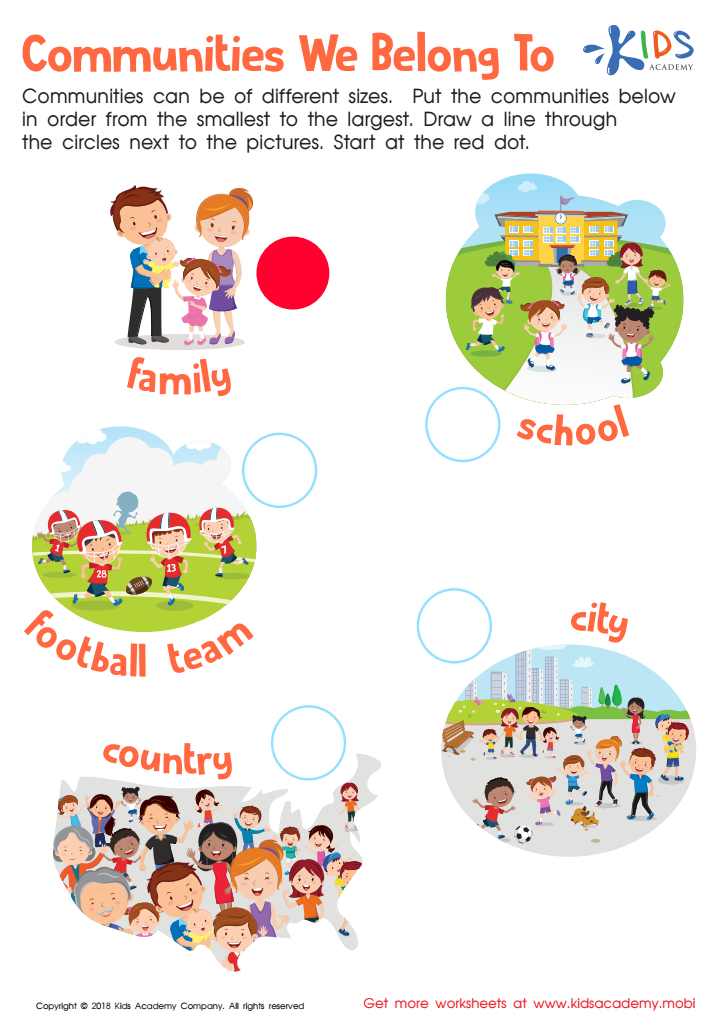
Communities We Belong to Worksheet
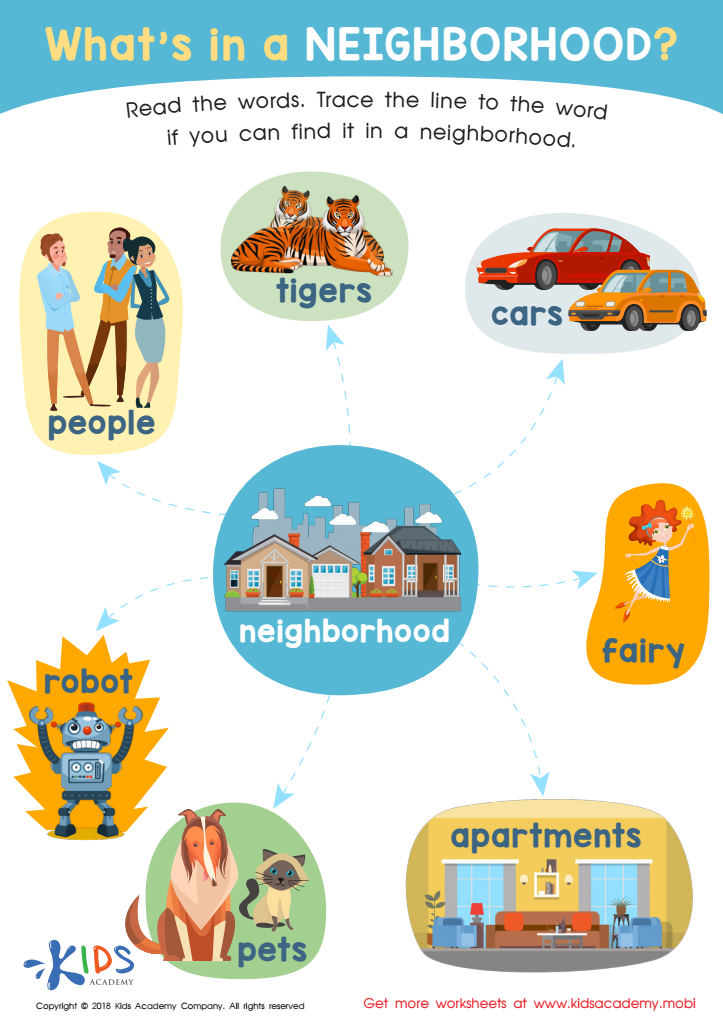
What's in a Neighborhood? Worksheet






Understanding communities is crucial for both parents and teachers as it fosters a sense of belonging, inclusivity, and mutual respect among children. When children understand their community, they develop social awareness by recognizing diverse cultures, traditions, and perspectives within their environment. This awareness is essential for nurturing empathy and kindness, which are foundational traits for effective communication and healthy relationships.
For parents, knowing the community allows them to integrate learning experiences outside the home, like attending local cultural events or volunteering, which enriches children's educational experiences.
Teachers, on the other hand, can create more relevant and engaging lessons by incorporating community-specific knowledge, making learning more meaningful. For example, they can draw on local history or community issues in their curriculum, which not only keeps students interested but also helps them see the real-world relevance of their studies.
Moreover, a good relationship between school and community encourages active parent involvement, which has been shown to improve student achievement, behavior, and attendance. Teachers who understand community dynamics can better address the needs and challenges faced by their students, providing support that is culturally and contextually appropriate.
Ultimately, a deep understanding of communities enriches educational experiences and helps foster well-rounded, socially responsible individuals who contribute positively to society.








