
Historical Knowledge Normal Governance and Civics Worksheets
4 filtered results
Difficulty Level
Grade
Age
-
From - To
Subject
Activity
Standards
Explore our engaging "Historical Knowledge Normal Governance and Civics Worksheets" designed to enhance students' understanding of vital historical events and civic principles. These resources help young learners grasp the evolution of governance and the significance of civic responsibilities in shaping society. Featuring age-appropriate activities that stimulate critical thinking and promote discussion, these worksheets aid in developing a well-rounded perspective on historical context. Ideal for classrooms or at-home learning, our printables encourage students to connect past knowledge to present-day civic duties. Foster a sense of civic engagement and historical awareness in your students today!
Favorites
With answer key
Interactive
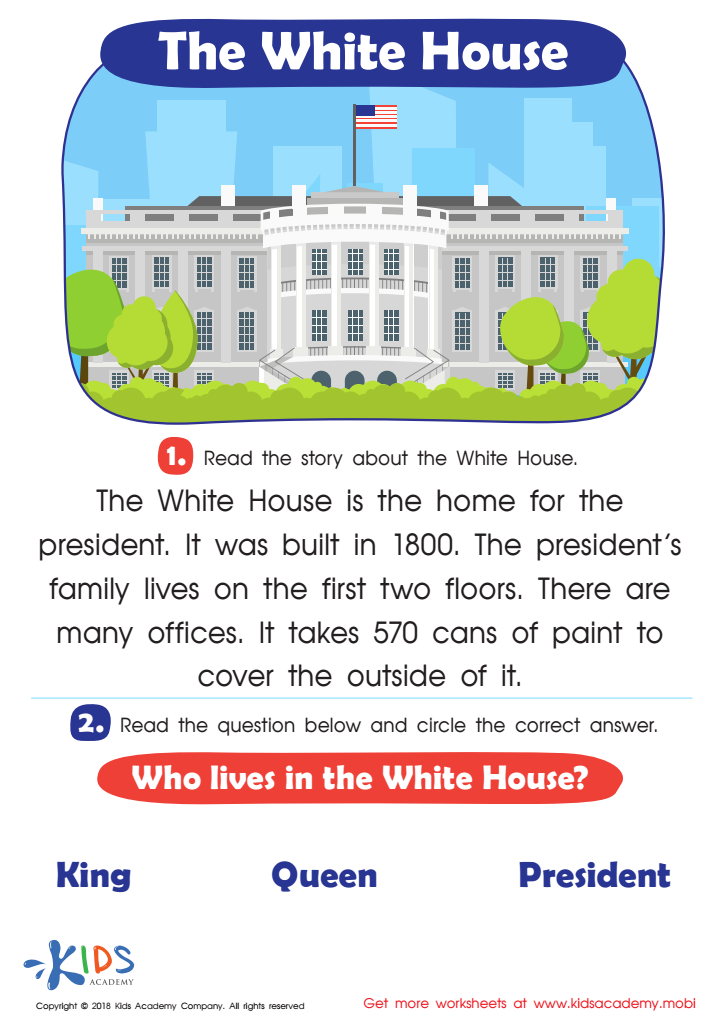
White House Worksheet
Read stories to your students to teach them new words, and about the White House. Before reading, ask your kindergartners what they already know. Then read short sentences for them to learn about the building the U.S President resides in.
 Assign to My Students
White House Worksheet
Worksheet
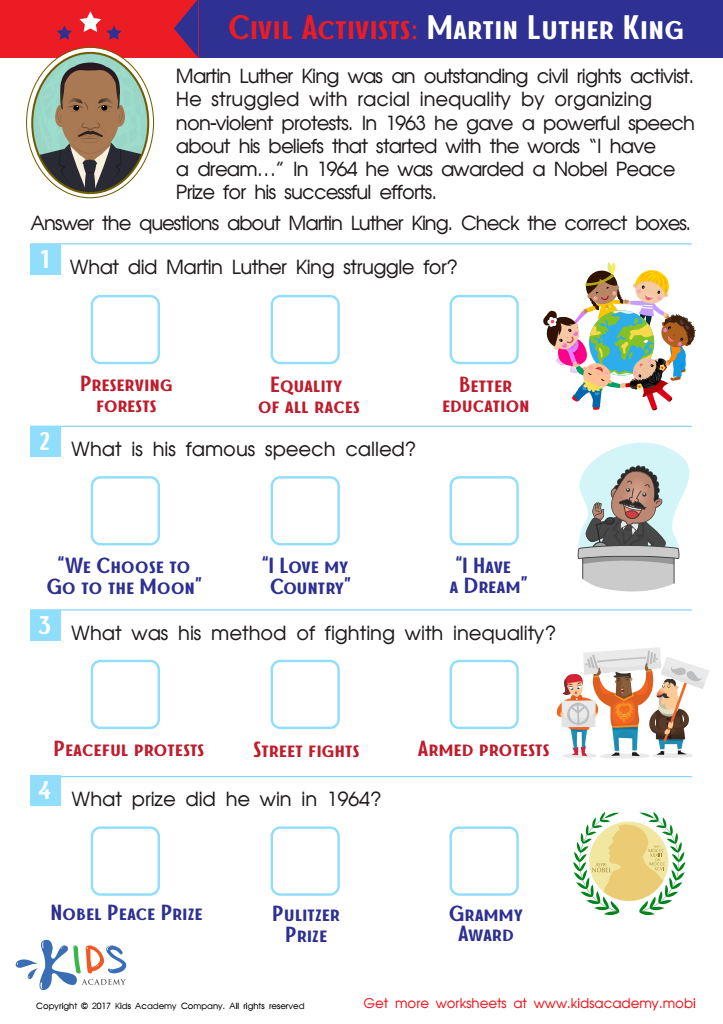
Martin Luther King Worksheet
Introduce your 3rd grader to Martin Luther King Jr.! This worksheet will open their eyes to his impact on US history. Let them discover his life, learnings, and legacy with this informative activity.
Martin Luther King Worksheet
Worksheet
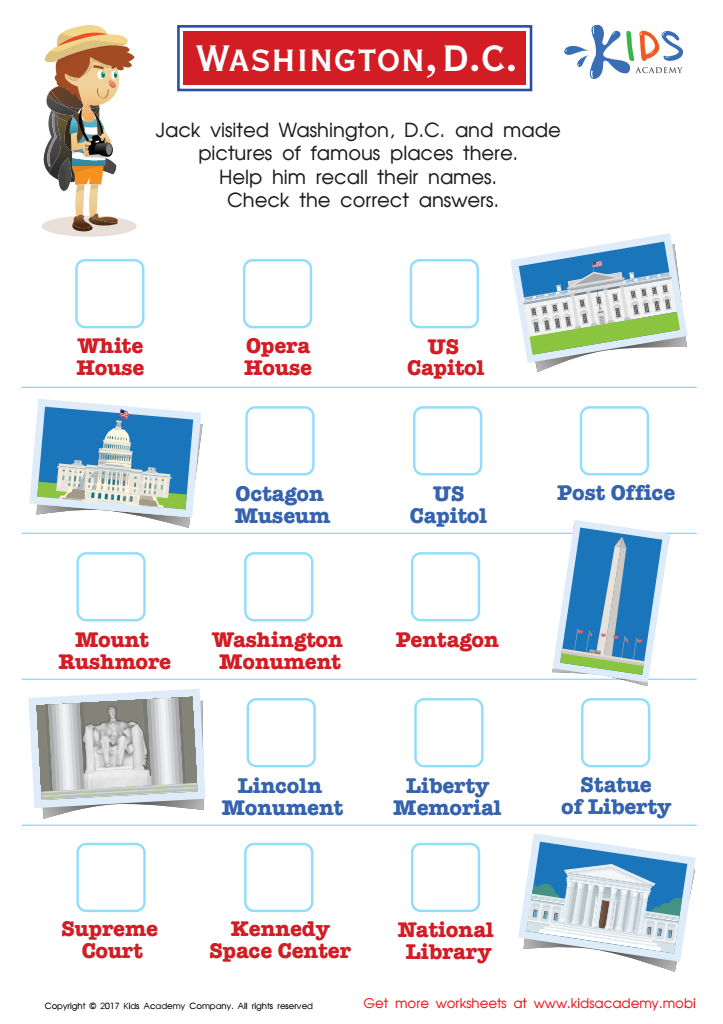
Washington D.C. Printable Worksheet
Join Jack on an adventure to explore the iconic attractions of Washington, D.C.! This printable worksheet helps kids learn about and recognize buildings and monuments that form part of the nation's history. It's a fun way to introduce children to the importance of these landmarks.
Washington D.C. Printable Worksheet
Worksheet
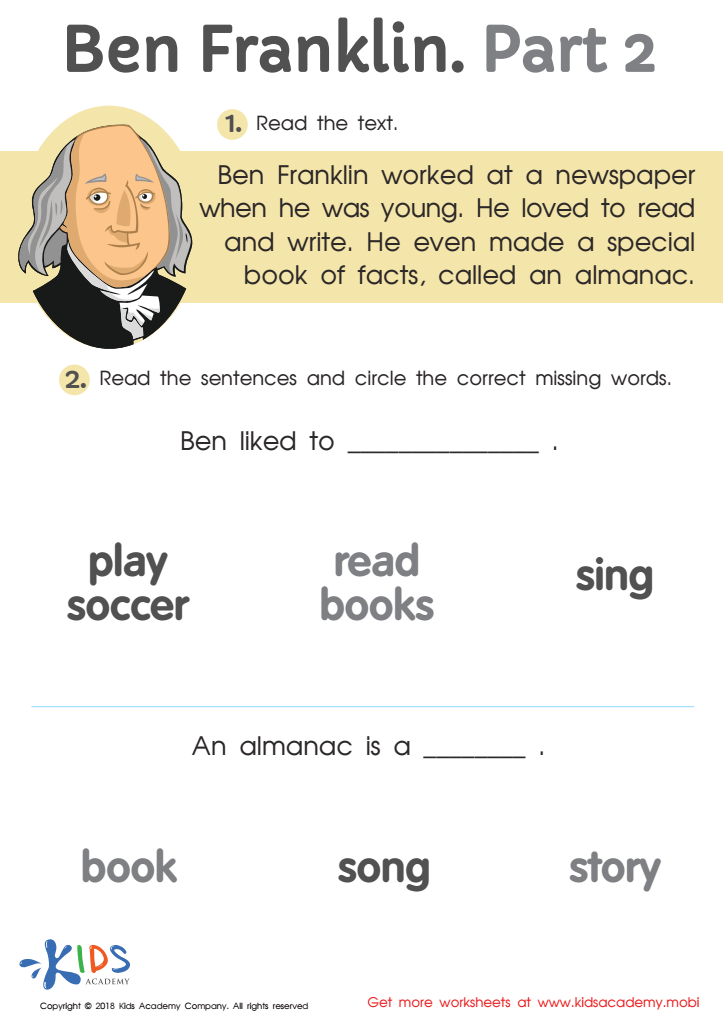
Ben Franklin Part 2 Worksheet
History is filled with great figures, like Benjamin Franklin. Let your kids in on the legacy by introducing them to the founder of the US fire department, diplomat, and inventor. Then, use a worksheet to have them fill in the blanks with the correct word to teach them more. Read the text, then read the sentences and have them circle the missing word.
Ben Franklin Part 2 Worksheet
Worksheet
Join Kids Academy for Free
Who is primarily going to use this learning content?


Parents and teachers should prioritize historical knowledge, normal governance, and civics education as these concepts are foundational for the development of informed, engaged citizens. Understanding history allows students to learn from past successes and failures, fostering critical thinking and encouraging them to ask questions about their society. It helps them appreciate diverse cultures and perspectives, essential for building empathy in an increasingly globalized world.
Normal governance refers to the rules and processes through which society operates, emphasizing the importance of systems such as democracy and the rule of law. By educating children about governance, we empower them to become active participants in their communities and understand the impact of their choices. This knowledge fosters a sense of responsibility and civic duty.
Civics education equips students with the skills to evaluate information, engage in political discourse, and understand their rights and responsibilities. As future voters and leaders, students need these skills to navigate and contribute positively to society.
Together, these elements cultivate a generation that values justice, equity, and participation, ensuring a robust democracy. Parents and teachers serve as vital guides in this journey, influencing young minds to become thoughtful, responsible, and active members of society.








