Understanding timelines Normal History Worksheets
3 filtered results
-
From - To
Explore our "Understanding Timelines" worksheets, designed to enhance children's grasp of historical events and their sequential order. These printable resources introduce students to the concept of timelines, making it easy for young learners to visualize past events as a coherent story. Ideal for early-grade teachers, our engaging activities encourage critical thinking as children practice placing events correctly on a timeline. With colorful graphics and simple instructions, these worksheets promote an interactive learning experience. Foster a love for history while honing essential organizational skills. Perfect for classroom or home use, these are essential tools for nurturing the minds of future historians!
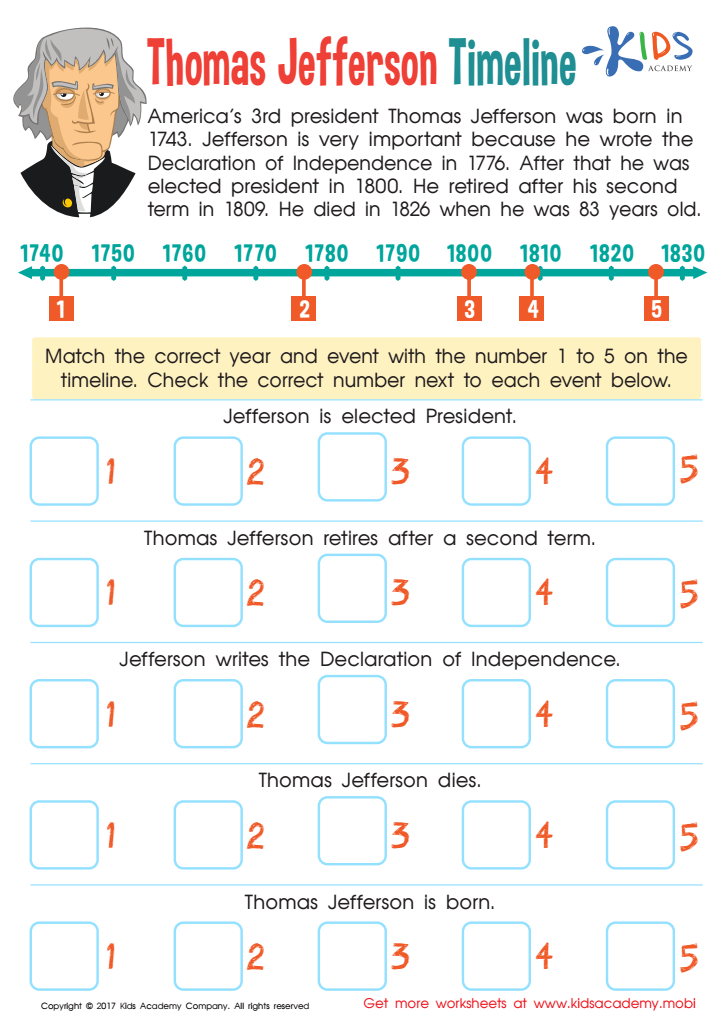
Thomas Jefferson Timeline Worksheet
 Assign to My Students
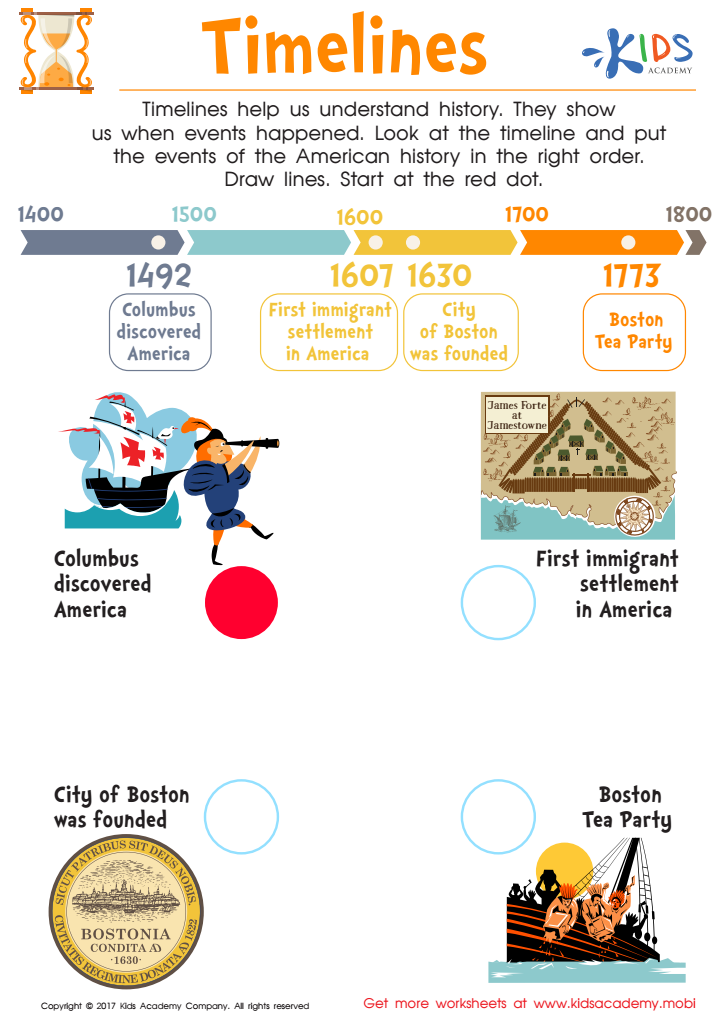
American History Timeline Worksheet
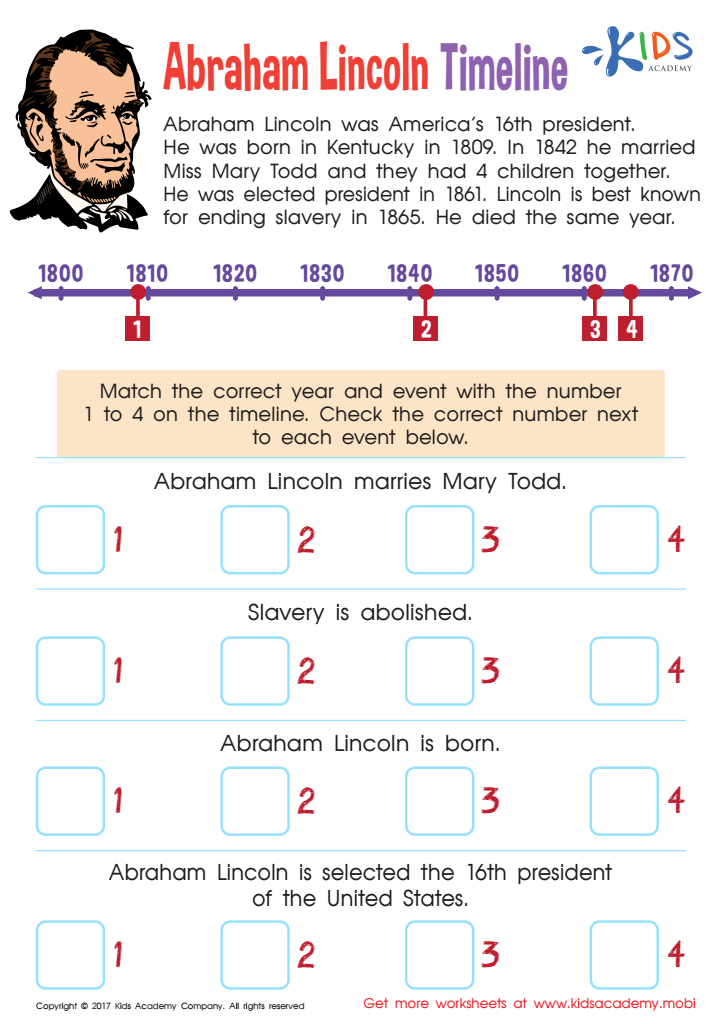
Abraham Lincoln Timeline Worksheet







Understanding timelines in history is crucial for both parents and teachers as it lays the foundation for critical thinking and contextual awareness in students. Timelines help children grasp the sequence of events, making it easier for them to understand cause-and-effect relationships. This structured representation aids in comprehending how past events shape the present and future, fostering a sense of contextual belonging in learners.
Moreover, familiarity with historical timelines encourages engagement with complex concepts, such as continuity and change. It empowers students to analyze and compare different historical periods, enhancing their ability to draw connections across various subject areas, including science, literature, and social studies.
For parents, supporting a child’s understanding of timelines encourages an appreciation for history, enabling their children to become informed citizens. It also facilitates meaningful discussions at home, sparking curiosity about heritage and significant global events.
For teachers, incorporating timelines into lessons can make history more relatable and enjoyable, providing students with visual and interactive learning tools. This enhances retention and promotes a dynamic classroom environment. Ultimately, caregivers and educators play a pivotal role in fostering a lifelong interest in history through an understanding of timelines, cultivating well-rounded, insightful individuals.