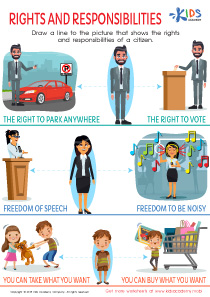
Understanding communities Normal Social Studies Worksheets
4 filtered results
-
From - To
Discover engaging "Understanding Communities" Social Studies worksheets designed to help young learners explore the concept of communities. These printable activities foster critical thinking and essential skills by encouraging children to identify features of their neighborhoods, recognize diverse roles within a community, and understand the importance of cooperation. With a variety of interactive exercises, students will develop an appreciation for diversity while learning about the interconnectedness of individuals in society. Perfect for classrooms and homeschooling, these worksheets provide an enriching experience that promotes curiosity and knowledge of the community, making social studies both fun and informative for early learners.
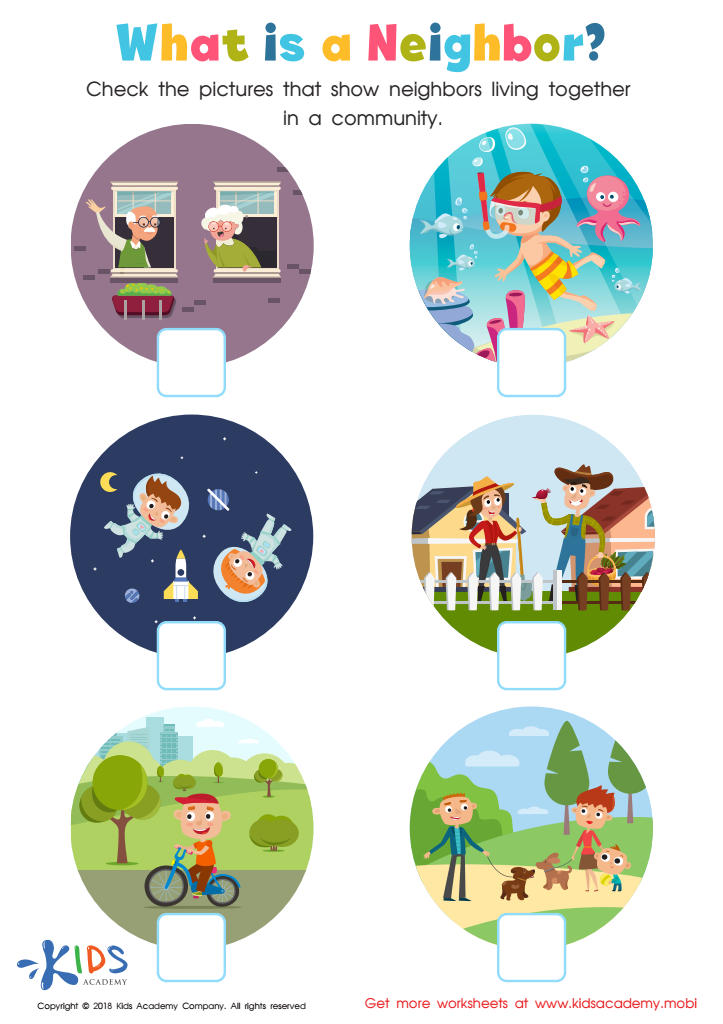
What is a neighbor Worksheet
 Assign to My Students
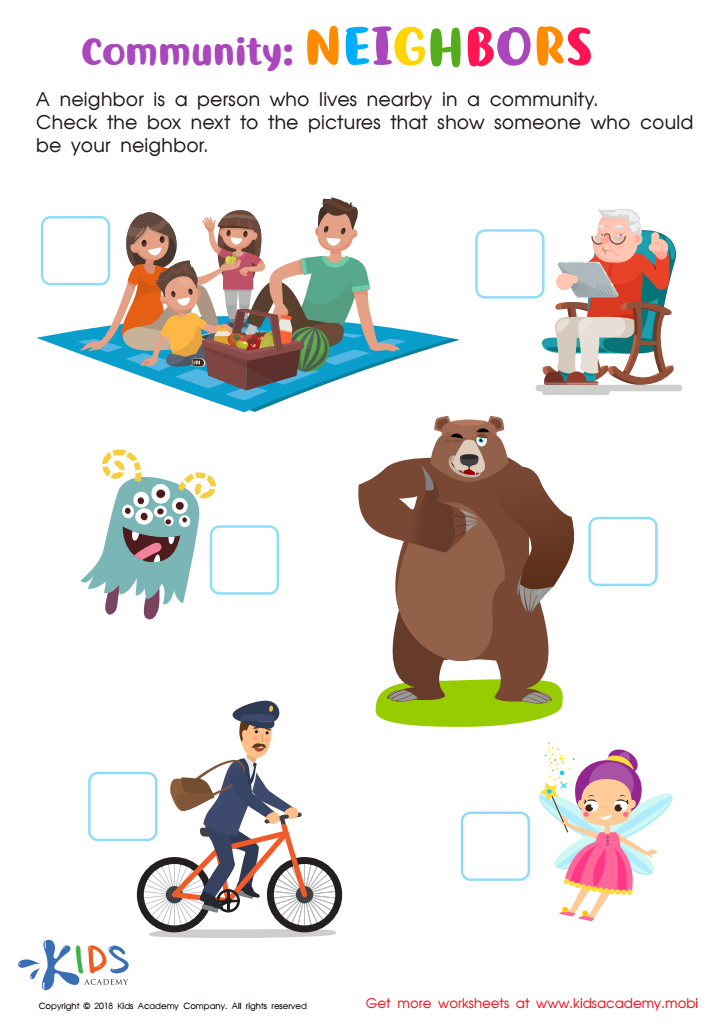
Community: Neighbors Worksheet
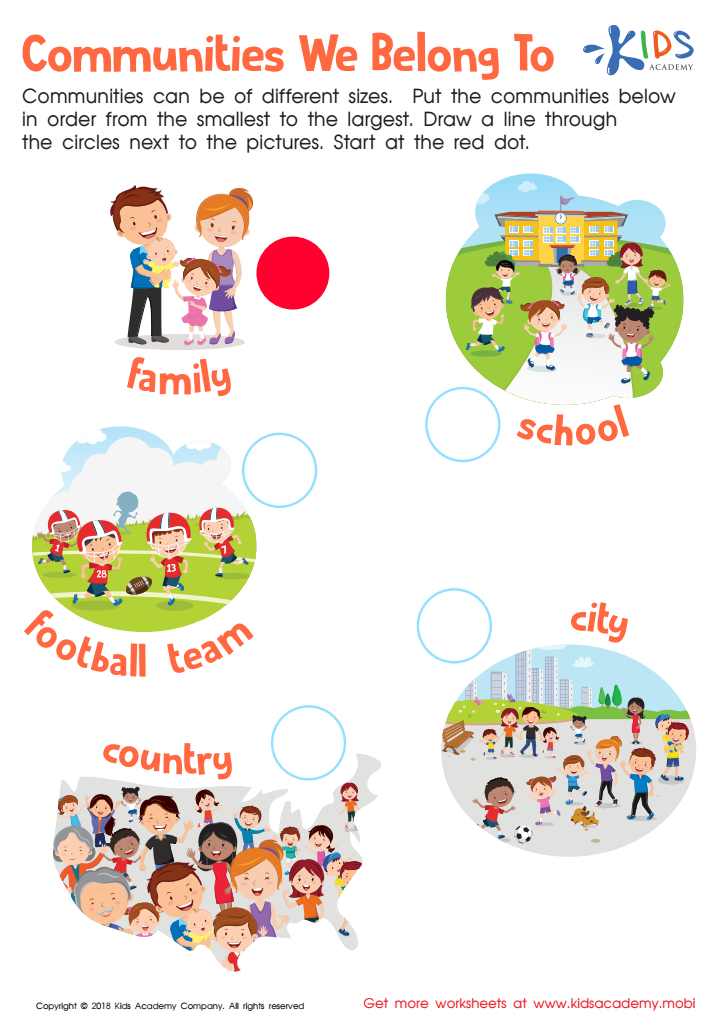
Communities We Belong to Worksheet
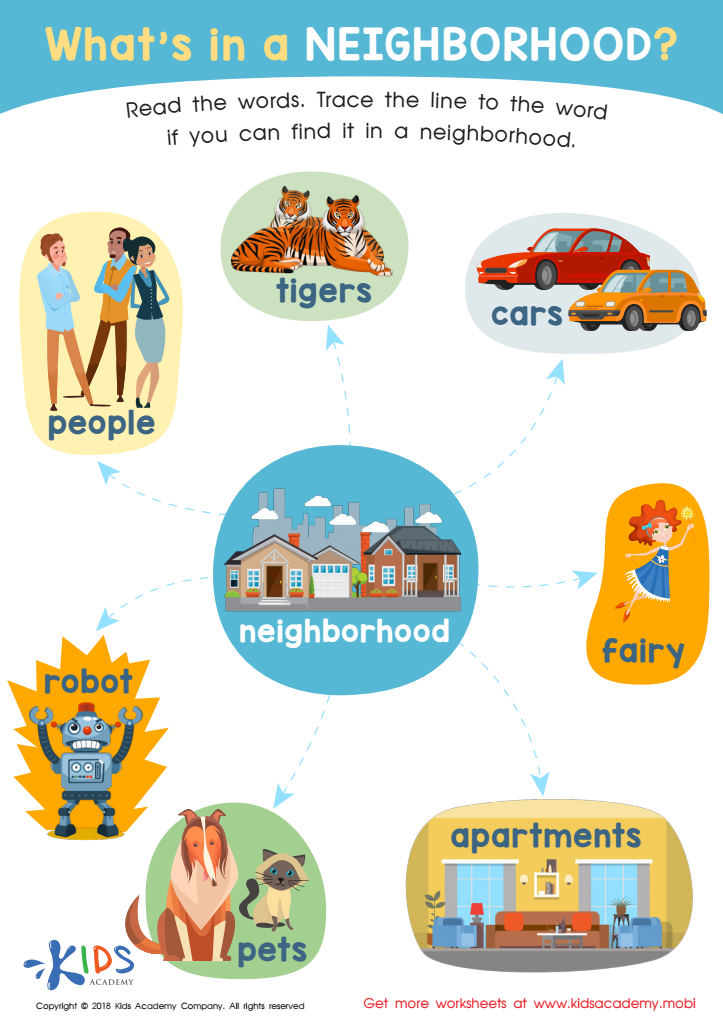
What's in a Neighborhood? Worksheet








Understanding communities is crucial for parents and teachers because it lays the foundation for children's social awareness and civic responsibility. Learning about local communities enables children to appreciate diversity, be empathetic toward others, and understand the dynamics that shape their environment. When children explore topics such as cultural heritage, community roles, and societal structures in social studies, they gain a deeper understanding of their place in the world.
For parents, this knowledge fosters meaningful conversations with their children about values, responsibility, and the importance of contributing positively to society. Engaging children in discussions about their communities encourages them to think critically about issues like equity, inclusion, and sustainability.
Teachers play a vital role in helping students connect with their surroundings. Through projects and lessons focused on local history and geography, educators can spark curiosity and build pride in their communities. Furthermore, a strong grasp of community dynamics helps students become informed citizens who can effectively participate in democratic processes and advocate for social change.
Overall, understanding communities is essential for holistic development, enhancing children's academic skills, emotional intelligence, and sense of belonging. By prioritizing this focus in education, parents and teachers cultivate well-rounded, socially conscious individuals.