Understanding times tables Normal Grade 3 Worksheets
3 filtered results
Difficulty Level
Grade
Age
-
From - To
Subject
Activity
Standards
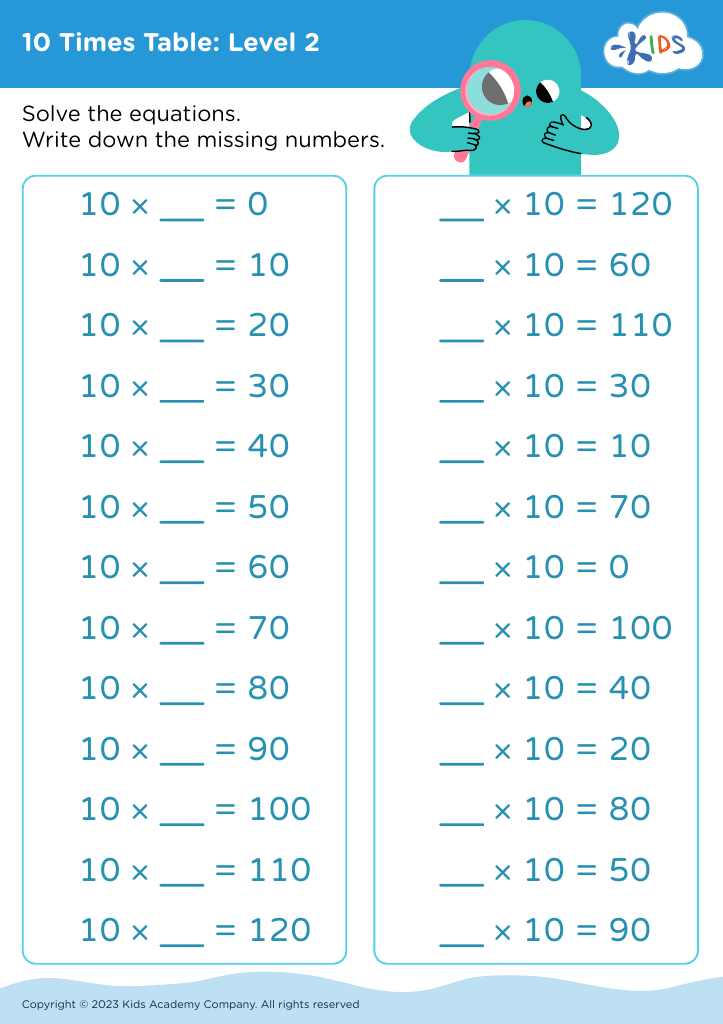
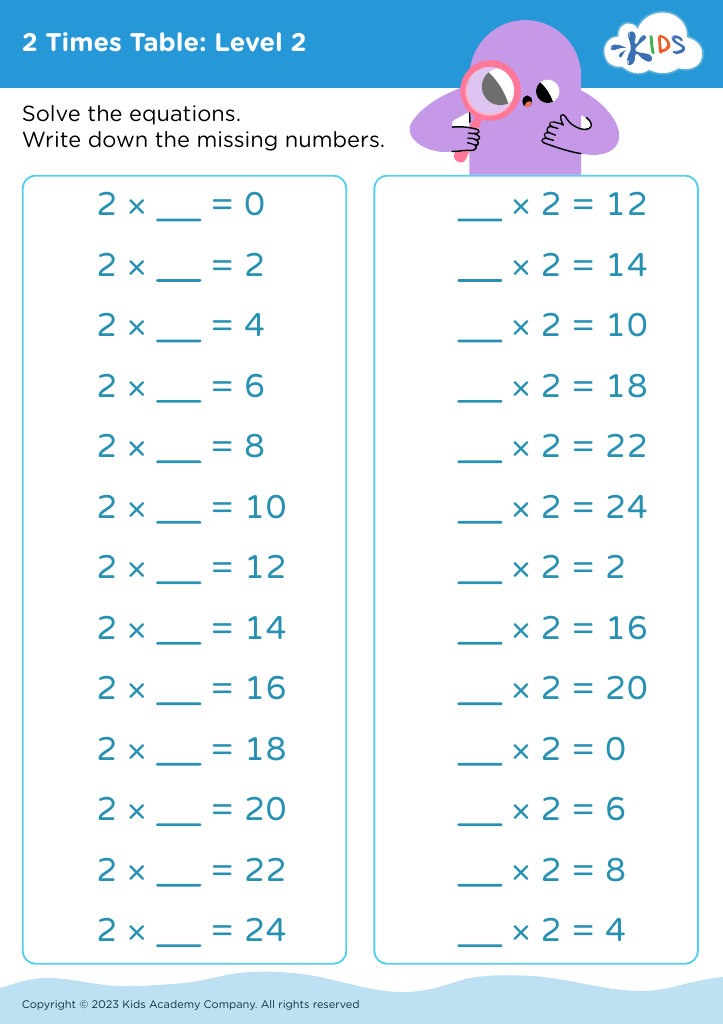
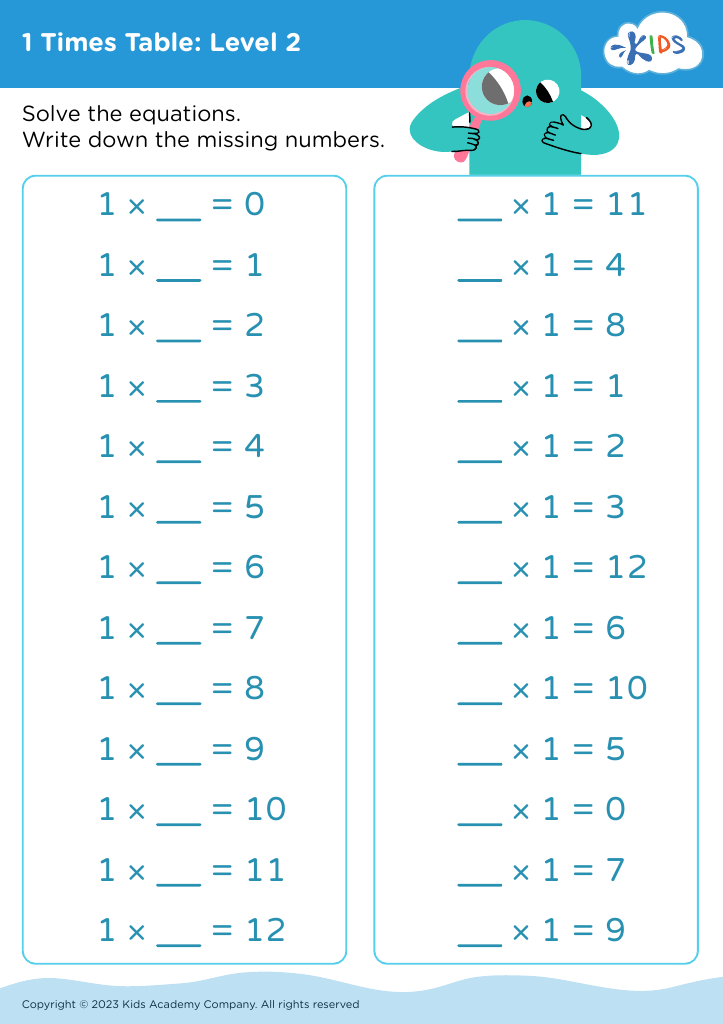
Welcome to our webpage dedicated to "Understanding Times Tables" for third graders! Here, you’ll find a variety of printable worksheets designed to make learning multiplication fun and engaging. These worksheets help students grasp the concept of times tables through interactive activities and exercises that reinforce their skills. Ideal for in-class use or at-home practice, our resources cater to different learning styles, ensuring that every child gains confidence in their multiplication abilities. Explore our carefully crafted materials to support your child's math journey and enhance their understanding of this essential building block in mathematics!
Favorites
With answer key
Interactive
Join Kids Academy for Free
Who is primarily going to use this learning content?






Understanding times tables is crucial for Grade 3 students as it lays the foundation for their future math skills. Mastery of these basics not only boosts their confidence, but it also enhances their problem-solving abilities. When students grasp multiplication, they can tackle more complex concepts such as division, fractions, and even beginning algebra with greater ease. This foundational knowledge enables them to approach math with a sense of competence, which can reduce anxiety and foster a positive attitude toward the subject.
Moreover, times tables are used daily in various real-life situations, such as calculating costs, measuring for projects, or figuring out time. By understanding multiplication, children gain essential life skills that help them navigate tasks efficiently.
For parents and teachers, promoting times table mastery helps create a supportive learning environment. Engaging students in fun activities, games, and practical applications reinforces their understanding and retention. Monitoring their progress and providing encouragement can significantly impact their mathematical journey.
Ultimately, when children understand their times tables, they are better equipped to excel in higher-level math and feel empowered about their learning, ensuring a lifelong appreciation for mathematics. This foundational knowledge shapes not just future academics but equips students with confidence in their everyday lives.