Addition skills Normal Grade 3 Addition & Subtraction Worksheets
5 filtered results
-
From - To
Enhance your third grader's mathematics proficiency with our engaging Addition Skills worksheets designed specifically for Grade 3. These interactive resources focus on developing essential addition and subtraction abilities, ensuring students grasp foundational concepts while having fun. Our thoughtfully crafted worksheets include a variety of exercises, from single-digit addition to multi-digit computations, catering to diverse learning styles. Educators and parents can support their child's skill mastery through vibrant, easy-to-follow activities that promote practice and retention. Perfect for classroom use or at-home learning, these worksheets help students build confidence and succeed in their math journey. Explore our extensive collection today!
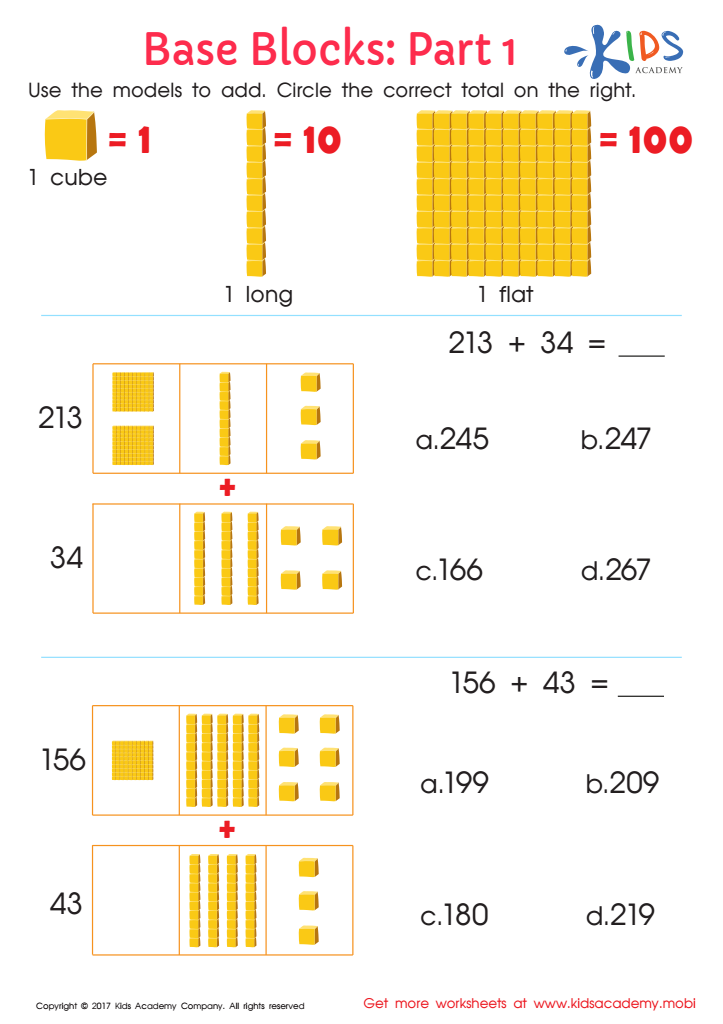
Base Ten Blocks Worksheet: Part 1
 Assign to My Students
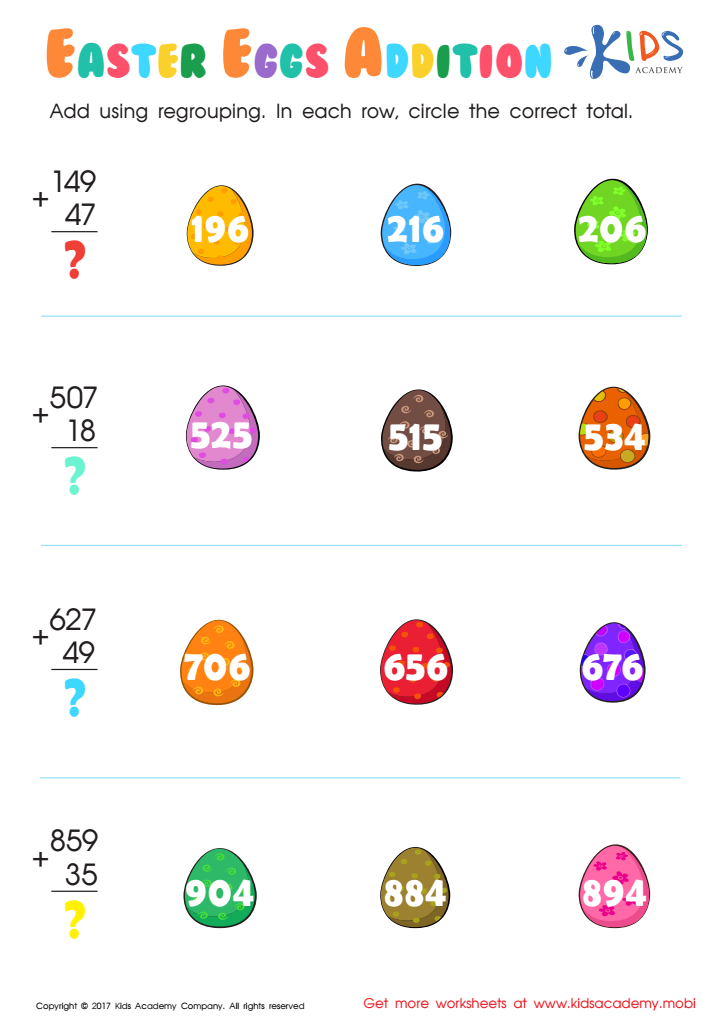
Addition with Regrouping Worksheet
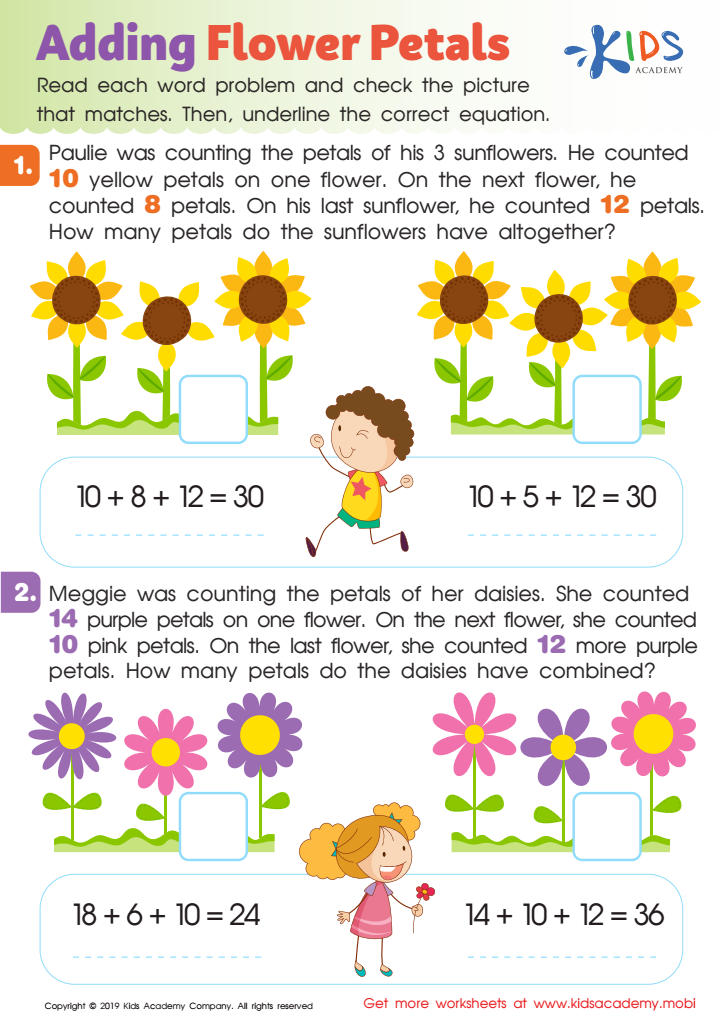
Adding Flower Petals Worksheet
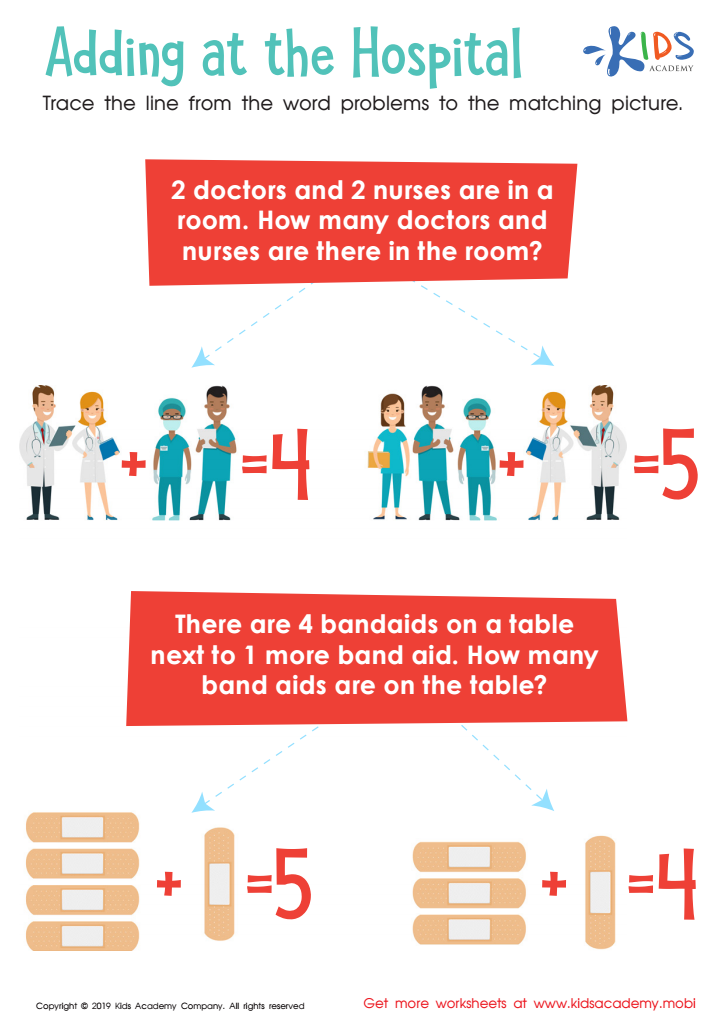
Adding at the Hospital Worksheet
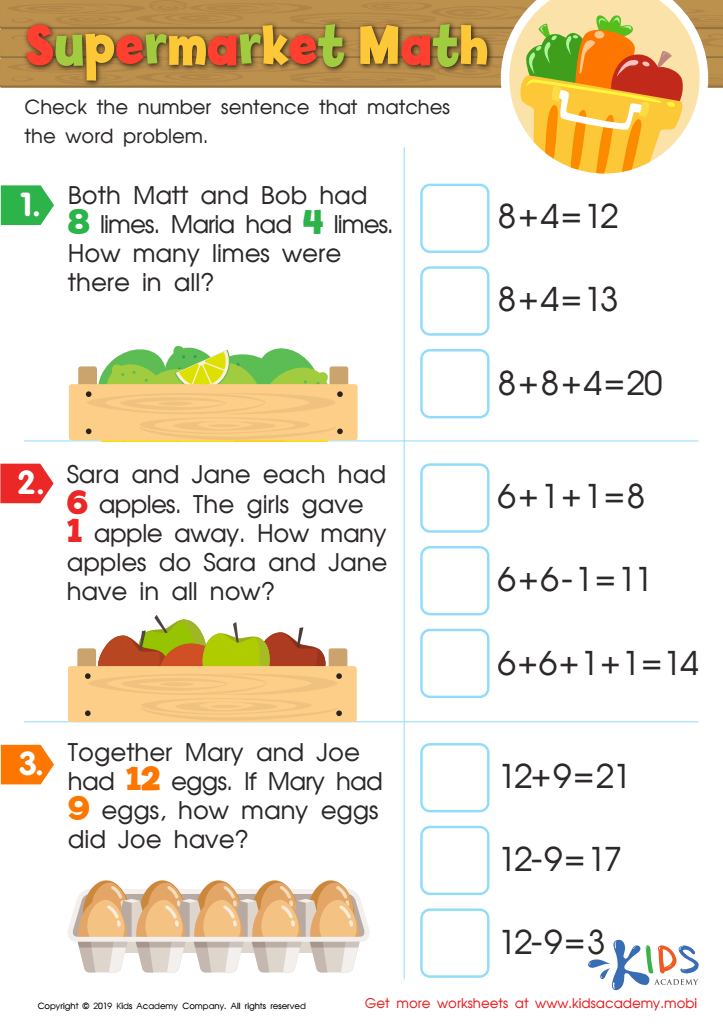
Supermarket Math Worksheet








Parents and teachers should prioritize 3rd grade addition and subtraction skills because they form the foundation for all future mathematical learning. At this stage, students transition from basic arithmetic to more complex concepts, so a solid grasp of these operations is essential. Proficiency in addition and subtraction enhances problem-solving skills and logical reasoning, enabling children to tackle increasingly challenging subjects in math, science, and even daily life activities like budgeting and cooking.
Moreover, strong addition and subtraction skills boost students' confidence, decreasing anxiety related to math. This self-assurance encourages a positive attitude towards learning and fosters motivation in the classroom. Understanding these operations also enables children to identify errors in their work, promoting critical thinking and self-correction.
In group activities and discussions, children who are confident in their addition and subtraction abilities can contribute actively, enhancing their collaboration and communication skills. As parents and teachers play crucial roles in this developmental phase, investing time and resources in strengthening these foundational skills will not only improve academic performance but will also instill a lifelong appreciation for mathematics and learning in general. It creates a bridge for students to engage effectively with more complex mathematical concepts in the future.