Historical Knowledge Normal Grade 3 Arrays Worksheets
3 filtered results
-
From - To
Explore our engaging Historical Knowledge Normal Grade 3 Arrays Worksheets designed to enhance young learners' math skills while connecting them to history! These worksheets introduce students to arrays through historical themes, making math concepts relatable and enjoyable. Kids will use visual representations to learn essential multiplication skills, improve their problem-solving abilities, and gain insights into significant historical events. Our fun and interactive content fosters critical thinking, ensuring that students not only grasp mathematical concepts but also appreciate the importance of historical knowledge. Perfect for classroom or at-home learning, these worksheets make history come alive while reinforcing vital math skills!
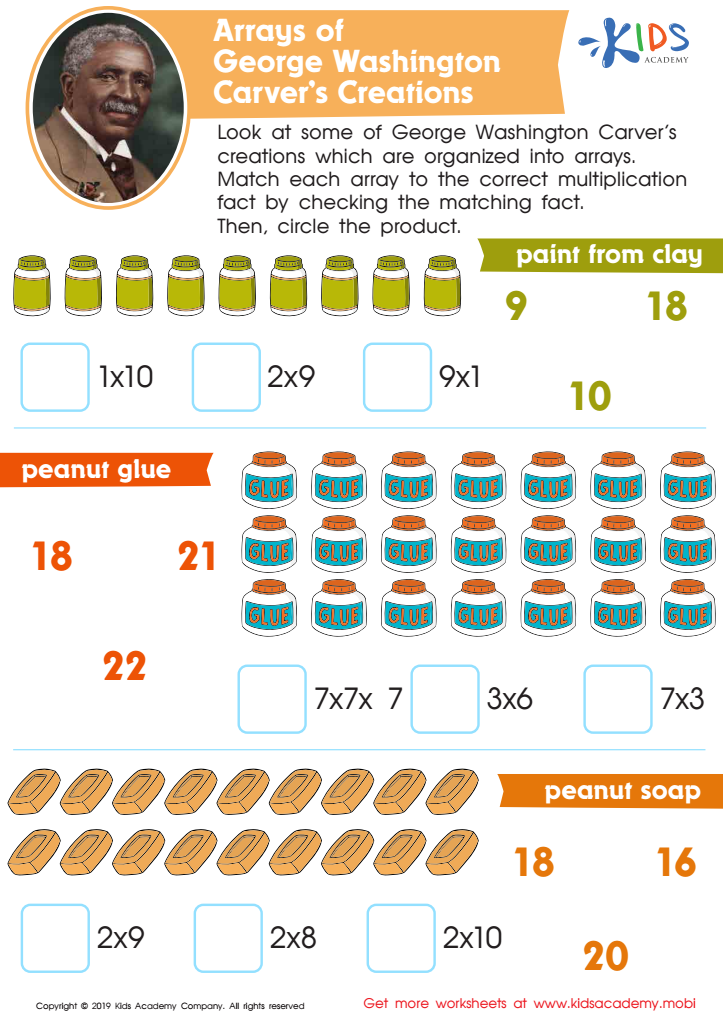
Arrays of George Washington Carver’s Creations Worksheet
 Assign to My Students
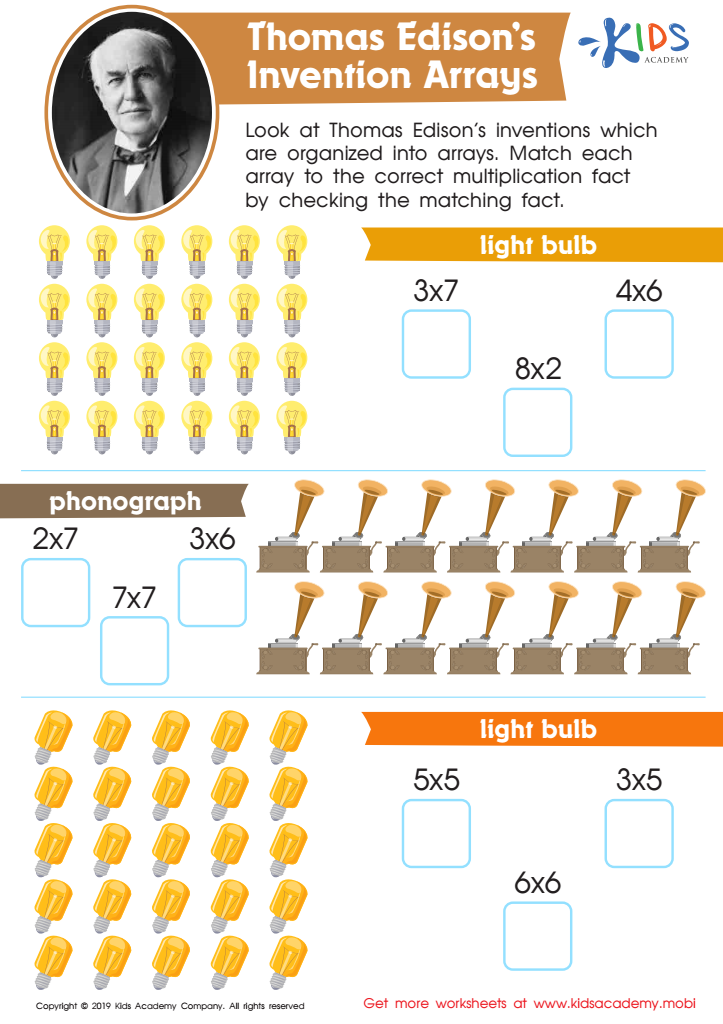
Thomas Edison’s Invention Arrays Worksheet
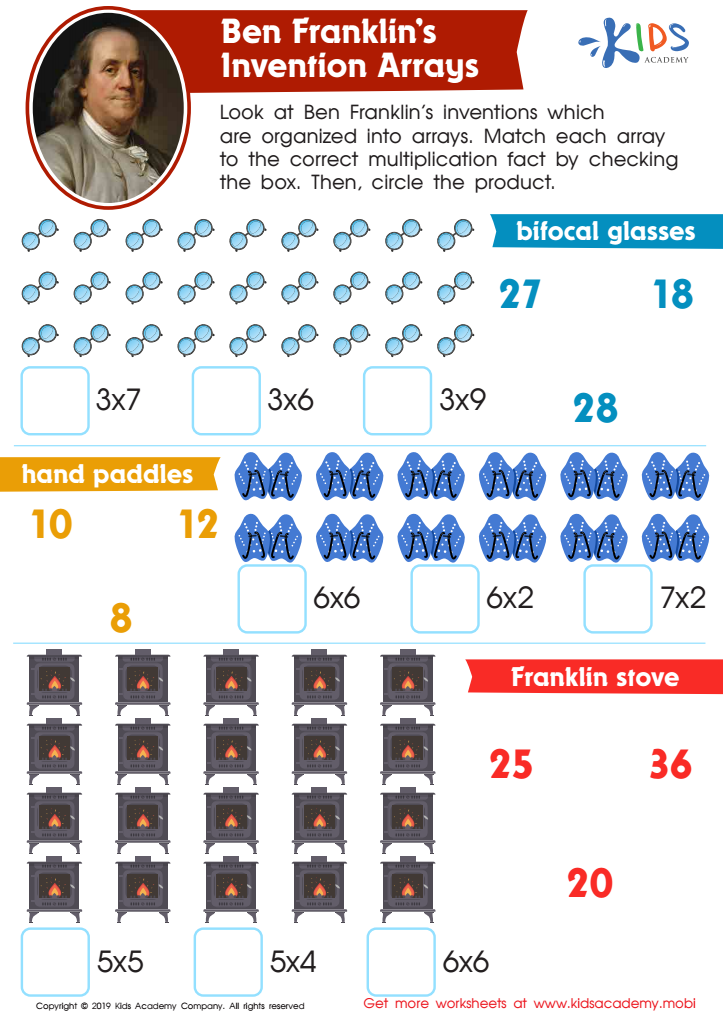
Ben Franklin’s Invention Arrays Worksheet





Parents and teachers should care about historical knowledge in the context of Normal Grade 3 Arrays because it plays a vital role in shaping students' understanding of the world around them. Learning about history helps children to understand how past events, cultures, and societies influence their current environment. In Grade 3, students begin to grasp basic concepts of arrays, which represent the arrangement of numbers in rows and columns. Integrating historical knowledge into this mathematical framework allows students to see the connections between math, science, and social studies.
For example, teachers can create array problems that relate to historical events, such as calculating the number of supplies needed for a specific event in history or organizing historical items into groups. This approach not only reinforces mathematical skills but also fosters critical thinking and contextual understanding. Additionally, engaging with history can make learning more relevant and interesting for students, encouraging them to explore the subject matter further.
Moreover, by addressing these topics as a community, parents can reinforce the importance of historical context in everyday life, emphasizing how understanding our past is essential to creating a better future. This holistic approach to education nurtures well-rounded students who are capable of thinking critically about math and history alike.