Historical Knowledge Normal Grade 3 Math Worksheets
4 filtered results
-
From - To
Explore our engaging Historical Knowledge Normal Grade 3 Math Worksheets, designed to integrate history with essential math skills! These worksheets provide young learners with a unique opportunity to enhance their mathematical understanding while uncovering interesting historical facts. Each activity fosters critical thinking, problem-solving, and computational skills through captivating themes that resonate with the past. Perfect for classroom use or at-home learning, our resources encourage students to discover the connections between math and history, making learning both enjoyable and meaningful. Dive into our collection to provide your child with a rich educational experience that promotes both numeracy and a love for history!
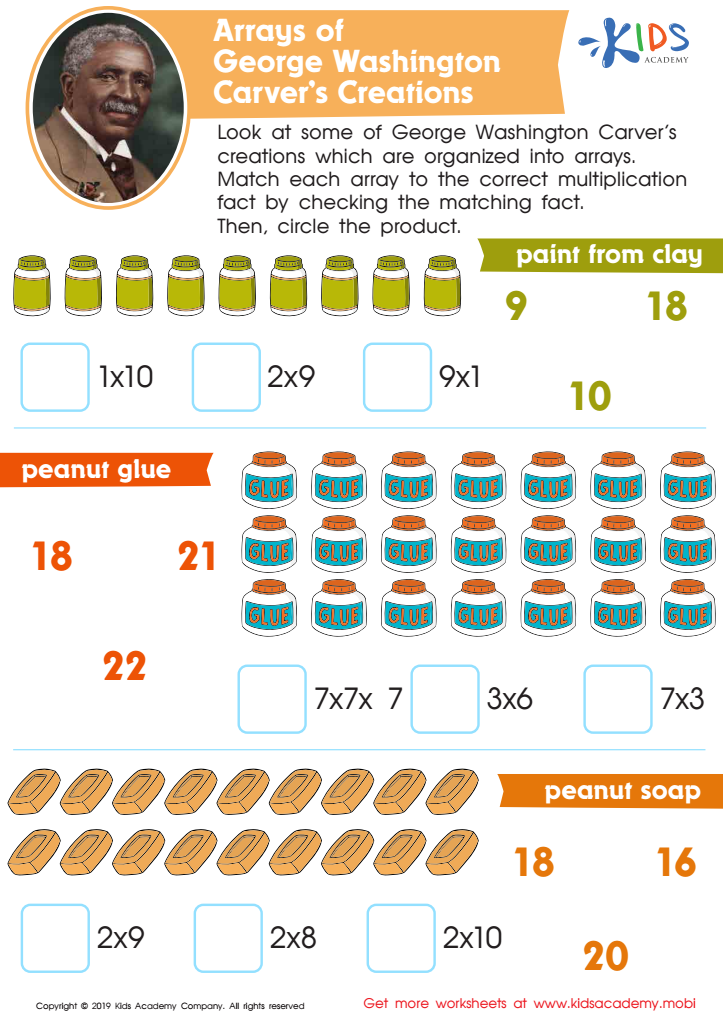
Arrays of George Washington Carver’s Creations Worksheet
 Assign to My Students
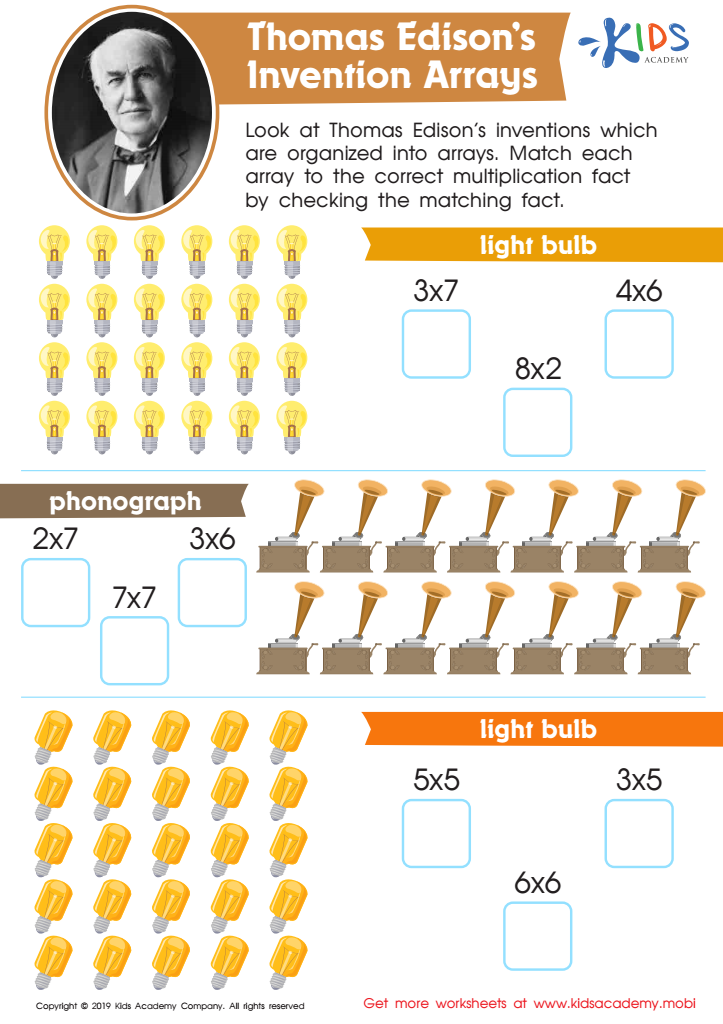
Thomas Edison’s Invention Arrays Worksheet
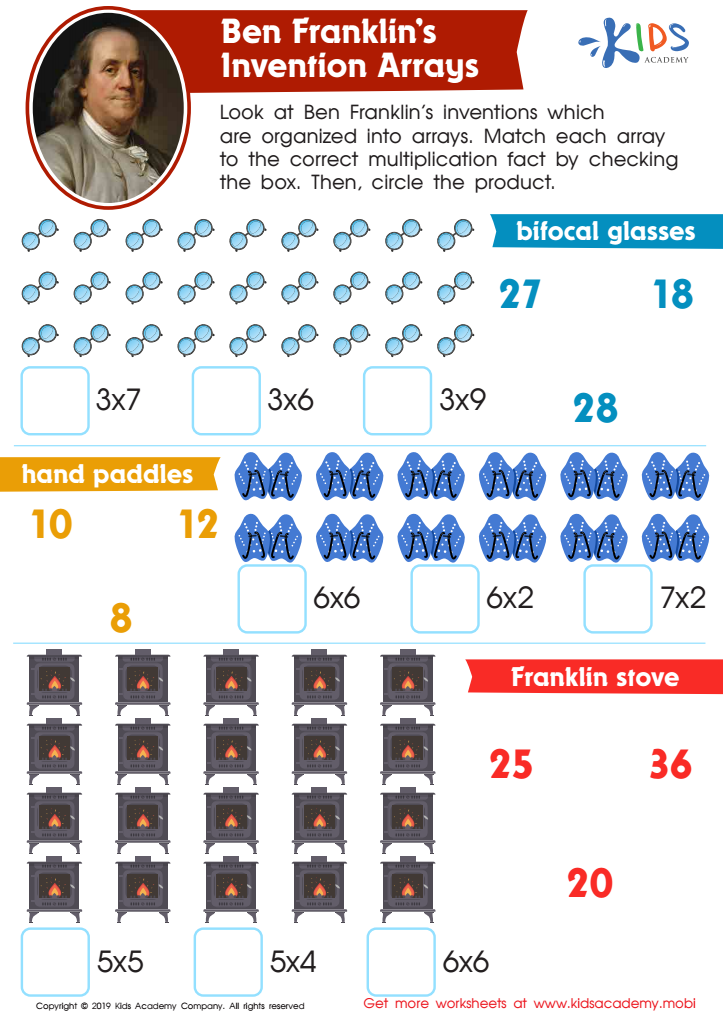
Ben Franklin’s Invention Arrays Worksheet
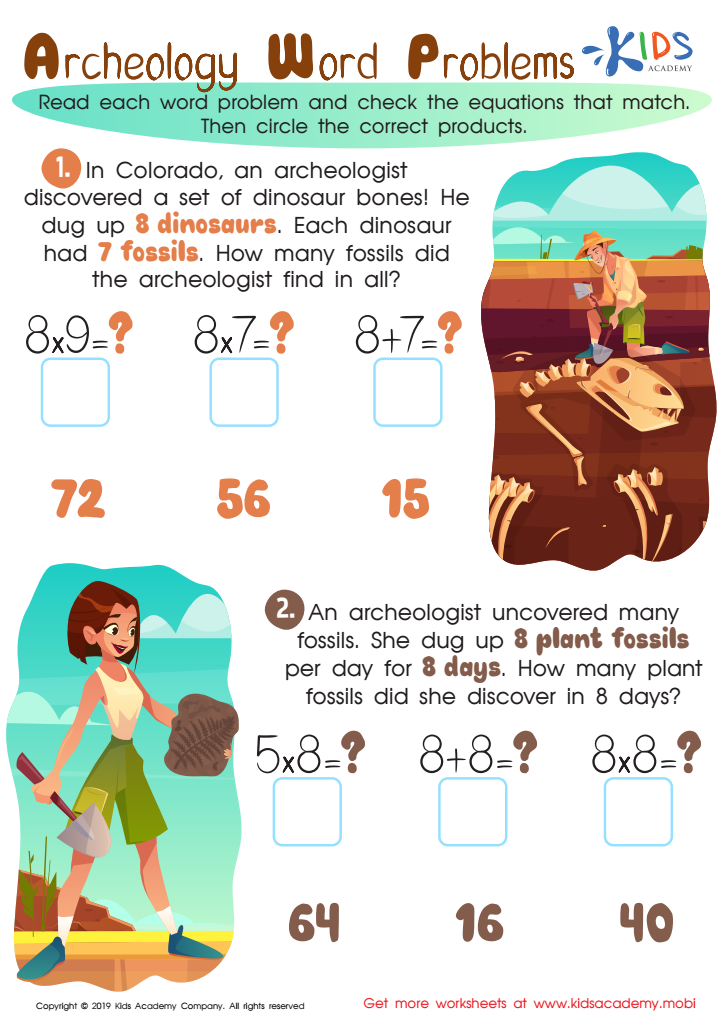
Archeology Word Problems Worksheet





Parents and teachers should recognize the importance of historical knowledge in teaching Grade 3 Math for several reasons. First, understanding the history of mathematical concepts can make learning more engaging and relatable for young students. When children see the real-world applications and historical development of math—such as counting systems used by ancient civilizations or the invention of zero—they may develop a greater interest and appreciation for the subject.
Second, exposing students to a variety of mathematical strategies that have evolved over time encourages critical thinking. Understanding various historical approaches enables children to appreciate multiple ways of solving problems, fostering creativity and flexibility in thinking.
Furthermore, historical knowledge in math helps meet students' diverse learning needs by providing cultural context. It promotes inclusivity, allowing students from different backgrounds to see themselves in history and recognize the contributions of various cultures to mathematics.
Finally, equipping parents and teachers with historical knowledge supports effective communication about math learning. It helps them to nurture a growth mindset, emphasizing that math abilities develop over time like any other skill. This understanding can motivate students, improving their confidence and enthusiasm towards math. Ultimately, integrating historical context into math education aids in developing well-rounded, informed, and engaged learners.