Real-life application Normal Grade 3 Math Worksheets
4 filtered results
-
From - To
Discover engaging Real-life Application Normal Grade 3 Math Worksheets that bring learning to life! Our expertly crafted worksheets transform abstract mathematical concepts into relatable, practical problems tailored for third graders. Each activity bridges classroom learning with everyday situations, enhancing problem-solving skills and critical thinking. Topics include time, money, measurement, and more, offering varied, interactive practice. Ideal for reinforcing curriculum standards, these worksheets make math fun and meaningful. Whether used at home or in the classroom, they ensure students understand and apply math in real-world scenarios, preparing them for future academic success. Explore our collection today!
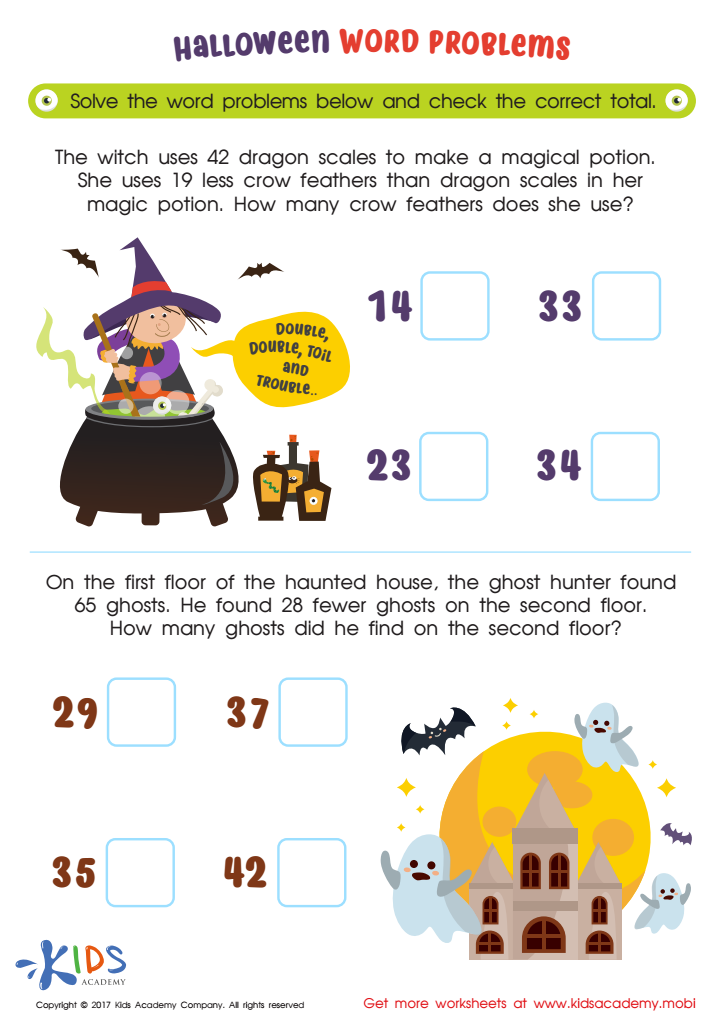
Halloween Word Problems Printable
 Assign to My Students
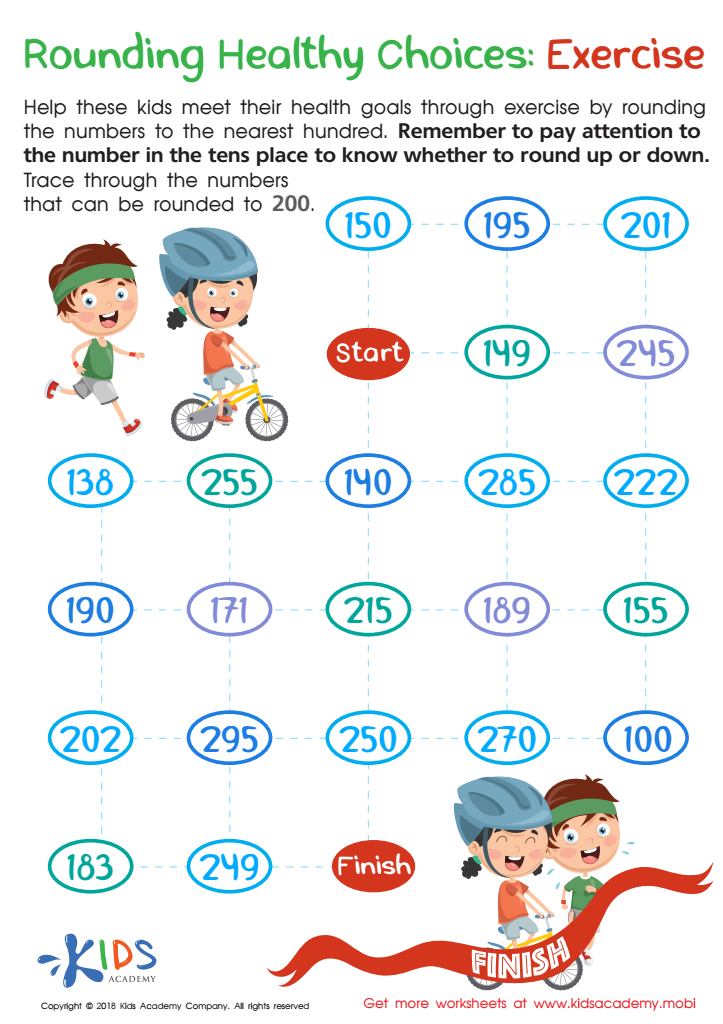
Rounding Healthy Choices Exercise Worksheet
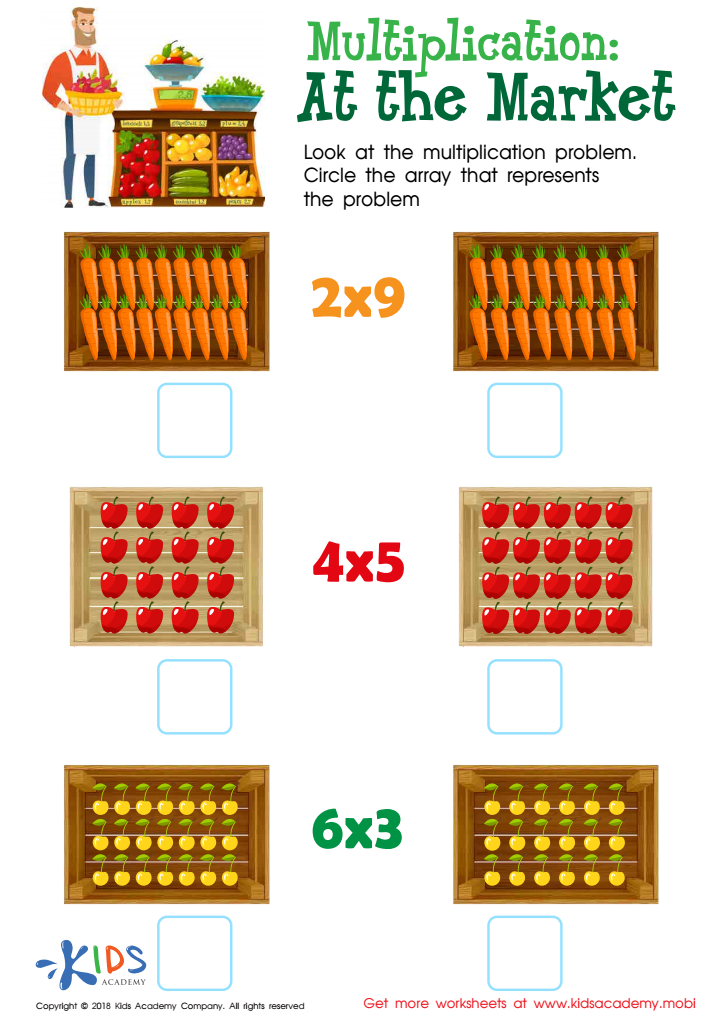
At the Market Worksheet
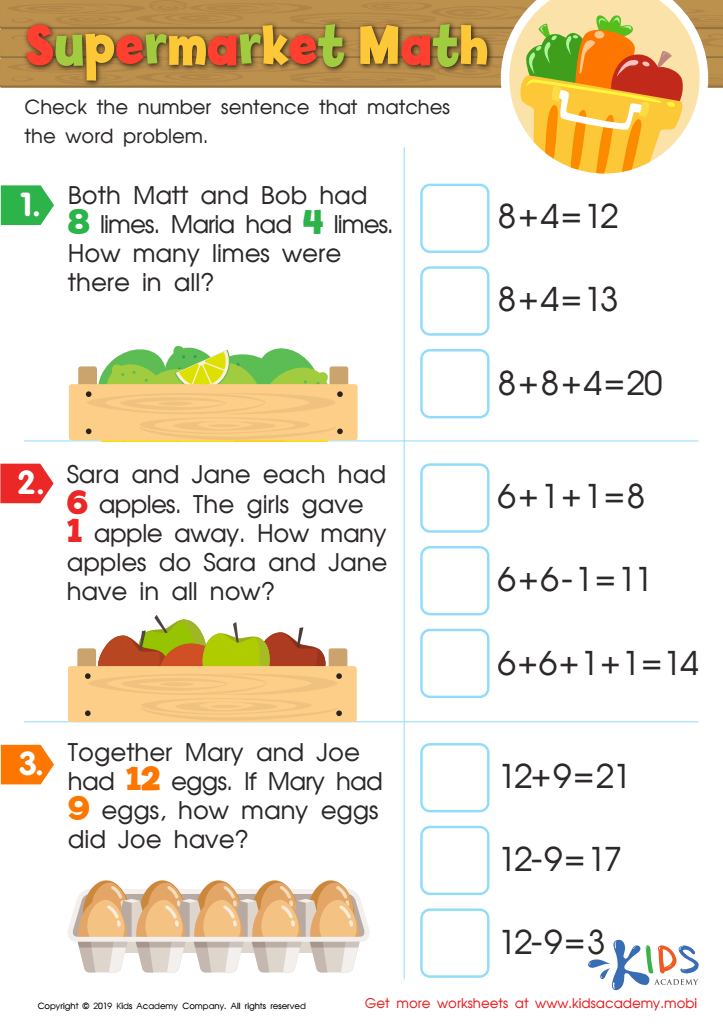
Supermarket Math Worksheet







Caring about the real-life application of normal Grade 3 math is essential for both parents and teachers because it makes learning relevant and engaging for children. When students see how math is used in daily activities, they are more motivated to learn and understand its importance. Math at this age involves concepts like addition, subtraction, multiplication, division, basic geometry, and fractions. These are foundational skills essential for everyday decision-making, such as budgeting, cooking, time management, and problem-solving.
For instance, understanding fractions can help children equally share items or understand measurements in recipes, fostering cooperative and practical life skills. Knowing addition and subtraction is fundamental for handling money, whether shopping with parents or saving allowance. These skills also aid in the later understanding of more complex concepts, ensuring students are not just memorizing equations but grasping their use.
Moreover, integrating real-life math applications flaunts educational consistency and ensures that learning continues beyond the classroom. Parents engaged in these applications at home can reinforce what’s taught, fostering collaborative learning and reinforcing family bonds. Teachers bringing real-world scenarios into lessons cater to different learning styles and help to bridge abstract concepts with tangible experiences. Altogether, this approach builds confidence and a robust mathematical foundation in children.