Logical Reasoning Normal Grade 3 Word Problems Worksheets
4 filtered results
-
From - To
Boost your third grader's problem-solving skills with our Logical Reasoning Word Problems Worksheets. Designed for normal grade 3 students, these engaging worksheets help develop critical thinking through real-life scenarios. With a variety of topics covering addition, subtraction, multiplication, and division, learners get to practice logical reasoning and enhance their math proficiency. Each carefully crafted problem encourages kids to think analytically, promoting a deeper understanding of mathematical concepts. Perfect for classroom use or at-home learning, our worksheets ensure a fun and challenging experience, making math both accessible and enjoyable for your child. Improve logic and computation today!
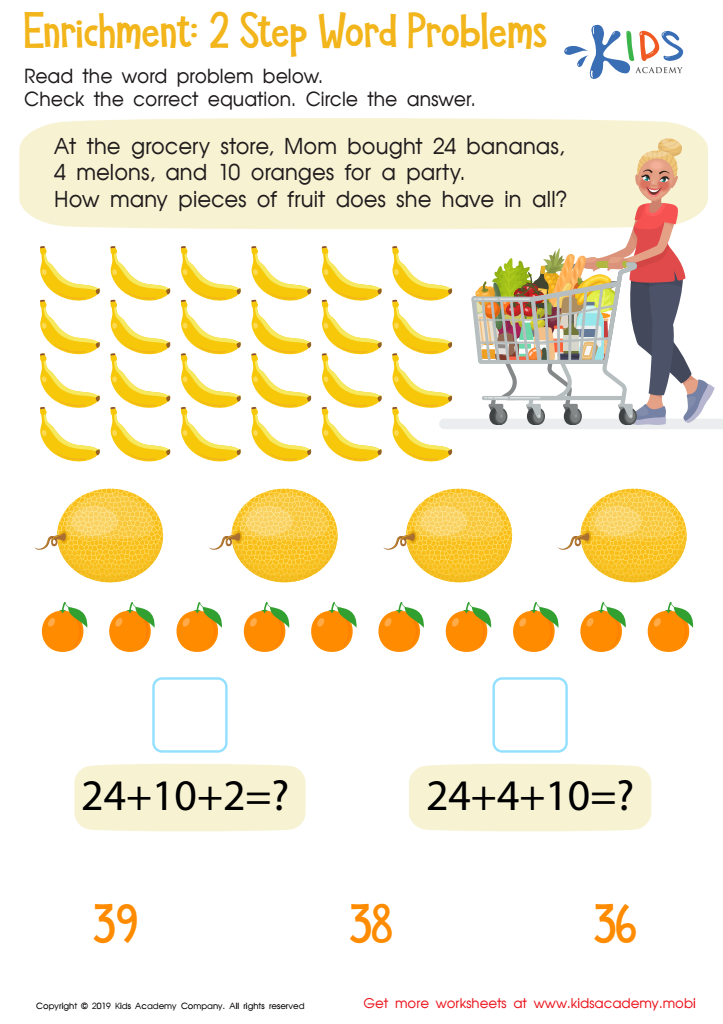
Enrichment -2 Step Word Problems Worksheet
 Assign to My Students
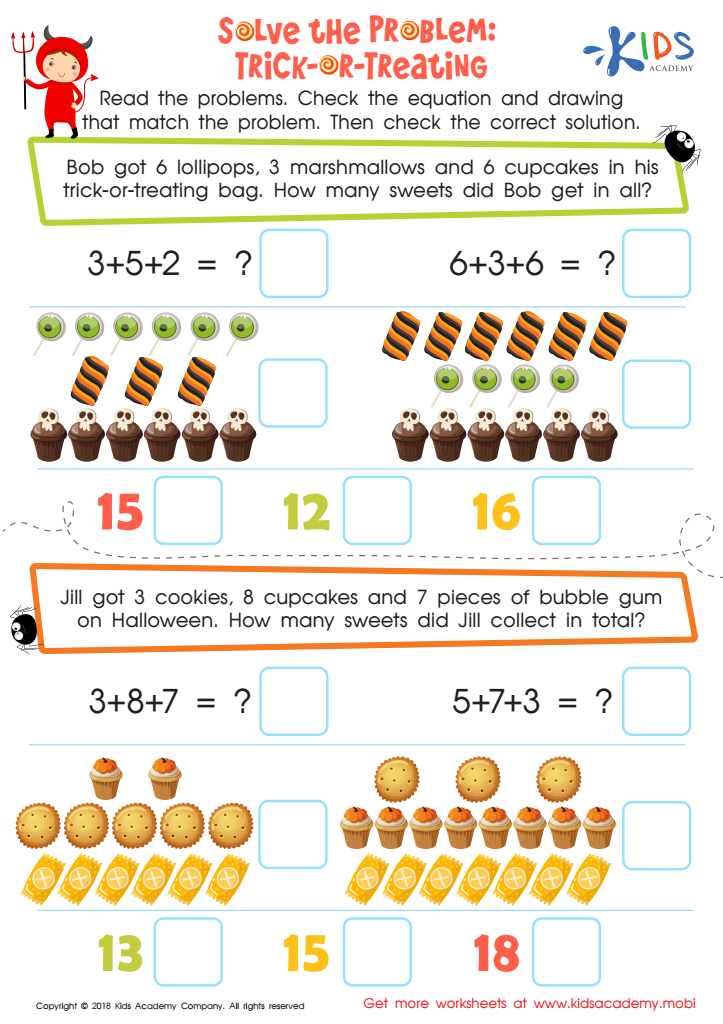
Solve the Problem: Trick–or–treating Worksheet
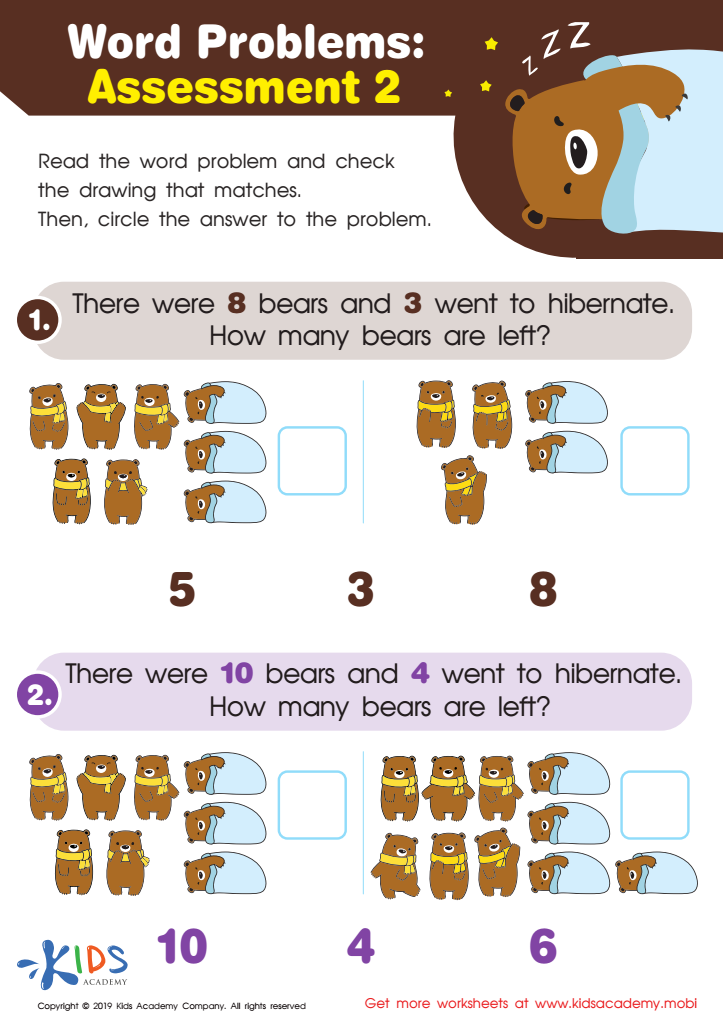
Word Problems: Assessment 2 Worksheet
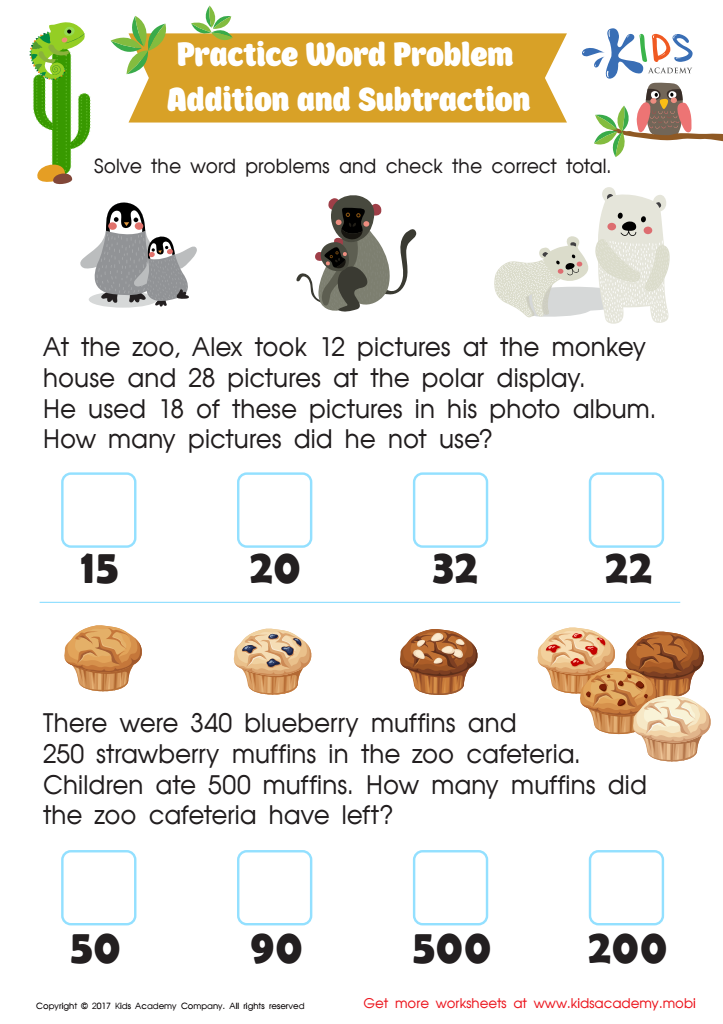
Addition and Subtraction: Word Problems Worksheet








Parents and teachers should care about Logical Reasoning Normal Grade 3 Word Problems because they play a crucial role in the development of critical thinking and problem-solving skills in children. At this age, students are developing foundational cognitive abilities, and engaging with these kinds of problems encourages them to think analytically and systematically. It helps them learn to break down complex problems into more manageable parts, promoting perseverance and resilience in the face of difficult tasks.
Furthermore, logical reasoning problems nurture children's ability to recognize patterns, draw connections, and apply learned knowledge to new situations, all of which are vital across subjects and in everyday life. These skills not only enhance their performance in mathematics but also in reading comprehension, science, and even social situations, where problem-solving is key.
For teachers, incorporating logical reasoning word problems into the curriculum can provide insights into each student's understanding and cognitive growth, allowing for targeted instruction and support. For parents, it presents an opportunity to engage with their child's learning process, supporting and reinforcing these important skills at home. Overall, a focus on logical reasoning at an early age sets the foundation for lifelong learning and intellectual curiosity, making it an essential component of primary education.