Subtraction practice Normal Grade 3 Word Problems Worksheets
3 filtered results
Difficulty Level
Grade
Age
-
From - To
Subject
Activity
Standards
Boost your child's subtraction skills with our comprehensive Grade 3 Subtraction Practice Word Problems Worksheets! These expertly designed sheets offer engaging, real-life scenarios that make math fun and relatable. Each worksheet focuses on honing subtraction skills, enhancing problem-solving abilities, and improving logical thinking. With clear instructions and age-appropriate challenges, your third grader will build confidence and become proficient in tackling subtraction problems. Perfect for both classroom use and home practice, these resources are an excellent addition to your child's math toolkit. Help your youngster excel in math with our top-quality, printable subtraction worksheets today!
Favorites
With answer key
Interactive
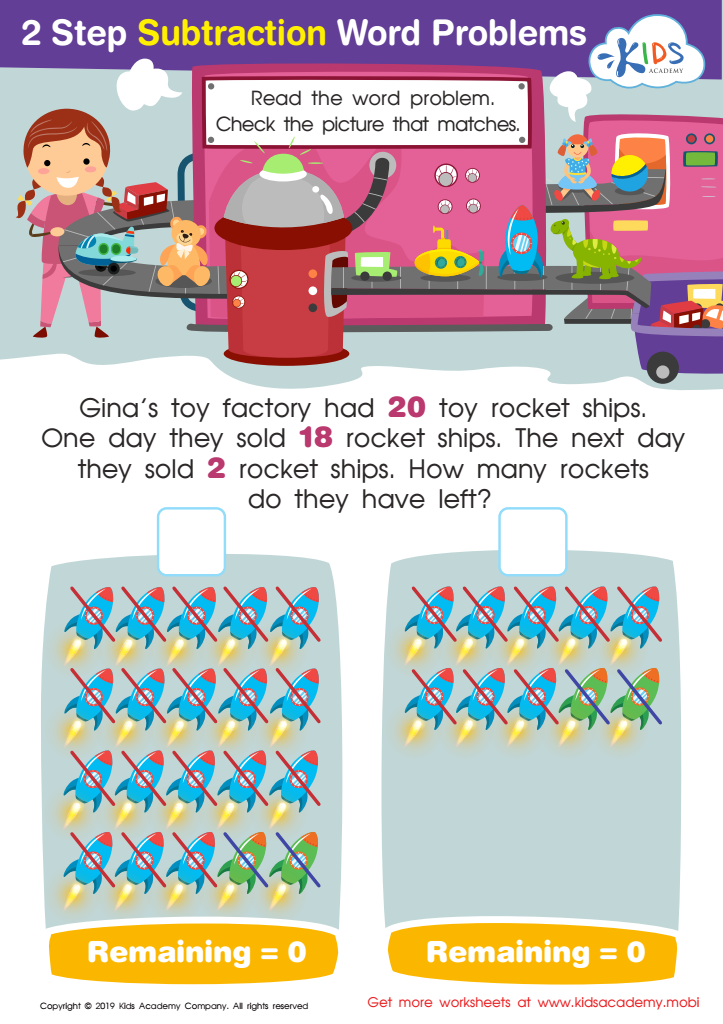
Step Subtraction Word Problems Worksheet
With this worksheet, kids can solve a multi-step subtraction problem with one-to-one number representation, helping Gina figure out her rocket count. Visualizing word problems is key, and this PDF will give your child a concrete image to work with. They'll be successful problem solvers in no time!
 Assign to My Students
Step Subtraction Word Problems Worksheet
Worksheet
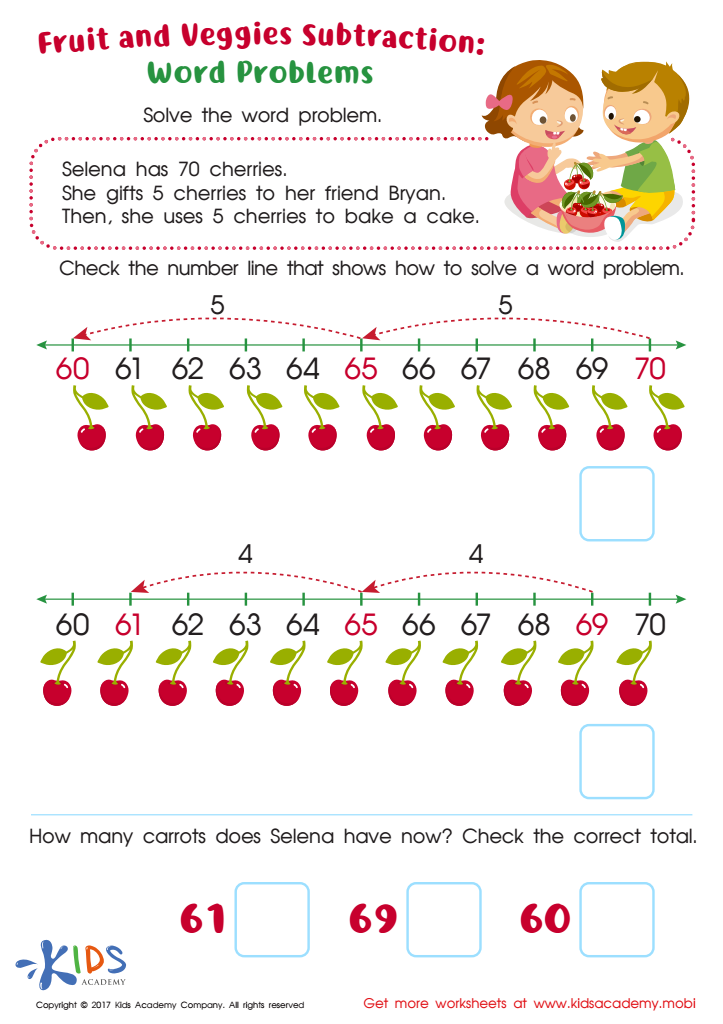
Subtraction Word Problems Free Printable
Try out this free printable subtraction worksheet! Your child can use number lines to solve challenging word problems – it's a great way to boost their problem-solving skills.
Subtraction Word Problems Free Printable
Worksheet
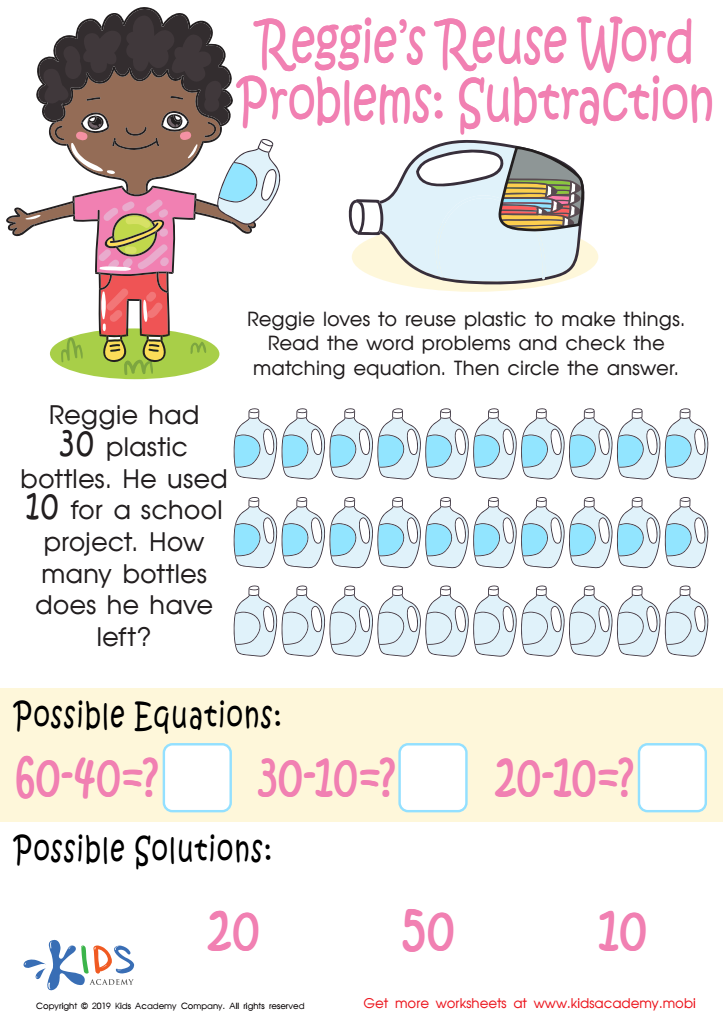
Reggie's Reuse Word Problems: Subtraction Worksheet
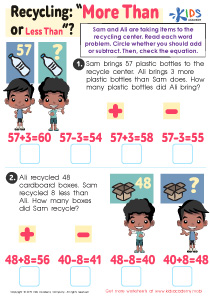
Kids can help pal Reggie become an eco-friendly friend! This PDF teaches kids subtraction and one-to-one number representation. They'll use pictures to solve word problems and find out how many plastic bottles Reggie can reuse. They'll also match number equations and solutions to get the right answer.
Reggie's Reuse Word Problems: Subtraction Worksheet
Worksheet
Join Kids Academy for Free
Who is primarily going to use this learning content?








Parents and teachers should care about subtraction practice for Normal Grade 3 word problems because mastering these skills is crucial for students' mathematical development and everyday problem-solving abilities. At this stage, children are transitioning from basic arithmetic to more complex concepts, and proficiency in subtraction is essential. Word problems reflect real-world scenarios, aiding in the application of subtraction in daily life, like understanding the concept of "taking away" or "finding the difference."
Practicing subtraction through word problems enhances critical thinking and analytical skills. Students learn to dissect the problem, comprehend the relationship between numbers, and decide which mathematical operations to use. This analytical process is fundamental, fostering cognitive development and preparing them for more challenging topics in future grades.
Additionally, consistent practice helps students gain confidence in their math abilities, reducing math anxiety. It reinforces learning through repetition and allows teachers and parents to identify areas where a child may need additional support. This targeted assistance can be crucial for a child's overall academic success and attitude toward math.
Therefore, emphasizing subtraction practice in Grade 3 through word problems helps build a solid foundation, making complex math concepts more approachable and everyday problem-solving more intuitive for young learners.