Logical Reasoning Normal Grade 3 Reading Worksheets
3 filtered results
-
From - To
Boost your third grader's critical thinking with our Logical Reasoning Reading Worksheets. Designed specifically for Grade 3 students, these engaging worksheets enhance reading comprehension and problem-solving skills. Each activity presents a scenario that requires kids to use logical reasoning to draw conclusions and make inferences. Perfect for classroom or home use, our printable worksheets help build good reading habits while developing analytical abilities. Available in beautifully illustrated formats, they captivate children's interest making learning fun and effective. Elevate your child's logical thinking and reading proficiency with Kids Academy's expertly crafted resources!
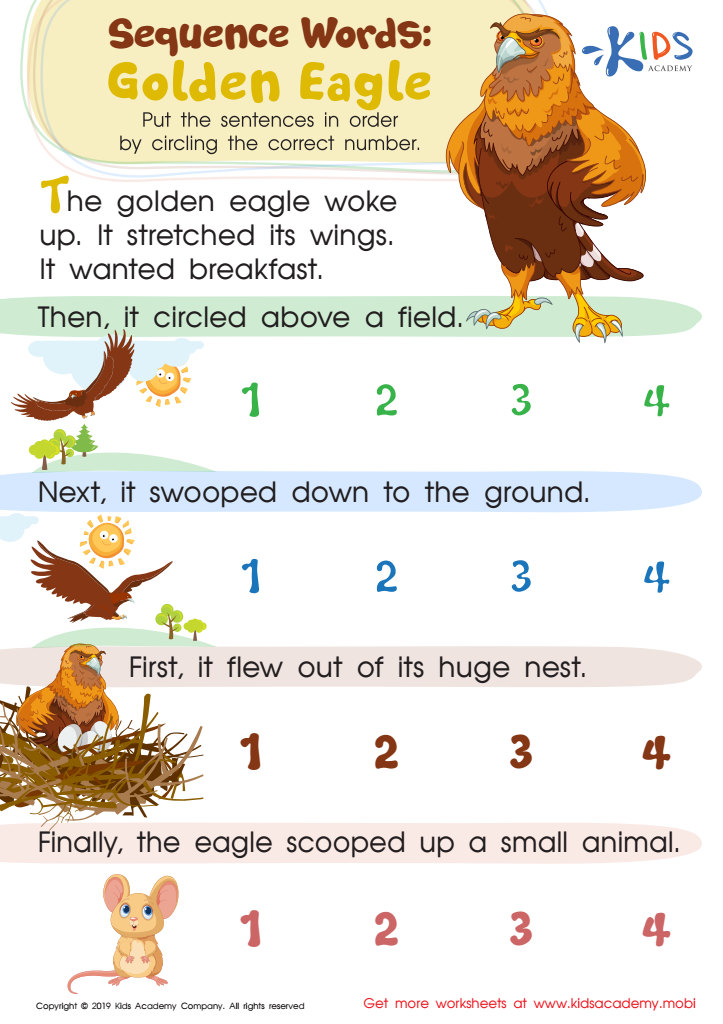
Sequence Word Eagle Worksheet
 Assign to My Students
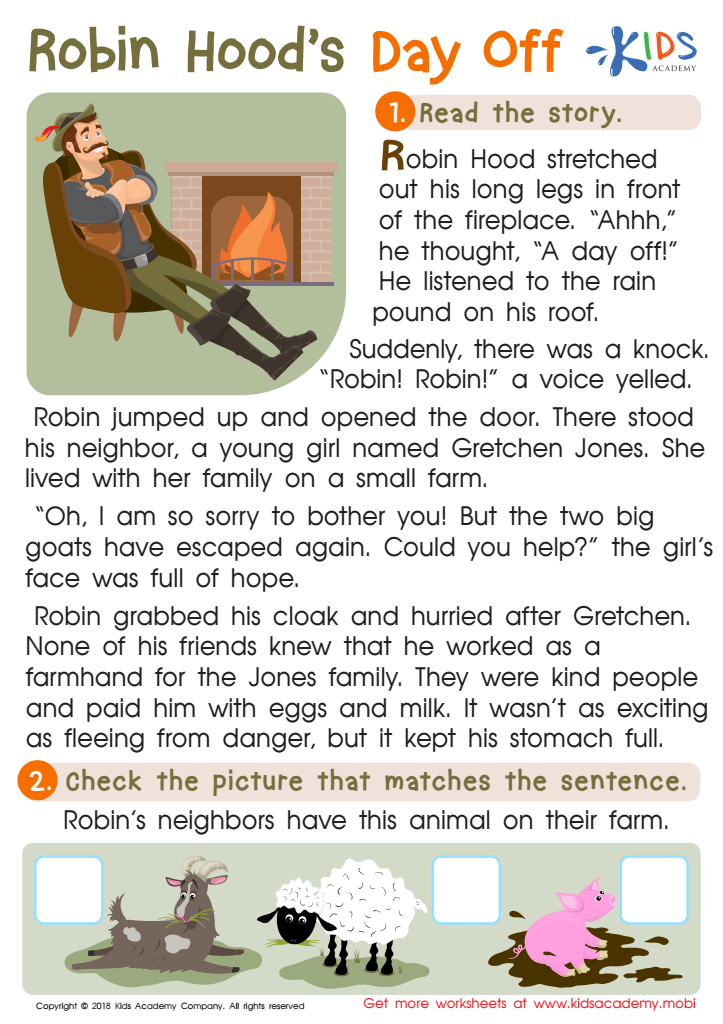
Robin Hood's Day Off Worksheet
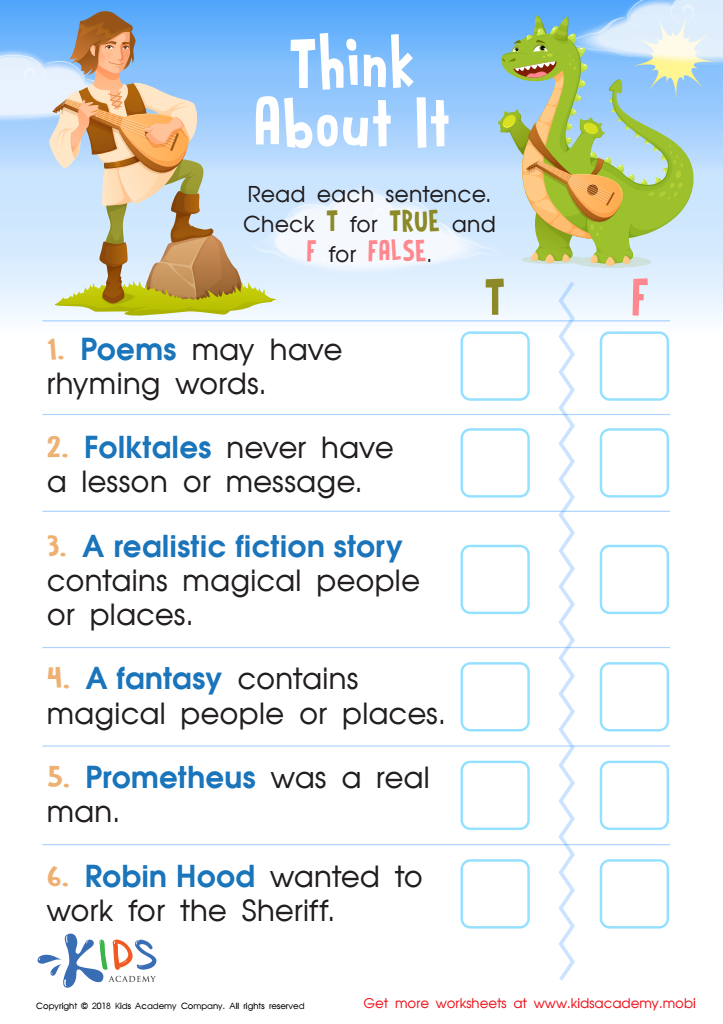
Think About It: Assessment Worksheet






Parents and teachers should prioritize Logical Reasoning in a Grade 3 reading curriculum because it builds foundational skills crucial for academic and real-life problem-solving. At this stage, children are transitioning from learning to read to reading to learn. Logical reasoning helps them make connections between different pieces of information, improves comprehension, and fosters critical thinking.
First, strong logical reasoning enhances reading comprehension. When children can logically process what they read, they better understand story structures, character motivations, and narratives, leading to a deeper grasp of the material. This skill subsequently facilitates better performance not just in language arts, but across all subjects, including math and science.
Second, early development of logical reasoning sets up lifelong benefits. It encourages children to think analytically, make predictions, and draw conclusions based on evidence. These skills are central to effective decision-making and problem-solving, crucial for personal and professional success.
Lastly, logical reasoning cultivates independent thinking. Encouraging students to ask "why" and "how" fosters curiosity and a quest for understanding, laying the groundwork for self-directed learning. By focusing on these skills in Grade 3, parents and teachers help children develop a robust intellectual toolkit that will serve as a cornerstone for future educational and life challenges.