Critical Thinking Normal Grade 3 Reading Fiction Worksheets
5 filtered results
Difficulty Level
Grade
Age
-
From - To
Subject
Activity
Standards
Enhance your third grader's comprehension skills with our engaging Critical Thinking Normal Grade 3 Reading Fiction Worksheets. Designed specifically for young learners, these worksheets encourage students to analyze, evaluate, and interpret fictional texts. By tackling thought-provoking questions and activities, children will develop their ability to think critically while cultivating a love for reading. Our resources include diverse short stories and tailored exercises that promote discussions and imaginative responses. Perfect for classroom or home learning, these worksheets empower educators and parents to guide students in strengthening their reading and reasoning skills, setting the foundation for future academic success. Explore our collection today!
Favorites
With answer key
Interactive
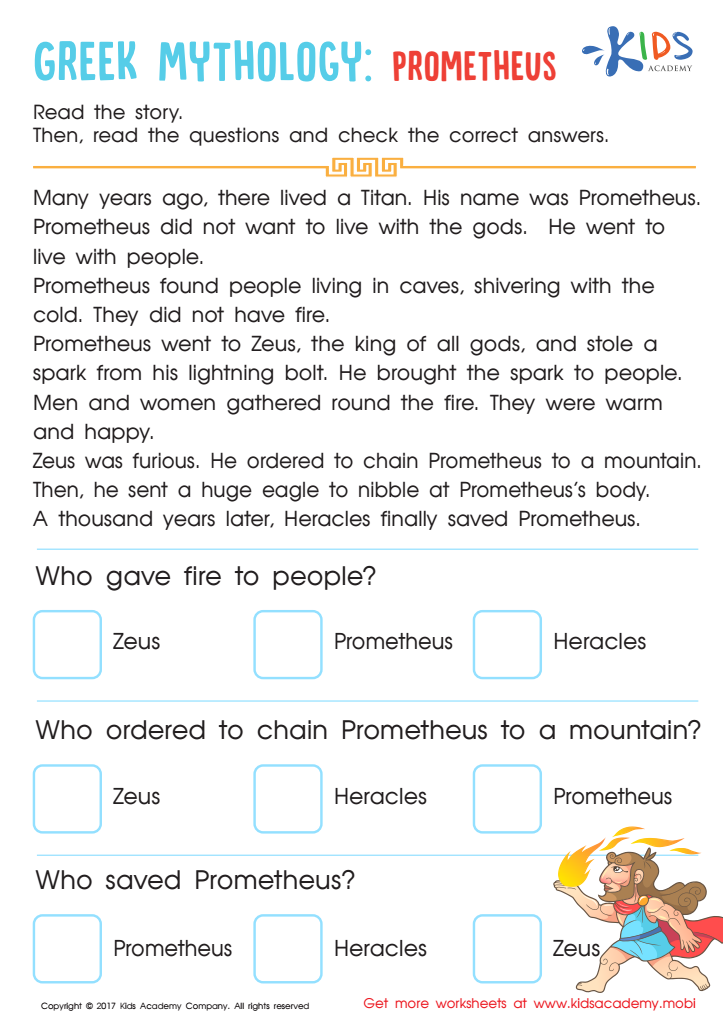
Prometheus Story Worksheet
Help kids improve reading comprehension with this Prometheus story worksheet! Learn about this classic mythological tale and break down the plot into understandable parts. By doing so, children will understand the story each step of the way.
 Assign to My Students
Prometheus Story Worksheet
Worksheet
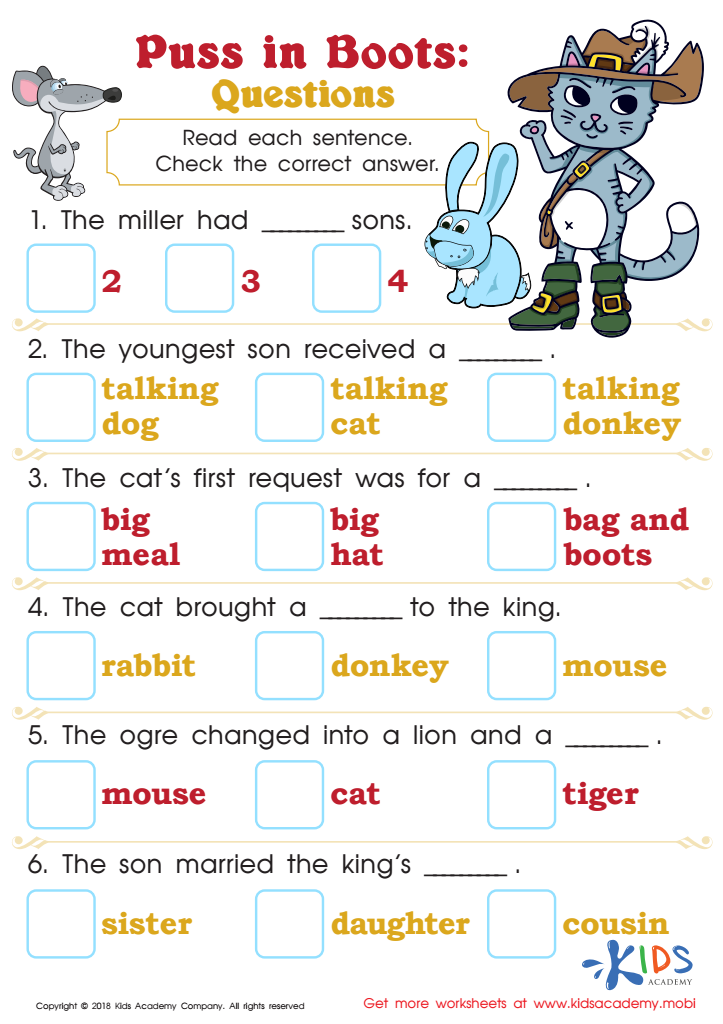
Puss in Boots: Questions Worksheet
This worksheet contains questions to be checked with boxes for the correct answers. It also has pictures of animals; ask kids to identify them, noting the objects with them. Read the questions and have kids provide the answers. Help them check the boxes for the right answer.
Puss in Boots: Questions Worksheet
Worksheet
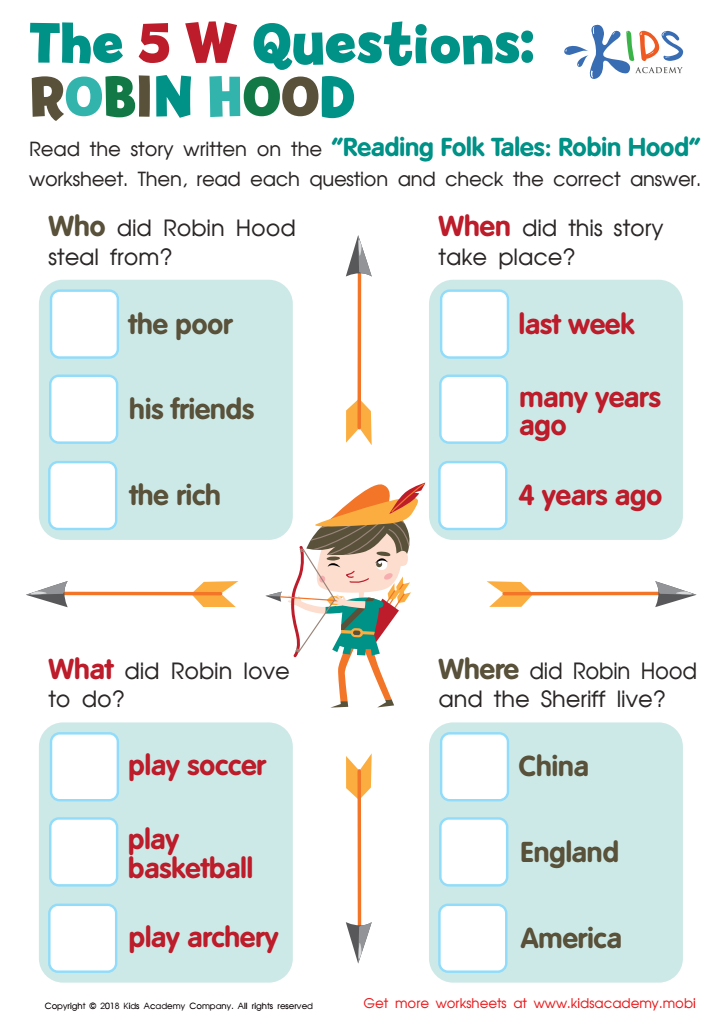
The 5 W Questions: Robin Hood Worksheet
Before embarking on this Robin Hood adventure, ensure your child reads and comprehends the 'Reading Folk Tales: Robin Hood' worksheet. Have them consider the story's lessons, and observe the details. Read the questions and help your kids select the correct answers.
The 5 W Questions: Robin Hood Worksheet
Worksheet
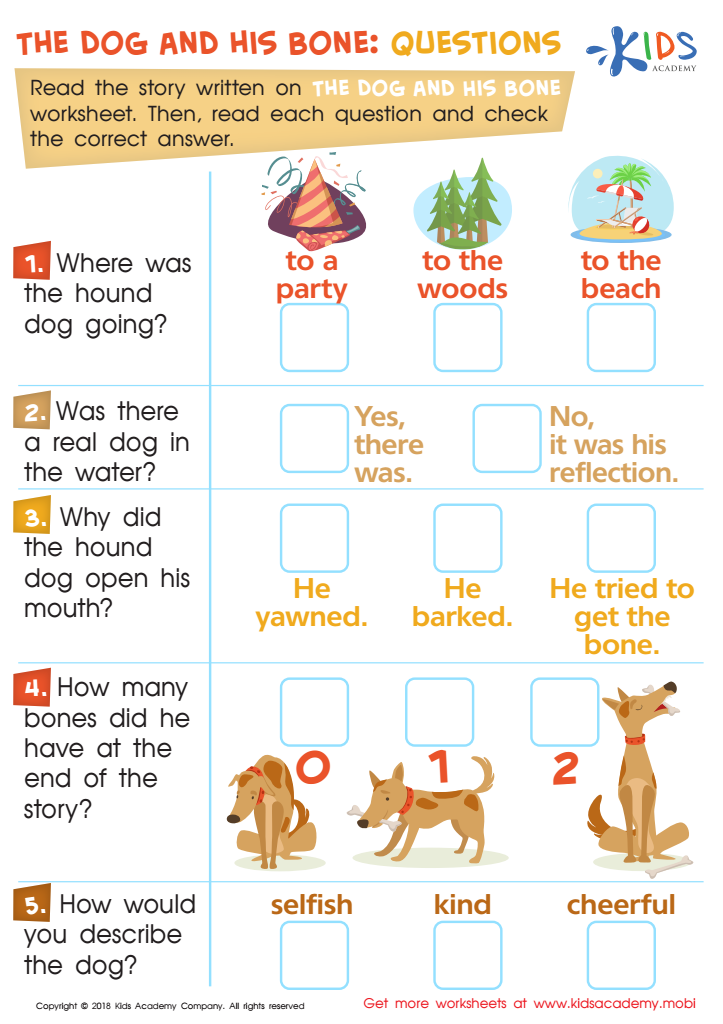
The Dog and His Bone: Questions Worksheet
Read the story of The Dog and His Bone to your child and help them understand it. Have them read it aloud if possible. Then, read the five questions on the worksheet and guide them to select the correct answers.
The Dog and His Bone: Questions Worksheet
Worksheet
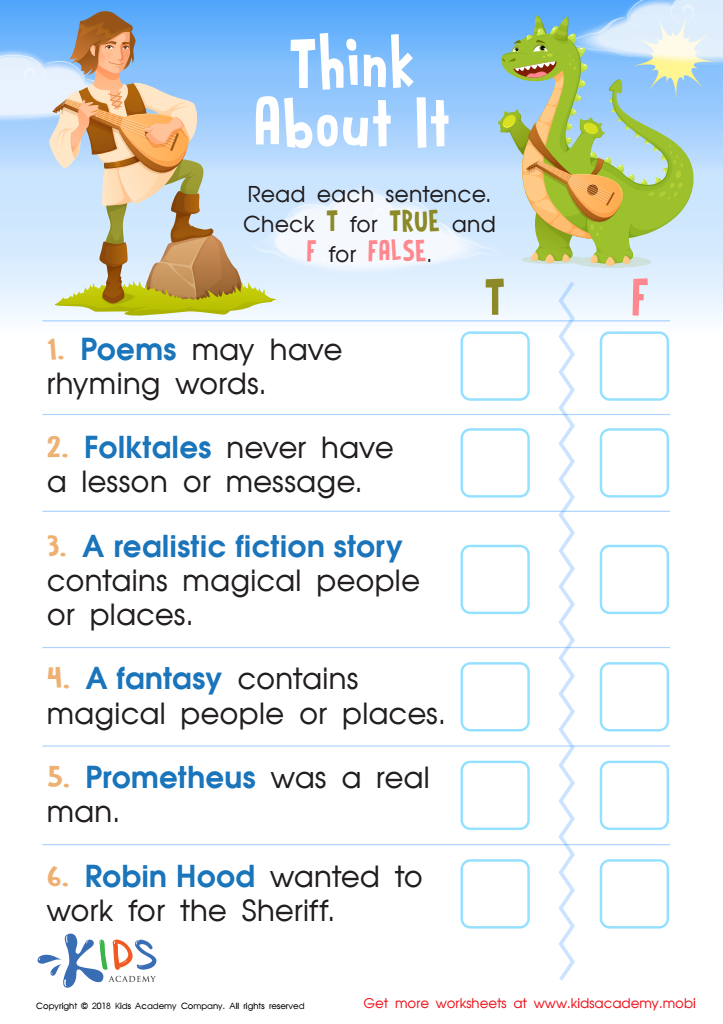
Think About It: Assessment Worksheet
Reading is a fun and important way to learn. Help your students become better readers with this simple yet colorful worksheet. Read each sentence aloud, then have them read it by themselves. Ask them to check T for True and F for False. It's a great way to practice their reading skills!
Think About It: Assessment Worksheet
Worksheet
Join Kids Academy for Free
Who is primarily going to use this learning content?








Critical thinking is essential for children, especially at the Grade 3 level, as they navigate fiction reading. At this stage, students begin to move beyond basic comprehension and are encouraged to analyze characters, plot, and themes, fostering discussions that deepen understanding. Parents and teachers should care about fostering critical thinking in fiction for several reasons.
Firstly, it promotes engagement. When children think critically about a story, they become active participants in their learning, asking questions, making predictions, and connecting the text to real-life experiences. This not only enhances comprehension but also develops a love for reading.
Secondly, critical thinking skills help children understand different perspectives and develop empathy. As they analyze characters’ motives and actions, they learn to appreciate diversity in thoughts and experiences, which is crucial in today's globalized society.
Lastly, fostering critical thinking through fiction prepares students for future academic challenges. It equips them with problem-solving skills and encourages creativity, both indispensable in higher education and life beyond the classroom.
In summary, promoting critical thinking in Grade 3 fiction reading nurtures independent learners, empathetic individuals, and well-rounded problem solvers, laying a strong foundation for their educational journey.