Weather identification Normal World Around Us Worksheets
3 filtered results
-
From - To
Explore our engaging "Weather Identification: Normal World Around Us Worksheets" designed for early learners! These printable resources help children recognize and understand different weather conditions while enhancing their vocabulary and observational skills. Featuring colorful images and interactive activities, these worksheets encourage students to identify sunny, rainy, snowy, and cloudy days, helping them connect classroom learning to the world around them. Perfect for teachers and parents, these activities promote critical thinking and creativity, making weather education fun and accessible. Download now and inspire your students to observe, classify, and appreciate the changing weather patterns in their environment!
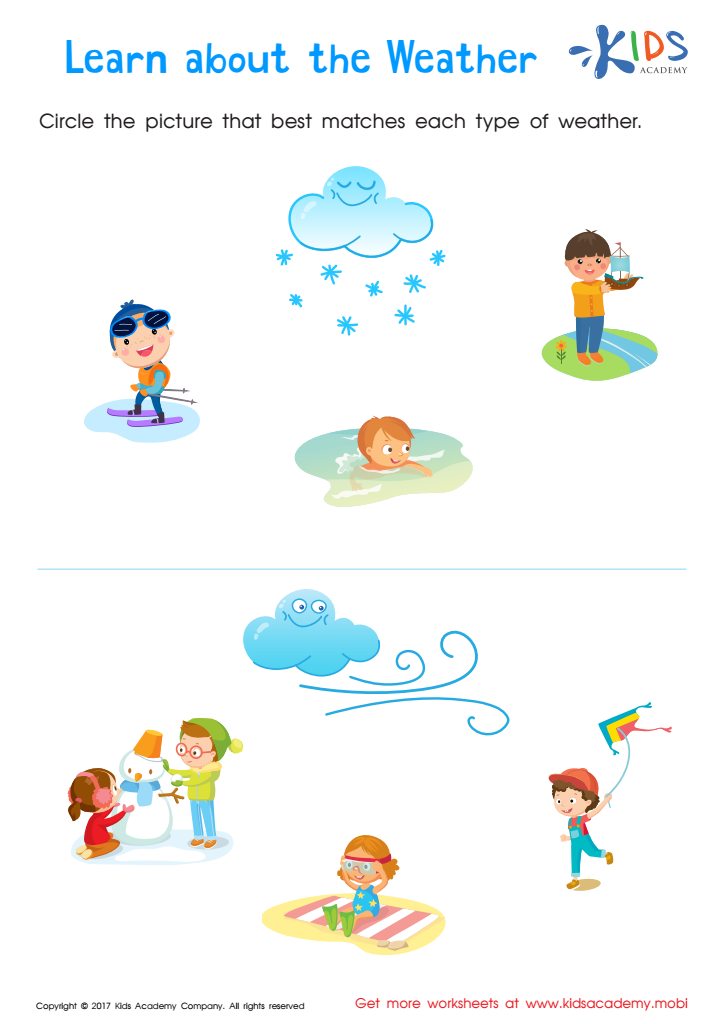
About the Weather Printable
 Assign to My Students
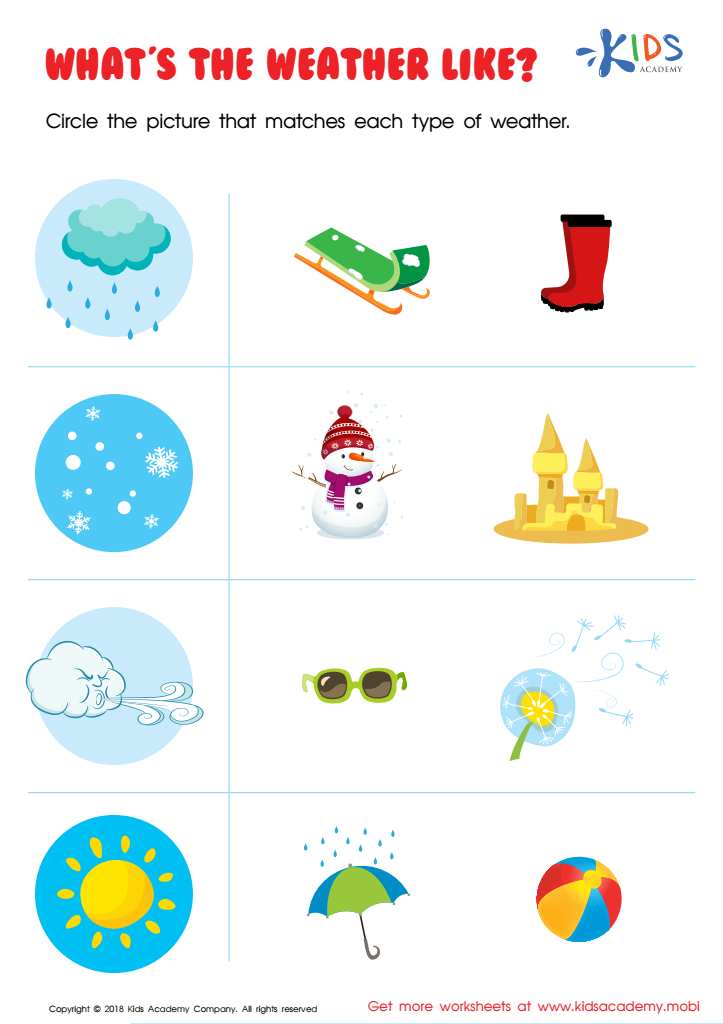
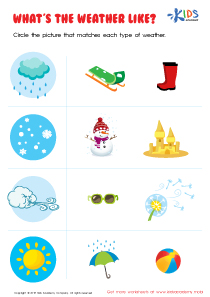
What's the Weather Like? Worksheet
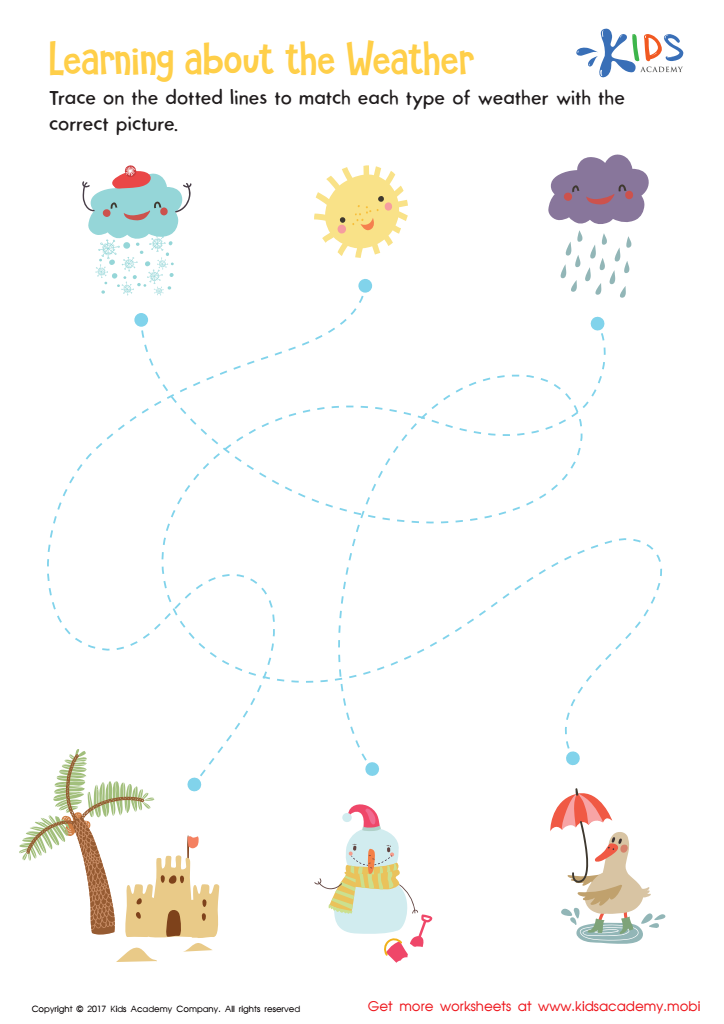








Understanding weather identification is essential for both parents and teachers, as it equips children with valuable skills to navigate their environment safely and effectively. Learning about various weather conditions—like rain, snow, thunderstorms, and extreme temperatures—enables children to dress appropriately and plan outdoor activities, fostering independence and self-care.
Moreover, weather identification is integral to fulfilling science curriculum standards. Engaging students in discussions about weather patterns cultivates critical thinking and observational skills. It encourages children to ask questions, make predictions, and understand the natural world around them, which enhances their scientific literacy.
Additionally, awareness of weather phenomena promotes safety and preparedness. By teaching students about severe weather alerts, they can learn how to respond appropriately, ultimately reducing risks during storms or natural disasters. This knowledge also extends to families, creating a sense of community as they can discuss and share information about local weather patterns.
Lastly, weather discussions can enrich children's understanding of ecosystems and climate connections, building a foundation for environmental stewardship. By prioritizing weather education, parents and teachers play a crucial role in nurturing informed and responsible future citizens who respect and protect their environment.