Letter G worksheets activities for Ages 3-5
1 filtered results
-
From - To
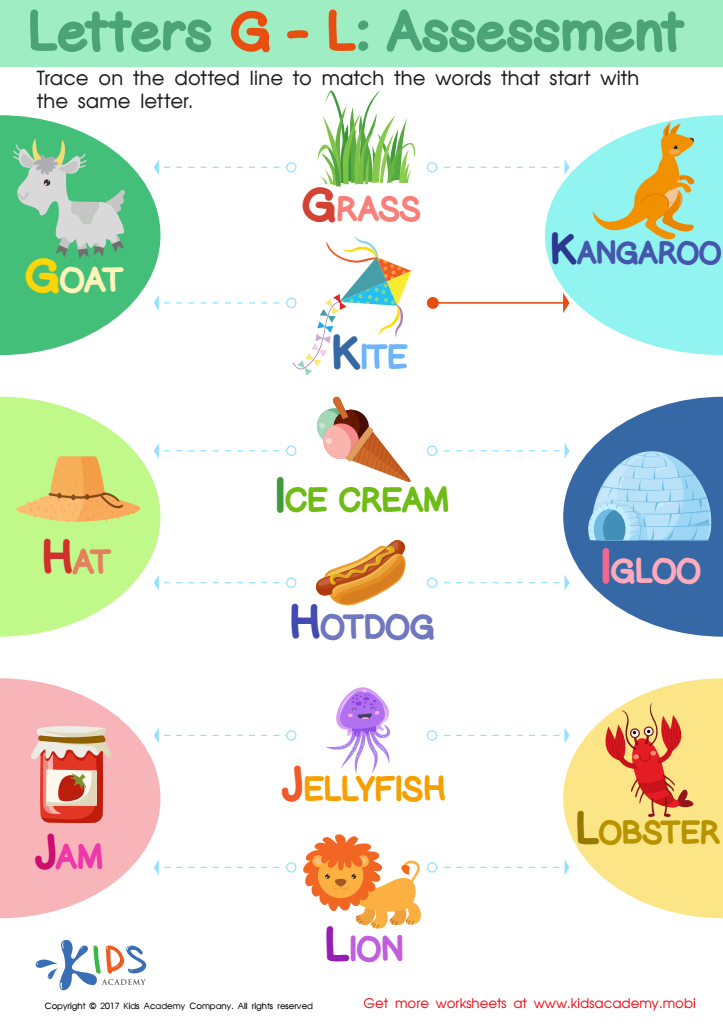
Letters G-L Worksheet
 Assign to My Students







Letter G worksheets activities are a cornerstone in early childhood education, playing an essential role in facilitating young learners' understanding and mastery of the alphabet. Focusing on the letter G, these activities are not only useful but vital for developing foundational literacy skills. Here are several reasons why Letter G worksheets activities are beneficial:
Promotes Letter Recognition: One of the primary advantages of Letter G worksheets activities is their ability to help children recognize and distinguish the letter G from other letters in the alphabet. This recognition is crucial for reading and writing fluency, as it lays the groundwork for decoding words and sentences.
Enhances Phonemic Awareness: These activities are instrumental in teaching the sounds associated with the letter G. By engaging in worksheet tasks, children learn to associate the letter with its sounds, an essential skill for phonemic awareness. This understanding facilitates the blending and segmenting of sounds to form words, a critical component of early reading skills.
Improves Fine Motor Skills: Completing Letter G worksheets involves a variety of tasks that require precise hand movements, such as tracing, coloring, and writing. These activities support the development of fine motor skills, which are important for performing everyday tasks and for writing legibly.
Supports Vocabulary Growth: Letter G worksheets often include activities that introduce children to words starting with the letter G. This not only reinforces the letter-sound connection but also expands a child’s vocabulary, supporting language development and comprehension skills.
Engages Through Creativity: Many Letter G worksheets activities incorporate creative elements, such as drawing or crafting projects related to words that start with G. This not only makes learning enjoyable but also helps in retaining the information taught.
In conclusion, Letter G worksheets activities are a multifaceted educational tool. They effectively support letter recognition, phonemic awareness, fine motor skills, vocabulary growth, and creativity, making them an indispensable part of early literacy programs.








