Counting worksheets activities for Ages 4-6
2 filtered results
-
From - To
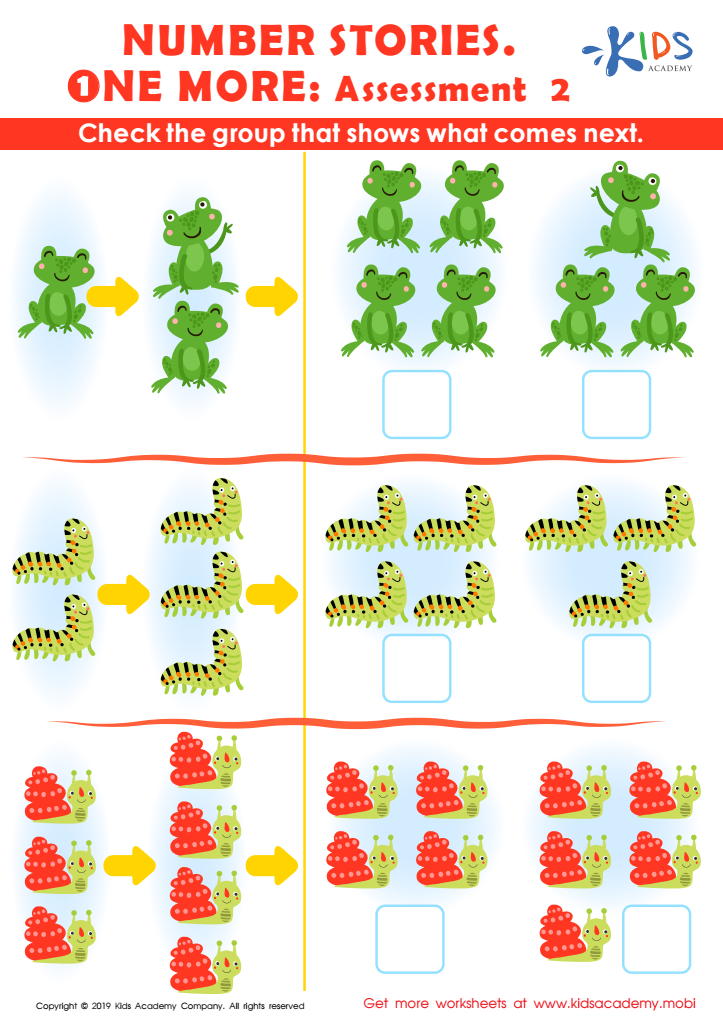
Number Stories One More – Assessment 2 Worksheet
 Assign to My Students
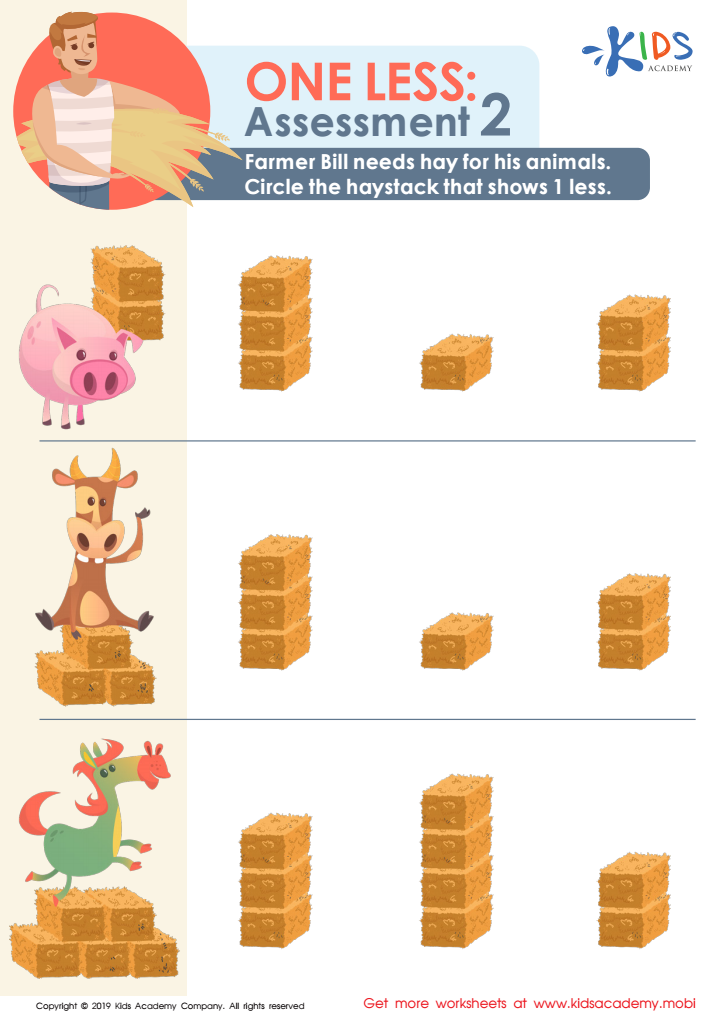
One Less: Assessment 2 Worksheet







.jpg)
Counting worksheets activities are an invaluable resource for both educators and parents aiming to boost the numerical skills of young learners. These activities are designed with the dual purpose of making learning engaging and enhancing the foundational arithmetic abilities that are crucial for a child's academic and everyday life success. Let's delve into why these activities are so useful.
Firstly, counting worksheets activities serve as an excellent tool for introducing and reinforcing the concept of numbers and counting. They transform abstract concepts into tangible tasks that children can interact with, thereby making the learning process much more relatable and easier to understand. Whether it's counting objects, connecting dots, or filling in missing numbers, these activities help solidify the basic principles of mathematics in a fun and enjoyable manner.
Secondly, these worksheets are incredibly versatile, catering to a wide range of skill levels. From simple counting exercises for beginners to more complex tasks for advanced learners, counting worksheets can be adapted to meet the individual needs of each child. This tailored approach ensures that children are neither overwhelmed nor under-challenged, promoting an optimal learning experience.
Moreover, counting worksheets activities encourage independent learning. As children work through these exercises, they develop critical thinking and problem-solving skills. They learn to trust their judgment and abilities, which boosts their confidence in handling mathematical tasks. This independence in learning not only fosters a positive attitude towards mathematics but also instills a sense of achievement upon completion of each worksheet.
Lastly, these activities offer a practical way to assess a child's understanding and progress. By observing how a child interacts with the worksheets, educators and parents can identify areas of strength and those requiring further attention. This ongoing assessment is crucial for providing timely support and intervention where necessary.
In conclusion, counting worksheets activities are a multifaceted educational tool. They make learning accessible, enjoyable, and effective, laying a solid foundation for future mathematical learning and everyday life skills.








