Lowercase/Small Letters worksheets activities for Ages 4-6
2 filtered results
-
From - To
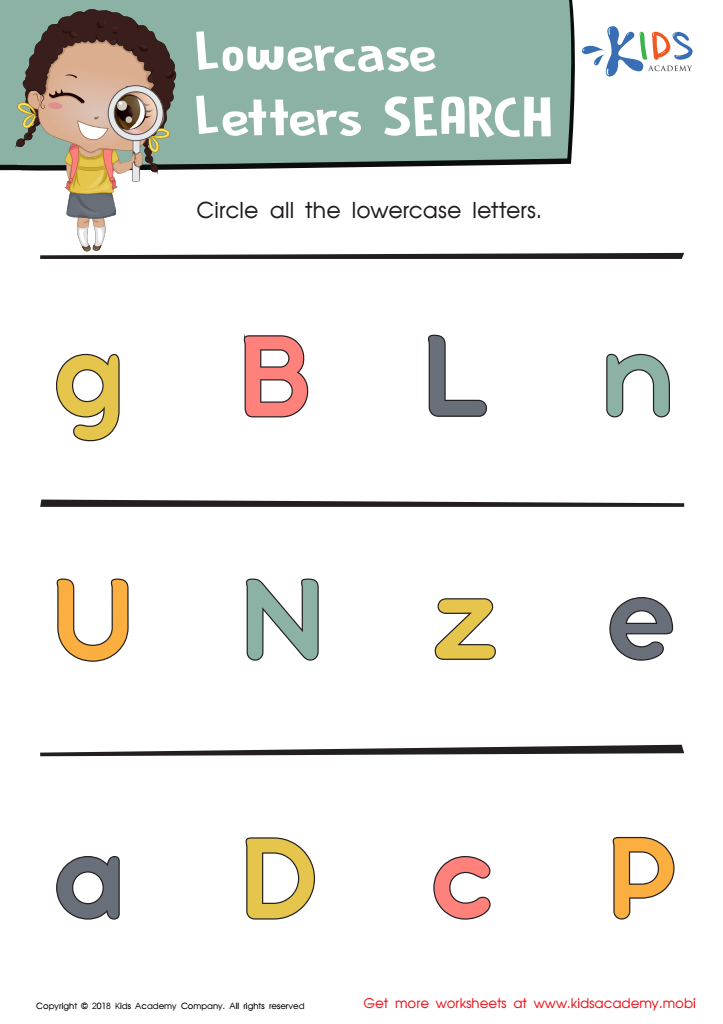
Lowercase Letters Search: Assessment Worksheet
 Assign to My Students
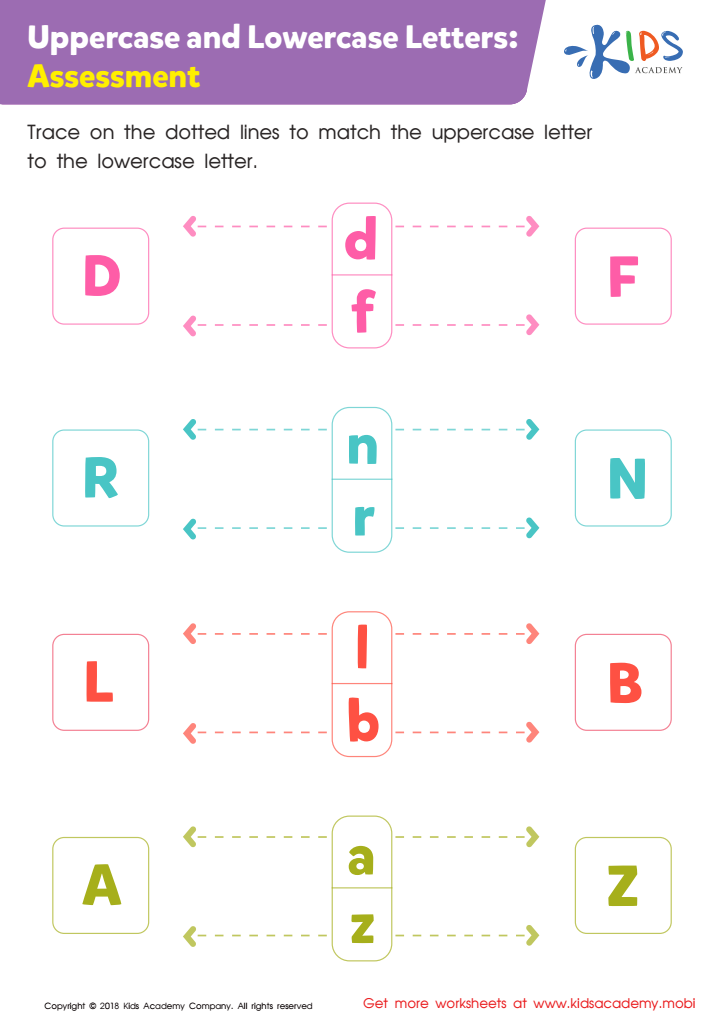
Uppercase and Lowercase Letters: Assessment Worksheet







Lowercase/Small Letters worksheets activities are an invaluable resource in the foundational stages of literacy development for children. Engaging in these specific worksheet activities can significantly enhance a child's ability to recognize, understand, and ultimately utilize lowercase letters in reading and writing. The emphasis on lowercase letters is crucial as they constitute the majority of the print we encounter in texts, making their mastery essential for fluent reading and effective communication.
Firstly, Lowercase/Small Letters worksheets activities are designed to improve letter recognition. Through repetitive and varied exercises, such as matching, tracing, and identifying letters in different fonts and contexts, children become familiar with the unique shapes and curves of each lowercase letter. This familiarity is key to developing quick and automatic letter recognition, which is a foundational skill for reading fluency.
Moreover, these worksheet activities also enhance fine motor skills and pencil control. Tracing and writing lowercase letters require children to practice precise movements and control over their writing instruments, skills that are transferable to numerous other learning areas and everyday tasks.
Another significant benefit is the boost in confidence that children gain from mastering these worksheets. As they progress through the activities and notice their own improvement, their self-esteem and motivation to engage in further learning activities increase. This positive feedback loop is crucial in the early stages of education, where attitudes towards learning are being formed.
Furthermore, Lowercase/Small Letters worksheets activities often incorporate elements of fun and creativity, such as coloring or drawing around letter shapes, which can make learning enjoyable and reduce any resistance to sitting down and focusing on educational tasks.
In conclusion, the focused practice provided by Lowercase/Small Letters worksheets activities is invaluable in equipping children with the skills they need for successful reading and writing. These activities not only enhance letter recognition and fine motor skills but also play a crucial role in building confidence and fostering a positive attitude towards learning.








