Addition & Subtraction worksheets activities for Ages 5-8 - Page 2
26 filtered results
-
From - To
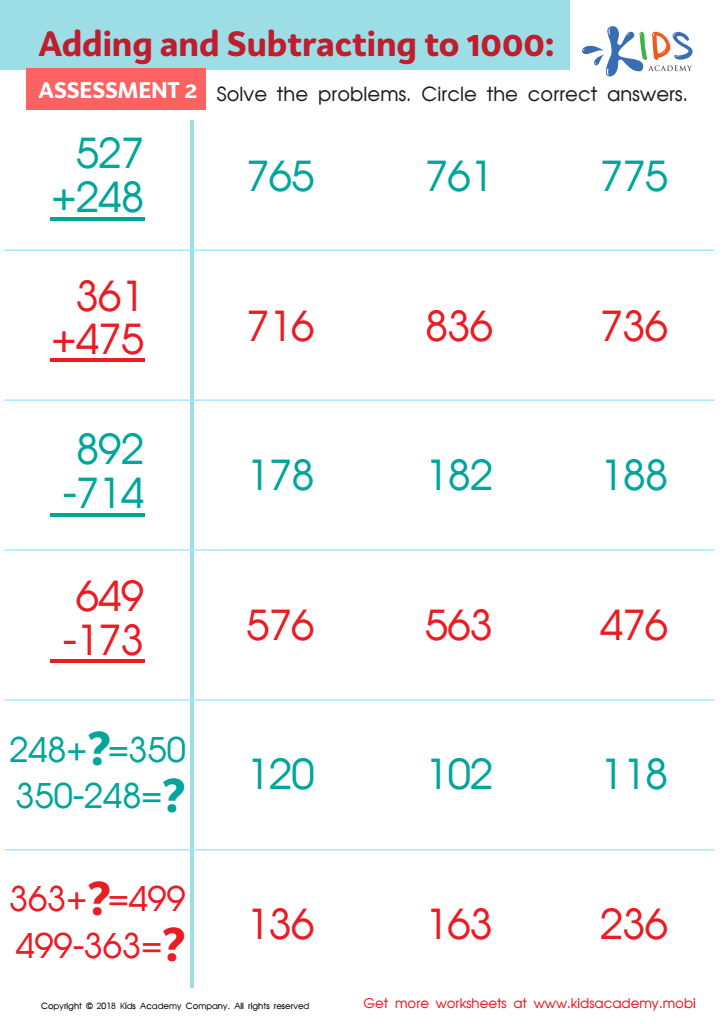
Adding and Subtracting to 1 Worksheet: Assessment 2
 Assign to My Students
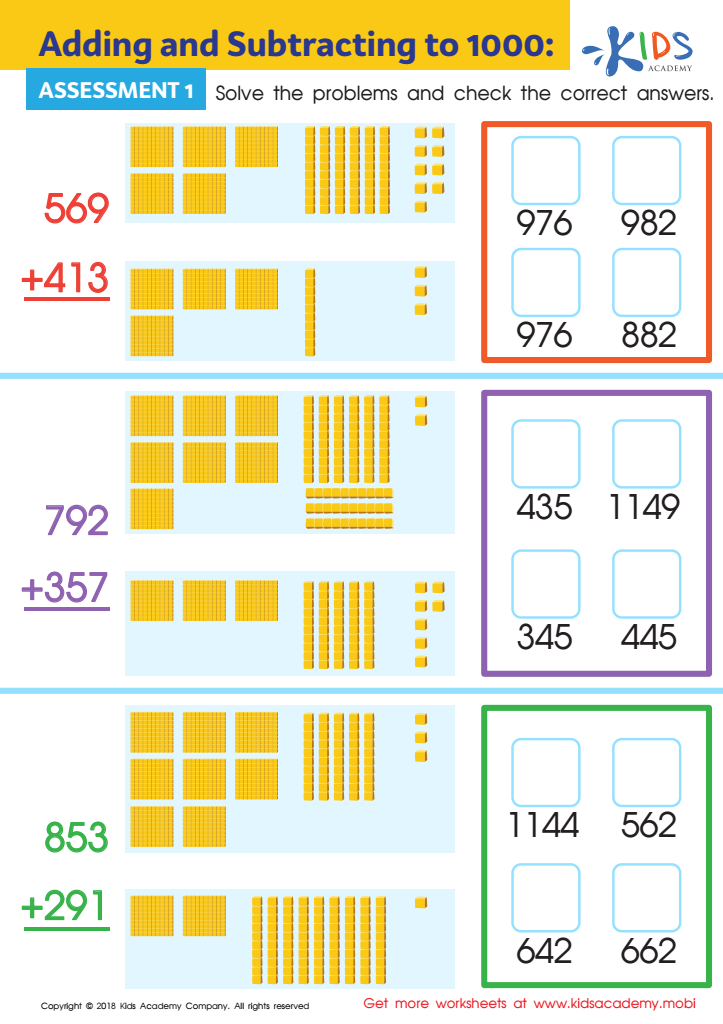
Adding and Subtracting to 1 Worksheet: Assessment 1








Parents and teachers should prioritize addition and subtraction activities for children aged 5-8 because these foundational math skills are crucial for overall academic success and cognitive development. At this age, children are in a key stage of learning where they grasp basic mathematical concepts that will support future problem-solving and critical-thinking abilities. Engaging in addition and subtraction activities helps to build number sense, making it easier for children to understand more complex mathematical operations later on.
Moreover, these activities promote mental agility and enhance their capacity for logical reasoning. Through hands-on activities, games, and interactive experiences, children develop a deeper understanding of concepts like quantity, equivalence, and numerical relationships. This not only makes math more enjoyable but also helps to reduce math anxiety in the future.
Additionally, collaborative activities encourage social skills, teamwork, and effective communication. When parents and teachers integrate addition and subtraction into everyday settings, such as cooking or shopping, they create real-world connections that reinforce the relevance of math in daily life. Ultimately, fostering a strong foundation in these essential skills can help set children up for long-term academic achievement, self-confidence, and a positive attitude toward learning in general.








