Tracing Shapes worksheets activities for 9-Year-Olds
2 filtered results
-
From - To
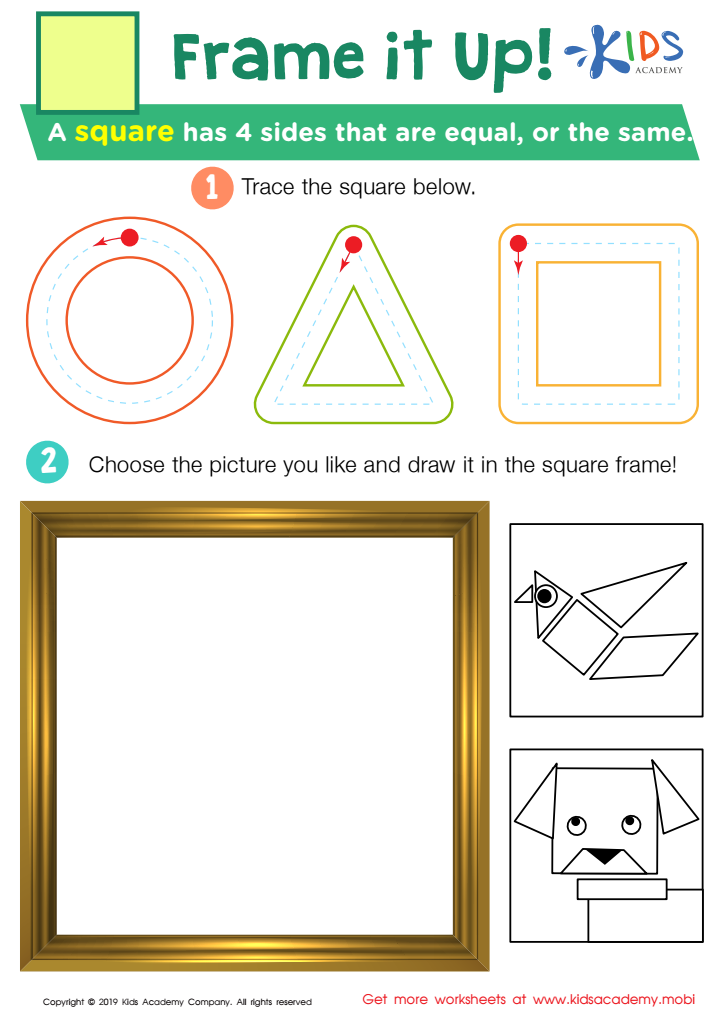
Frame it Up Worksheet
 Assign to My Students
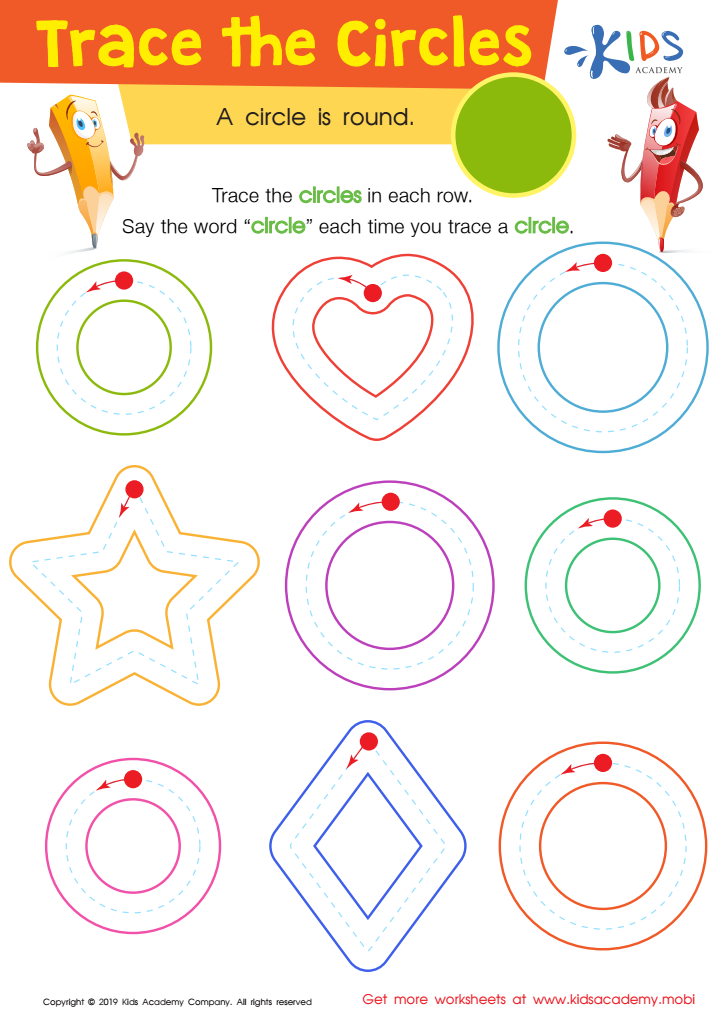
Trace The Circles Worksheet








Tracing Shapes worksheets activities play a significant role in children's early development and learning process. These activities are not just about guiding a pencil around a predefined path; they are carefully designed exercises that nurture a plethora of skills essential for young learners. Let’s delve into why Tracing Shapes worksheets activities are incredibly useful.
First and foremost, Tracing Shapes worksheets activities enhance fine motor skills. The intricate movements required to follow the contours of various shapes help children develop control over their hand muscles. This improved dexterity is crucial, not only for handwriting but also for everyday tasks such as tying shoelaces or buttoning clothes.
Additionally, these activities serve as a foundation for letter and number recognition. Many letters and numbers consist of shapes or parts of shapes. By tracing circles, squares, triangles, and other geometrical figures, children become familiar with the curves and lines that make up letters and numbers, easing the transition into reading and writing.
Spatial awareness is another key benefit of Tracing Shapes worksheets activities. As children learn to navigate around the edges of shapes, they gain an understanding of concepts such as inside and outside, boundary, and orientation. This spatial understanding is critical in math and science learning, as it helps in grasping more complex concepts later on.
Moreover, Tracing Shapes worksheets activities boost cognitive skills. Following a path requires concentration and attention to detail, fostering focus and memory retention. These cognitive abilities are vital across all areas of learning and development.
Lastly, these activities offer an opportunity for creative expression. Once children are comfortable with tracing, they can start to experiment with colors and patterns, turning simple shapes into unique pieces of art. This not only nurtures creativity but also enhances self-esteem and provides a sense of achievement.
In summary, Tracing Shapes worksheets activities are an invaluable tool in early childhood education. They support fine motor skills, letter and number recognition, spatial awareness, cognitive development, and creativity, making them a fundamental component of learning through play.








