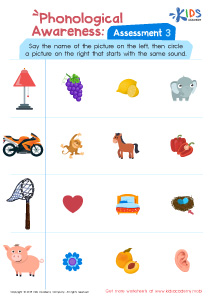
Vowels and Consonants Worksheets for Ages 3-7 - Page 2
28 filtered results
-
From - To
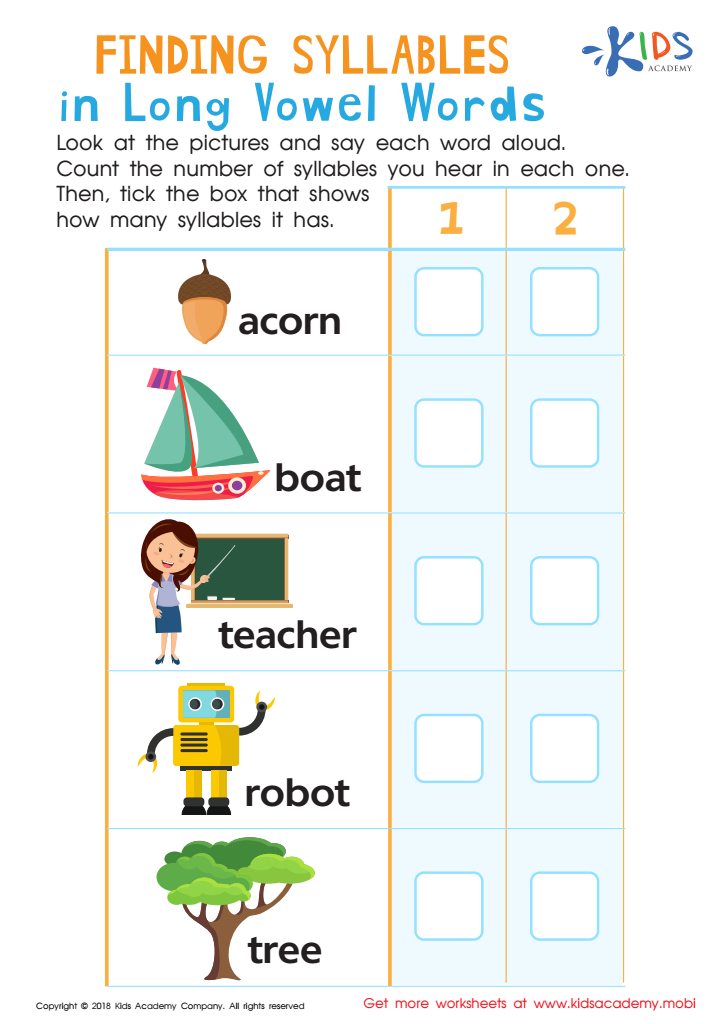
Finding Syllables in Long Vowel Words Worksheet
 Assign to My Students
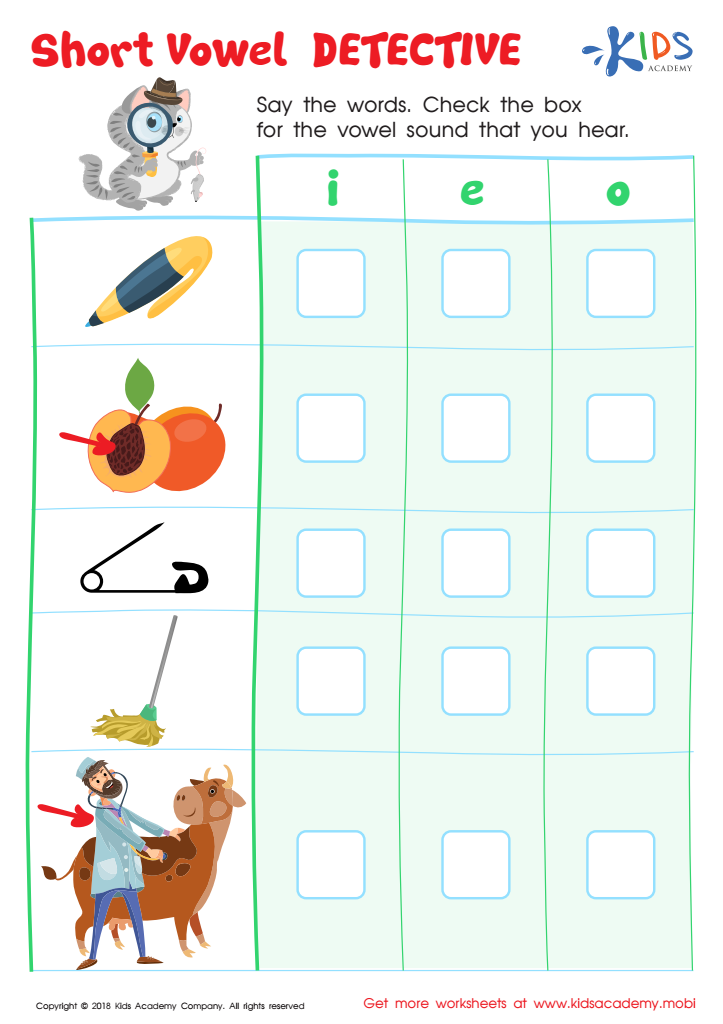
Short Vowel Detective Worksheet
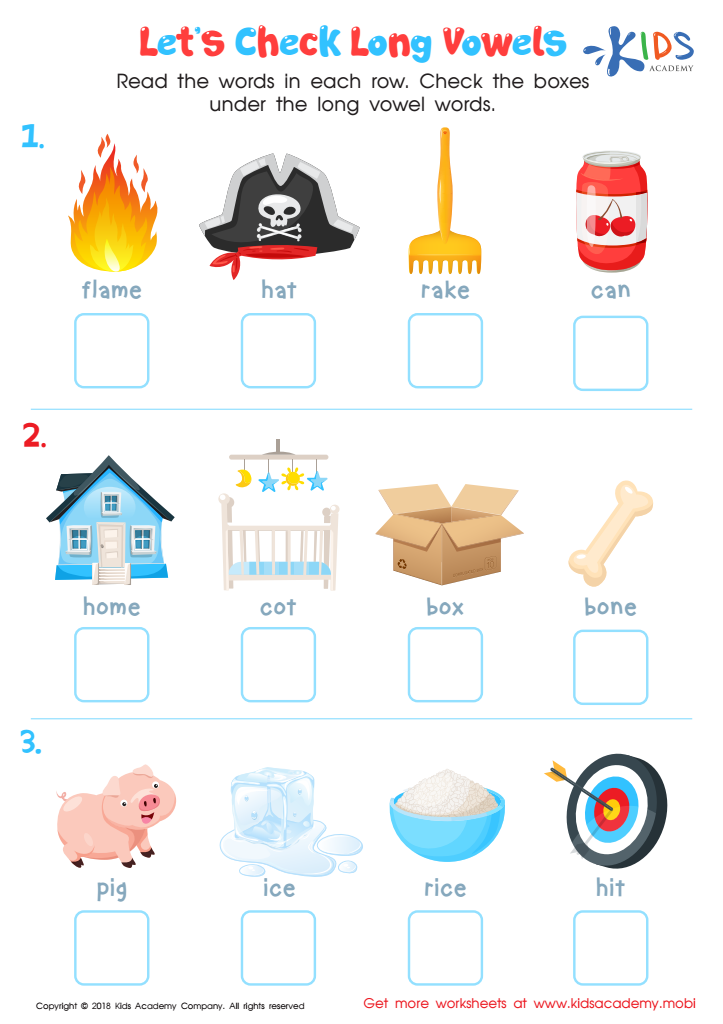
Let's Check Long Vowels: Assessment Worksheet
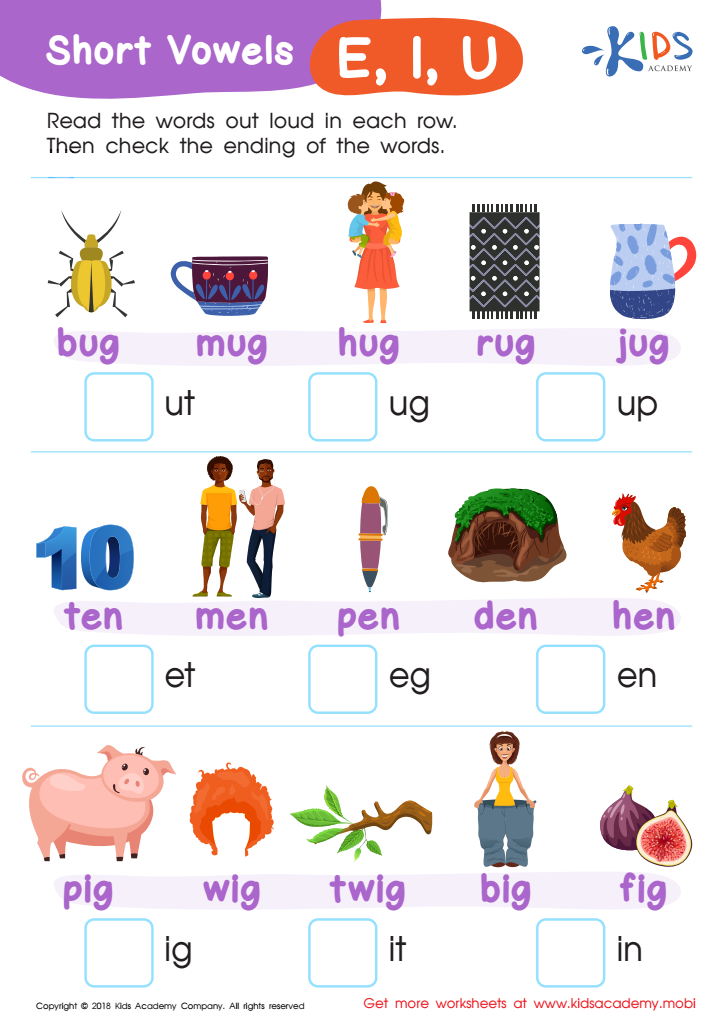
Short Vowels /e/, /i/, and /u/ Worksheet



Understanding vowels and consonants is fundamental to early childhood literacy and language development. For children aged 3 to 7, recognizing the difference between vowels (a, e, i, o, u) and consonants (the other letters) is essential for several reasons.
Firstly, mastering these phonetic components builds the foundation for reading and writing skills. Children learn to decode words by understanding which letters are vowels and which are consonants, allowing them to sound out words, thus improving their reading fluency.
Secondly, early exposure to these concepts fosters better oral language skills. As children learn to identify and use vowels and consonants, they gain a deeper understanding of how words function, which enhances their vocabulary and supports effective communication.
Moreover, activities involving vowels and consonants can be engaging and playful, promoting a love for learning. Games, songs, and rhymes centered on these phonetic elements can make language acquisition enjoyable, which is crucial at this stage.
Ultimately, parents and teachers play a pivotal role in nurturing these skills, as they contribute significantly to a child's long-term success in literacy, ultimately benefiting academic achievement and overall confidence in communication.