Filters

7 filtered results

Clear all filters
Favorites
With answer key
Interactive

7 filtered results

Difficulty Level

Grade


Subject

    Introduce your little one to the magical world of reading with our engaging Two Letter Phonics Worksheets for Ages 4-6. Designed to build foundational literacy skills, these colorful and interactive worksheets help young learners identify, pronounce, and combine two-letter phonics to form simple words. Perfect for preschool and kindergarten students, each worksheet offers fun activities such as matching, tracing, and reading exercises that keep children actively learning. Foster your child's early reading confidence and watch their love for language blossom! Download now and start the phonics journey with a resource trusted by parents and educators.

    Check out this FREE Trial Lesson on Two Letter Phonics for age 4-6!

    Digraphs

    Favorites
    With answer key
    Interactive
    • 4-6
    • Interactive
    • Two Letter Phonics
    Missing Digraph: Part 2 Worksheet
    Missing Digraph: Part 2 Worksheet

    Missing Digraph: Part 2 Worksheet

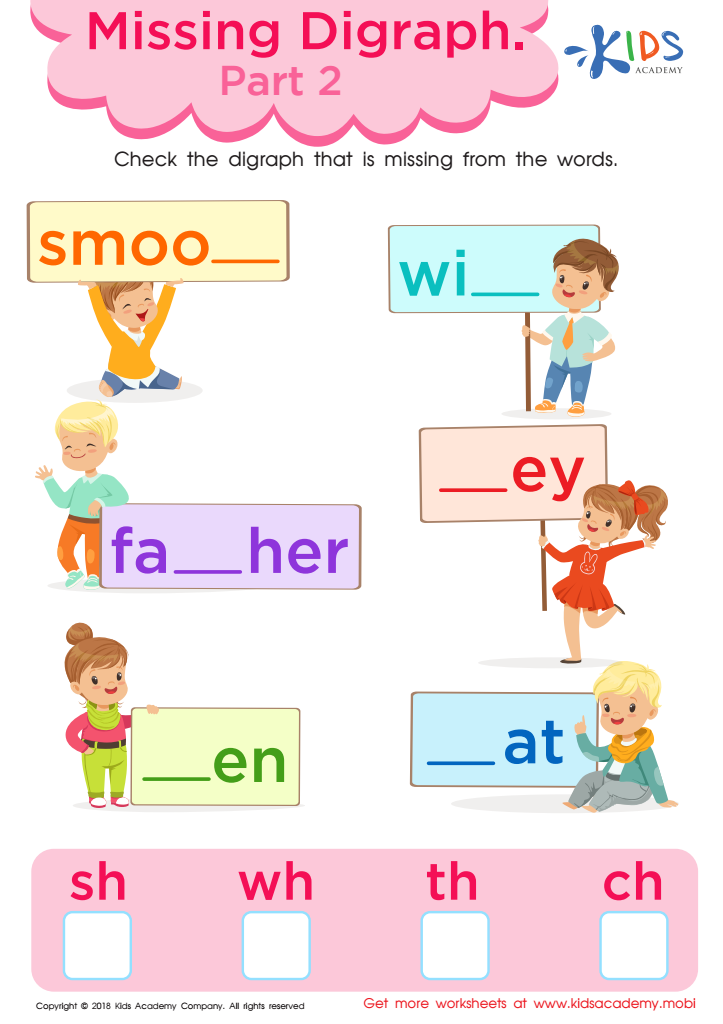
    Practice the "th" digraph with this fun worksheet from Kids Academy! See how it appears at the beginning, middle, or end of words and help learners fill in the blanks. Check if they got it right by finding the th digraph at the bottom!
    Missing Digraph: Part 2 Worksheet
    Worksheet
    Review the Blends Worksheet
    Review the Blends Worksheet

    Review the Blends Worksheet

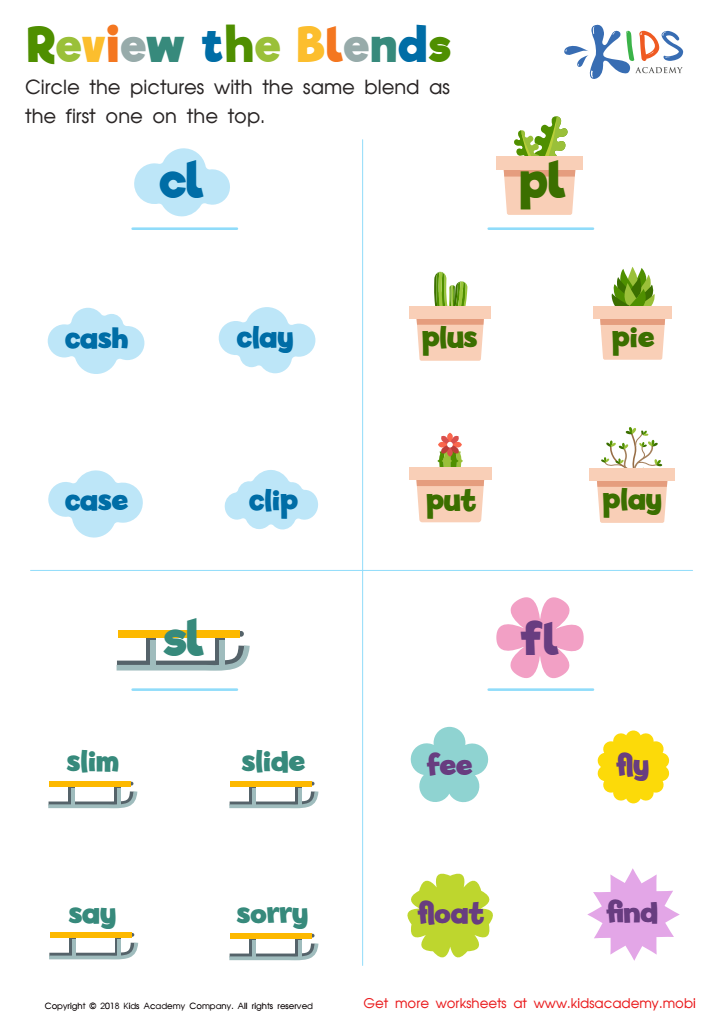
    Consonant blends are two or three consonants that make a sound when pronounced together. L-blends like cl, bl, sl, fl and 3-letter blends like str, slp are common. This phonics worksheet helps early readers identify words containing two letter L-blends. Students must circle the words then read them aloud.
    Review the Blends Worksheet
    Worksheet
    Feed the Whale Worksheet
    Feed the Whale Worksheet

    Feed the Whale Worksheet

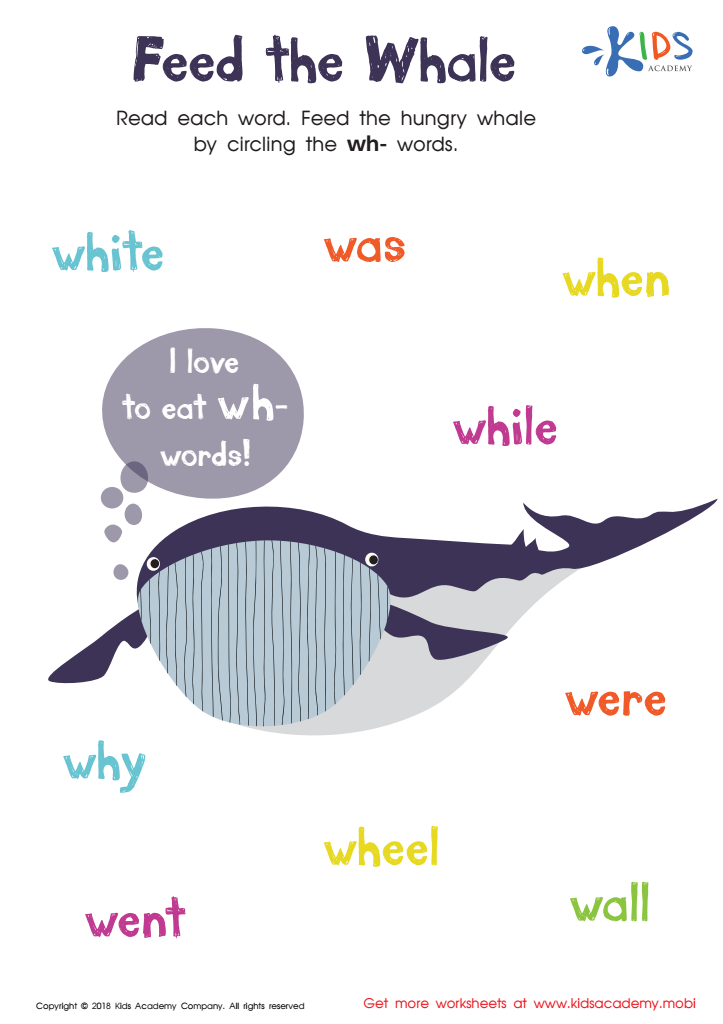
    Help your early reader build beginning consonant and blend recognition with this fun whale worksheet! They'll feed the whale wh- words, circle sight words, and build fine motor skills—all while discriminating between differently colored words.
    Feed the Whale Worksheet
    Worksheet
    Digraph Th Printable Worksheet
    Digraph Th Printable Worksheet

    Digraphs: Think About "th" Worksheet
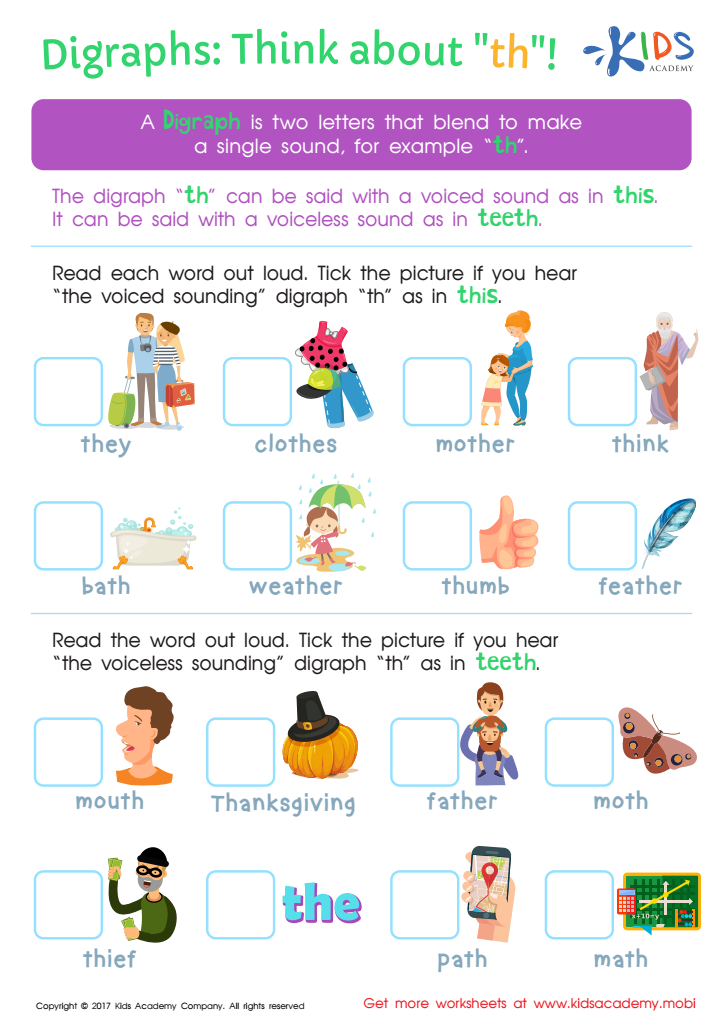
    Help your child master phonics with this illustrated digraph Th printable worksheet. It will help recognize "Th" words, differentiate voiced and voiceless sounds and understand key concepts. Use similar words while they work to reap its full benefits!
    Digraphs: Think About "th" Worksheet
    Worksheet
    Consonant Blend Dr and Tr Printable Worksheet
    Consonant Blend Dr and Tr Printable Worksheet

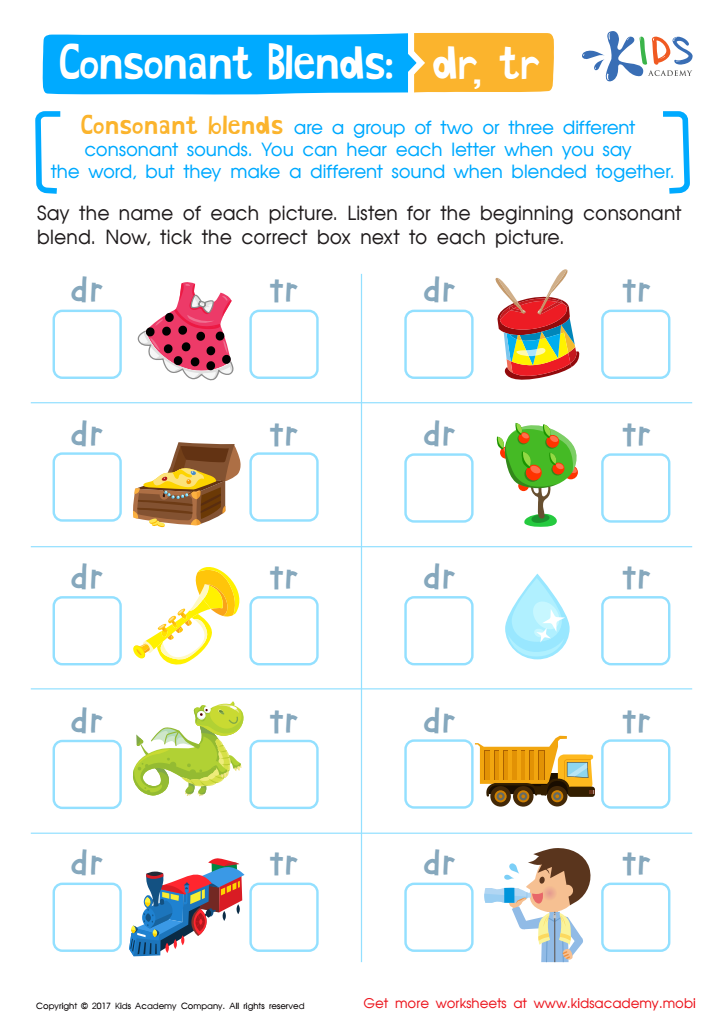
    Consonant Blends: "Dr" and "Tr" Printable
    Pictures of the words provide a visual cue, and sound-outs help with auditory cues.
    Consonant Blends: "Dr" and "Tr" Printable
    Worksheet
    Consonant Blends Pl, Cl, and Sl Printable Worksheet
    Consonant Blends Pl, Cl, and Sl Printable Worksheet

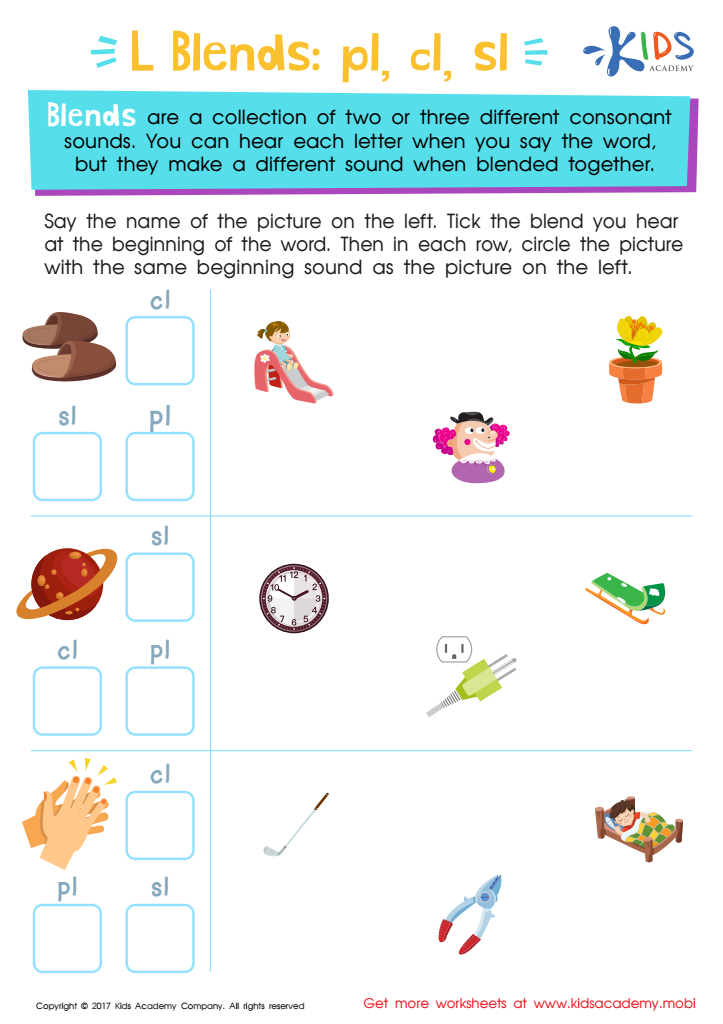
    L Blends: "Pl", "Cl" and "Sl" Printable
    This printable worksheet will help your child recognize and identify the Pl, Cl, and Sl consonant blends, sound them out, and identify them in print. Improve your child's reading and writing skills with fun and colorful phonics practice!
    L Blends: "Pl", "Cl" and "Sl" Printable
    Worksheet
    Consonant Blend Fl, Bl, and Gl Printable Worksheet
    Consonant Blend Fl, Bl, and Gl Printable Worksheet

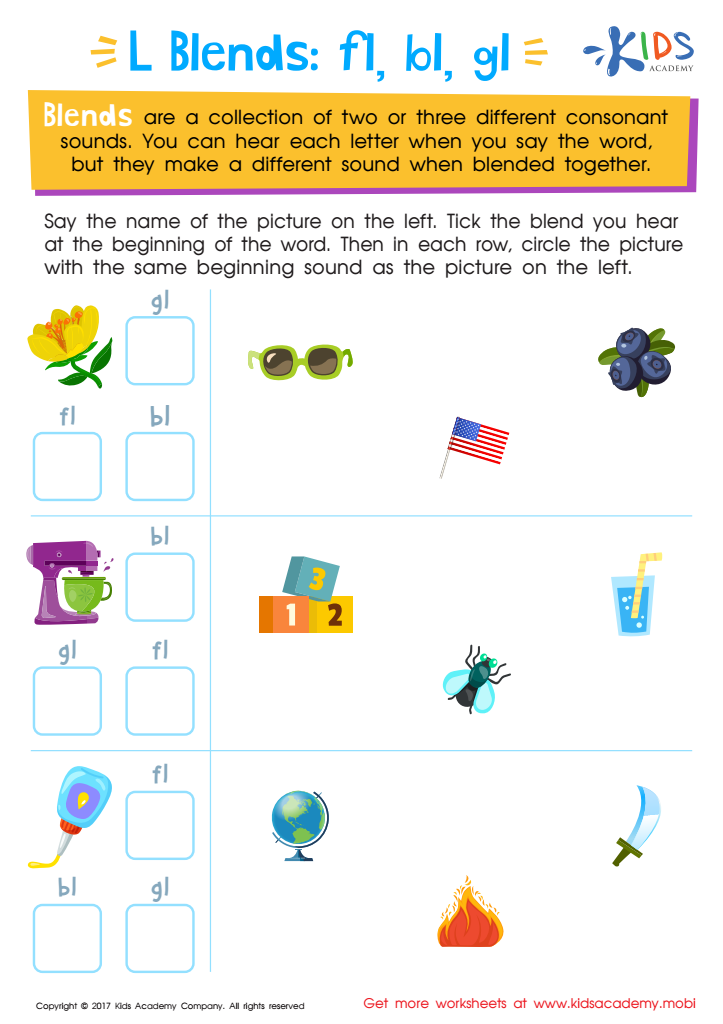
    Blending Consonants: "Fl", "Bl" and "Gl" Printable

    Help your child master consonant blends Fl, Bl, and Gl with this printable worksheet. Find words associated with the pictures and learn to better understand the difference between consonant blends. Vibrant images motivate and aid in learning. Download now for improved phonics success!
    Blending Consonants: "Fl", "Bl" and "Gl" Printable

    Worksheet


    Understanding two-letter phonics is pivotal in the early literacy journey of children aged 4-6, who are typically in the initial stages of learning to read and write. This fundamental skill helps them recognize how sounds blend together to form words, which is a critical building block for more advanced reading capabilities. When parents and teachers emphasize two-letter phonics, they set the foundation for a child's fluency and comprehension abilities.

    Two-letter phonics involves familiarizing children with combinations of consonants and vowels, such as "at," "an," "it," and "is." Mastering these blends enables young learners to decode words efficiently. Early success in decoding gives kids confidence and motivation to tackle more complex words and texts, leading to a more profound love for reading.

    Moreover, understanding two-letter phonics supports spelling skills. When children grasp the sound relationships in basic words, they can apply this knowledge to spell more complicated words accurately. This acquisition fosters better writing skills and communication, aiding overall educational development.

    In essence, prioritizing two-letter phonics educates children about the elemental connections in language. By doing so, parents and teachers pave the way toward comprehensive literacy, which is essential for academic success and practical everyday communication. Therefore, attention to these early learning aspects is not just beneficial but essential for developing capable and confident readers and writers.