Filters

102 filtered results

Clear all filters
Favorites
With answer key
Interactive

102 filtered results

Difficulty Level

Grade


Check out this FREE Trial Lesson on Reading Fiction for age 4-6!

Recognize Common Types of Text: Poetry

Favorites
With answer key
Interactive
  • 4-6
  • Interactive
  • Reading Fiction
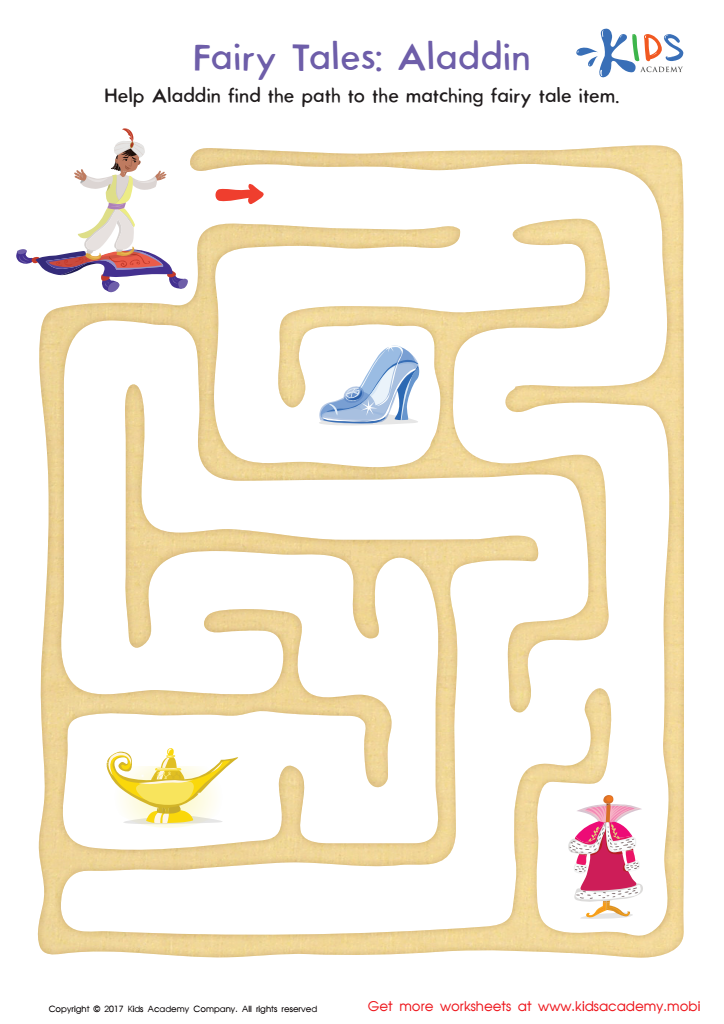
Fairy tale worksheet: Aladdin

Fairy Tales Aladdin Printable

Test your child's reading recall with this challenge: the Aladdin maze worksheet! Guide your learner to identify objects linked to the story, then ask them to retell it afterwards. Hone those memory skills while having fun!
Fairy Tales Aladdin Printable
Worksheet
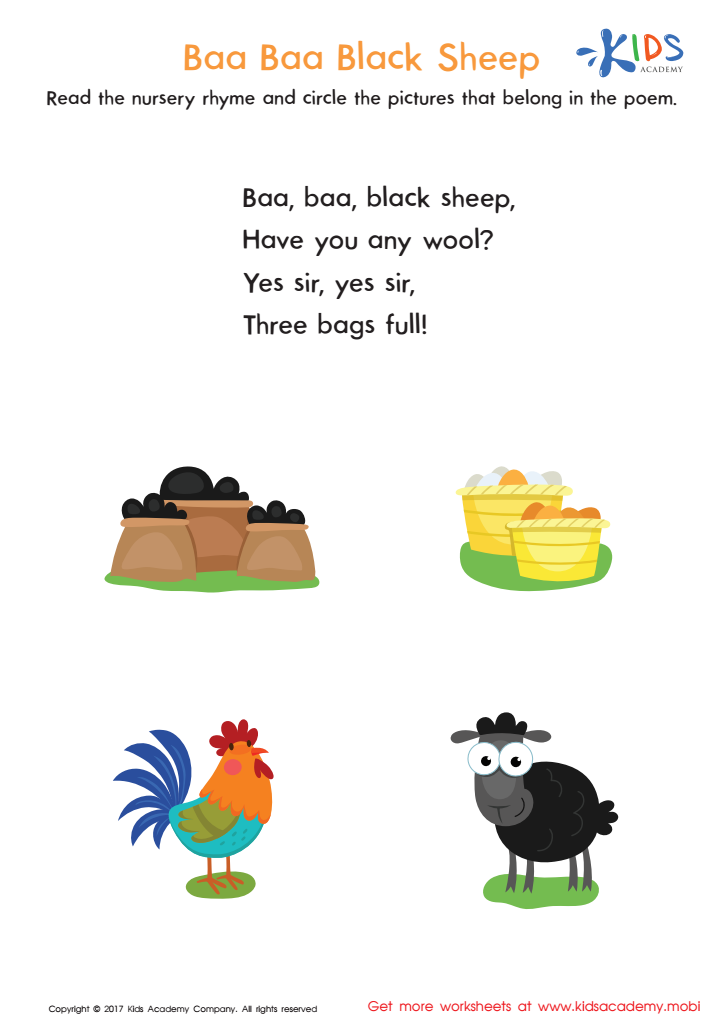
Baa Baa Black Sheep printable worksheet

Baa Baa Black Sheep Printable

Jumpstart your child's reading skills with this printable Baa Baa Black Sheep worksheet! Recite the lines with them, then have them select the pictures associated with the poem to test comprehension. Fun and educational!
Baa Baa Black Sheep Printable
Worksheet
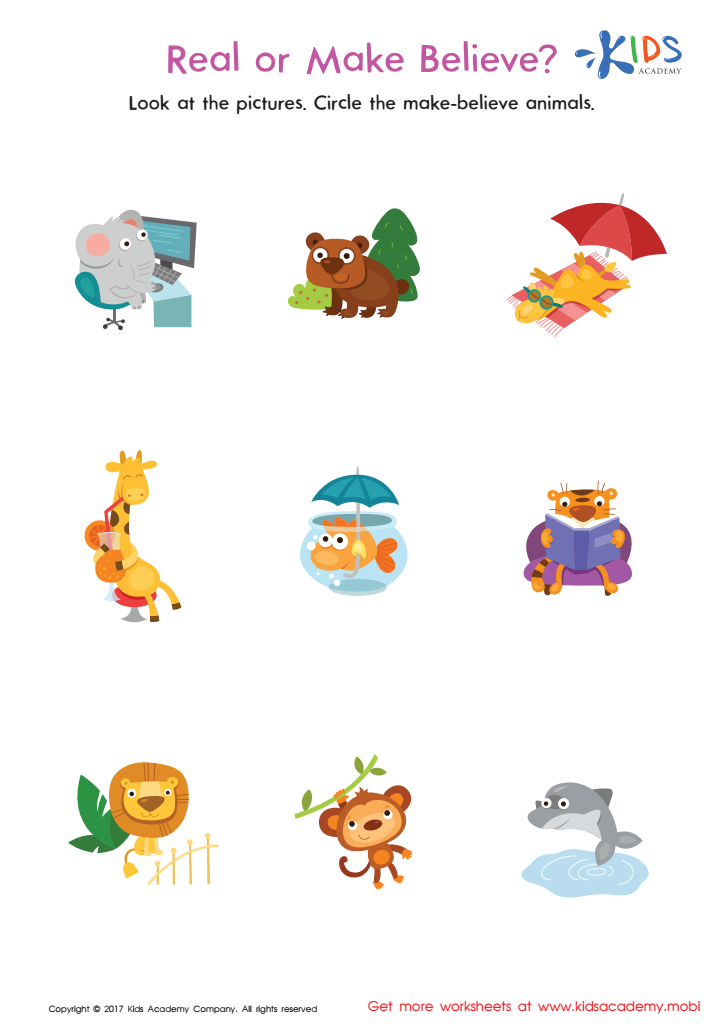
Fact or make believe worksheet pdf

Fact or Make Believe Worksheet

This fun and funny worksheet challenges your child to decide if each animal can do the activity listed. Can a camel go sunbathing? Separating fact from fiction can be entertaining! Motivate your child while they complete this PDF worksheet.
Fact or Make Believe Worksheet
Worksheet
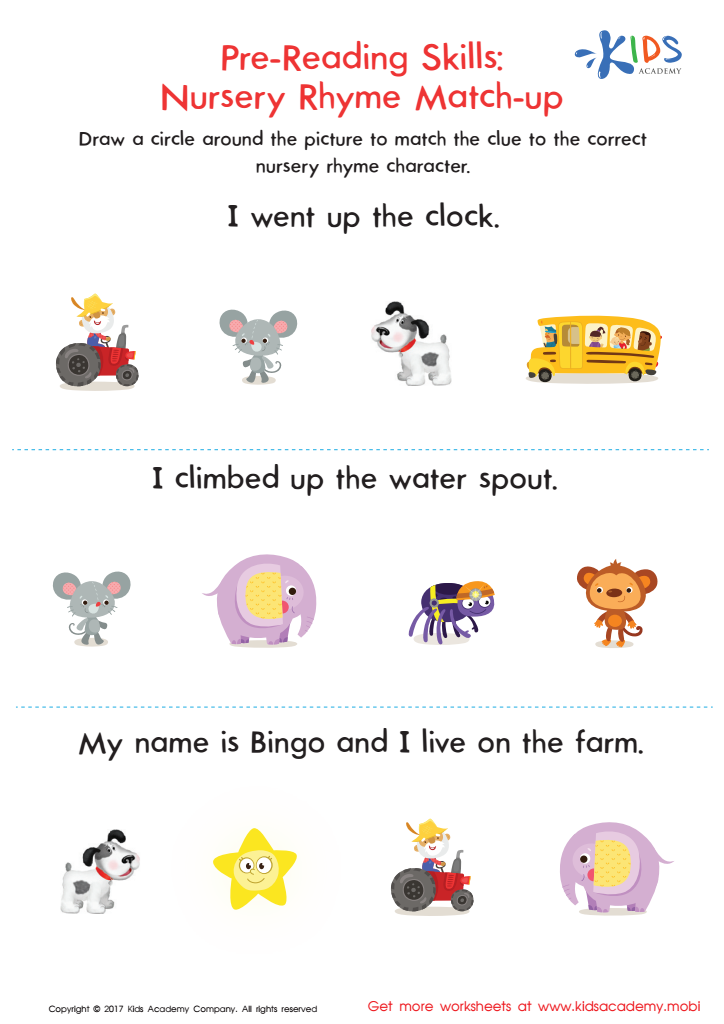
Nursery rhyme match-up worksheet

Nursery Rhyme Match–Up Worksheet
This worksheet helps kids build pre-reading skills using stories they know and love! By connecting with prior knowledge, kids can develop ideas about characters and set the stage for reading strategies.
Nursery Rhyme Match–Up Worksheet
Worksheet
Pre reading worksheet guess my name

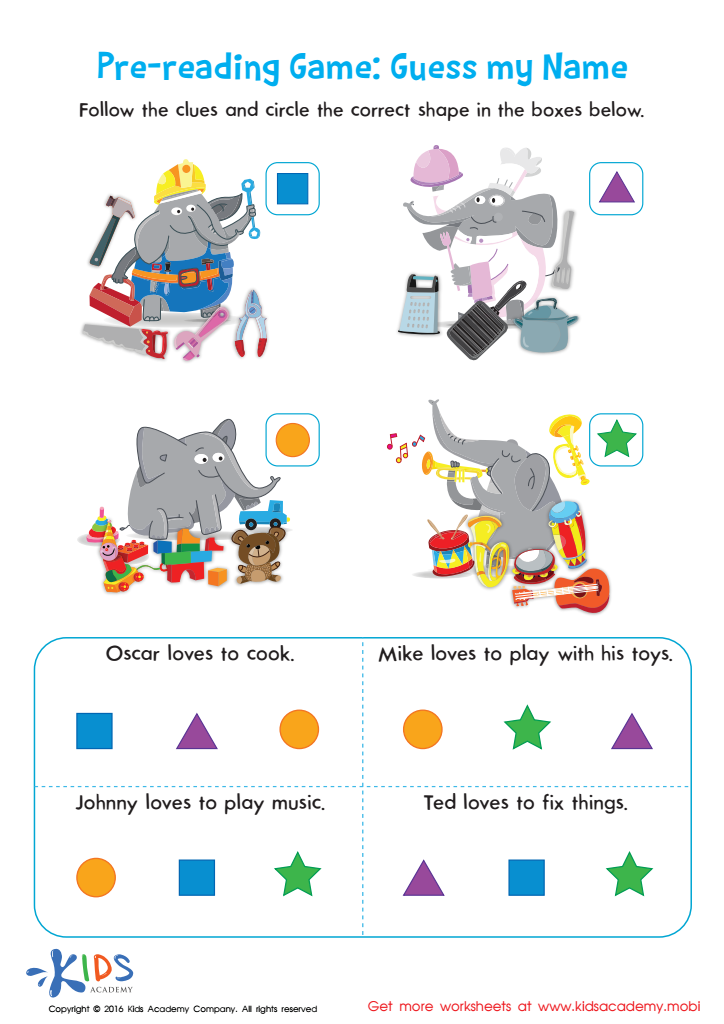
Pre Reading Worksheet Guess My Name

Guess My Name is a fun way to practice inference skills. Guess My Name is a fun pre-reading game to help your child practice drawing inferences from clues. With colorful illustrations, they'll use clues to match each elephant with its sentence and sharpen their inference skills.
Pre Reading Worksheet Guess My Name
Worksheet
Fairy Tale Worksheets

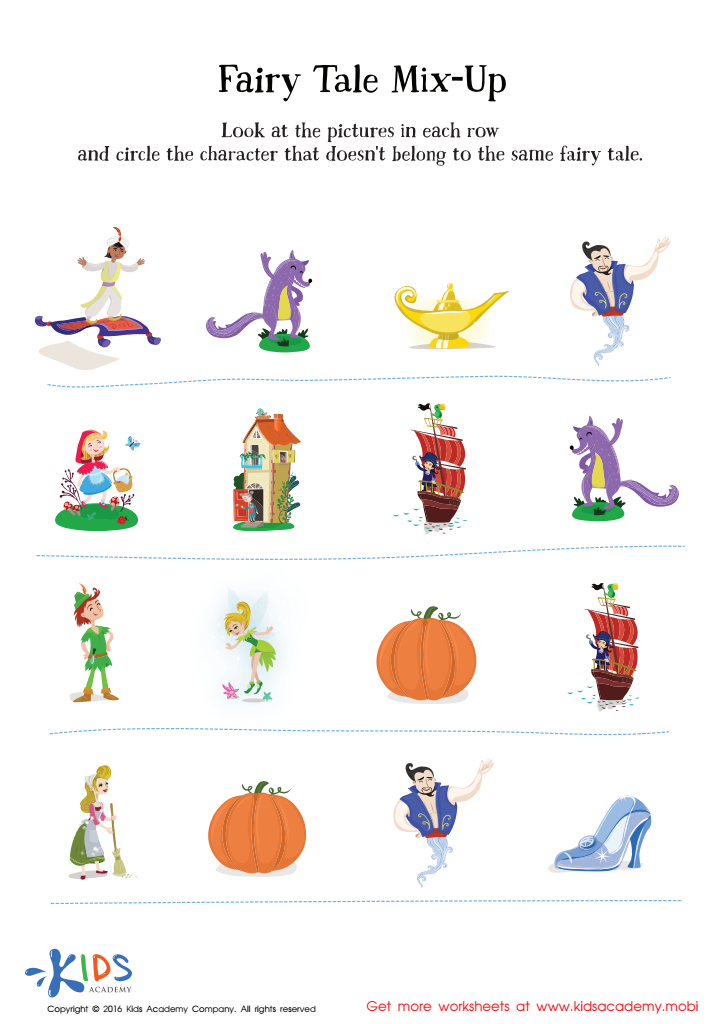
Fairy Tale Worksheet: Story Mix Up

Kids love fairy tales! Encourage your child to engage with their favorite stories using our vibrant worksheet. It'll help sharpen cognitive and comprehension skills, build problem-solving skills, and strengthen classification skills. Beforehand, read or watch the fairy tales and talk about each one's characters and elements. Your child will love the story and time spent together! Print the worksheet and get ready for a magical experience.
Fairy Tale Worksheet: Story Mix Up
Worksheet


... 4 5

Reading Fiction for Ages 4-6 is not just an activity to keep young minds busy; it's a vital part of their cognitive and emotional development. Worksheets tailored to this age group play a crucial role in enhancing the benefits of reading through structured and engaging activities. Here are a few reasons why these worksheets are incredibly useful.

Firstly, worksheets on Reading Fiction for Ages 4-6 help in improving comprehension skills. At this developmental stage, children are just beginning to understand narrative structures and themes. The worksheets are designed to ask questions that make the child think about the story, its characters, and the events that unfold, thereby deepening their understanding and retention.

Secondly, these worksheets encourage creativity and imagination. Fiction opens up new worlds to young readers, and the accompanying worksheets can prompt them to use their imagination to draw scenes from the story, predict what happens next, or even create their own stories. This not only enhances creativity but also fosters a love for reading.

Moreover, Reading Fiction for Ages 4-6 with the support of worksheets helps in vocabulary building. These activities introduce new words in a contextual setting, making it easier for children to learn and remember them. The interactive nature of worksheets ensures that vocabulary learning is fun and engaging.

Lastly, worksheets provide a structured learning environment that can help young readers develop a routine. Consistently working through reading-related activities can instill a sense of discipline and improve focus, which are essential skills for academic success.

In conclusion, worksheets on Reading Fiction for Ages 4-6 are an invaluable tool in the early education toolkit, enhancing learning, imagination, vocabulary, and discipline in young readers. Through these activities, children not only enjoy the magic of stories but also build a strong foundation for lifelong learning.