Recognizing number patterns Worksheets for Ages 4-9
4 filtered results
-
From - To
Discover the joy of learning with our "Recognizing Number Patterns Worksheets" specially designed for children ages 4-9. These engaging worksheets help young minds grasp essential math concepts by identifying and continuing number patterns. Perfect for early grade learners, our fun activities develop critical thinking and problem-solving skills. Children will advance through various difficulty levels, stimulating their cognitive growth and boosting their confidence in mathematics. Paired with vibrant graphics and interactive tasks, these worksheets make learning an enjoyable adventure. Visit our website to download these invaluable resources and ignite your child's passion for numbers today!
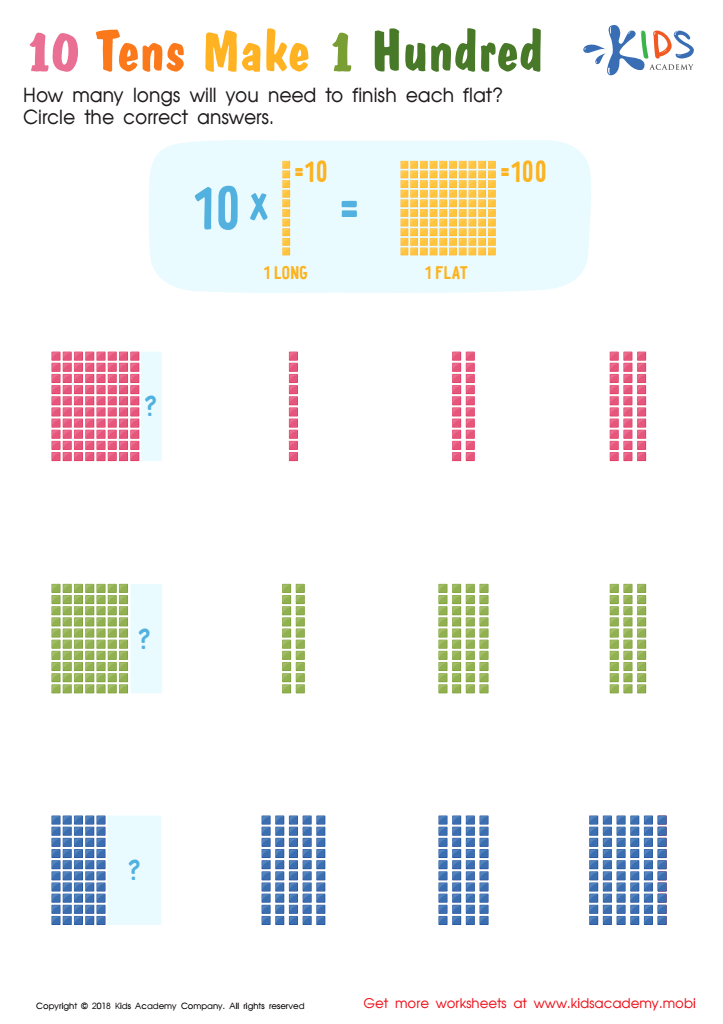
10 Tens Make 1 Hundred Worksheet
 Assign to My Students
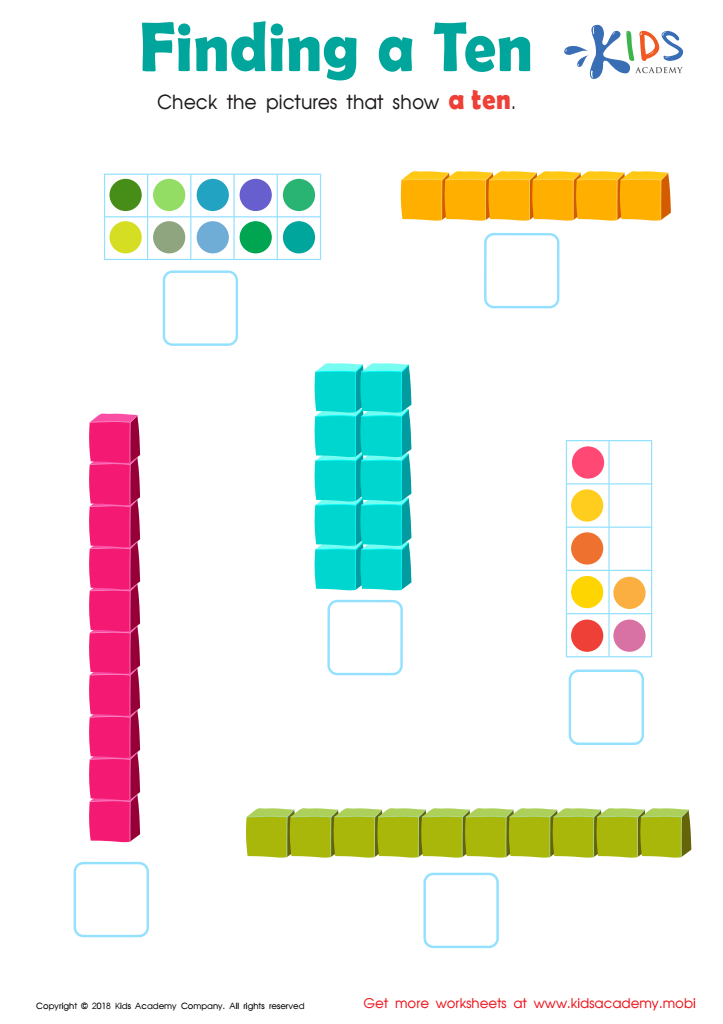
Finding a Ten Worksheet
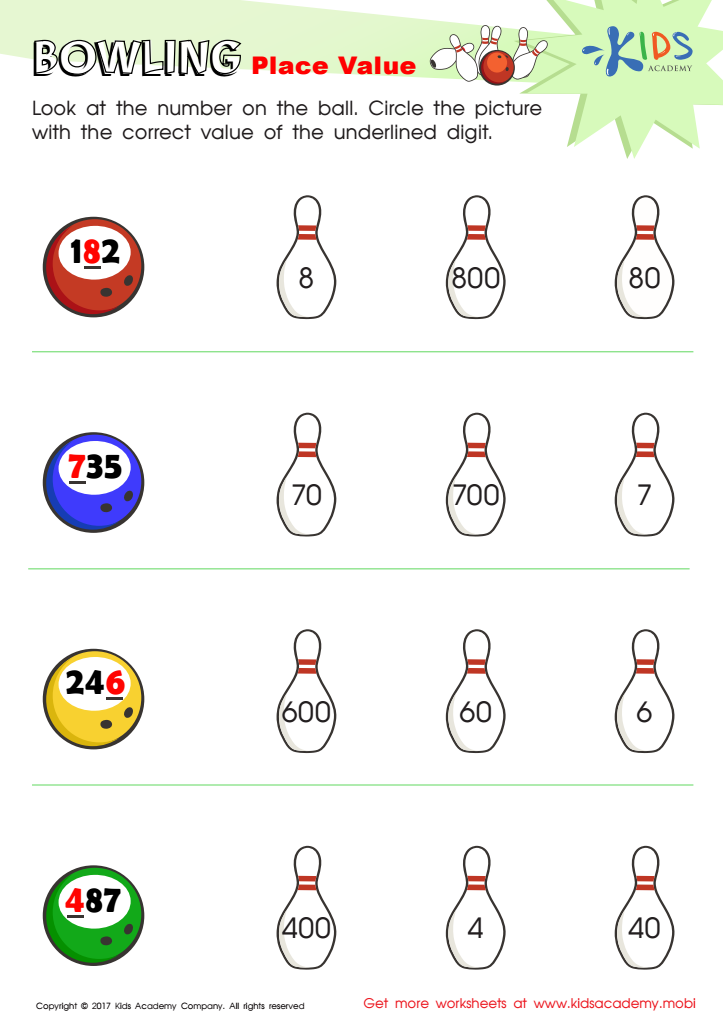
Place Value Worksheet
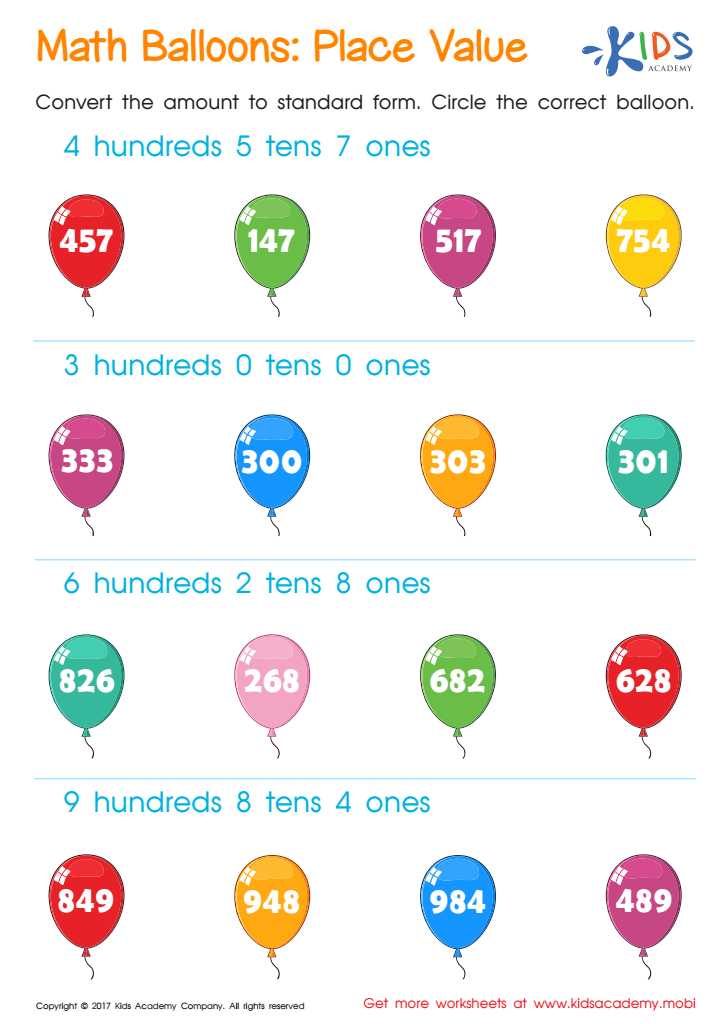
Place Value Printable Worksheet







Recognizing number patterns is crucial for young children ages 4-9 because it lays the foundation for mathematical understanding and critical thinking. During these early years, children's brains are exceptionally receptive to learning and pattern recognition is a key component of cognitive development.
Firstly, learning to identify and understand patterns helps children develop problem-solving skills. Once they can recognize patterns, they can predict what comes next, enhancing their ability to think logically and make connections. For example, recognizing a sequence such as 2, 4, 6, 8 helps children understand the concept of even numbers and multiplication.
Secondly, pattern recognition aids in learning other mathematical concepts such as addition, subtraction, and eventually, algebra. Patterns provide a visual and tactile method for children to engage with numbers, making abstract concepts more tangible. This hands-on learning is essential for young learners who thrive on interactive and engaging activities.
Moreover, these skills extend beyond mathematics; understanding patterns in stories or nature boosts observational skills and creativity. This breeds a sense of accomplishment and confidence, fostering a positive attitude towards learning in general.
By focusing on number patterns in early education, parents and teachers can provide children with the essential tools for successful academic and personal growth, empowering them to face more complex mathematical challenges in the future.








