Graphs Worksheets for Ages 5-8 - Page 2
27 filtered results
-
From - To
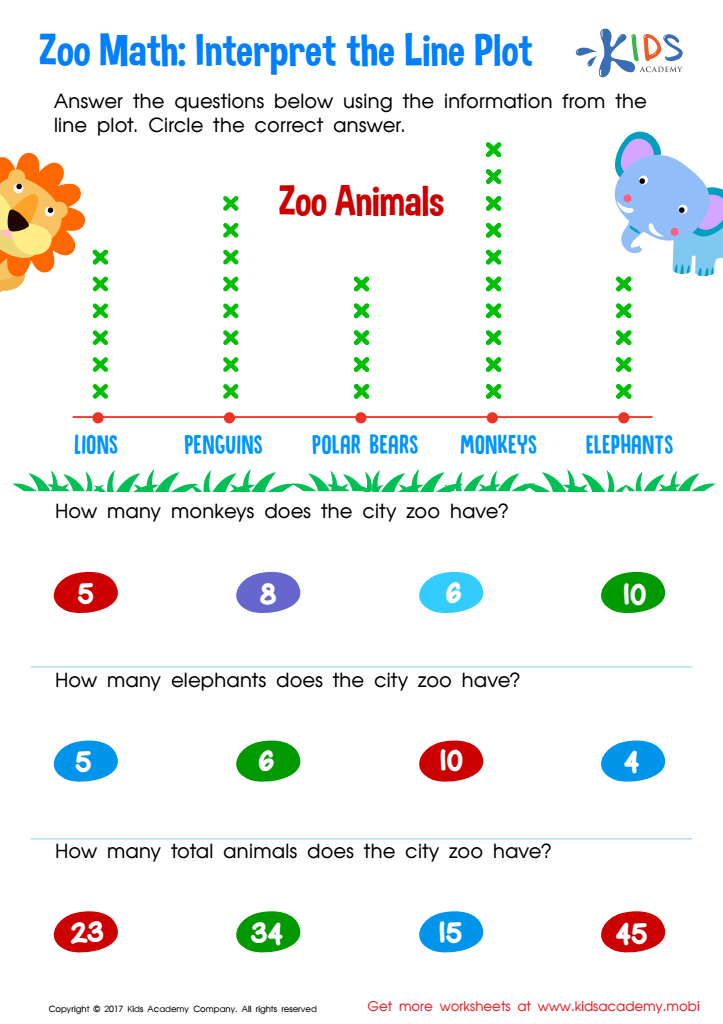
Interpret Line Plot Worksheet
 Assign to My Students
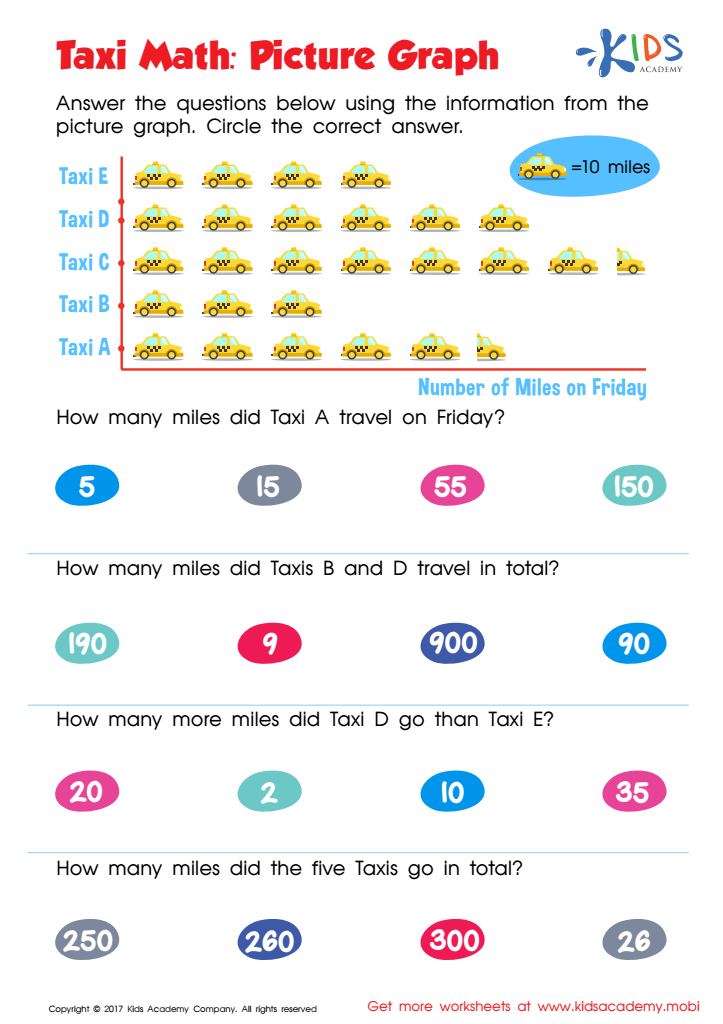
Taxi Math Worksheet
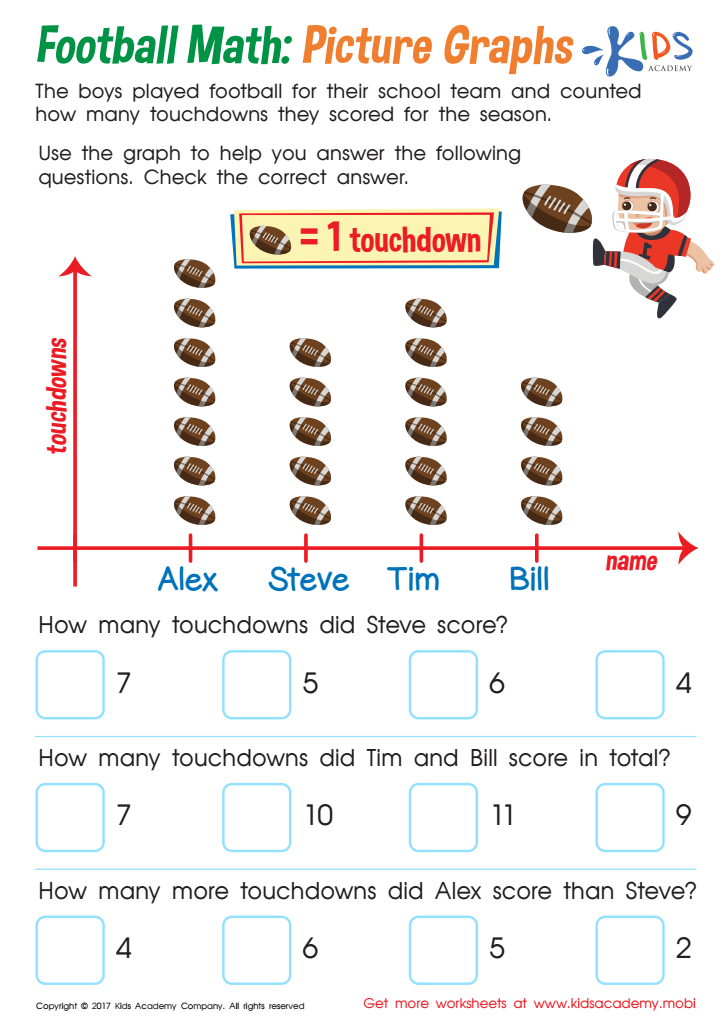
Football Math Worksheet








Parents and teachers should care about introducing graphs to children aged 5-8 because this early exposure builds essential foundational skills in data literacy and critical thinking. Graphs are visual representations of information that help young children to understand and interpret complex data in a straightforward, intuitive manner. By interacting with simple graphs, like bar charts or pictograms, children learn to categorize and compare information effectively.
Understanding graphs supports the development of mathematical concepts such as counting, sorting, and recognizing patterns, which are fundamental in early childhood education. Additionally, interpreting graphs requires cognitive skills like observation, analysis, and logical reasoning, which contribute to overall intellectual development.
Furthermore, proficiency with graphs nurtures problem-solving abilities. For instance, children might be asked to determine which types of fruit are most popular among their classmates. Through this exercise, they practice gathering, organizing, and comparing data—key components of scientific inquiry.
Engaging with graphs also enhances literacy skills, as discussing and explaining what they see helps children to articulate their thoughts clearly. This is crucial for developing both written and oral communication skills. Thus, incorporating graphs in early education equips children with versatile tools that support their academic growth and everyday decision-making.








