Filters

1773 filtered results

Clear all filters
Favorites
With answer key
Interactive

1773 filtered results

Difficulty Level

Grade


Check out this FREE Trial Lesson for age 6!

U.S. Regions

Favorites
With answer key
Interactive
  • 6
  • Interactive
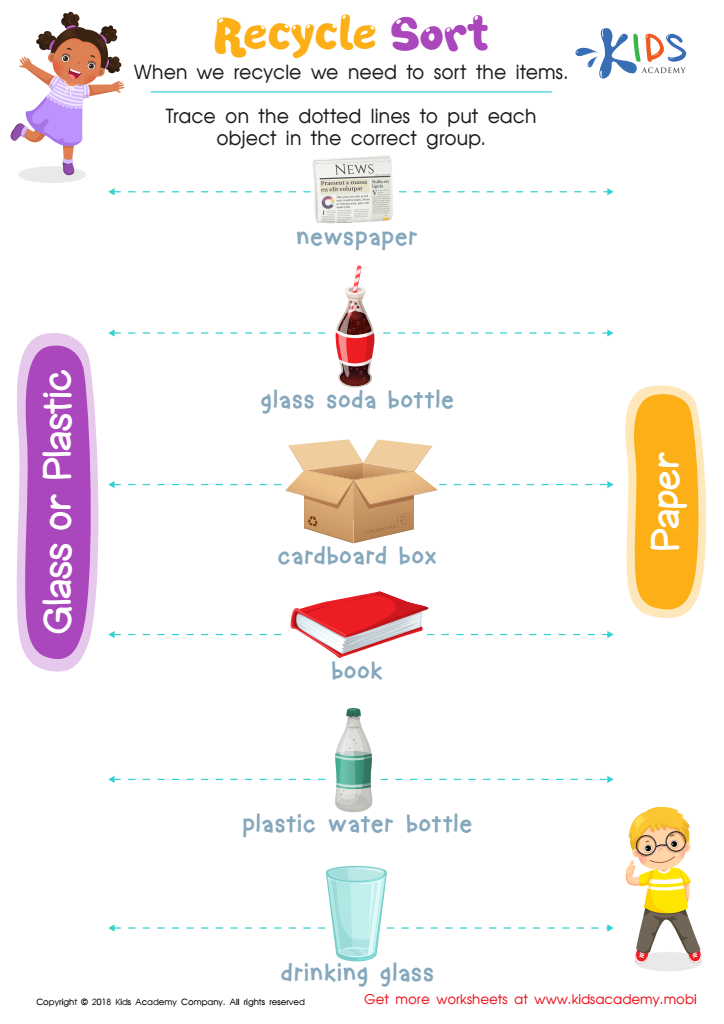
Recycle Sort Worksheet

Recycle Sort Worksheet

Help your children become eco-warriors while they develop critical thinking and fine motor skills with this free downloadable worksheet! Engaging pictures and matching words, plus fun and bright colors, will have kids analyzing and sorting recyclables into paper or glass/plastic groups using traceable lines.
Recycle Sort Worksheet
Worksheet
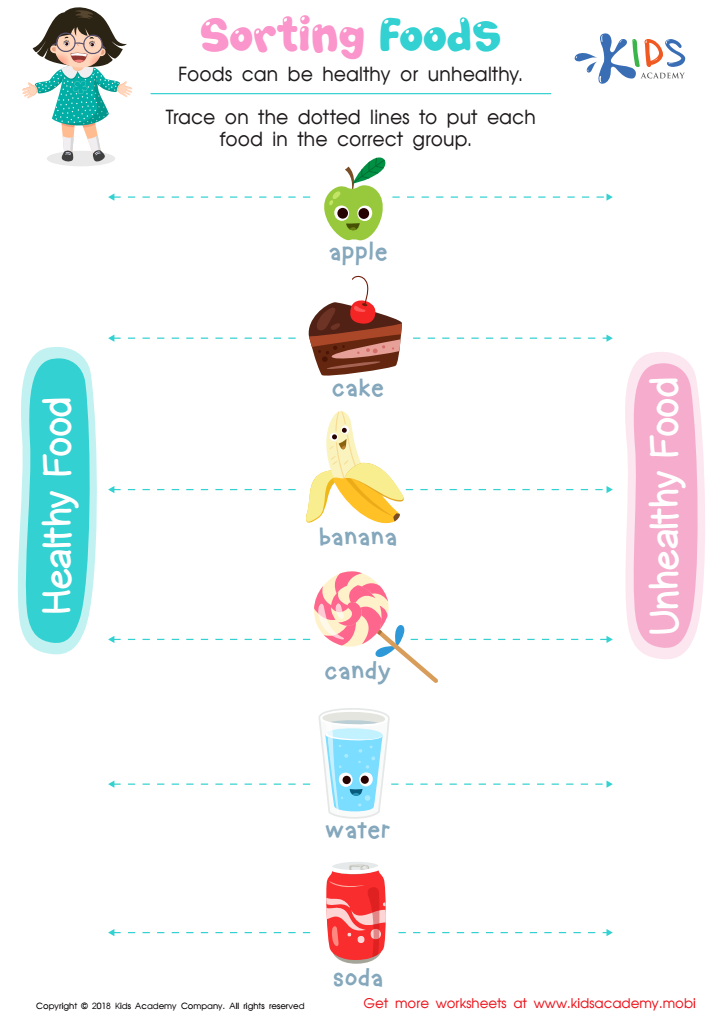
Sorting Food Worksheet

Sorting Food Worksheet

This delightful worksheet boosts critical thinking and fine motor skills. Kids use prior knowledge and pictures to sort foods into healthy and unhealthy groups. Tracing lines support accurate sorting and matching. Enjoy fun and free learning!
Sorting Food Worksheet
Worksheet
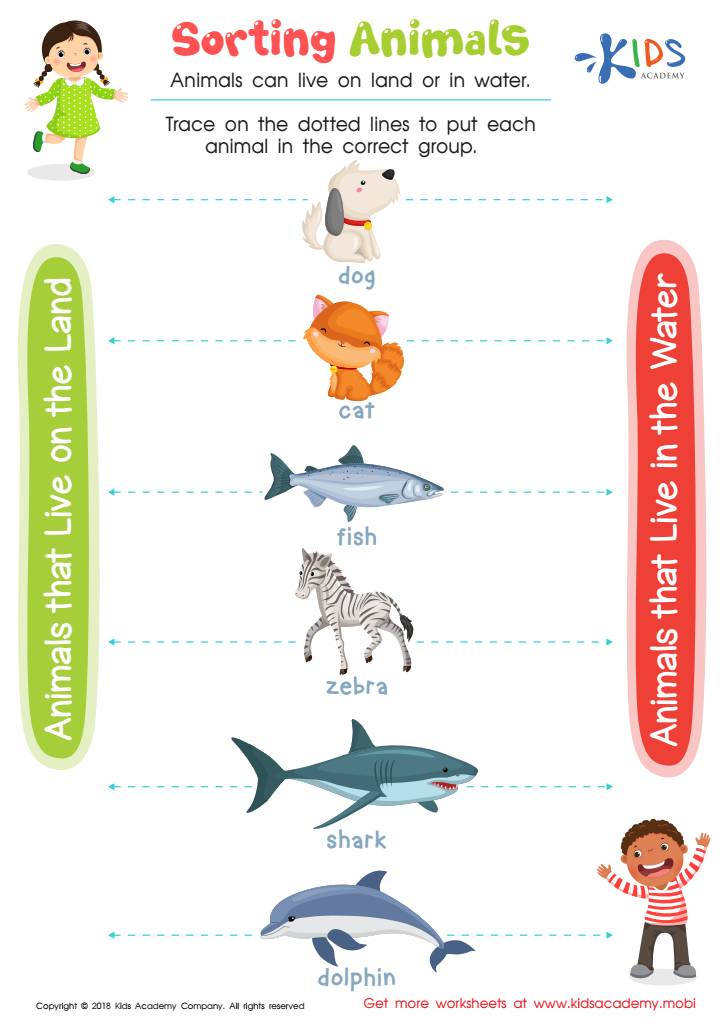
Sorting Animals Worksheet

Sorting Animals Worksheet

Your kids will love this free, interactive worksheet! With image clues, they can read and trace the animal names, and then sort them into groups of land or water animals. It's an enjoyable way to boost their critical thinking, fine motor and prior knowledge skills.
Sorting Animals Worksheet
Worksheet
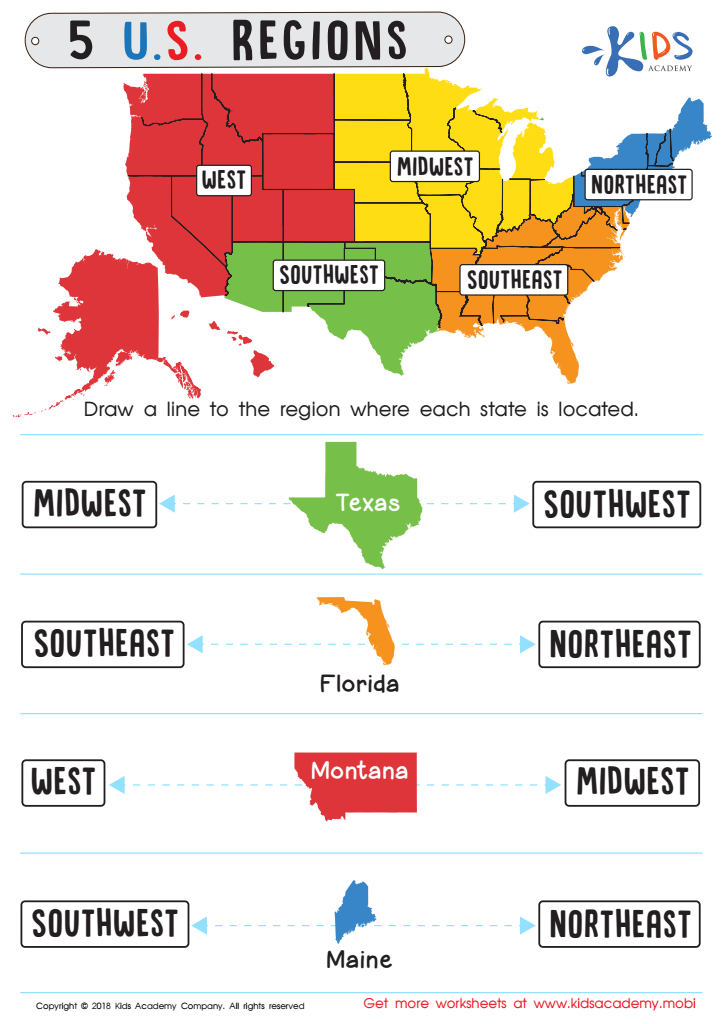
5 U.S. Regions Worksheet

5 U.S. Regions Worksheet

Familiarize students with states & capitals in your country before starting. Look at the map and ask kids to name some states. Then have them draw a line to the region each state is located in. This'll help them recognize the different places and make the exercise easier.
5 U.S. Regions Worksheet
Worksheet
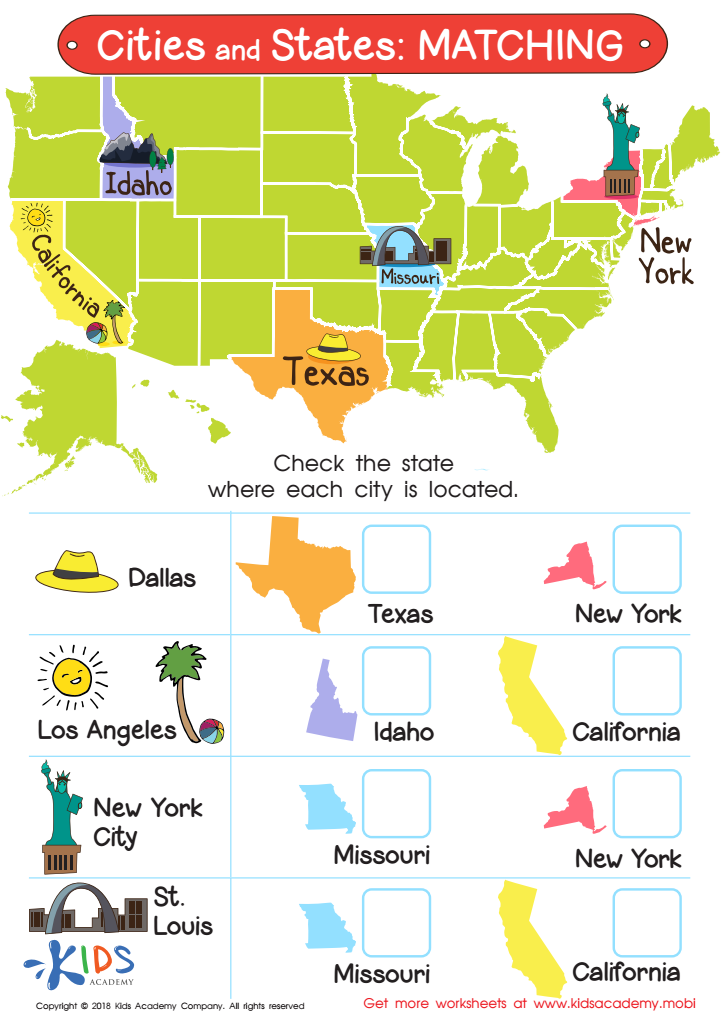
Cities and States: Matching Worksheet

Cities and States: Matching Worksheet

Ask your child if they can name some of the states in your country. If they can, great! If not, use this worksheet to have them learn some states. Show them the map and ask them to observe the shape and color of each state. Then, have them answer the questions by checking the state where each city is located.
Cities and States: Matching Worksheet
Worksheet
Who Is in a Family? Worksheet

Who Is in a Family? Worksheet

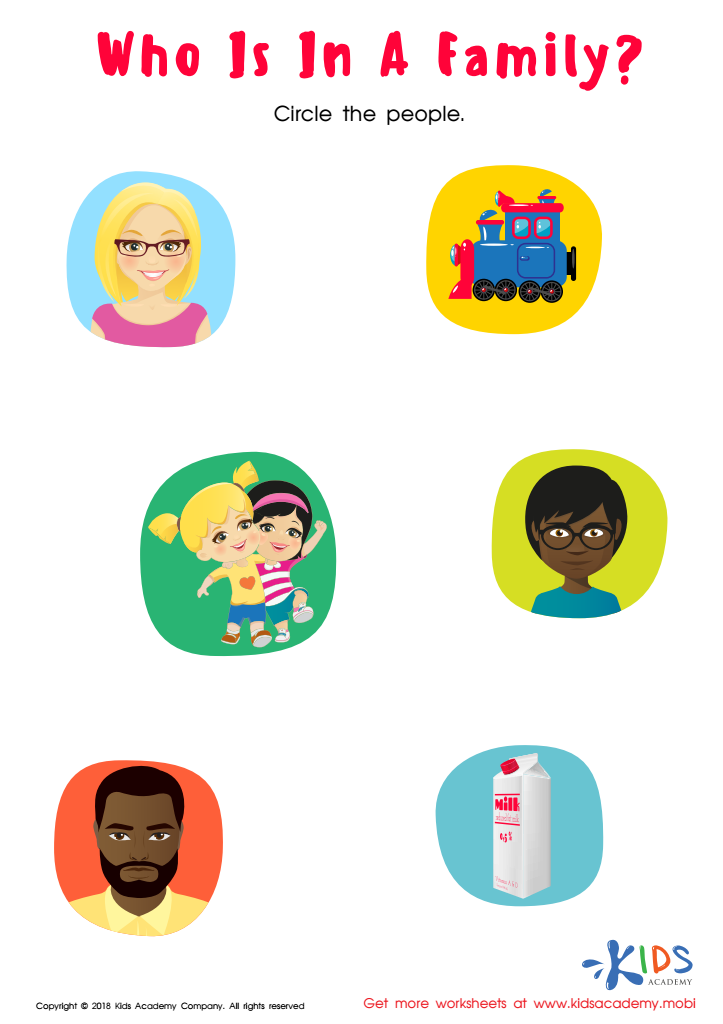
Kids enjoy discussing families. This easy, colorful worksheet helps them determine if a person or thing is in a family. Children look at each picture, name it, and circle it if it represents someone in a family. It introduces or reinforces family words, making it ideal for toddlers.
Who Is in a Family? Worksheet
Worksheet
Force and Interactions: Assessment 2 Worksheet

Force and Interactions: Assessment 2 Worksheet

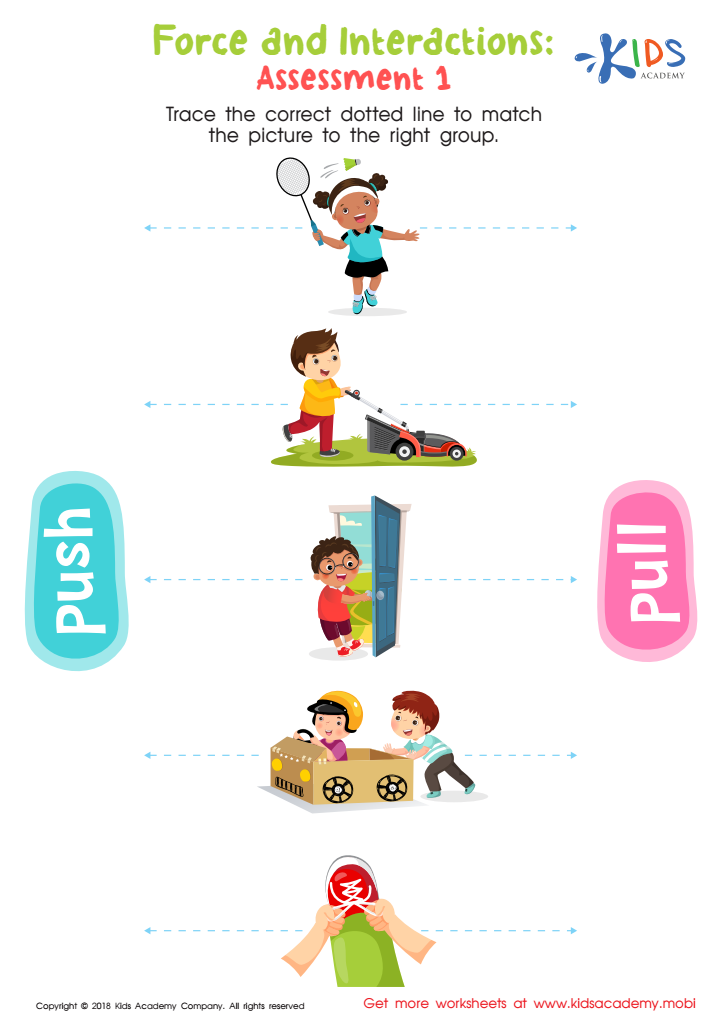
Help your child see the difference between push and pull with this fun worksheet. Ask them to match each picture to the right group. The "push" is on the left and the "pull" is on the right. Assist them in tracing the activities and explain what it is the people are doing.
Force and Interactions: Assessment 2 Worksheet
Worksheet
Force and Interactions: Assessment 1 Worksheet

Force and Interactions: Assessment 1 Worksheet

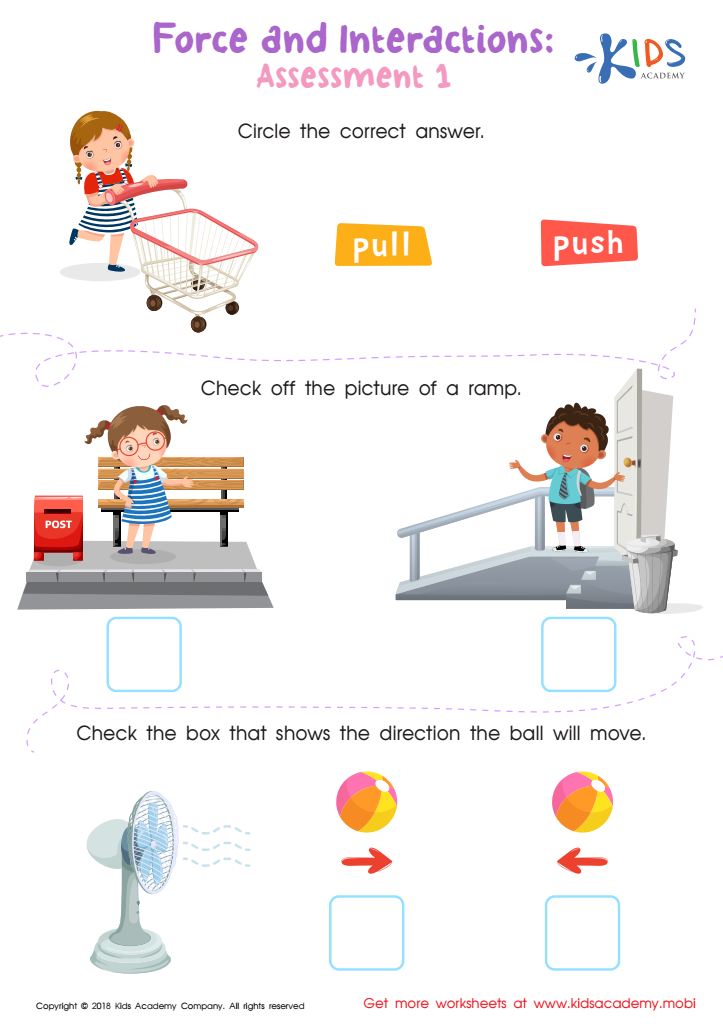
Test your students' knowledge of pushing, pulling, ramps and wind with this worksheet. The first task requires them to identify push or pull pictures. The second asks them to identify a ramp and the third to explain which direction a ball will move when exposed to wind.
Force and Interactions: Assessment 1 Worksheet
Worksheet
Force and Interactions: Review 2 Worksheet

Force and Interactions: Review 2 Worksheet

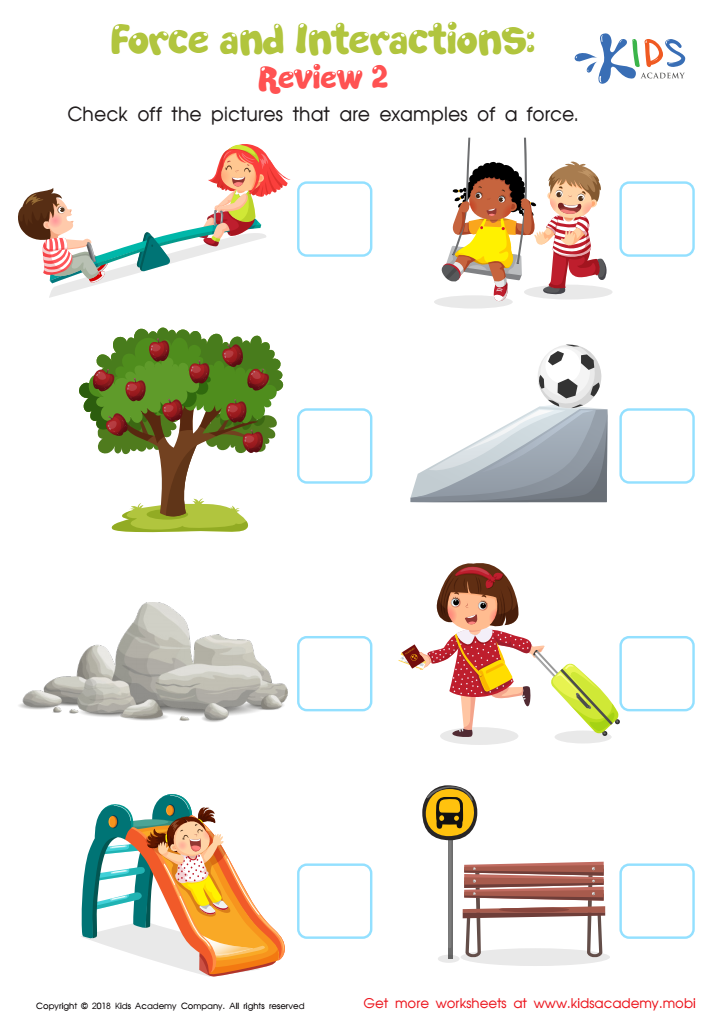
Your child can identify force examples by checking the pictures. There are 8 images of kids engaging in activities and objects in motion. Get them to name the activities and objects, or if they know, explain force and interaction.
Force and Interactions: Review 2 Worksheet
Worksheet
Force and Interactions: Review 1 Worksheet

Force and Interactions: Review 1 Worksheet

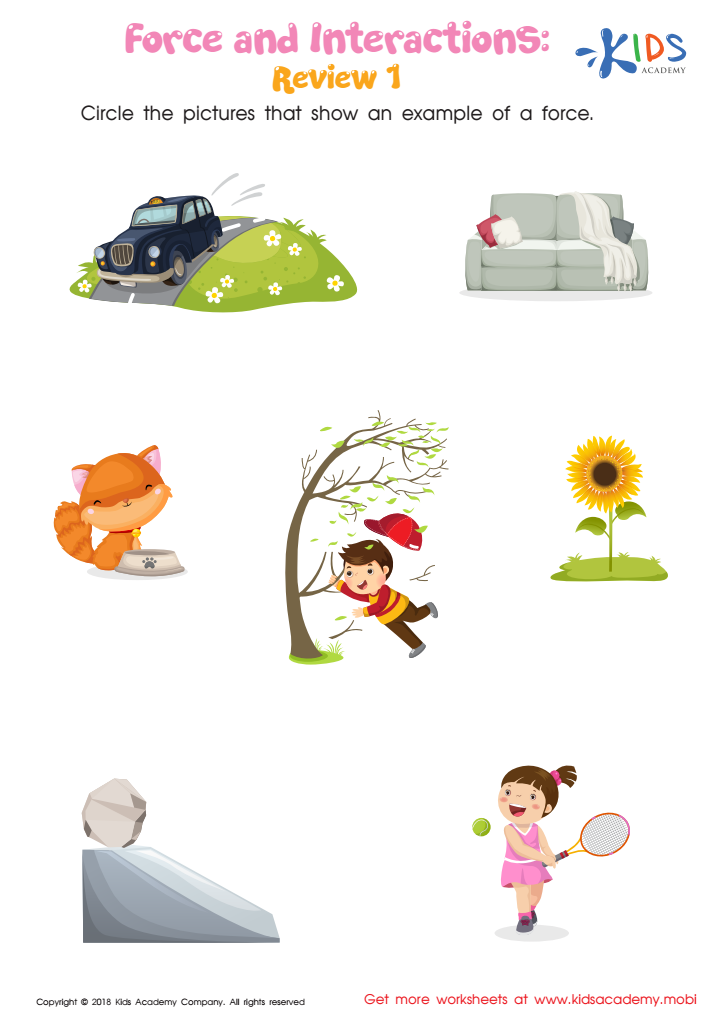
See how well your child can identify the different forces. Explain to your child that force is what causes objects to move, such as wind blowing a branch or an object going down a ramp. Ask them to circle images that show a force and assess how well they can identify them.
Force and Interactions: Review 1 Worksheet
Worksheet
Ramps Worksheet
Ramps Worksheet

Ramps Worksheet

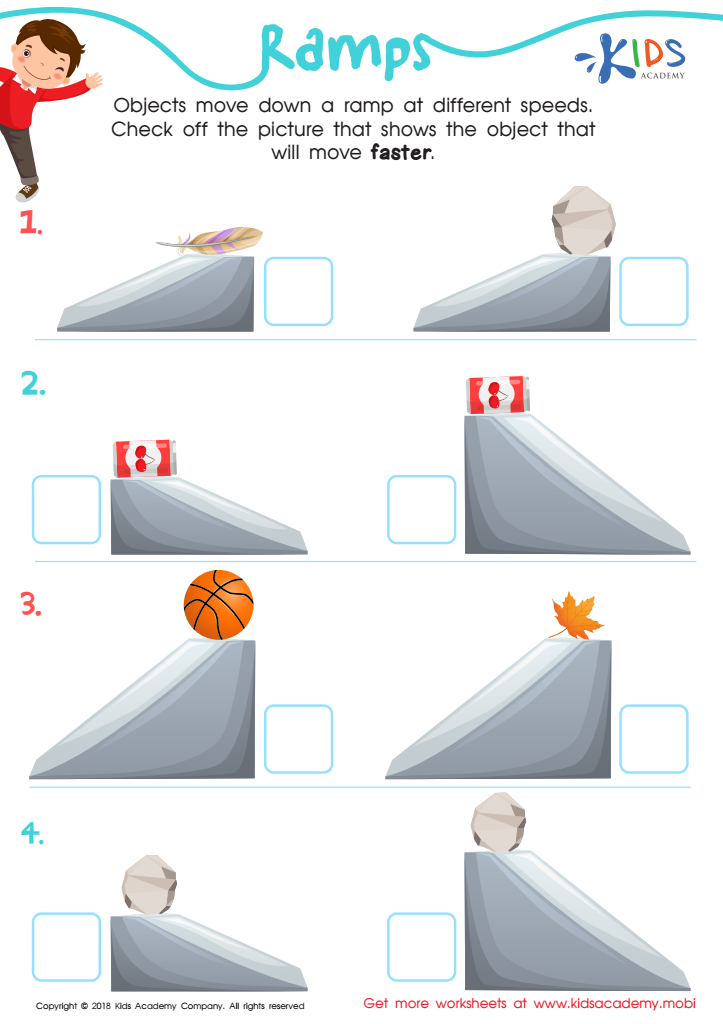
If your child has seen a ramp, they'll find this worksheet easy. A ramp is sloped for objects to move quickly downwards. The printout has images of objects on different ramps. Ask your child to identify which object will move faster.
Ramps Worksheet
Worksheet
Ramps All Around us Worksheet

Ramps All Around us Worksheet

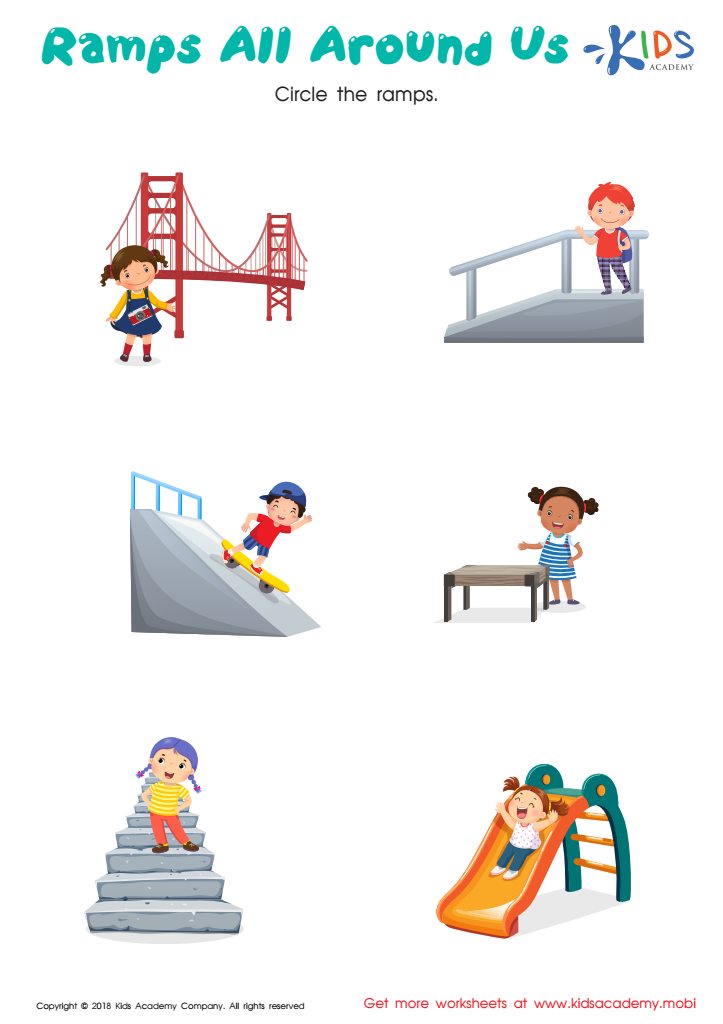
Ask your kids if they know what ramps are, then have them give you examples of places they've seen them. This worksheet has pictures of ramps - have your child identify and circle them.
Ramps All Around us Worksheet
Worksheet
Push or Pull Sorting Worksheet

Push or Pull Sorting Worksheet

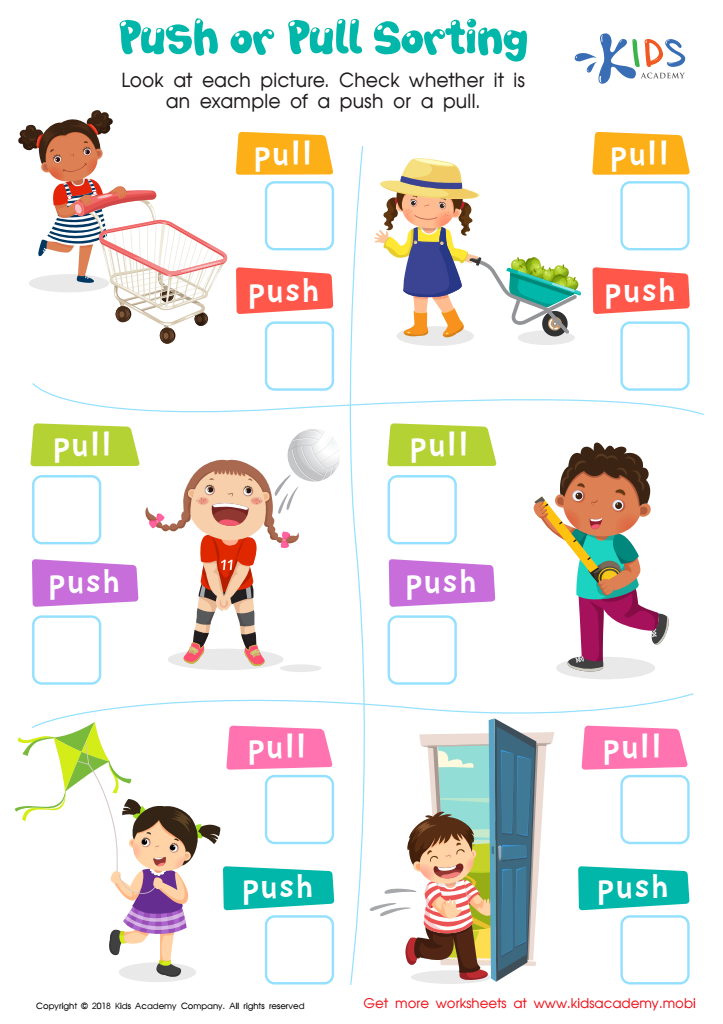
Show your child the pictures in this worksheet. Ask them to tell you what each child is doing. Then, ask them to identify whether it's an example of pushing or pulling. Ask if they know what these terms mean and if they can provide examples.
Push or Pull Sorting Worksheet
Worksheet
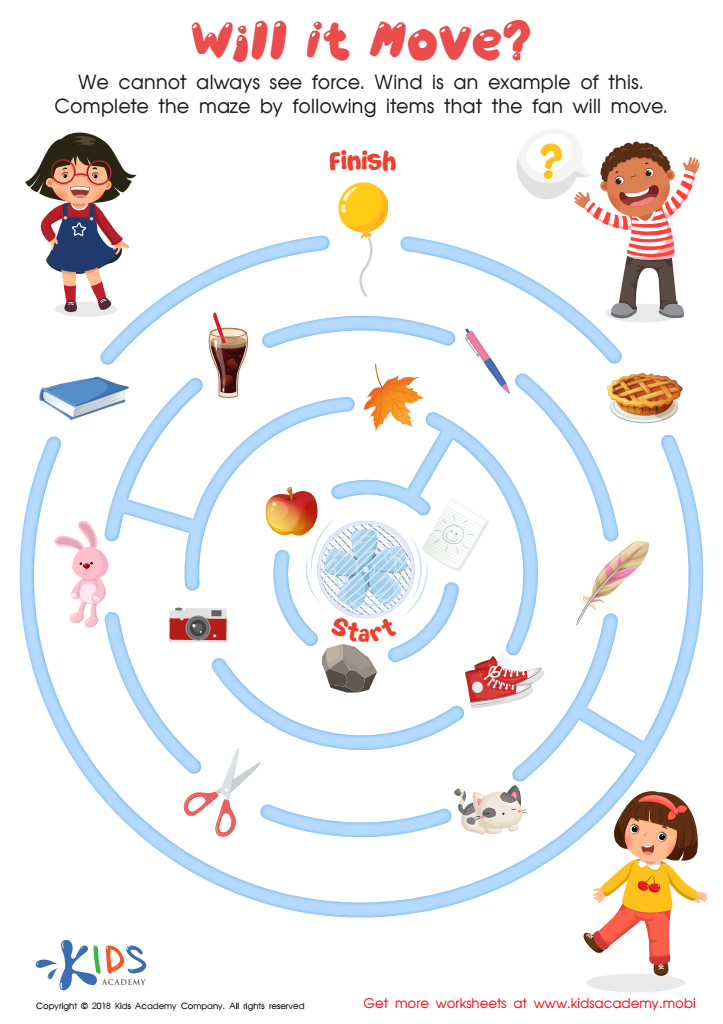
Will it Move? Worksheet

Will it Move? Worksheet

Does your child know about force? If yes/no, this worksheet can help. Force is invisible - like wind - but it moves objects. Ask your child to complete the maze, following the path of items moved by the wind. 80 words.
Will it Move? Worksheet
Worksheet
Which Direction Will it Go? Worksheet

Which Direction Will it Go? Worksheet

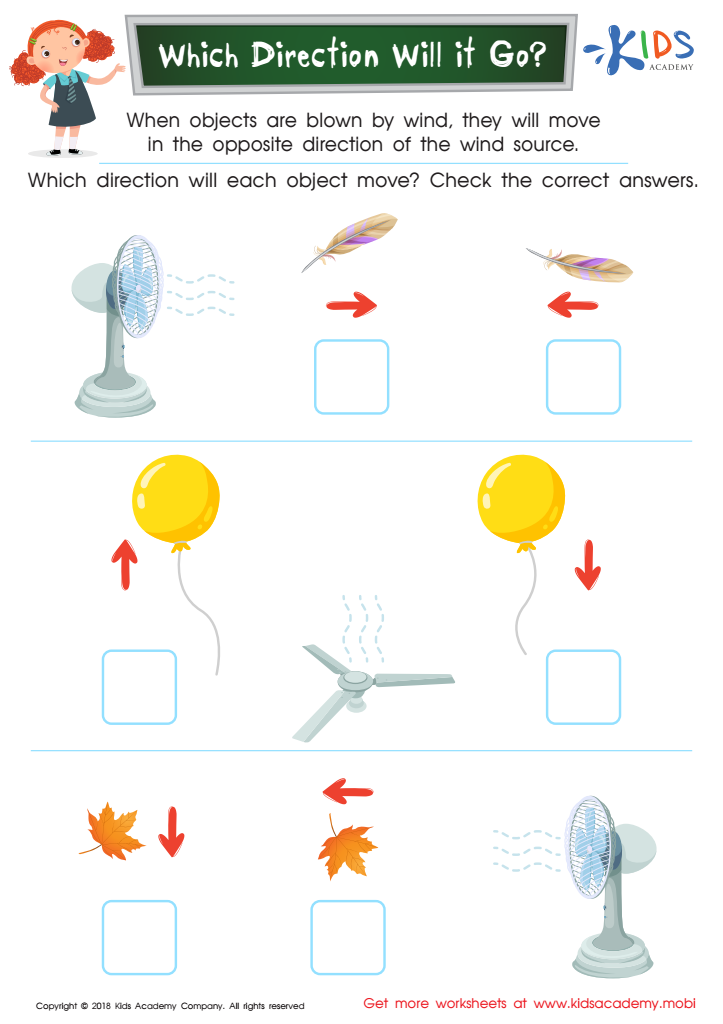
Explain to your students: when objects are blown by wind, they will move in the opposite direction. In the worksheet, there are pictures of wind sources and objects being blown by the wind. Ask your child to identify and check the direction each object will move.
Which Direction Will it Go? Worksheet
Worksheet
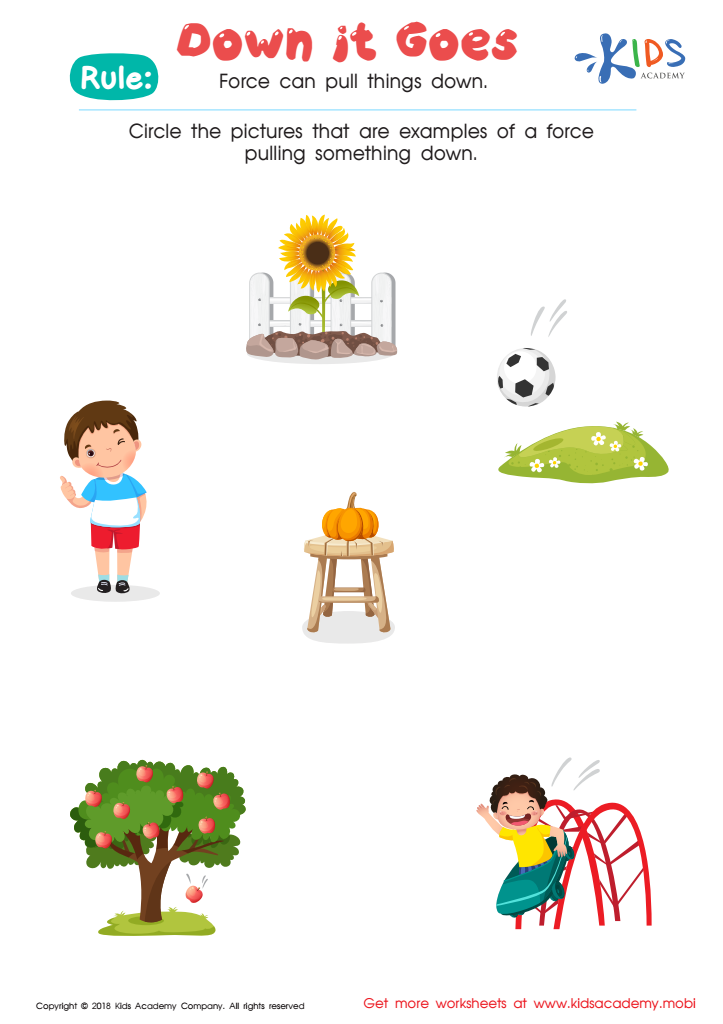
Down it Goes Worksheet

Down it Goes Worksheet

Explain gravity to your child using this fun worksheet. Ask them to give examples of things pulled down with force, then instruct them to circle the pictures that show this. It's a great way to help them understand the concept of gravity.
Down it Goes Worksheet
Worksheet
What's Inside the Building? Worksheet

What's Inside the Building? Worksheet

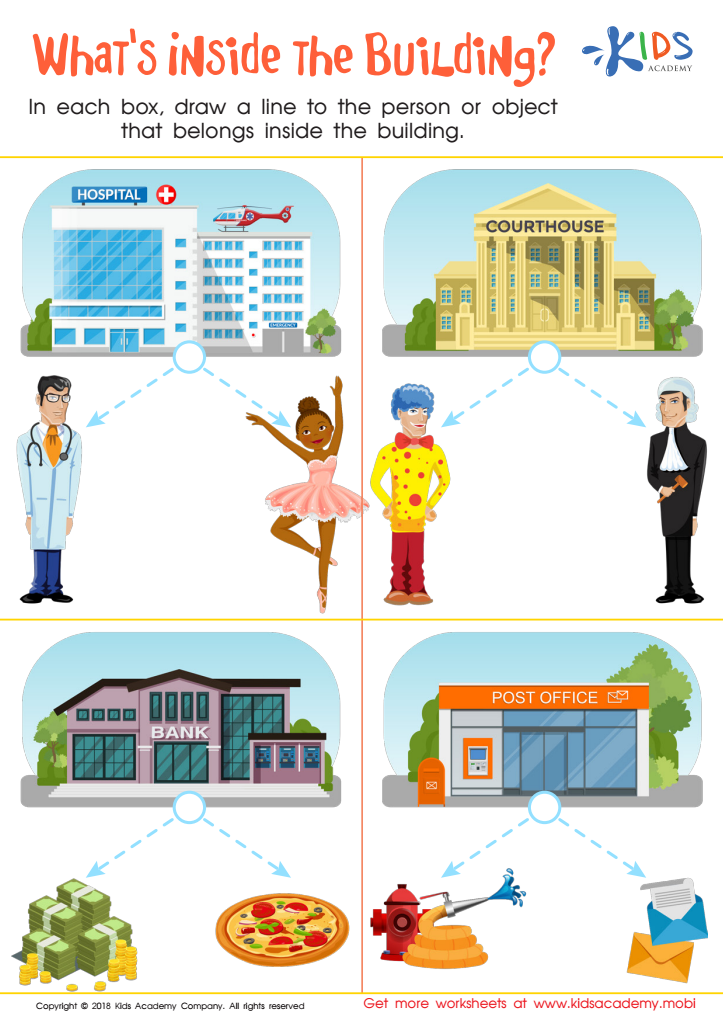
Have your child draw a line from each of the four buildings (printout provided) to the corresponding person or object. This worksheet will help them identify people who work in a hospital, courthouse, bank and others—what they wear and what they're called.
What's Inside the Building? Worksheet
Worksheet
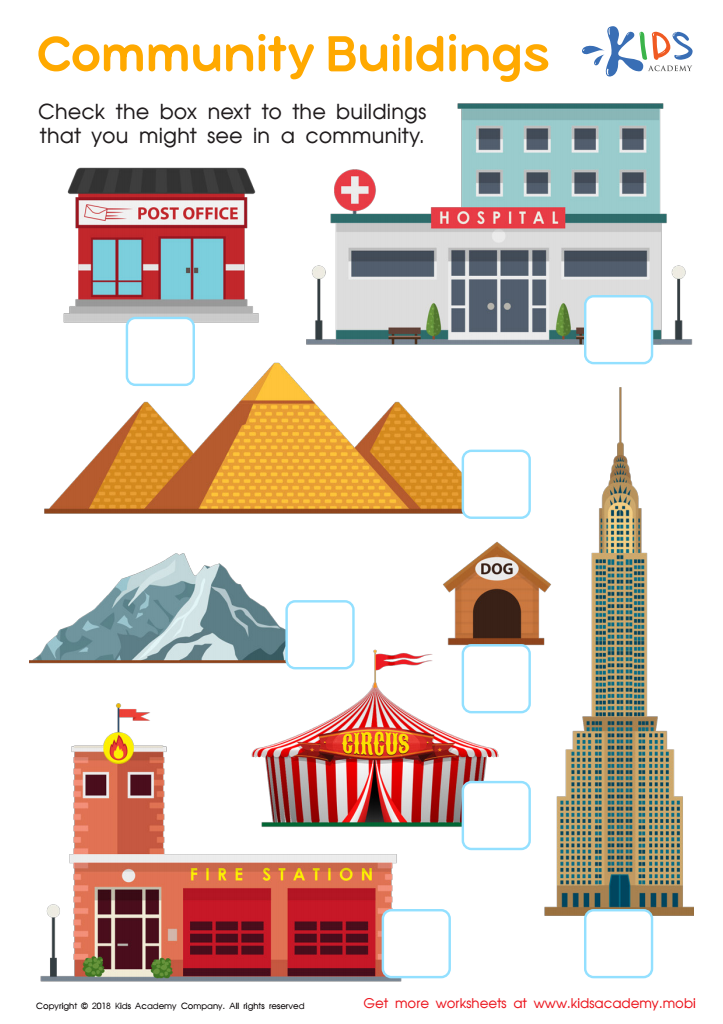
Community Buildings Worksheet

Community Buildings Worksheet

Test your child's knowledge of local buildings with this worksheet. Ask them to name the buildings in the images, then check the boxes next to the ones they might see in a community. It's a great way to explore the places you visit together.
Community Buildings Worksheet
Worksheet
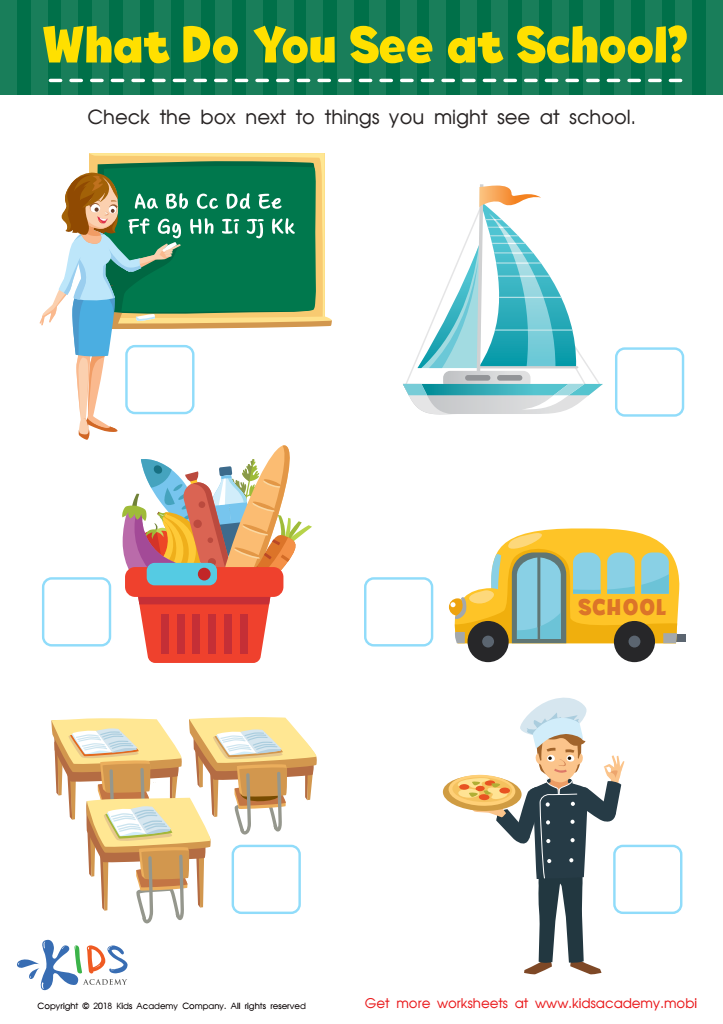
What Do you See at School? Worksheet

What Do you See at School? Worksheet

Have your kids give you a list of things they see at school. Then, view the worksheet together. Ask them to check the boxes next to the school items. Look for objects that can be found at school and those that don't belong. This is a great way to check their knowledge of what they see at school daily, except on weekends and holidays.
What Do you See at School? Worksheet
Worksheet
Let's Go to School! Worksheet

Let's Go to School! Worksheet

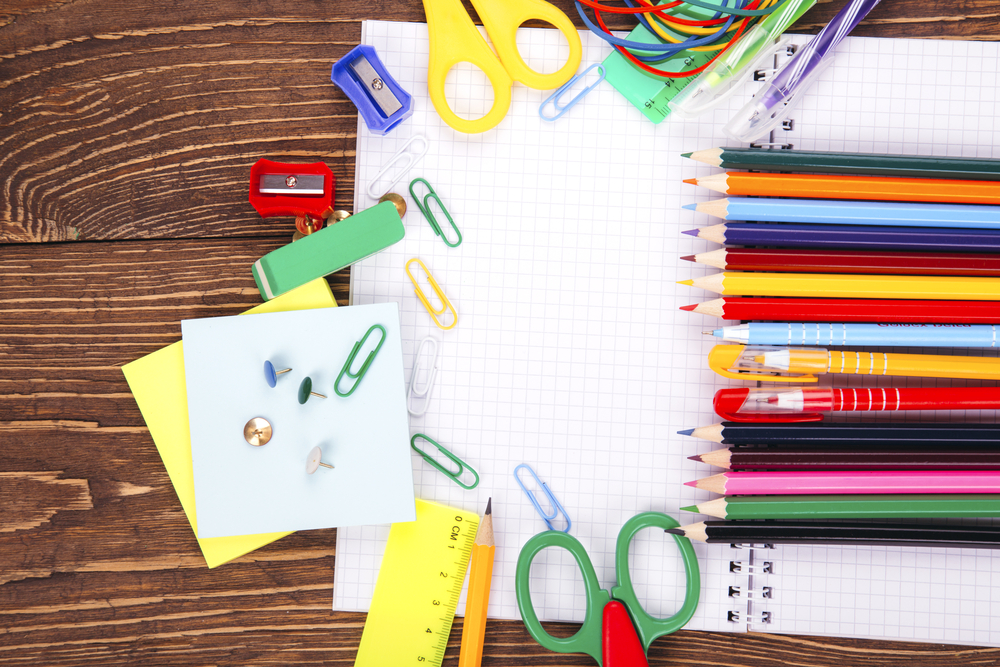
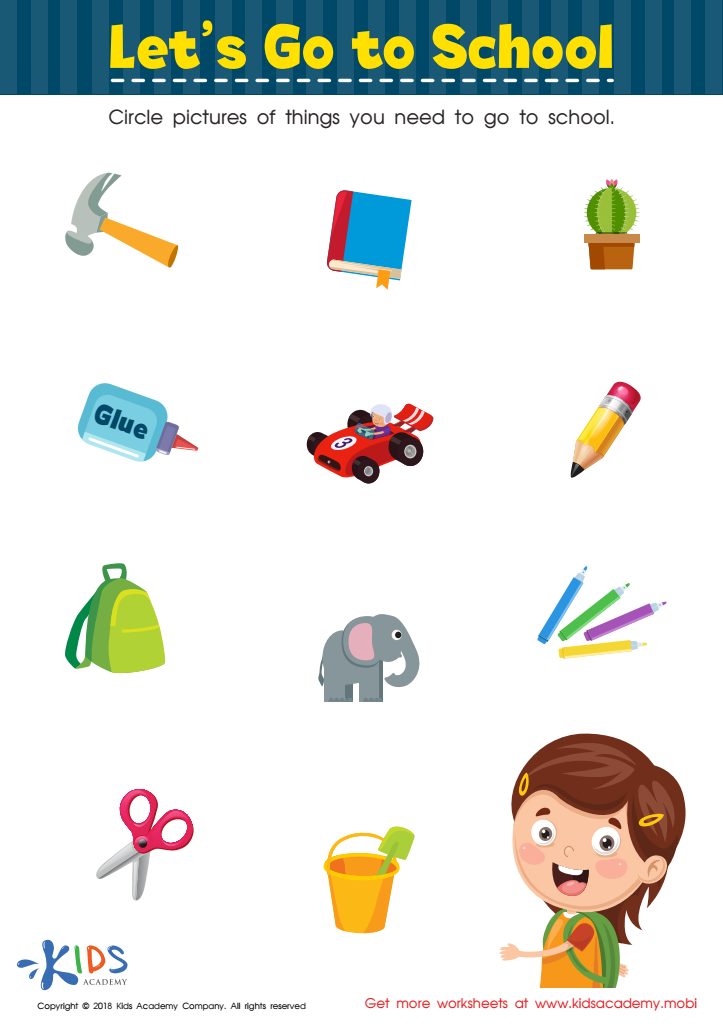
Ask your kids to circle the objects they need for school on this worksheet. It contains pictures of different objects - some needed and some not related to school. This should be easy for them as they're already enrolled or homeschooled.
Let's Go to School! Worksheet
Worksheet
What Do you See at the Library? Worksheet


What Do you See at the Library? Worksheet

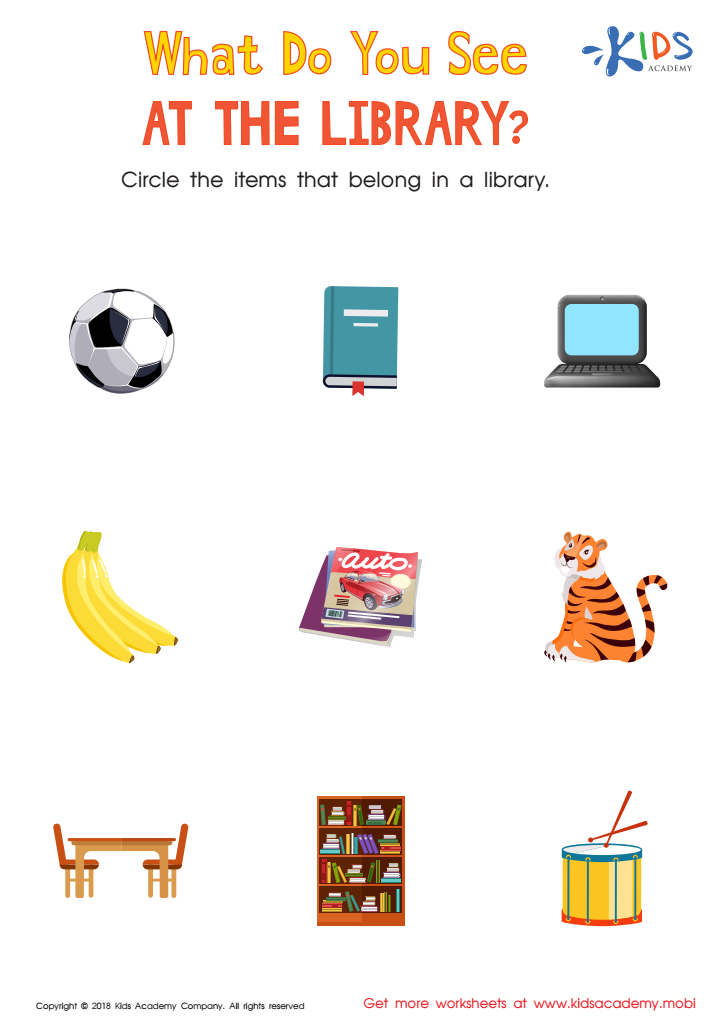
Let your kids look at the worksheet with pictures of objects found in libraries and those that don't. Ask them to list some, then circle the ones that belong in a library. Can they identify them? See if you can spot any they miss!
What Do you See at the Library? Worksheet

Worksheet
Let's Go to the Library! Worksheet

Let's Go to the Library! Worksheet

How often does your child visit the library? If they're a frequent visitor, they'll breeze through this worksheet. It requires them to look at pictures that depict activities done in the library and activities not allowed. Ask them to circle the correct picture. It's a fun way to reinforce library knowledge.
Let's Go to the Library! Worksheet
Worksheet
Let's Go to the Store! Worksheet

Let's Go to the Store! Worksheet

Take your kids along for errands and shopping. Ask them to identify items on this worksheet and the store where you'd buy them. See how much attention they were paying! Have fun and find out with this fun worksheet.
Let's Go to the Store! Worksheet
Worksheet
City Workers: Matching Worksheet

City Workers: Matching Worksheet

Examine the worksheet with your kid. Identify the individuals on the left and their jobs. Have your child circle the correct items on the right that pertain to the city workers. Help your child learn about city workers with this activity.
City Workers: Matching Worksheet
Worksheet


Worksheets designed specifically for 6-year-olds offer an array of benefits that are pivotal to the developmental phase these young learners are navigating through. At this age, children are at a crucial stage where they are beginning to solidify the foundation of their academic and cognitive skills. Worksheets tailored for 6-year-olds cater to their unique learning needs, presenting concepts in an engaging and age-appropriate manner.

One of the primary advantages of these worksheets is that they foster independence in learning. As 6-year-olds begin to grasp reading and follow instructions, worksheets allow them to work at their own pace, encouraging self-directed learning. This independence in tackling tasks not only boosts their confidence but also cultivates a sense of responsibility towards their education.

Moreover, worksheets for 6-year-olds are designed to enhance fine motor skills through activities such as writing, cutting, and coloring. These exercises are crucial for developing hand-eye coordination and preparing children for more complex tasks in the future.

Another significant benefit is the reinforcement of academic concepts. Through repeated practice and engaging exercises, children can consolidate their understanding of basic literacy and numeracy skills, which are foundational to their future academic success.

Additionally, these worksheets offer a structured way for parents and educators to assess a child's learning progress, identify areas of strength, and areas that may require more attention. This ongoing assessment ensures that learning gaps are addressed promptly, setting children on a path of continuous improvement and growth.

In summary, worksheets for 6-year-olds are an invaluable tool in the educational journey of young learners. They not only make learning fun and engaging but also play a critical role in developing key skills that will serve children well beyond their early years of schooling.