Filters

6 filtered results

Clear all filters
Favorites
With answer key
Interactive

6 filtered results

Difficulty Level

Grade


Discover engaging and educational "Easy Letter Sounds Worksheets for Ages 3-6" designed to make learning fun for your little one! These printable worksheets from Kids Academy help young learners develop critical foundational skills in recognizing and pronouncing letter sounds. Perfect for preschool and kindergarten students, our colorful and interactive activities combine visual aids with hands-on practice to enhance early literacy. Each exercise is tailored to keep your child interested and motivated, promoting confidence as they master the basics of reading. Join us today to give your child the head start they deserve on their educational journey!

Check out this FREE Trial Lesson on Letter Sounds for age 3-6!

One-to-one Letter-sound Correspondence

Favorites
With answer key
Interactive
  • 3-6
  • Interactive
  • Letter Sounds
  • Easy
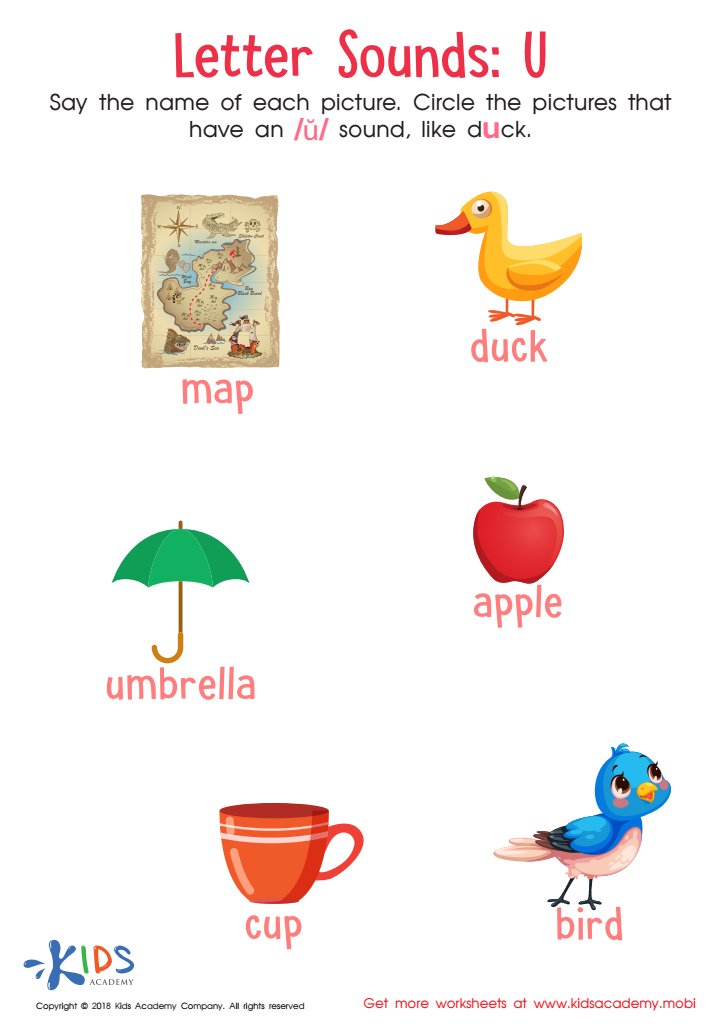
Letter U Sounds Worksheet

Letter U Sounds Worksheet

The letter U is special with multiple pronunciations. This worksheet helps kids identify the short «u» in words like duck and cup. Read the words aloud and listen closely to the sounds. Circle only words with the correct sound to complete the sheet. Kids will quickly know that words like "map" don't contain a U.
Letter U Sounds Worksheet
Worksheet
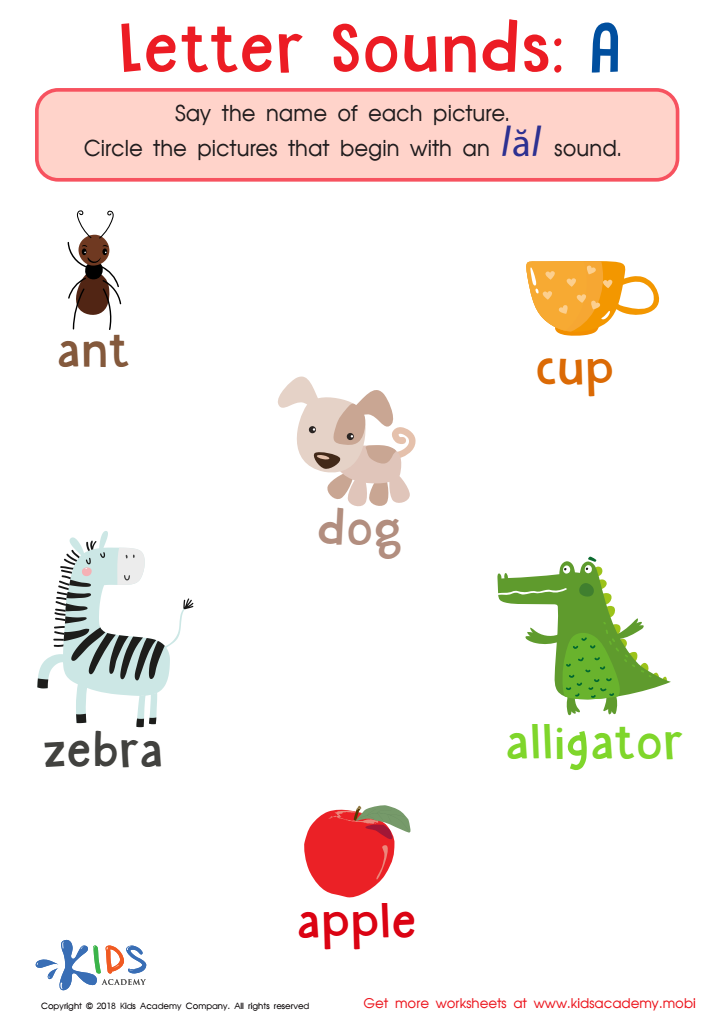
Letter A Sounds Worksheet

Letter A Sounds Worksheet

Encourage your new reader to practice the «ă» sound with this fun, free PDF worksheet. With the help of picture clues, they'll say the name of each word and trace circles around the items that start with «ă». This worksheet is an effective way to boost beginning sound skills while having fun!
Letter A Sounds Worksheet
Worksheet
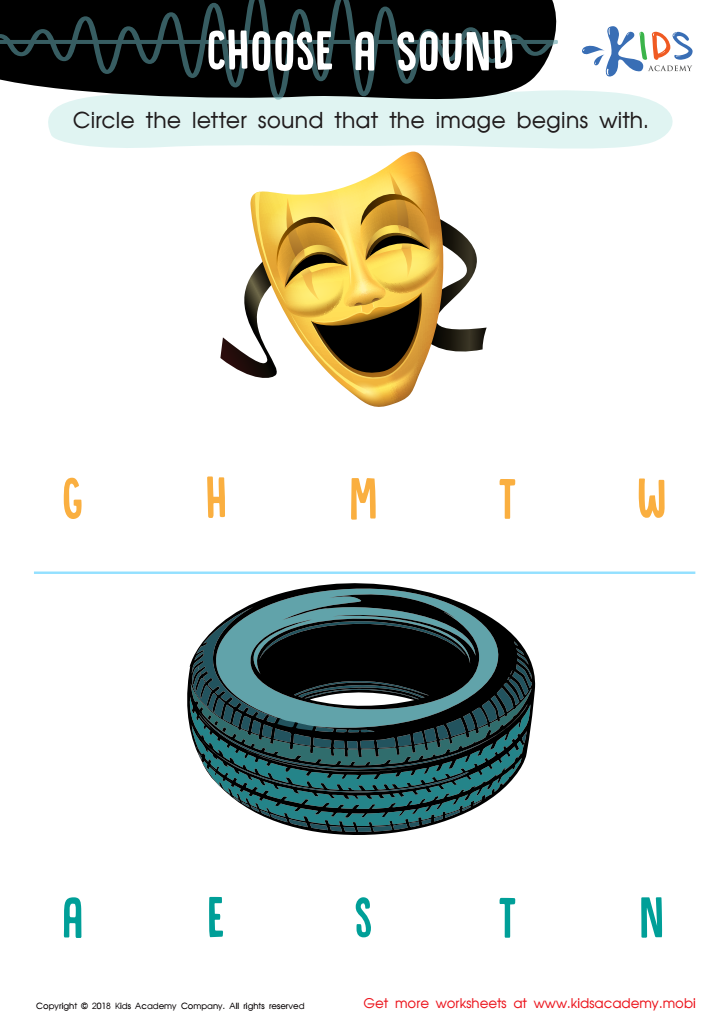
Choose a Sound Worksheet

Choose a Sound Worksheet

Help your child hone pre-reading skills with this colorful worksheet! They'll practice tracing letter sounds, develop phoneme awareness, and gain confidence. Plus, it's a fun way to work on their fine motor skills.
Choose a Sound Worksheet
Worksheet
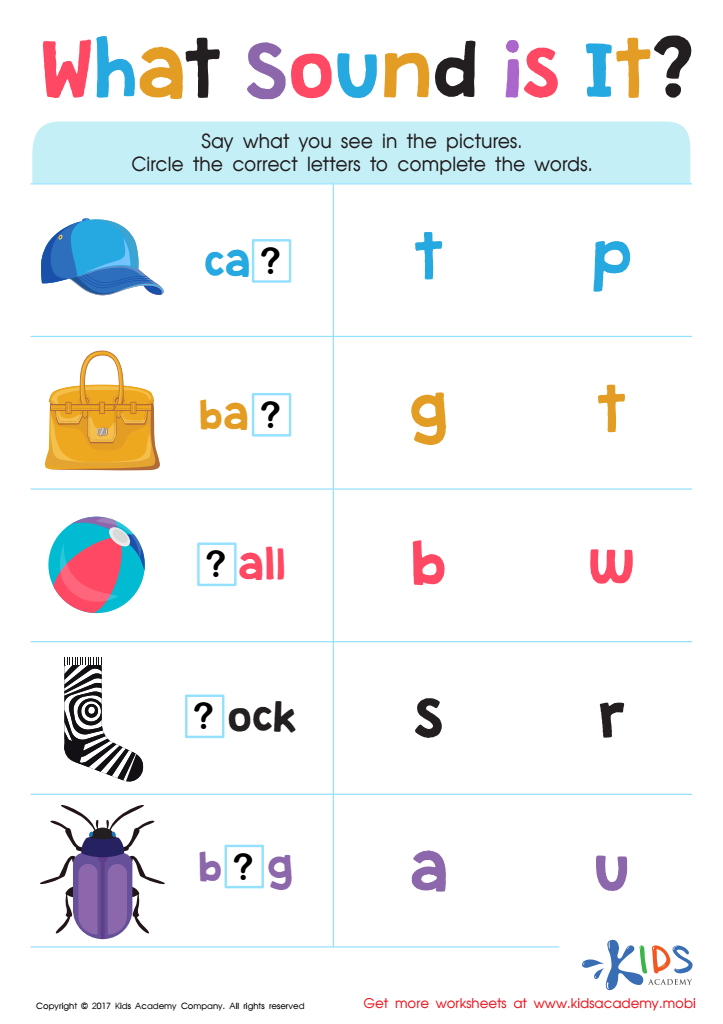
What Sound Is it? Worksheet

What Sound Is it? Worksheet

Have your child say the words for the pictures on this fun worksheet. As he or she sounds out the word, your child will use the provided letter choices to complete it, building reading and phonics skills. Visual cues make it easier to identify the correct beginning, middle, or end sound.
What Sound Is it? Worksheet
Worksheet
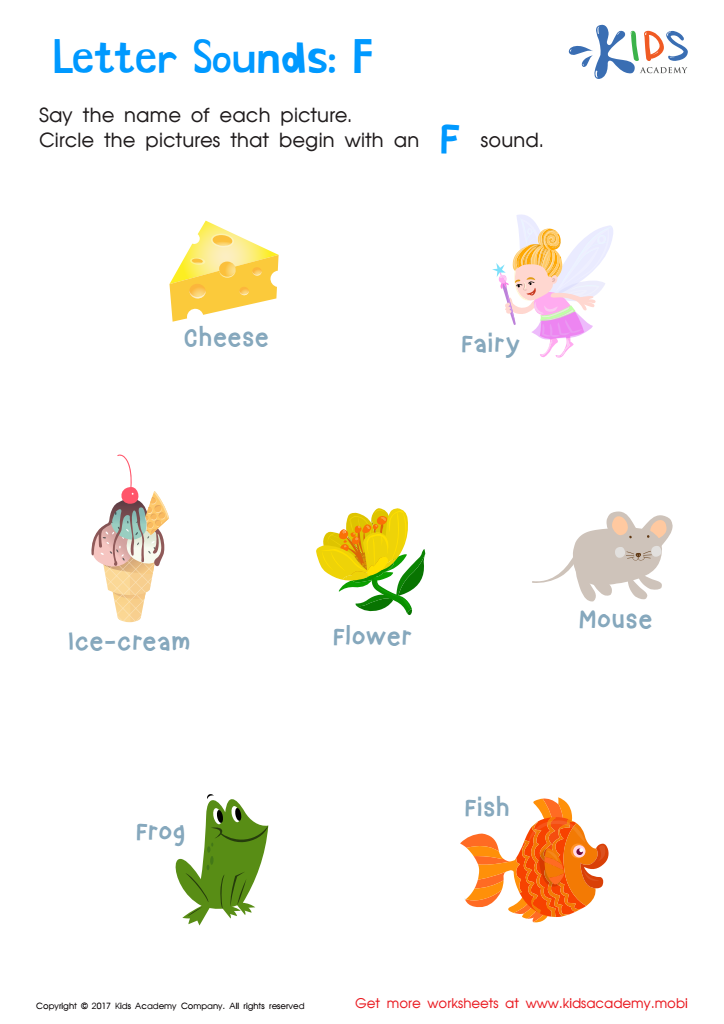
Letter f sounds worksheet

Letter F Sounds Worksheet

Kids will practice identifying 'f' words, tracing, and coloring the letter F for a great way to learn phonics. Help your child discover the wonders of the letter 'F' with this fun worksheet! Kids will practice identifying 'F' words, tracing and coloring the letter, and building early reading skills. Stimulate their learning and let them connect letter sounds to words they know. An enjoyable way to practice phonics!
Letter F Sounds Worksheet
Worksheet
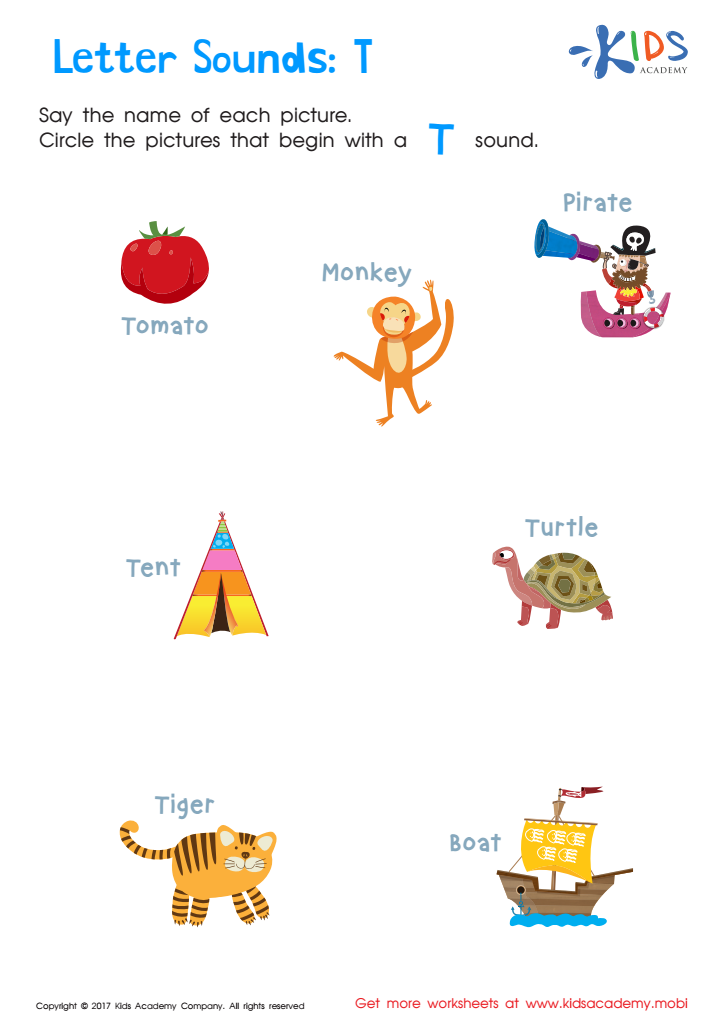
Letter t sounds worksheet

Letter T Sounds Worksheet

This worksheet is a fun way to help kids learn the t sound. It has familiar pictures and an easy-to-follow format, so kids can quickly recognize and learn the letter t.
Letter T Sounds Worksheet
Worksheet


Easy Letter Sounds for Ages 3-6 is a foundational tool essential for early childhood education. At this developmental stage, children are like sponges, rapidly absorbing new information. Engaging with letter sounds during these years establishes the groundwork for reading and language proficiency—skills that are crucial for academic success and overall communication.

When children familiarize themselves with letter sounds early on, they begin to understand the vital connection between letters and their corresponding sounds, a crucial step in phonemic awareness. This skill is the bridge to phonics, which helps with decoding words, a fundamental part of reading. Strong reading skills contribute significantly to a child’s general knowledge, confidence, and expressive skills.

Additionally, engaging young learners with letter sounds in a fun and interactive way caters to multiple learning styles and keeps them interested, making education an enjoyable experience rather than a chore. Not only does this foster a love for learning, but it also enhances cognitive development, memory, and auditory discrimination.

For parents and teachers alike, investing time and effort into teaching these skills pays profound long-term dividends. Children who master letter sounds between ages 3-6 are often more poised to excel in later academic stages, showing advancements in their reading, writing, and communication abilities.