Addition Practice Easy Addition Worksheets for 3-Year-Olds
7 filtered results
-
From - To
Introducing our "Addition Practice Easy Addition Worksheets for 3-Year-Olds," designed to make early math learning fun and accessible! These worksheets feature simple, colorful exercises that are perfect for young learners, fostering foundational skills in a playful manner. Ideal for preschool children, our worksheets use engaging themes and visuals to teach basic addition concepts, ensuring kids stay interested and motivated. Each page is crafted to build confidence and develop essential math skills through repetition and practice. Help your child start their math journey on the right foot with our exciting and educational worksheets!
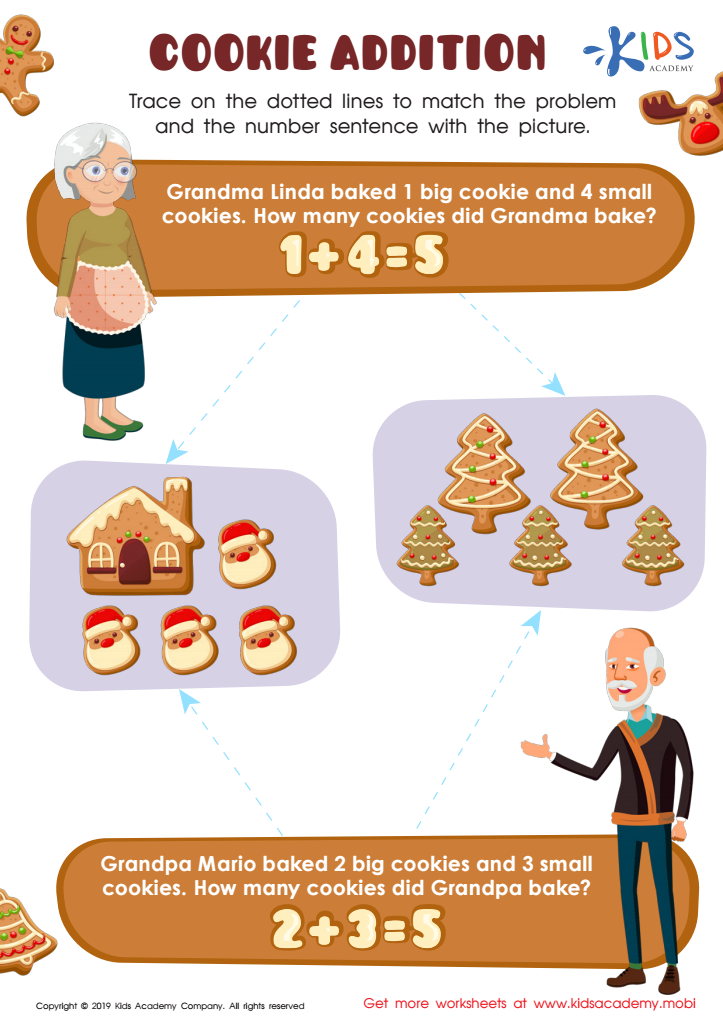
Cookie Addition Worksheet
 Assign to My Students
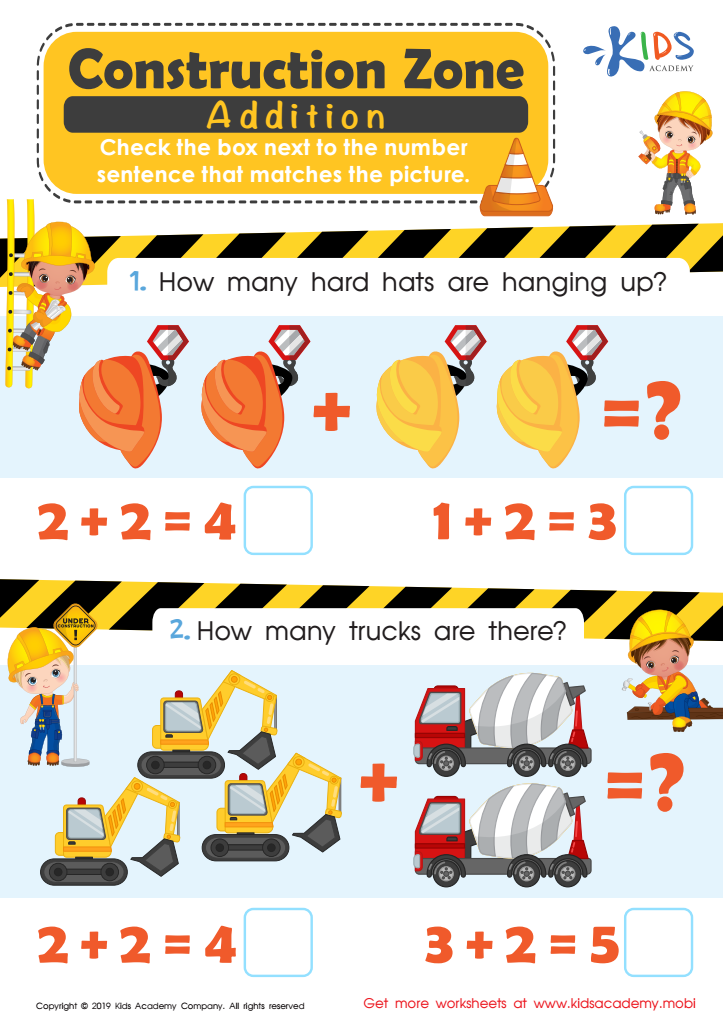
Construction Zone Addition Worksheet
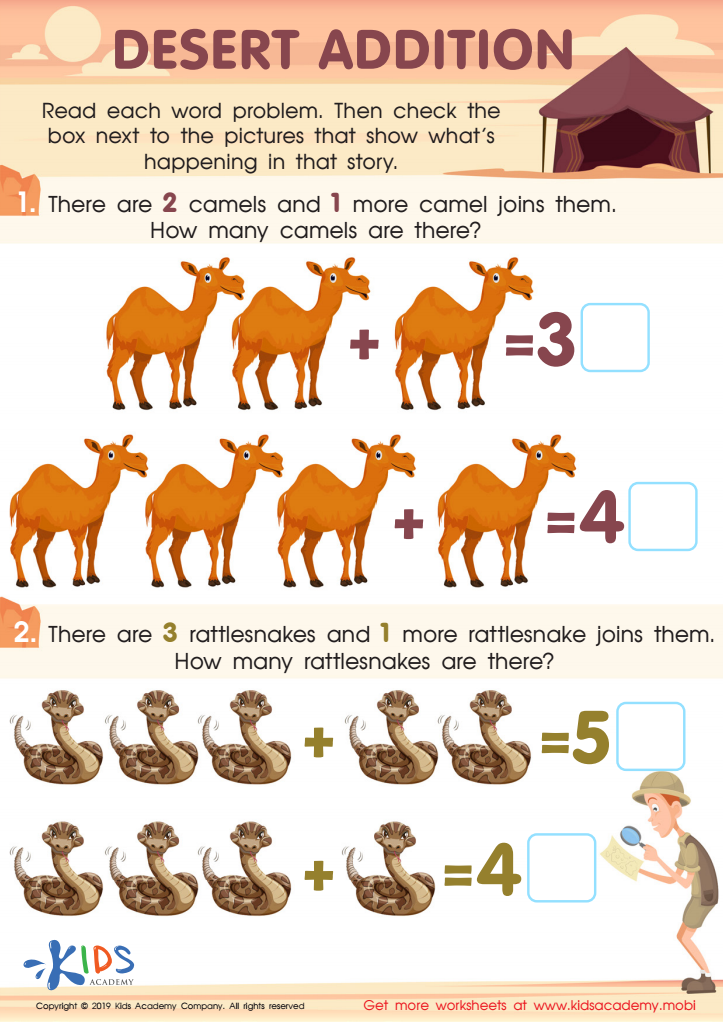
Desert Addition Worksheet
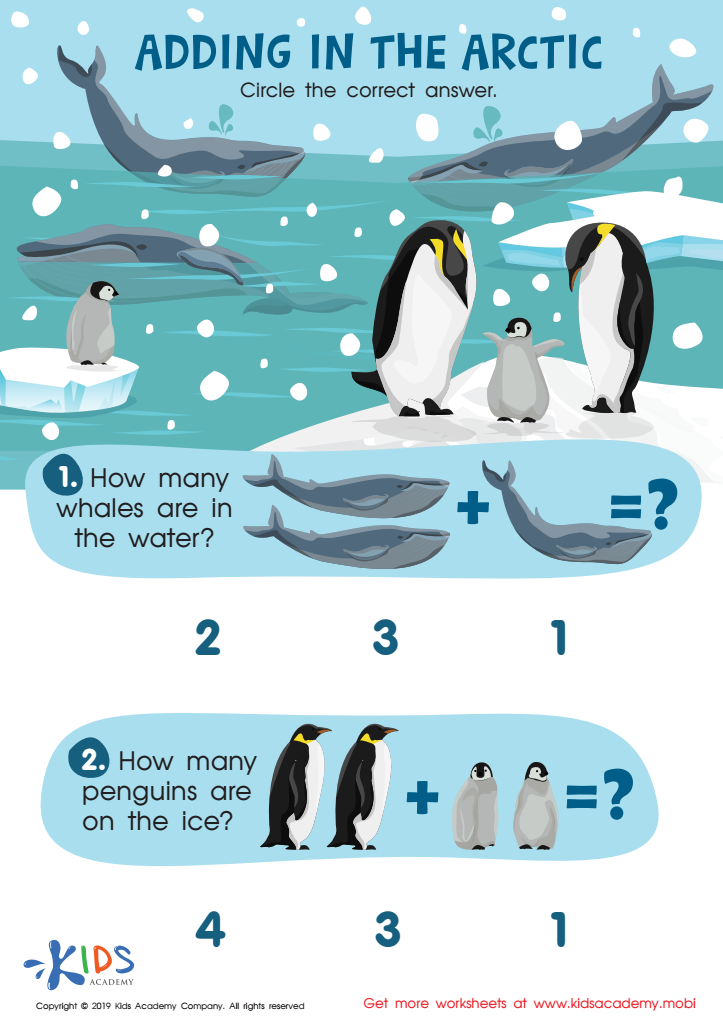
Adding in the Arctic Worksheet
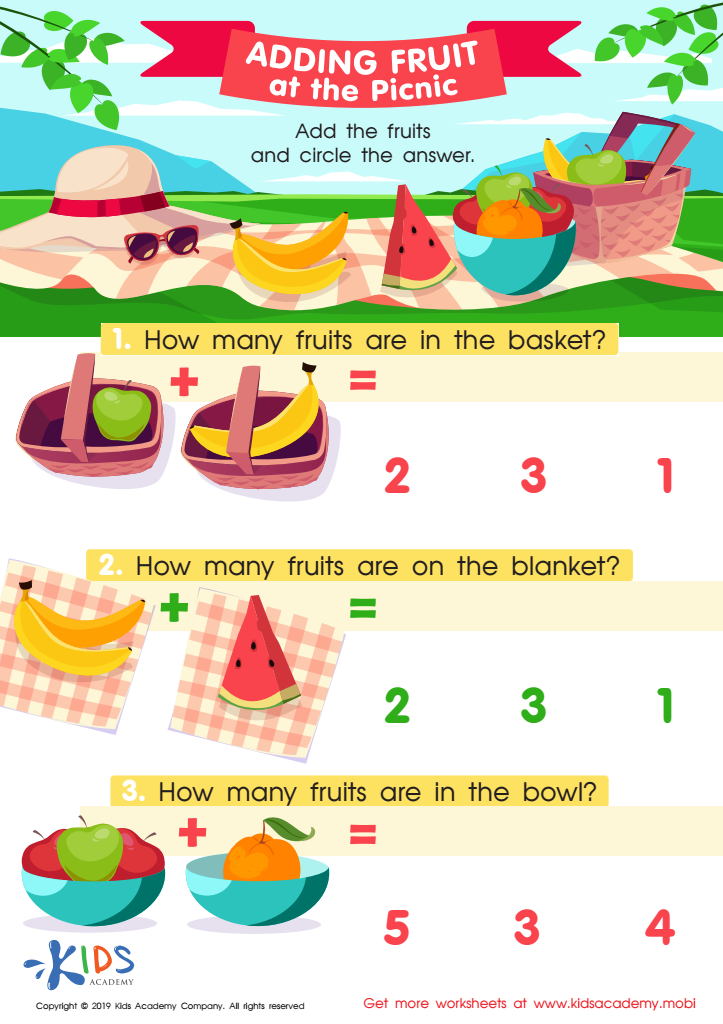
Adding Fruit at the Picnic Worksheet
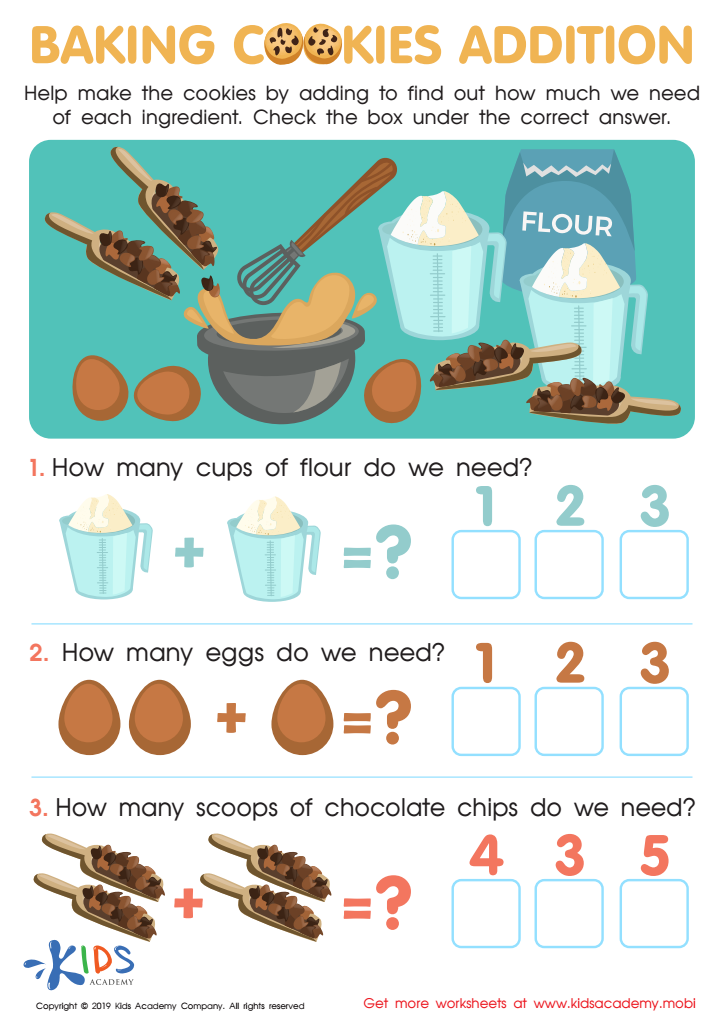
Baking Cookies Addition Worksheet
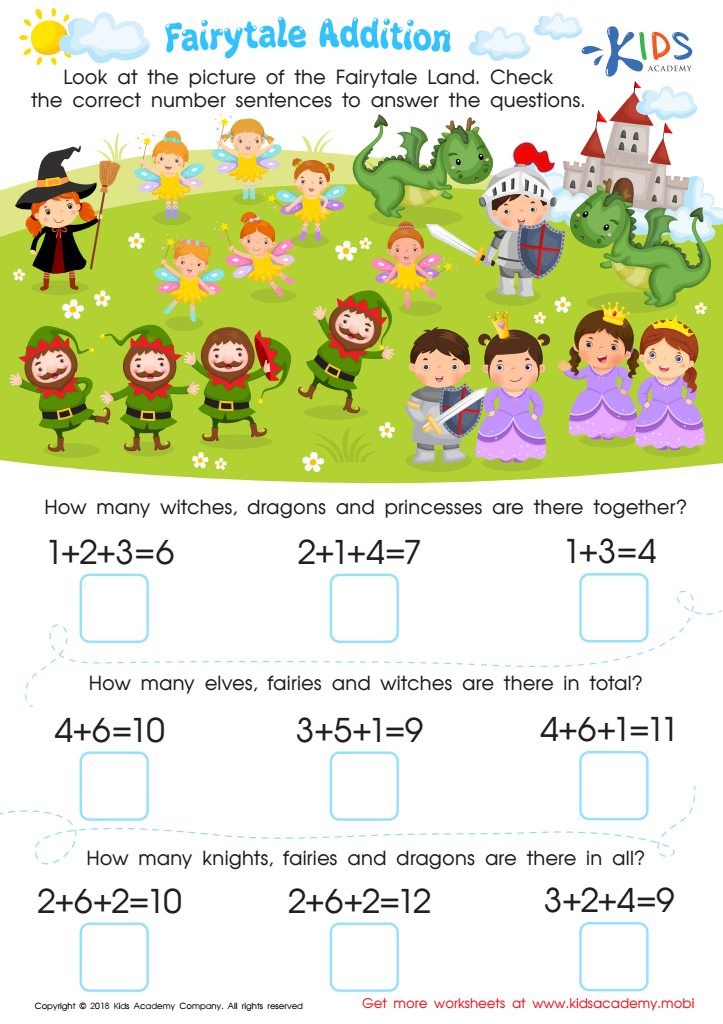
Fairytale Addition Worksheet








Parents and teachers should prioritize addition practice for 3-year-olds because foundational math skills are critical for early cognitive development and future academic success. Engaging young children in easy addition exercises stimulates their budding numerical sense, helping them grasp basic concepts like counting, number recognition, and the relationship between quantities.
At this early age, the brain is highly receptive to new information and forms connections rapidly; introducing addition now can boost a child's confidence with numbers and promote a positive attitude towards learning math. These early experiences with addition not only enhance problem-solving abilities but also encourage logical reasoning and critical thinking—skills that are invaluable both in school and everyday life.
Furthermore, structured addition practice fosters fine motor skills as children learn to write numbers, enhances concentration through focused activities, and nurtures social skills during interactive exercises. The use of playful, engaging methods such as counting objects, using visual aids, or playing educational games, ensures that learning remains enjoyable and stress-free for young minds.
By caring about and investing time in addition lessons for 3-year-olds, parents and teachers set the groundwork for a lifelong love of learning. This preparation smoothes the transition into more complex mathematical concepts in subsequent educational stages, setting the stage for academic achievement and a brighter future.








