Easy Beginning Sounds Worksheets for Ages 4-9
4 filtered results
-
From - To
Welcome to our "Easy Beginning Sounds Worksheets for Ages 4-9"! These engaging worksheets are designed to help young learners develop crucial phonemic awareness by focusing on the sounds at the beginning of words. Perfect for preschoolers and elementary students, our resources feature fun activities such as tracing, matching, and identifying initial sounds. Each worksheet aims to enhance reading readiness while making learning enjoyable. With appealing illustrations and age-appropriate challenges, kids will love practicing phonics through these interactive exercises. Start building strong language skills today and watch your child thrive in their literacy journey! Explore our collection and ignite their passion for reading!
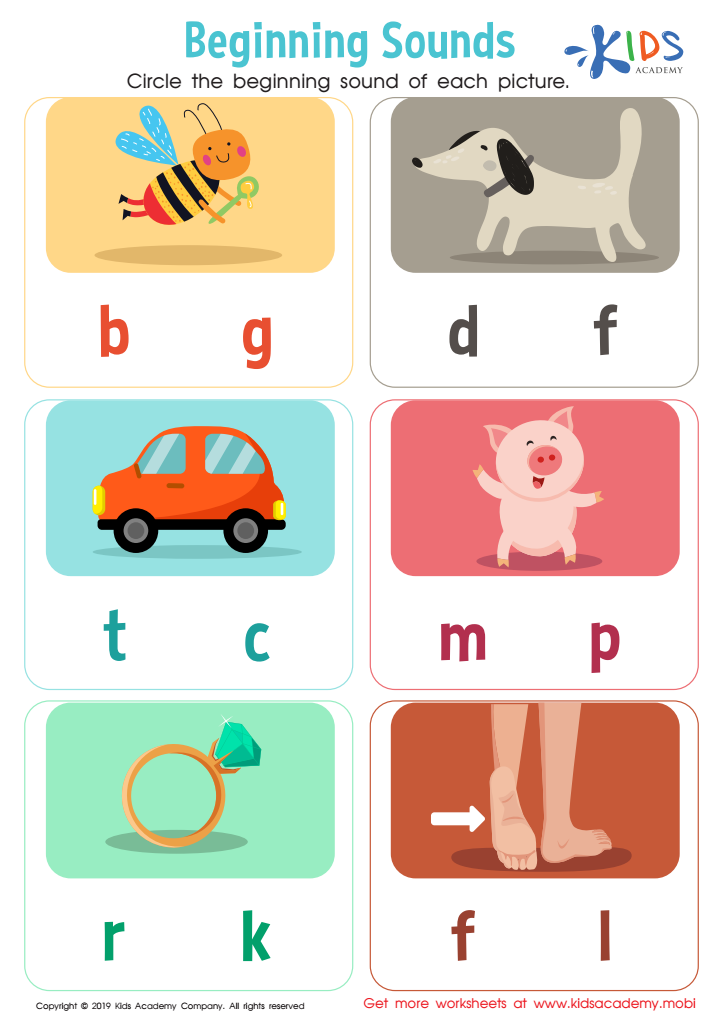
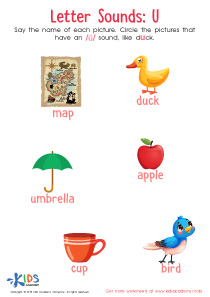
Beginning Sounds Worksheet
 Assign to My Students
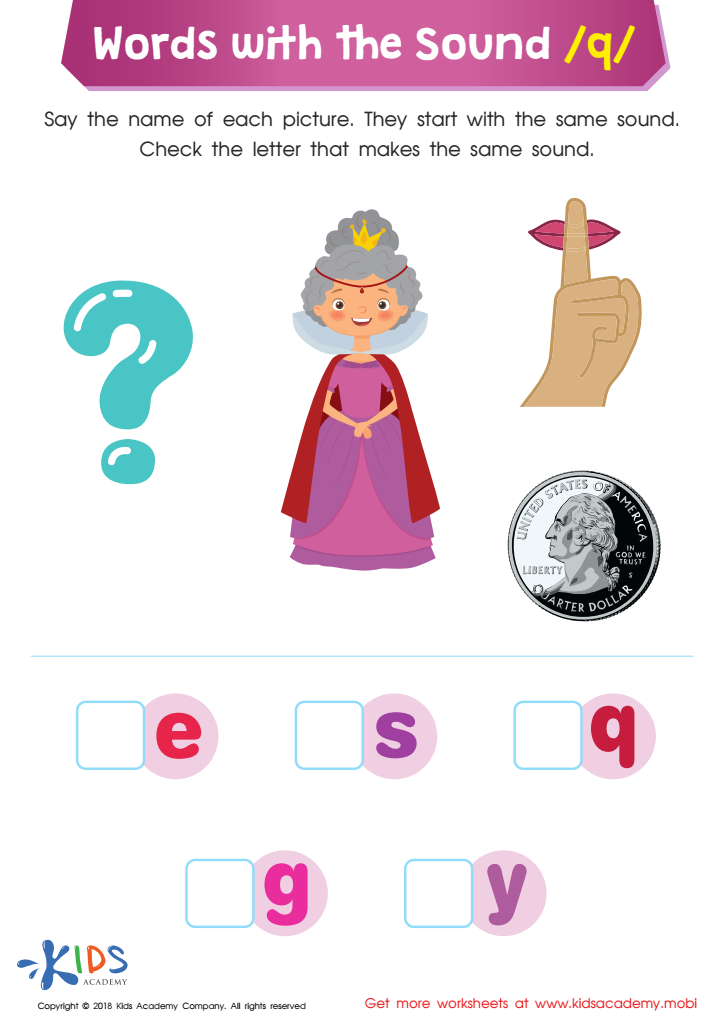
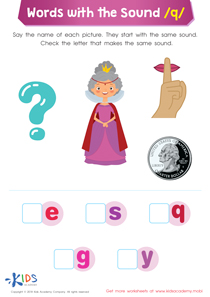
Words with Sound Q Reading Worksheet
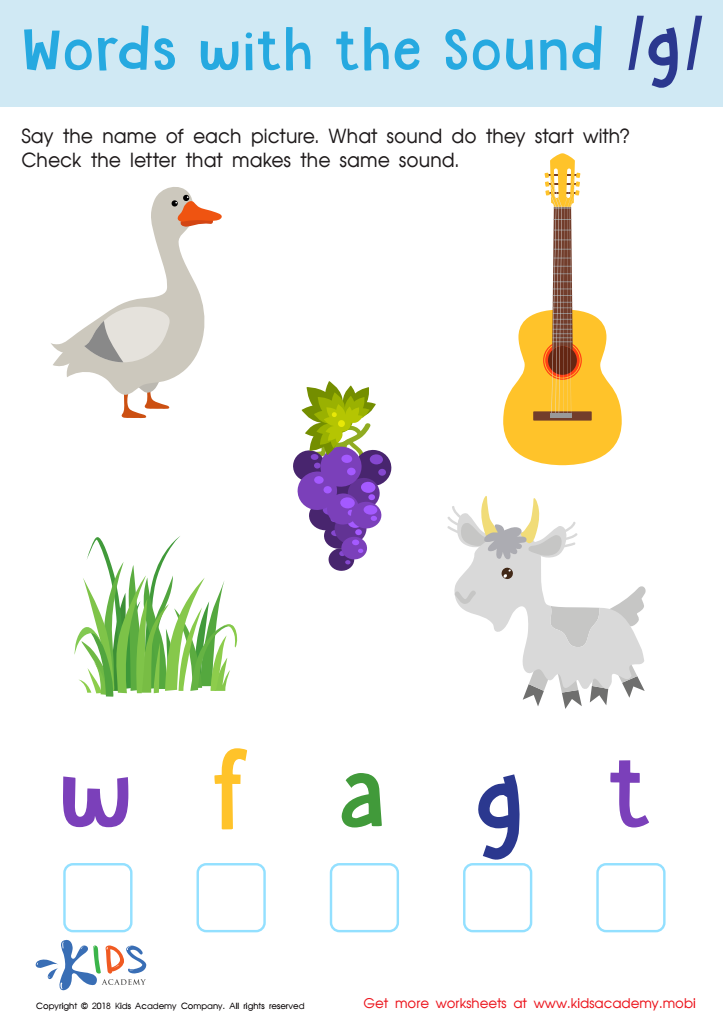
Words with sound g Reading Worksheet
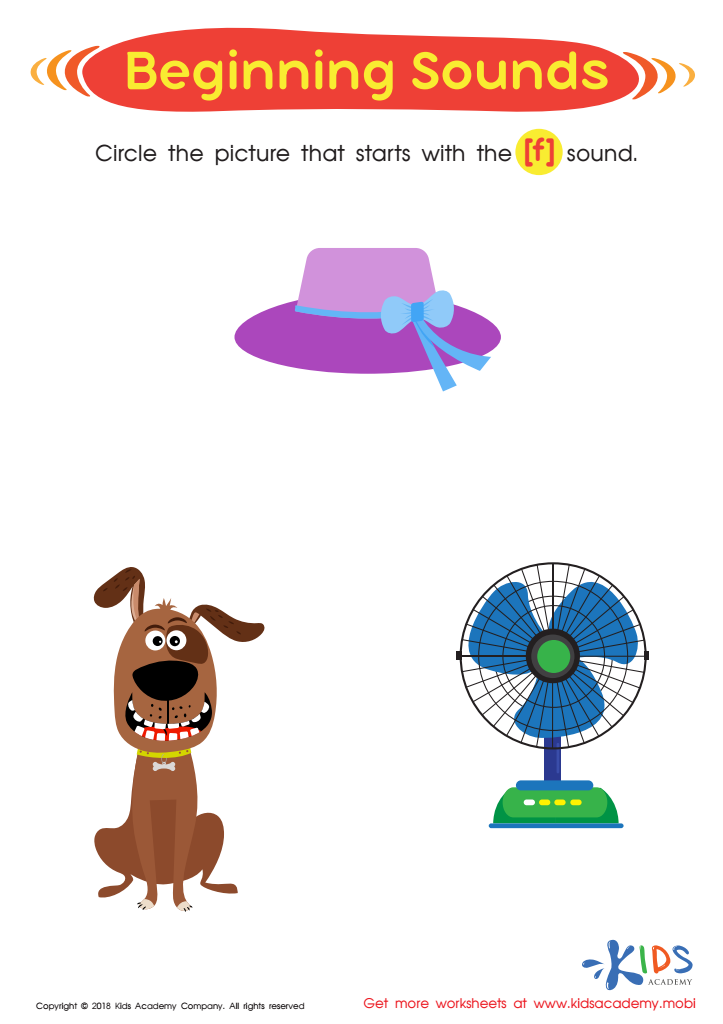
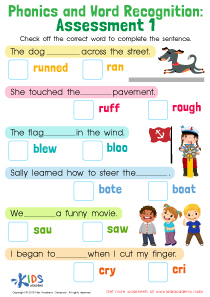
Beginning Sounds Assessment Printable








Easy Beginning Sounds is essential for parents and teachers to prioritize in children ages 4-9 as it lays the foundation for reading and communication skills. Early phonemic awareness, which includes recognizing and articulating beginning sounds, fosters children's ability to decode words, making the reading process smoother as they progress in their literacy journey.
When children can identify and manipulate initial sounds, they become more confident readers and spellers. This skill enhances their ability to make connections between letters and sounds, promotes vocabulary expansion, and supports comprehension efforts as they explore texts. These early language competencies are invaluable for academic success in language arts and reading, influencing overall performance in school.
Furthermore, engaging with beginning sounds can be a fun and interactive experience, involving games, songs, and storytelling that fuel a love for learning. As parents and teachers incorporate easy beginning sounds into everyday activities, they not only strengthen children’s literacy skills but also encourage critical thinking and creativity.
By focusing on this crucial aspect of language development, adults can better equip young learners for future educational challenges, ultimately setting them on a path to lifelong learning and effective communication. Investing time in children’s early phonemic awareness is a step towards a brighter academic future.