Easy Letter Sounds Worksheets for Ages 4-9
6 filtered results
-
From - To
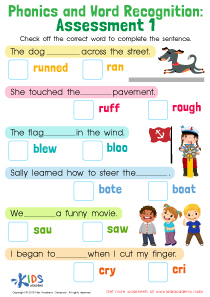
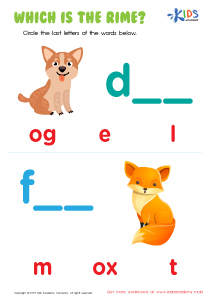
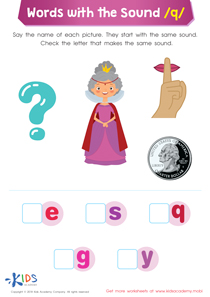
Discover our "Easy Letter Sounds Worksheets for Ages 4-9" at Kids Academy, designed to make learning phonics engaging and effective. Perfect for young learners, these worksheets help children master the foundational skill of associating letters with their corresponding sounds. With fun activities and vibrant illustrations, kids will enjoy practicing and reinforcing their letter sound knowledge. Our resources cater to different proficiency levels, ensuring that all children can progress confidently. Ideal for both classroom and home use, these worksheets are an excellent tool to support early literacy development. Start exploring now and watch your child's reading skills soar!
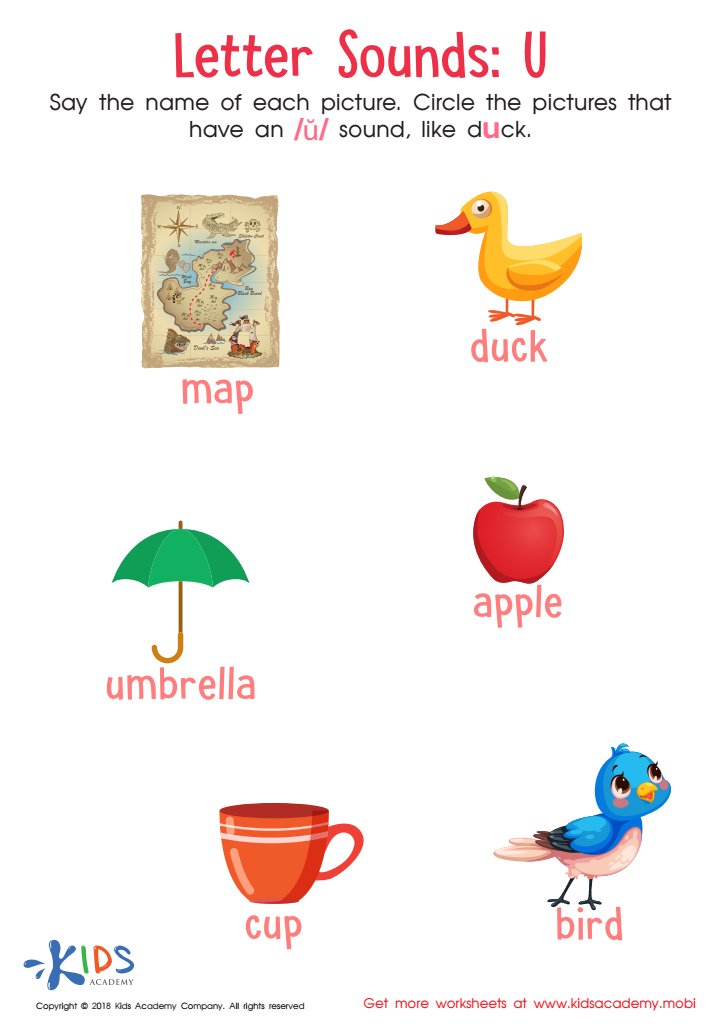
Letter U Sounds Worksheet
 Assign to My Students
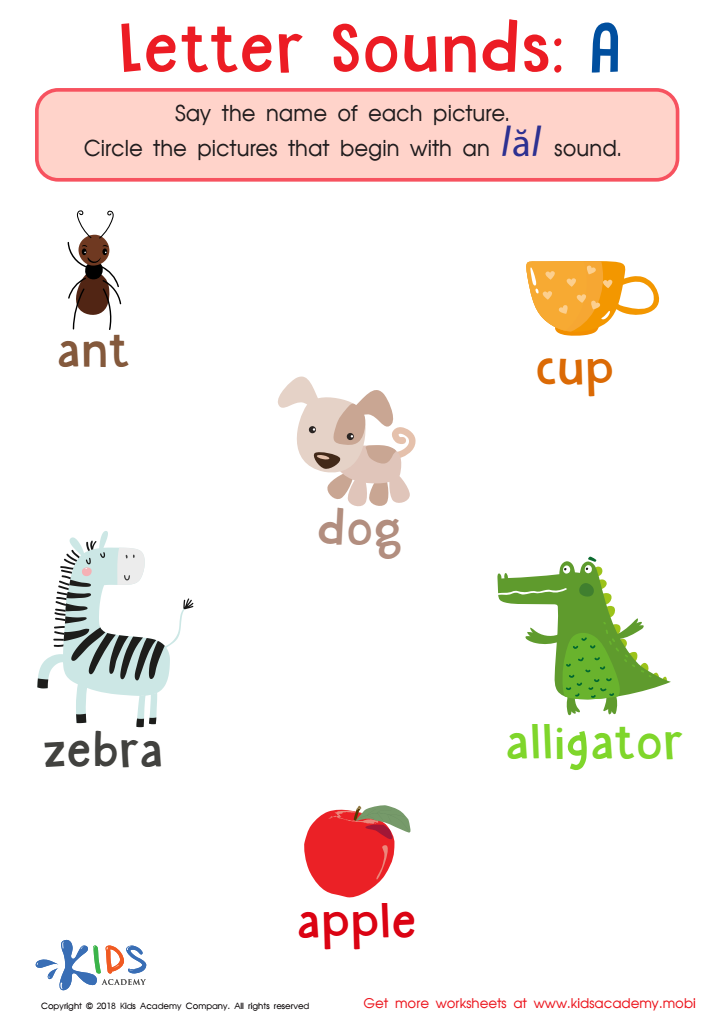
Letter A Sounds Worksheet
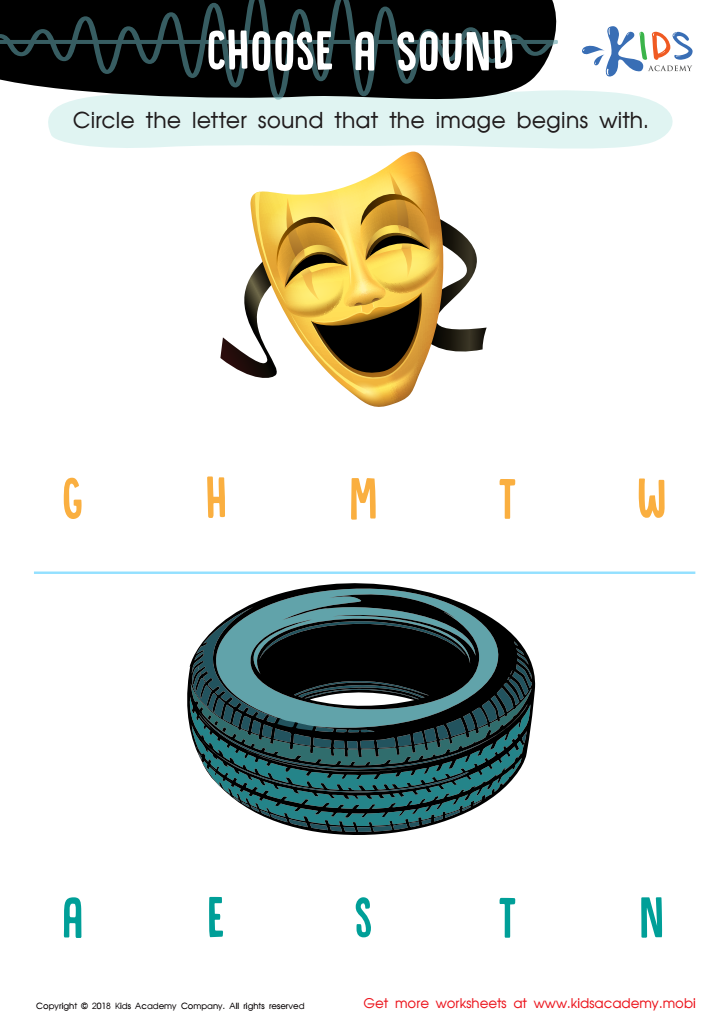
Choose a Sound Worksheet
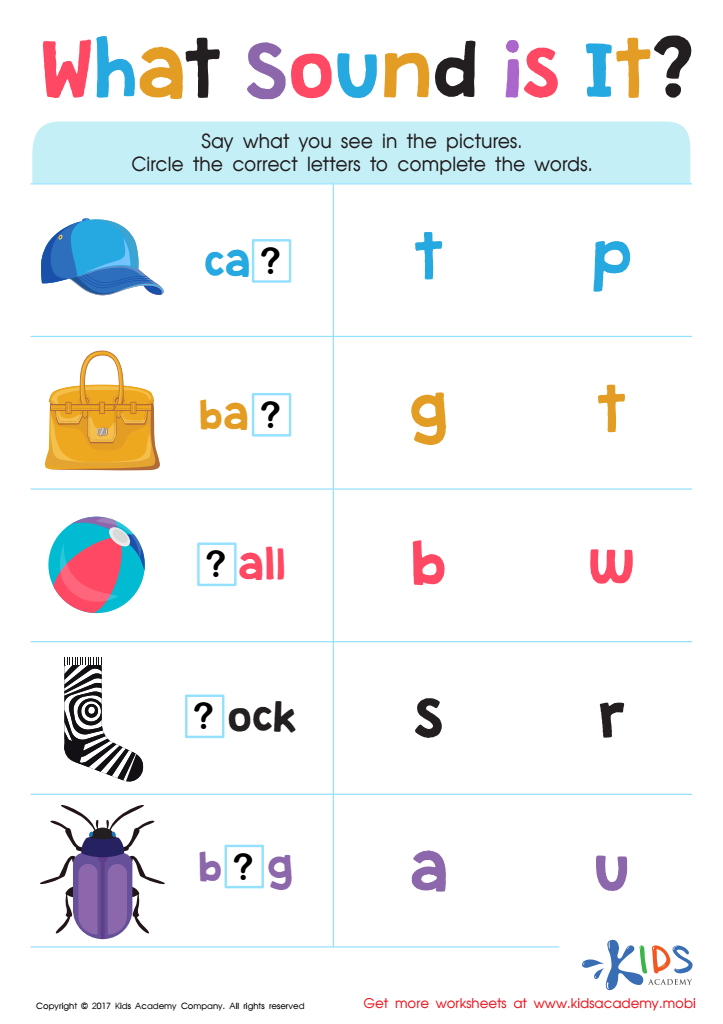
What Sound Is it? Worksheet
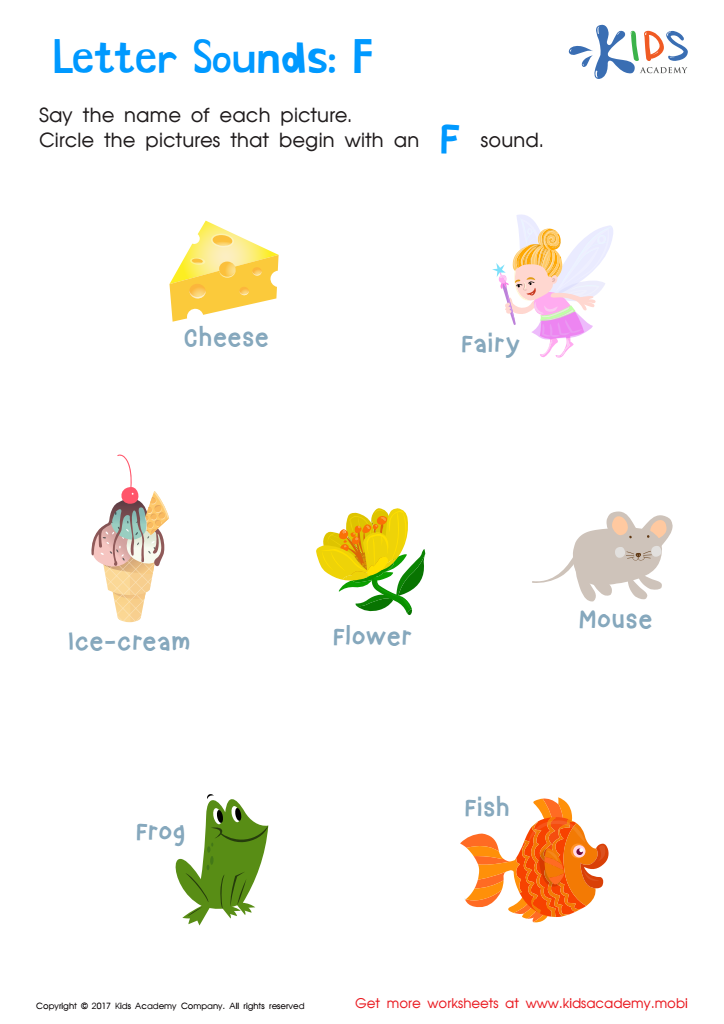
Letter F Sounds Worksheet
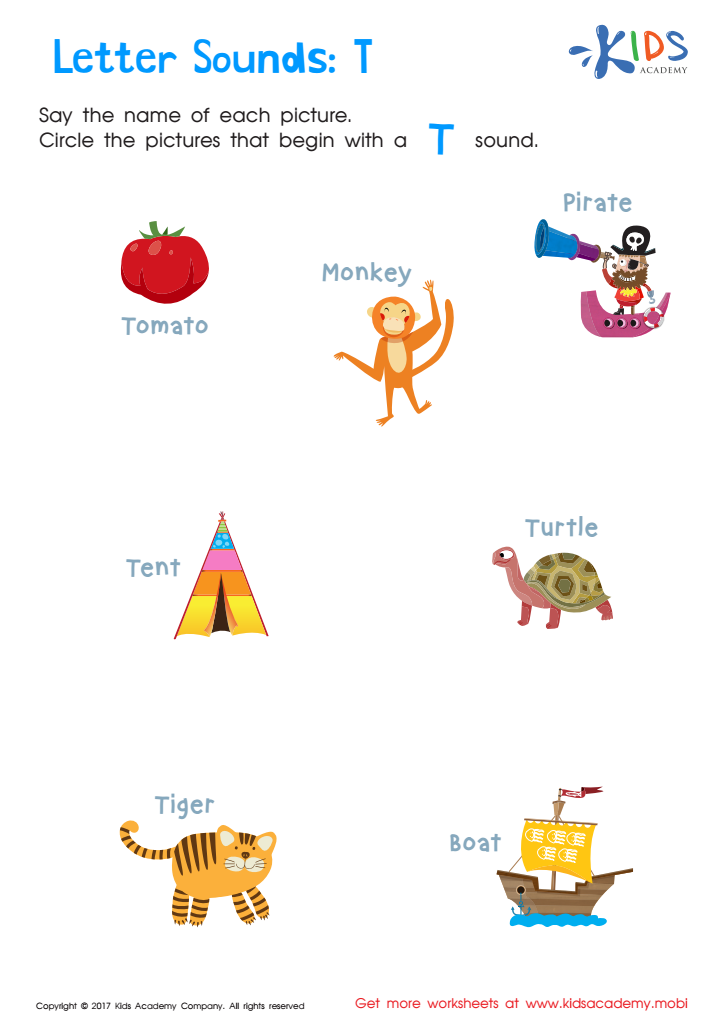
Letter T Sounds Worksheet








Parents and teachers should prioritize Easy Letter Sounds for children aged 4-9 because early phonetic awareness forms the foundation of proficient reading and writing skills. During these critical developmental years, children are exceptionally receptive to new information and are at the prime stage to build literacy capabilities. Understanding and recognizing letter sounds enables kids to decode words, making reading less of a chore and more of an adventure.
Introducing kids to Easy Letter Sounds enhances their phonemic awareness, which is crucial for spelling, reading fluency, and comprehension. Early mastery of these sounds sets the stage for their ability to tackle more complex linguistic tasks as they progress through their education. This foundational skill can vastly mitigate future learning challenges and reduce learning-related anxieties.
Moreover, developing reading skills at an early age cultivates a lifelong love for reading, opening doors to endless learning opportunities and fostering creativity and imagination. It also bolsters vocabulary, communication, and cognitive development—skills vital for all academic subjects and everyday life.
Thus, dedicating time to ensure young children understand and can manipulate letter sounds is investing in their future success, academically and beyond. It’s a vital step in empowering curious, confident, and competent learners, equipping them with the skills they need to thrive.