Easy Good Citizenship Worksheets for Ages 7-8
3 filtered results
-
From - To
Discover our engaging "Easy Good Citizenship Worksheets for Ages 7-8," designed to help young learners understand the importance of being responsible, respectful citizens. These thoughtfully crafted worksheets cover essential topics such as community involvement, personal responsibility, and the rights and duties of citizens, providing enjoyable activities that promote critical thinking. With colorful illustrations and user-friendly formats, children will love exploring concepts like teamwork, kindness, and fairness. Perfect for complementing classroom activities or as at-home practice, our printable resources make learning about good citizenship accessible and fun! Empower your child to embrace their role in the community with these exciting educational tools.
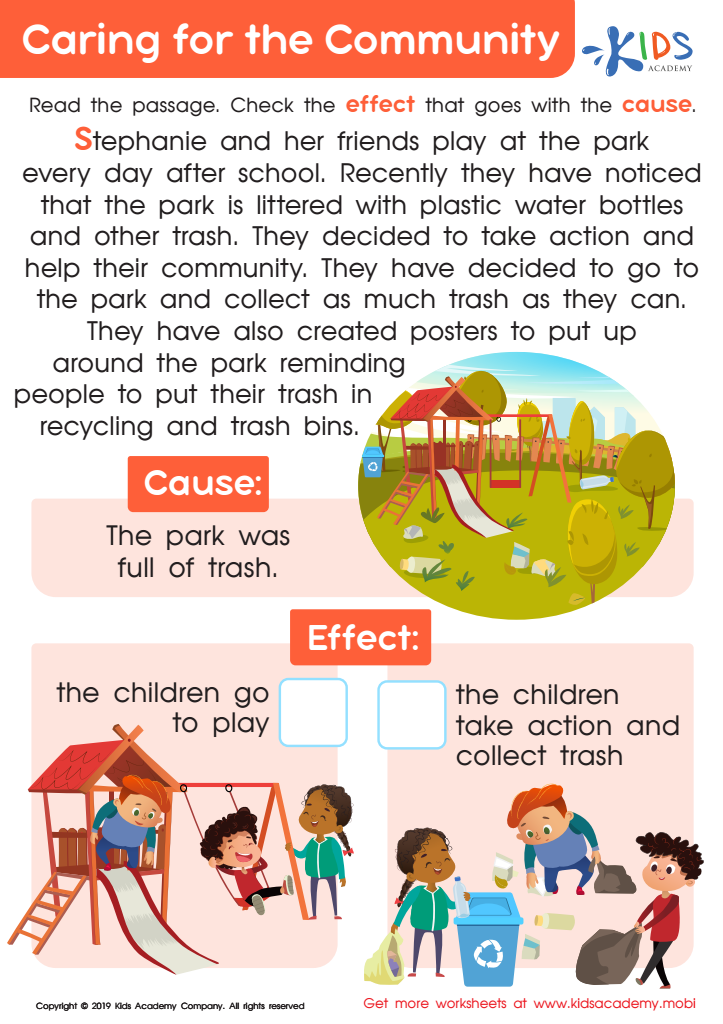
Caring for the Community Worksheet
 Assign to My Students
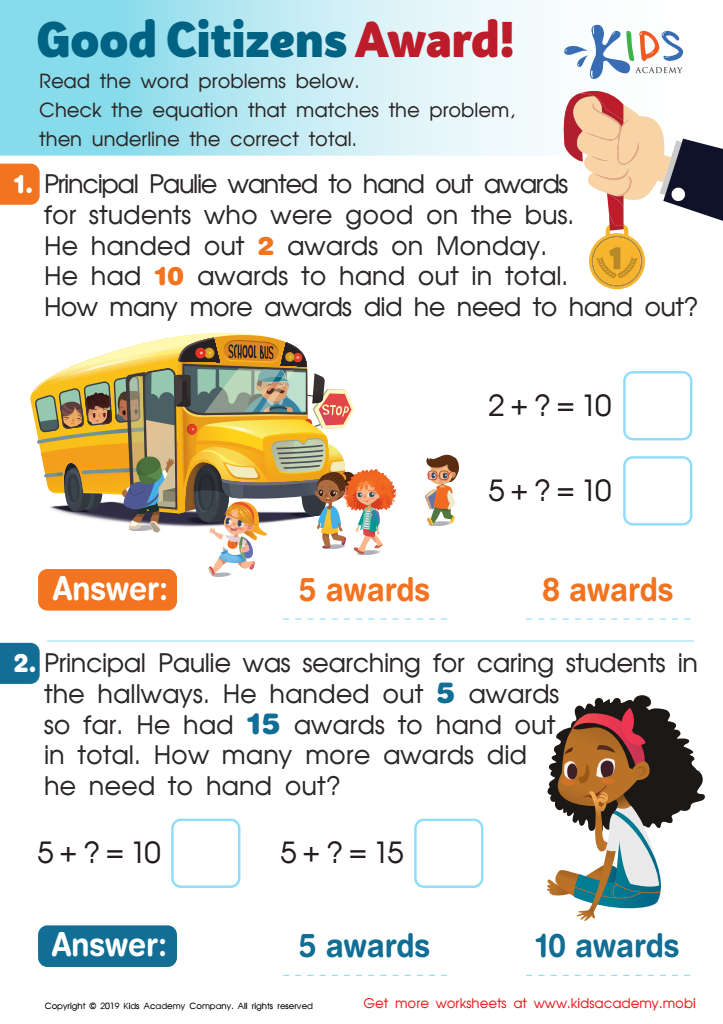
Good Citizens Award! Worksheet
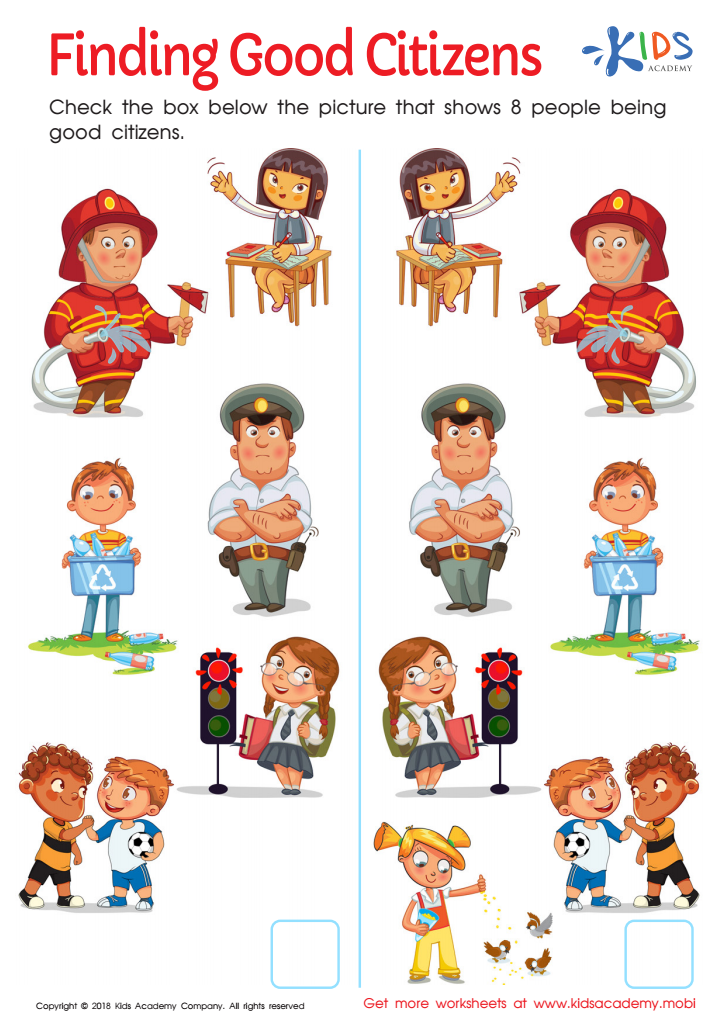
Finding Good Citizens Worksheet




Parents and teachers should prioritize "Easy Good Citizenship" for children aged 7-8 because this foundational stage of development shapes attitudes and social behaviors that can last a lifetime. At this age, children are increasingly aware of their surroundings and are beginning to understand their roles in their communities. Teaching good citizenship nurtures essential values such as respect, responsibility, and kindness.
By emphasizing good citizenship, children learn the importance of making positive choices, helping others, and contributing to their communities. This curriculum can boost their emotional intelligence and social skills, fostering empathy and cooperation among peers. Additionally, instilling good citizenship early enhances children’s sense of identity and belonging, empowering them to feel like active participants in their world.
Moreover, understanding good citizenship can lead to increased awareness about societal issues and encourages civic engagement, laying the groundwork for thoughtful future citizens. Children who engage in service projects or community activities develop self-esteem and greater connection to those around them. In sum, fostering easy good citizenship in young learners not only benefits individual children but builds stronger, more cohesive communities overall, supporting a healthier, more engaged society.