Extra Challenge Consonants Worksheets for Ages 3-4
3 filtered results
Difficulty Level
Grade
Age
-
From - To
Subject
Activity
Standards
Boost your child's early literacy skills with our "Extra Challenge Consonants Worksheets" specially designed for ages 3-4. These engaging worksheets are tailor-made to help young learners master consonant recognition and pronunciation through fun, interactive activities. Each worksheet is thoughtfully crafted by education experts to stimulate young minds and encourage confidence in identifying and using consonants. Perfect for preschoolers, these printable resources integrate vibrant visuals and playful exercises, turning learning into an exciting adventure. Equip your little one with the essential skills needed for reading success. Explore our collection today and watch their phonics skills thrive!
Favorites
With answer key
Interactive
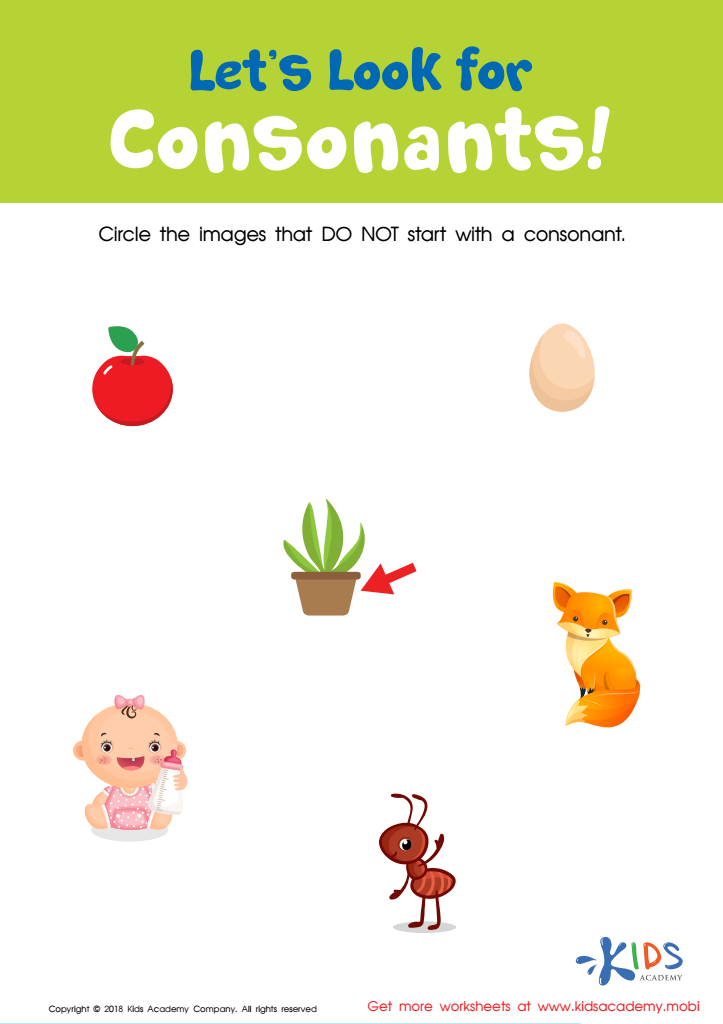
Let's Look for Consonants Worksheet
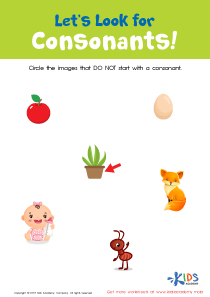
Help kids learn consonants and words that start with them. Ask them to recite the alphabet, then explain consonants are all letters but the 5 vowels. Use the worksheet to ask them to circle items without a consonant. Emphasize that's 21 consonants.
 Assign to My Students
Let's Look for Consonants Worksheet
Worksheet
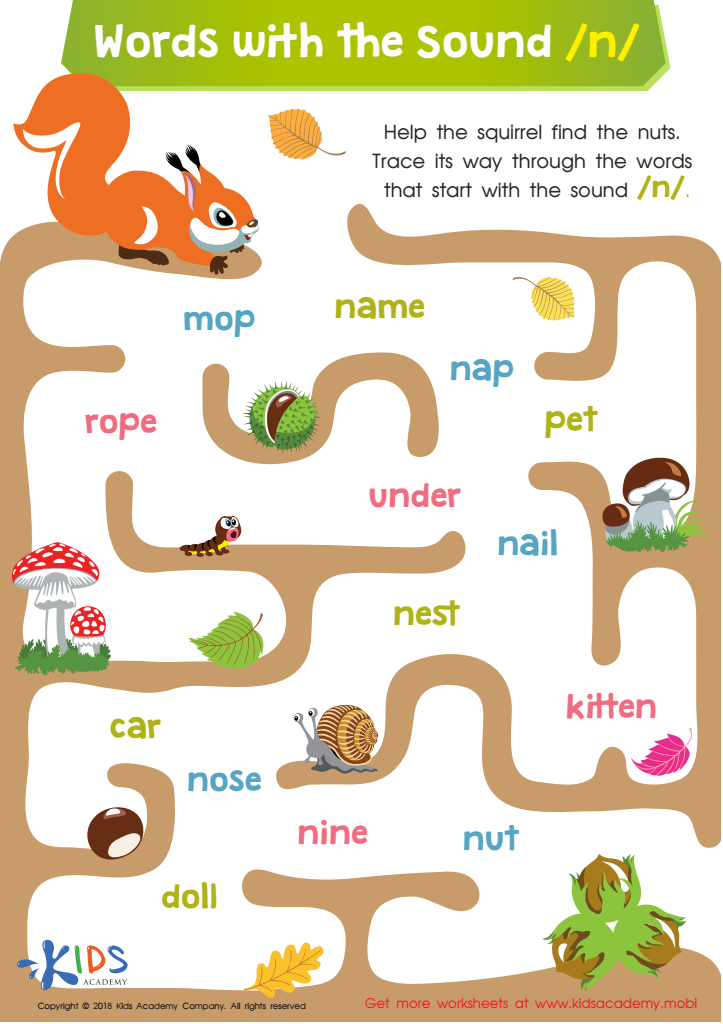
Words with Sound N Reading Worksheet
Young readers will love the colourful pictures and simple sight words on this download worksheet. They can trace their way through the maze as they help the cute squirrel reach his acorns, finding words with the sound "n" as they go. It's a fun way to work on reading skills - they won't even realise they're learning!
Words with Sound N Reading Worksheet
Worksheet
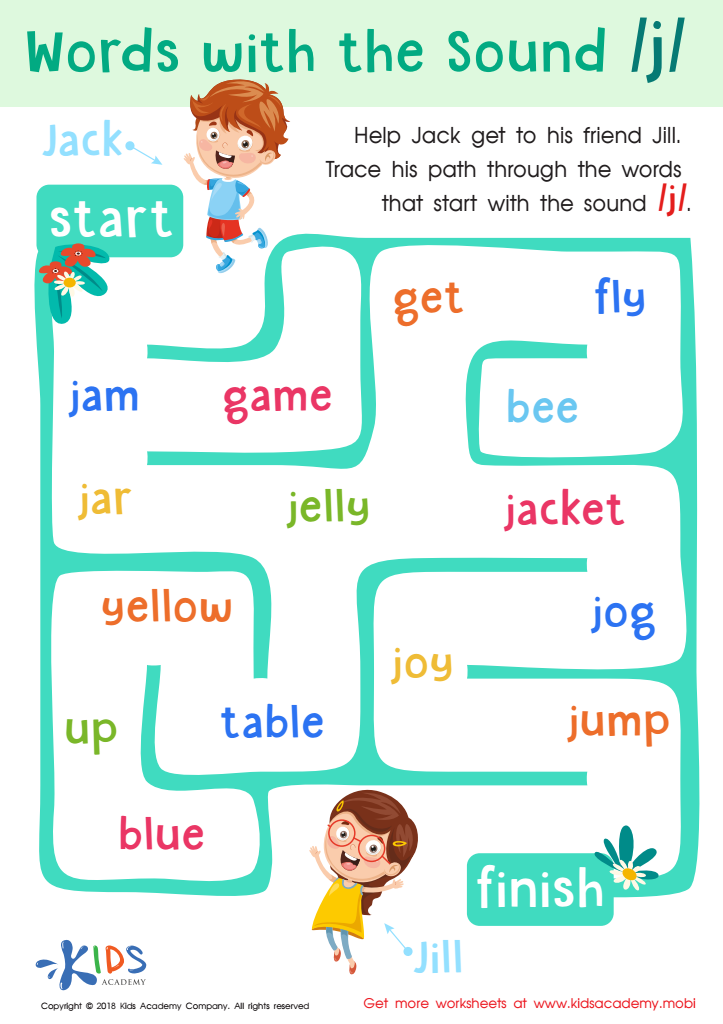
Words with sound j Reading Worksheet
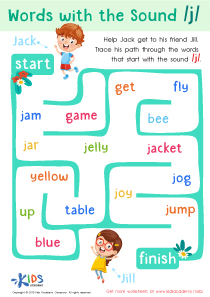
Don't be fooled: The letter J sounds like G in this letter sounds maze! Kids will enjoy helping Jack find Jill by listening to beginning sounds and tracing a path to the exit. Choose words that start with the letter J sound to complete the challenging maze!
Words with sound j Reading Worksheet
Worksheet
Join Kids Academy for Free
Who is primarily going to use this learning content?



Extra Challenge Consonants for children aged 3-4 are an essential step in early literacy development and should be taken seriously by both parents and teachers. At this formative stage, young learners are developing phonemic awareness, the ability to hear, identify, and manipulate individual sounds in spoken words. Mastery of consonants, including those that are more challenging, provides foundational skills for reading and writing.
Gaining proficiency with challenging consonants helps children to better understand the sound structures (phonological structures) of words. This is critical for decoding, the ability to apply knowledge of letter-sound relationships to accurately read written words. Struggling with this fundamental aspect often leads to difficulties in reading fluency and comprehension later on.
Furthermore, learning to articulate challenging consonants promotes clear speech and effective communication skills. Speech intelligibility, or how well a child's speech is understood by others, is directly impacted by their command of different consonantal sounds.
Finally, successful engagement with these challenges boosts a child's confidence and motivation, fostering a positive attitude towards learning. The support from parents and teachers in this process plays a crucial role. Through structured practice, encouragement, and patience, young learners can navigate this complex aspect of language acquisition, establishing a strong literacy foundation for their academic journey.