
Extra Challenge Beginning Consonants Worksheets for Ages 5-8
3 filtered results
Difficulty Level
Grade
Age
-
From - To
Subject
Activity
Standards
Discover our "Extra Challenge Beginning Consonants Worksheets" designed specifically for young learners aged 5-8. These engaging worksheets provide an exciting way for children to enhance their phonics skills by focusing on beginning consonants. Each activity promotes letter recognition and sound association, helping kids build a strong foundation for reading. Using vibrant illustrations and interactive tasks, our worksheets make learning fun and effective. Perfect for parents and teachers looking to extend their students' mastery of phonics, these resources are sure to spark curiosity and reinforce key literacy skills. Explore the world of consonants and watch your child thrive in their reading journey!
Favorites
With answer key
Interactive
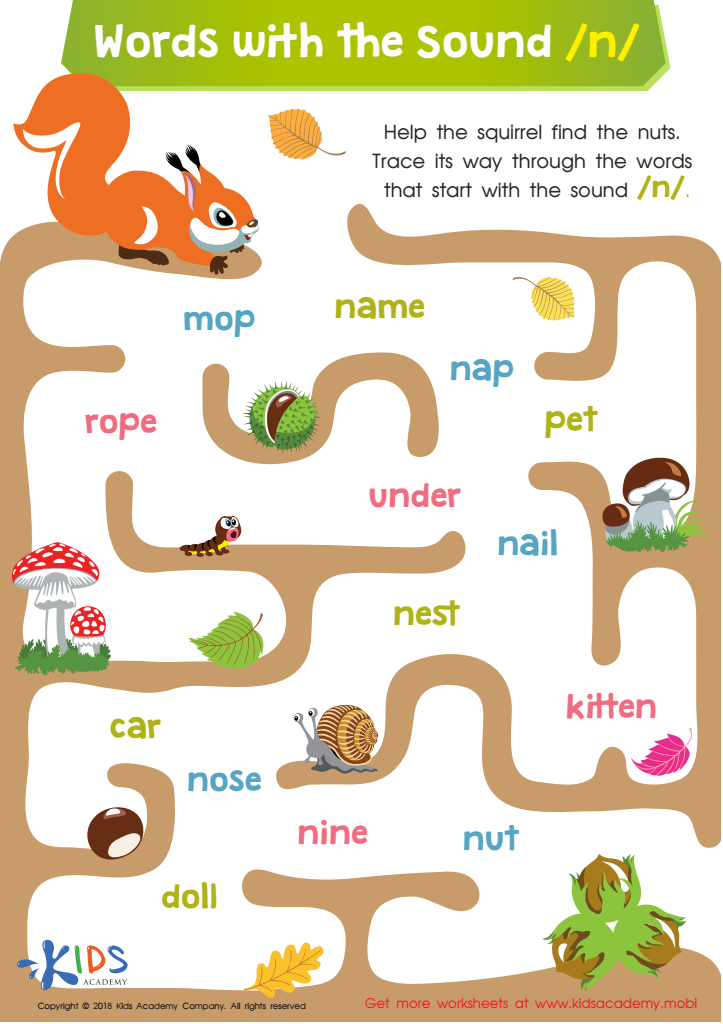
Words with Sound N Reading Worksheet
Young readers will love the colourful pictures and simple sight words on this download worksheet. They can trace their way through the maze as they help the cute squirrel reach his acorns, finding words with the sound "n" as they go. It's a fun way to work on reading skills - they won't even realise they're learning!
 Assign to My Students
Words with Sound N Reading Worksheet
Worksheet
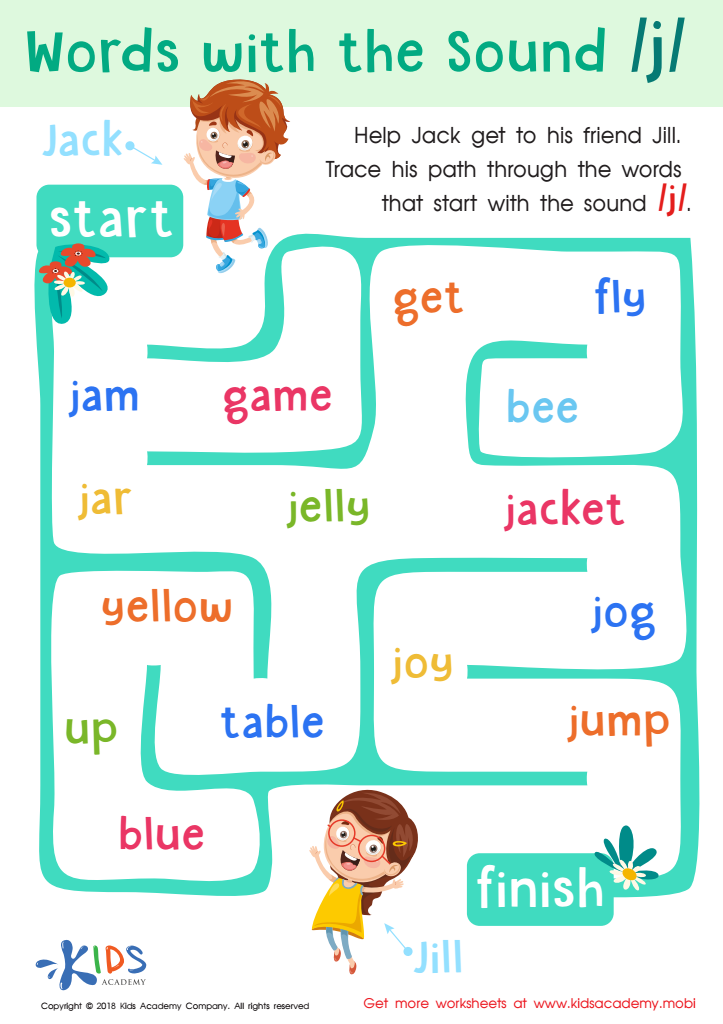
Words with sound j Reading Worksheet
Don't be fooled: The letter J sounds like G in this letter sounds maze! Kids will enjoy helping Jack find Jill by listening to beginning sounds and tracing a path to the exit. Choose words that start with the letter J sound to complete the challenging maze!
Words with sound j Reading Worksheet
Worksheet
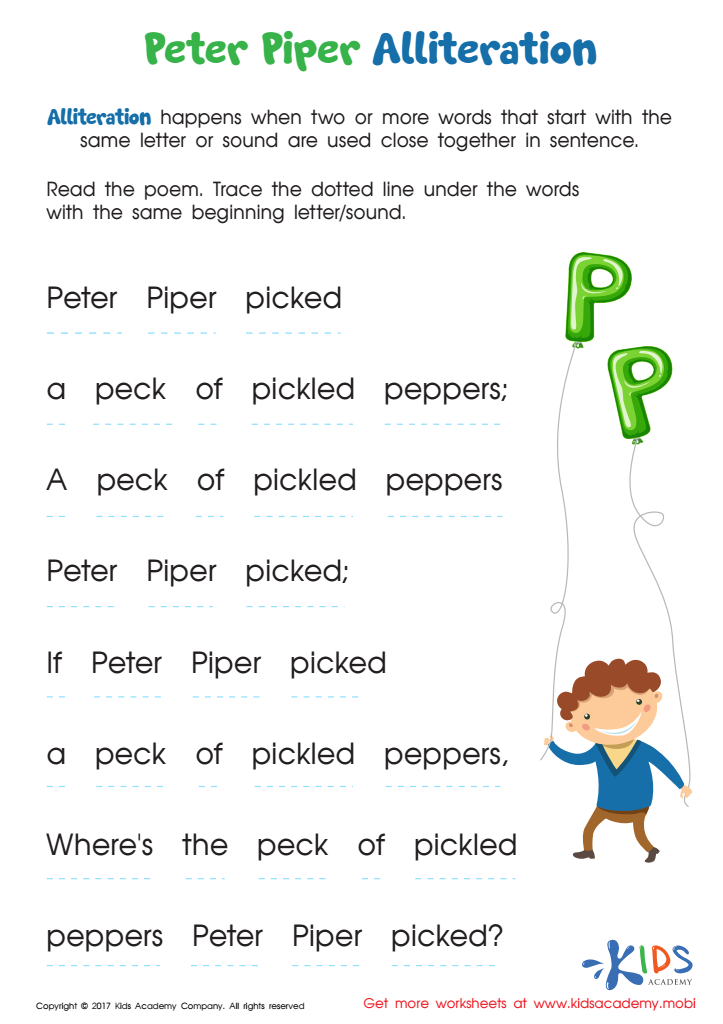
Peter Piper Alliteration Worksheet
Kids love tongue twisters! This worksheet familiarizes them with alliteration through Peter Piper, a beloved nursery rhyme. They underline words that start with the same letter sound, learning to recognize alliteration.
Peter Piper Alliteration Worksheet
Worksheet
Join Kids Academy for Free
Who is primarily going to use this learning content?


Extra Challenge Beginning Consonants can play a pivotal role in early literacy development for children aged 5-8. Understanding the importance of phonetic sounds, particularly beginning consonants, is foundational for reading and writing skills. When parents or teachers focus on this aspect, they help young learners decode words more effectively, enhancing their overall language comprehension.
By emphasizing beginning consonants, children become more adept at recognizing patterns in words. This recognition supports their ability to blend sounds and read aloud with greater confidence. Moreover, a strong grasp of consonant sounds contributes to better spelling and vocabulary development, which are crucial at this stage of learning.
Additionally, engaging activities that challenge children to identify and manipulate beginning consonants can engender enthusiasm for reading. When children perceive learning as a fun and engaging challenge, their motivation increases, which is essential for sustaining interest in literacy.
Ultimately, parents and teachers who prioritize Extra Challenge Beginning Consonants provide a crucial support system, laying a solid foundation for children's future academic success. By fostering these skills early on, they equip children with the tools they need to thrive not only in language arts but across all subjects as they continue their educational journey.








