Extra Challenge Consonants Worksheets for Ages 5-8
5 filtered results
Difficulty Level
Grade
Age
-
From - To
Subject
Activity
Standards
Our "Extra Challenge Consonants Worksheets for Ages 5-8" are designed to give young learners an engaging way to master consonant sounds and letters. Each worksheet offers fun and interactive tasks that challenge students to identify, connect, and use consonants in various contexts. Ideal for children seeking to expand their reading and writing skills, these worksheets encourage critical thinking and attention to detail. With colorful illustrations and enjoyable activities, our resources make learning an adventure. Perfect for at-home practice or classroom use, these worksheets help children hone their phonics abilities, setting a strong foundation for future literacy success.
Favorites
With answer key
Interactive
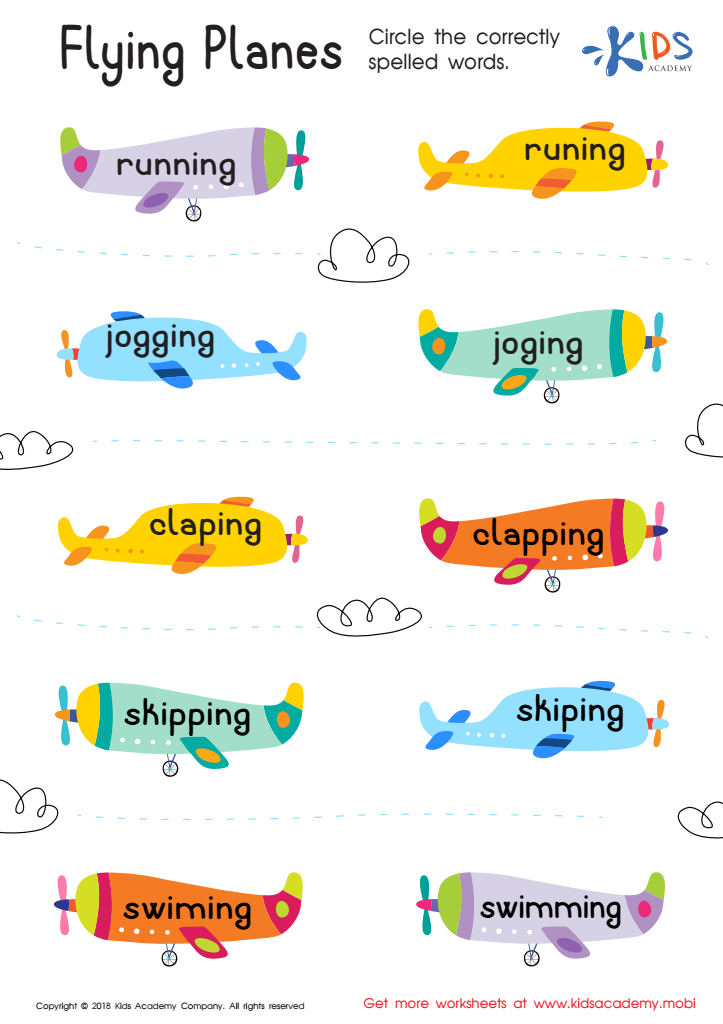
Flying Planes Worksheet
Adding the -ing suffix to verbs is a breeze with this fun worksheet! Colorful planes help your child spot the correct spelling of words that end in consonants - double the consonant, add -ing! Kids can compare correctly and incorrectly spelled words, giving them a better understanding of how the word looks correctly. Download the free PDF and get spelling!
 Assign to My Students
Flying Planes Worksheet
Worksheet
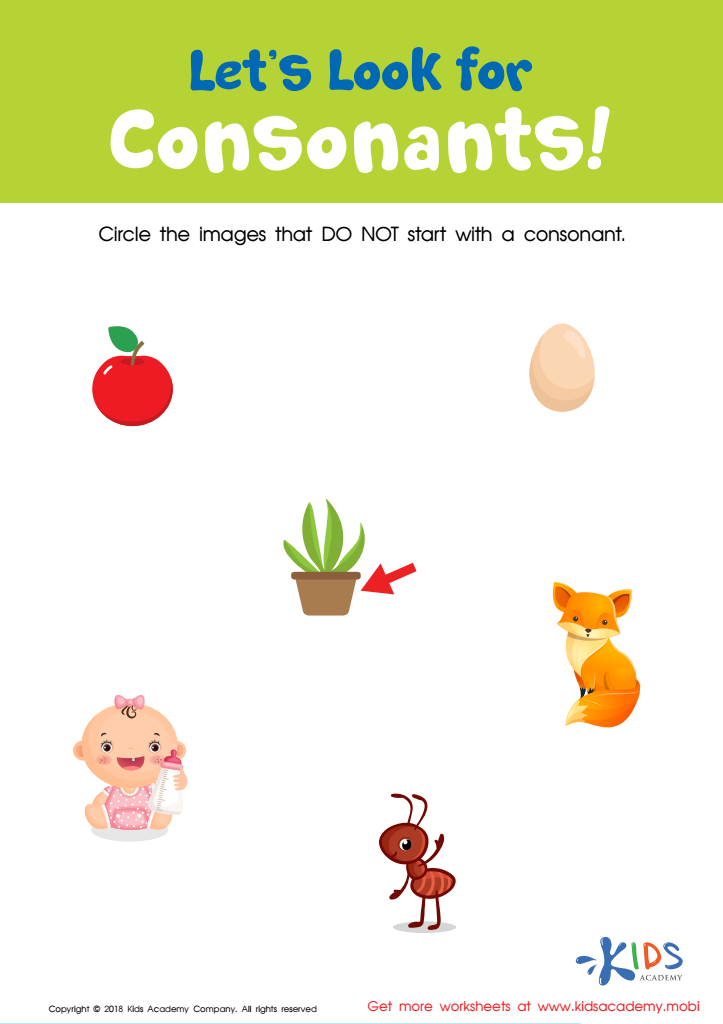
Let's Look for Consonants Worksheet
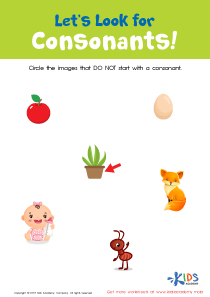
Help kids learn consonants and words that start with them. Ask them to recite the alphabet, then explain consonants are all letters but the 5 vowels. Use the worksheet to ask them to circle items without a consonant. Emphasize that's 21 consonants.
Let's Look for Consonants Worksheet
Worksheet
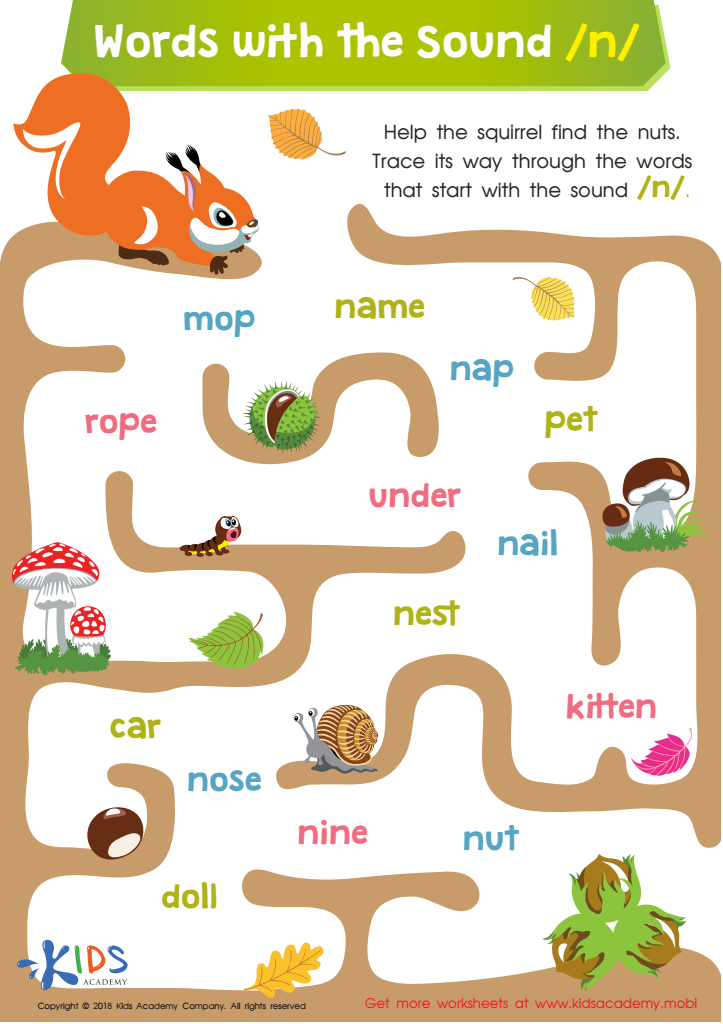
Words with Sound N Reading Worksheet
Young readers will love the colourful pictures and simple sight words on this download worksheet. They can trace their way through the maze as they help the cute squirrel reach his acorns, finding words with the sound "n" as they go. It's a fun way to work on reading skills - they won't even realise they're learning!
Words with Sound N Reading Worksheet
Worksheet
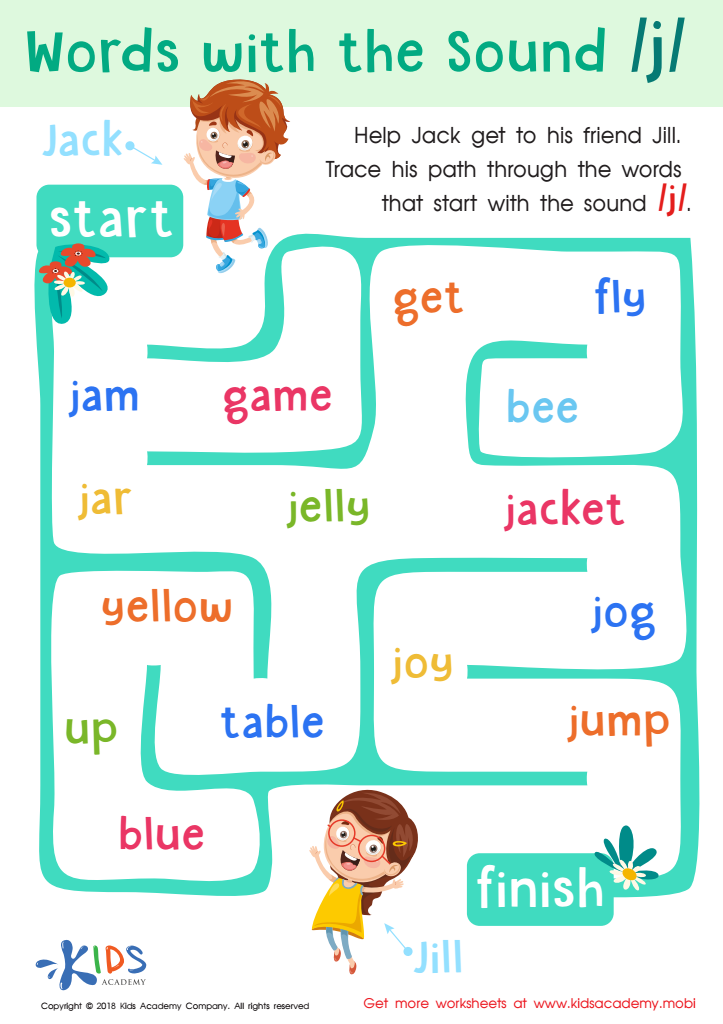
Words with sound j Reading Worksheet
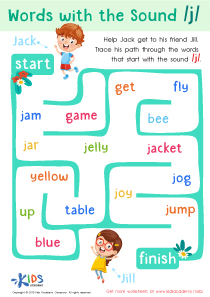
Don't be fooled: The letter J sounds like G in this letter sounds maze! Kids will enjoy helping Jack find Jill by listening to beginning sounds and tracing a path to the exit. Choose words that start with the letter J sound to complete the challenging maze!
Words with sound j Reading Worksheet
Worksheet
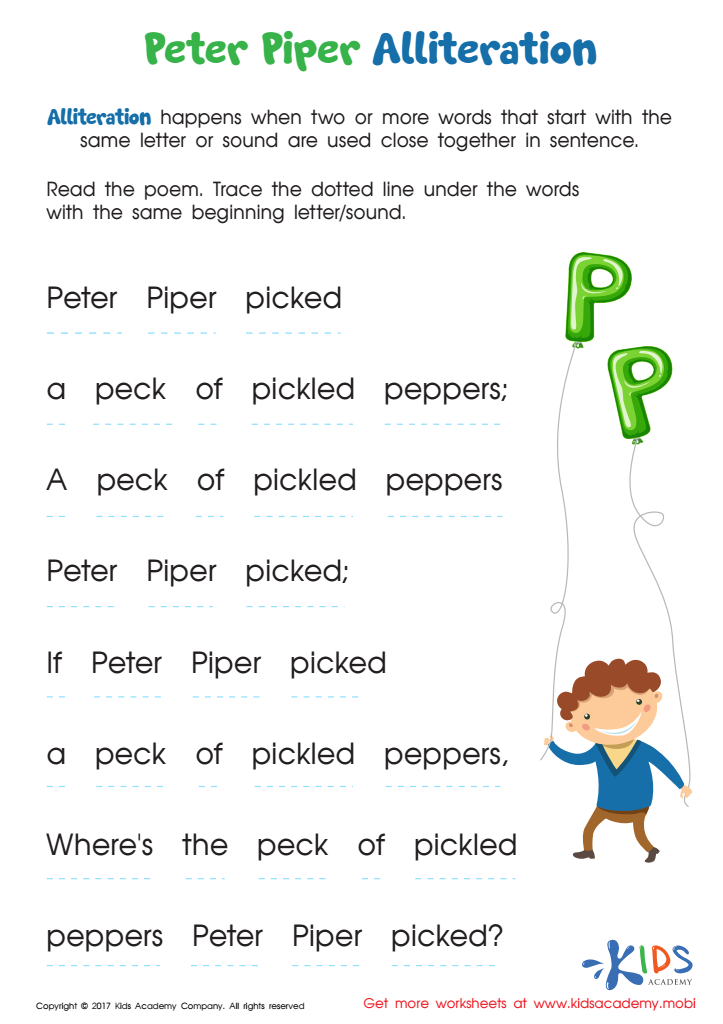
Peter Piper Alliteration Worksheet
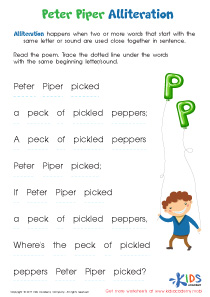
Kids love tongue twisters! This worksheet familiarizes them with alliteration through Peter Piper, a beloved nursery rhyme. They underline words that start with the same letter sound, learning to recognize alliteration.
Peter Piper Alliteration Worksheet
Worksheet
Join Kids Academy for Free
Who is primarily going to use this learning content?



Parents and teachers should care deeply about Extra Challenge Consonants for children ages 5-8 because mastering these sounds is pivotal in early literacy development. During this formative period, children are building the foundation of their reading and spelling abilities. Extra Challenge Consonants include more complex sound combinations, like blends (e.g., "sl," "tr") and digraphs (e.g., "ch," "sh").
Understanding and practicing these helps children decode words accurately and enhances their phonemic awareness—the ability to hear, identify, and manipulate phonemes. This skill is critical for fluent reading, which in turn influences comprehension and overall academic success.
Challenging consonants also encourage critical thinking and problem-solving. Children learn to recognize patterns, anticipate sounds, and decode new words. This not only builds confidence in their reading abilities but also promotes greater enthusiasm for learning.
From a social perspective, children who are proficient readers tend to perform better in school, leading to higher self-esteem and better peer interactions. Early intervention and practice with these consonants facilitate smoother transitions through increasingly complex reading materials, thus supporting a child's long-term educational journey.
Ultimately, investing time and effort in extra challenge consonants sets young learners on a path to becoming proficient, confident, and motivated readers, capable of tackling more advanced texts with ease.