Extra Challenge Capitalization Worksheets for Ages 5-9
4 filtered results
Difficulty Level
Grade
Age
-
From - To
Subject
Activity
Standards
Discover our Extra Challenge Capitalization Worksheets designed for children ages 5-9, perfect for enhancing writing skills and promoting language comprehension. These engaging worksheets provide a fun and interactive way to teach kids about proper capitalization in various contexts, from sentences to titles. Each worksheet challenges students to identify and correct lowercase letters and capitalize proper nouns, offering exciting scenarios that ignite their imagination. Tailored to build confidence, these exercises support early literacy development while encouraging critical thinking. Ideal for both classroom use and at-home practice, our worksheets are a fantastic resource for parents and teachers seeking to fulfill educational standards.
Favorites
With answer key
Interactive
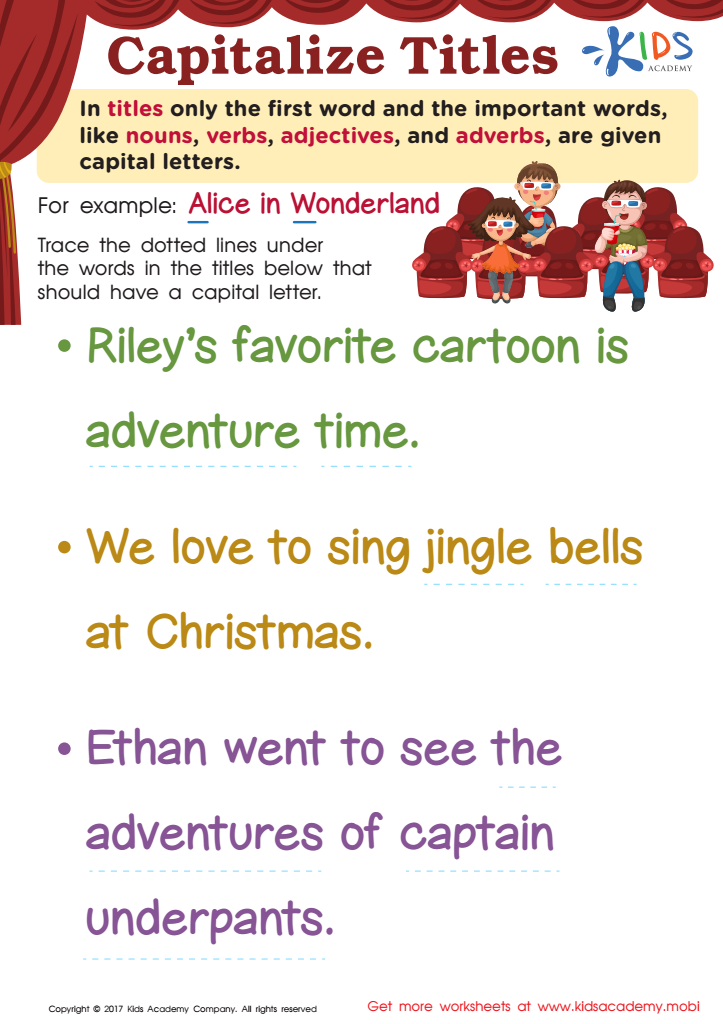
Capitalizing Titles Worksheet
Perfect for kids all the way through high school, it's an easy way to nurture healthy writing habits.
 Assign to My Students
Capitalizing Titles Worksheet
Worksheet
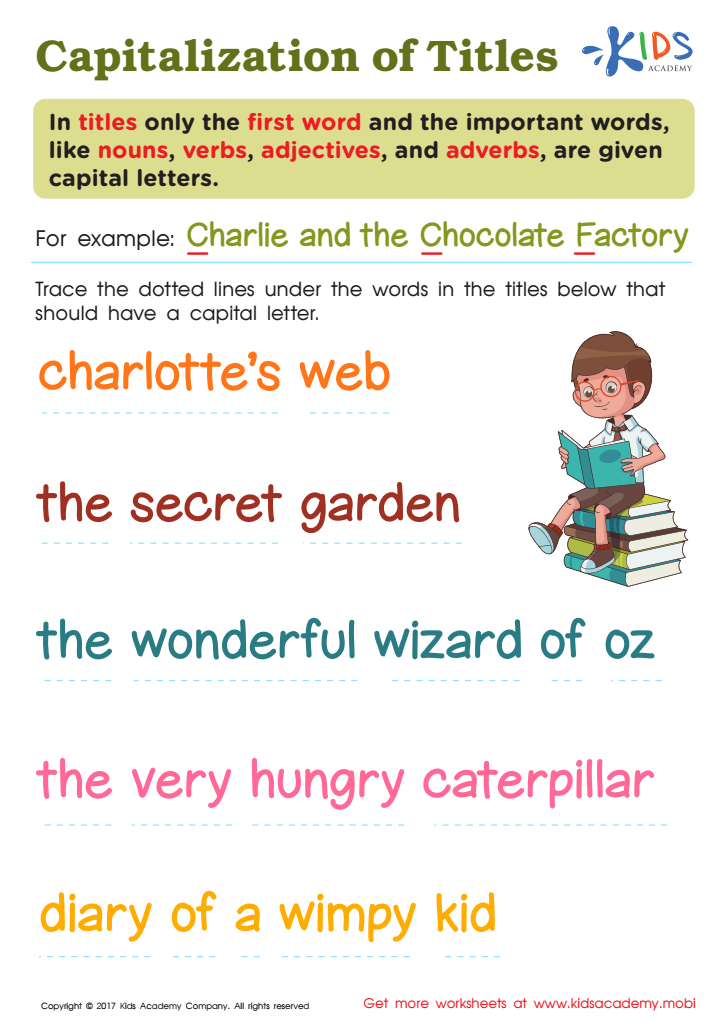
Capitalization of Titles Worksheet
Capitalizing titles can be tricky. This worksheet helps kids do it with ease by focusing on popular book titles. Kids find capitalization much easier with examples from childhood favorites.
Capitalization of Titles Worksheet
Worksheet
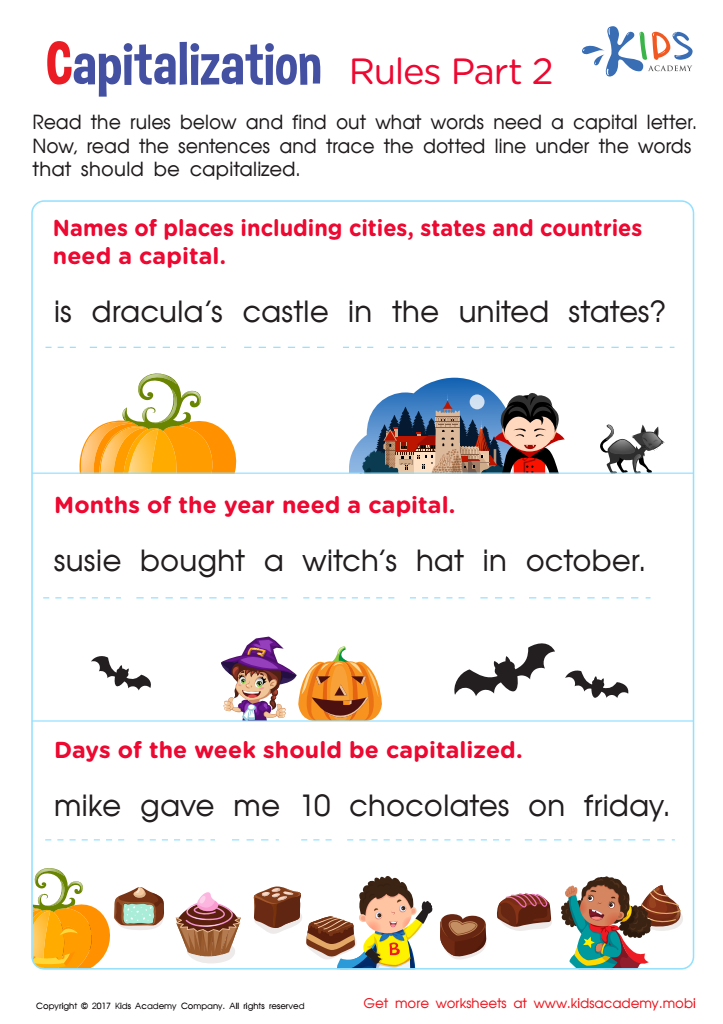
Capitalization Rules: Part 2 Worksheet
Split up grammar rules into shorter, achievable worksheets with this Halloween-themed worksheet, helping kids to practice capitalization for 1st grade.
Capitalization Rules: Part 2 Worksheet
Worksheet
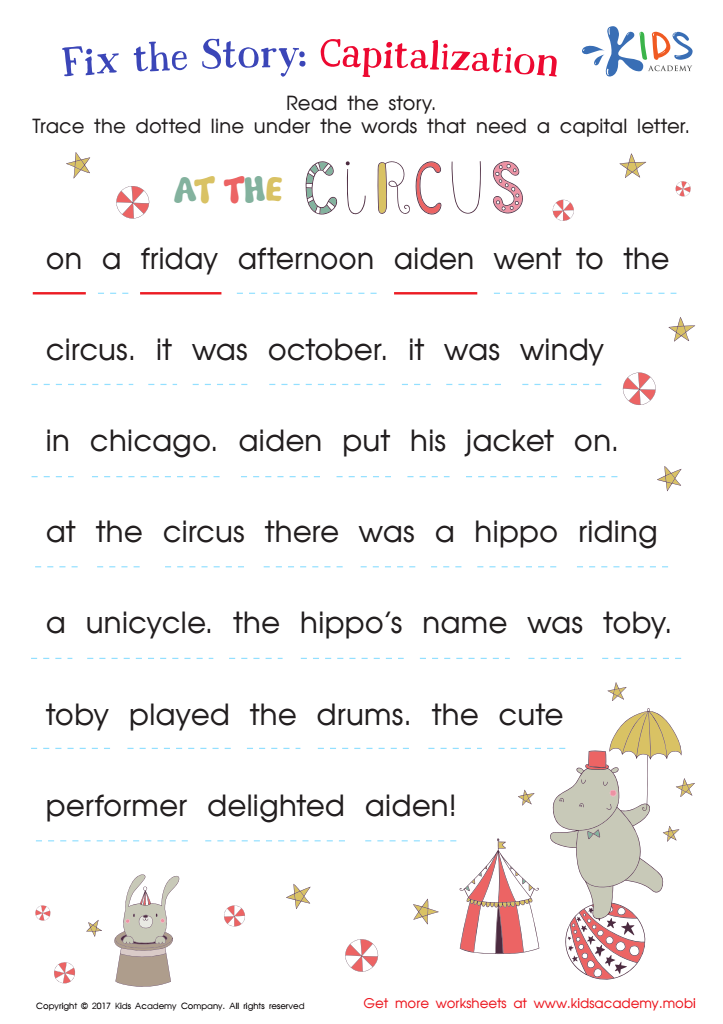
Capitalization: Fix the Story Worksheet
This worksheet is perfect for mastering capitalization in stories: Fix the Story. Read along with your child and help them find all the words that require capitalization. It's sure to be a fun and engaging challenge!
Capitalization: Fix the Story Worksheet
Worksheet
Join Kids Academy for Free
Who is primarily going to use this learning content?


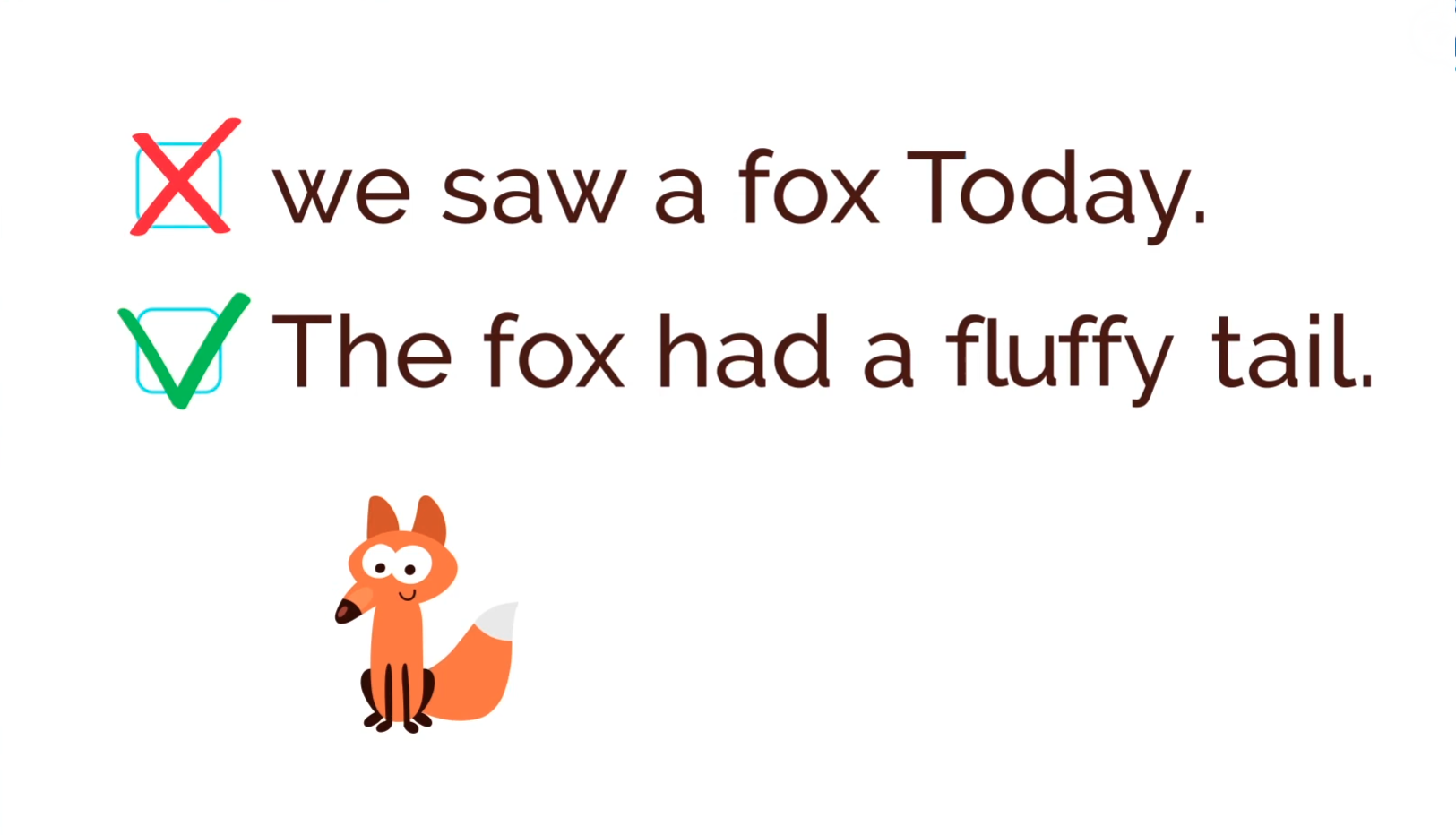
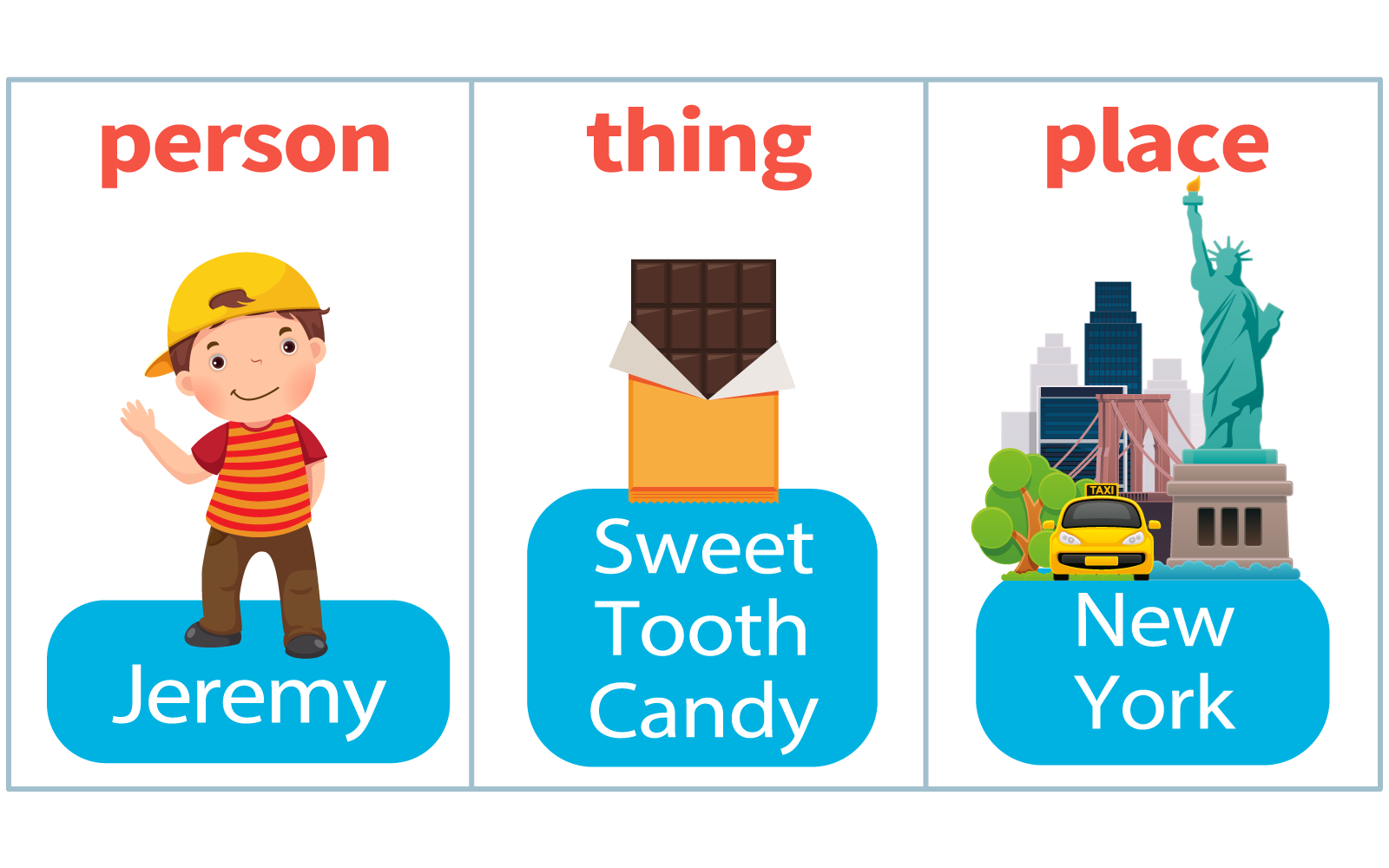




Extra Challenge Capitalization is an essential skill for children aged 5-9 as it significantly enhances their literacy development and communication skills. At this stage, children begin to understand and apply fundamental writing rules, which includes distinguishing when and how to capitalize words. This understanding not only fosters better written expression but also lays the groundwork for more advanced language concepts in the future.
When young learners are encouraged to master capitalization outside of standard rules—like important concepts, places, or pneumonic devices—they develop an appreciation for language's nuances. This critical thinking approach allows them to engage with texts more deeply and express their thoughts more clearly.
Moreover, encouraging extra challenge capitalization aligns with mastering grammar, enhancing vocabulary, and boosting comprehension. It stimulates cognitive skills as students practice recognizing patterns and adapting their writing for various contexts.
Teachers and parents play pivotal roles in nurt 私development by providing encouragement and resources, fostering a supportive learning environment. By caring about Extra Challenge Capitalization, they help children become confident writers and communicators, ultimately equipping them with valuable tools for academic success and lifelong learning. Promoting such skills at a young age means setting the stage for mastery in language arts as they grow.