Hand-eye Coordination Extra Challenge Grade 1 Math Worksheets
4 filtered results
Difficulty Level
Grade
Age
-
From - To
Subject
Activity
Standards
Boost your child's math skills and hand-eye coordination with our "Hand-eye Coordination Extra Challenge Grade 1 Math Worksheets." These engaging worksheets are designed to make learning both fun and effective for first graders. By incorporating challenging math problems with interactive activities, kids enhance their fine motor skills and visual tracking abilities. Ideal for young learners, these exercises involve tracing, matching, drawing, and solving math puzzles, providing a comprehensive approach to early math education. Perfect for home or classroom use, our worksheets offer an exciting way to develop essential skills needed for academic success. Download your set today and watch your child thrive!
Favorites
With answer key
Interactive
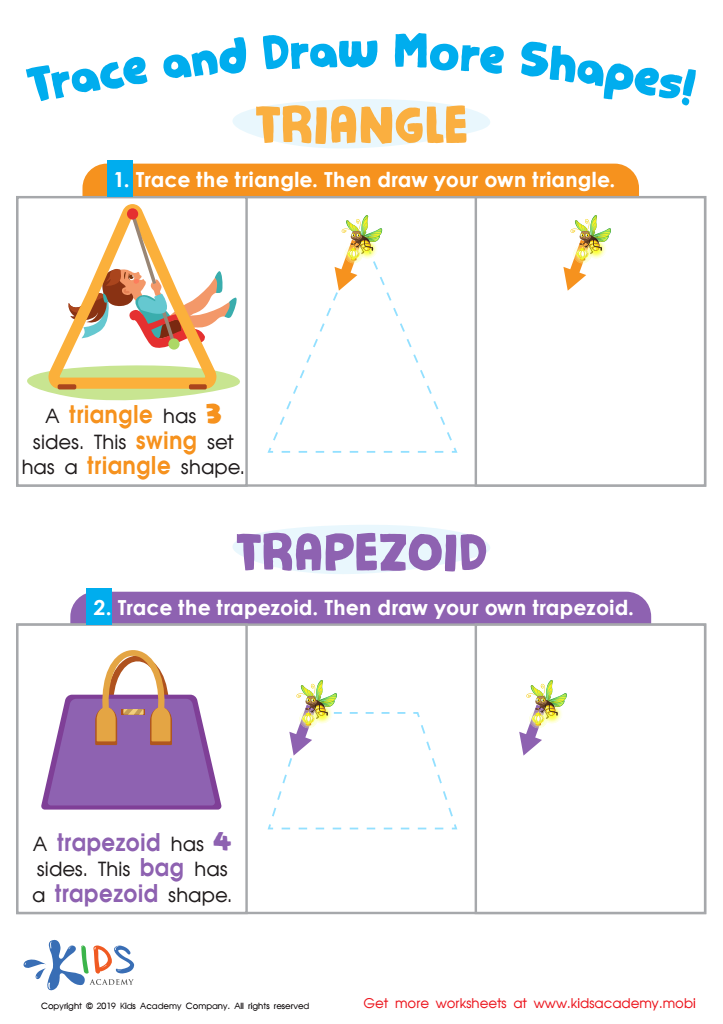
Trace and Draw More Shapes Worksheet
Help your kids with more learning! Look at images in the worksheet, read facts about the shapes, then help your kids trace and draw. This reinforces that learning is never done; use this simple worksheet to help your kids with school homework and more!
 Assign to My Students
Trace and Draw More Shapes Worksheet
Worksheet
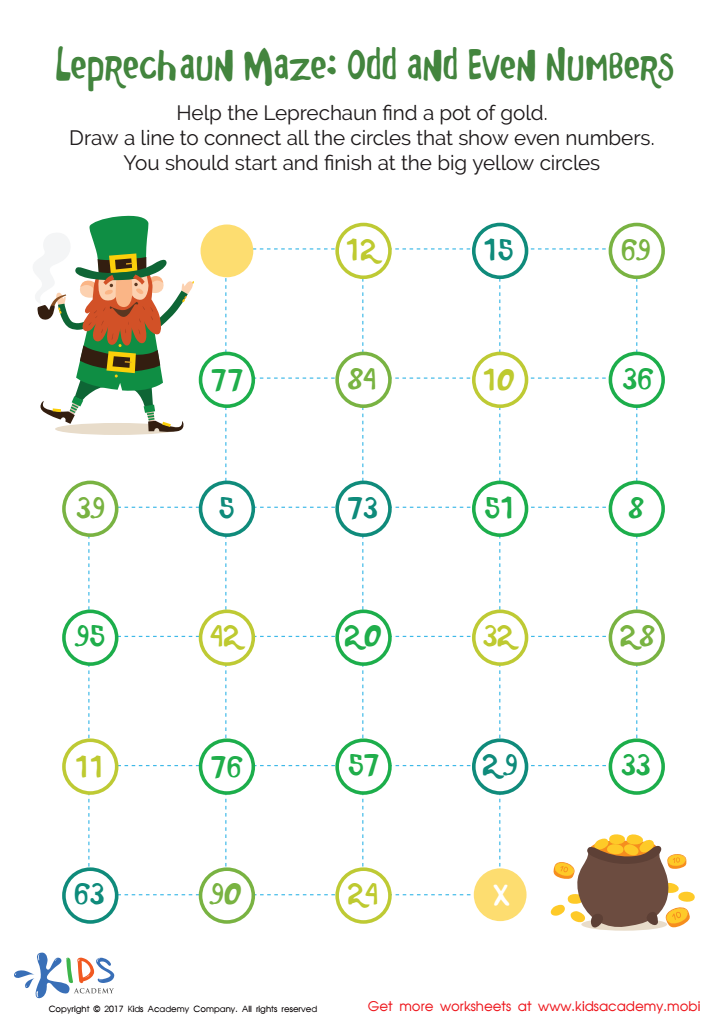
Leprechaun Maze Printable
Help the leprechaun find his pot of gold! Challenge your learner with this St. Patrick's Day worksheet. Let them identify odd or even numbers in the maze and connect the dots. It will be a fun way to celebrate St. Patrick's Day!
Leprechaun Maze Printable
Worksheet
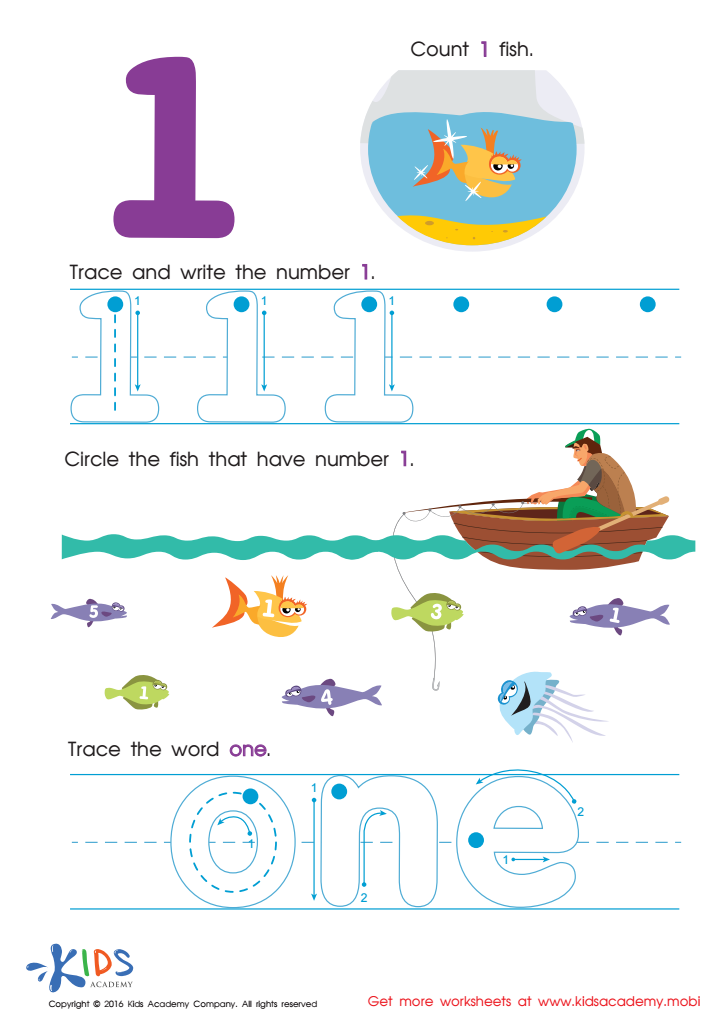
Learning to Write 1 Worksheet
Learning to write numbers can be easy and fun! Get this new number worksheet to help your child excel. Practice counting, tracing and writing the number “one”, then circle the fish with “1” on them. Revise spelling and have fun! Get more tracing numbers worksheets at Kids Academy and enjoy the learning process.
Learning to Write 1 Worksheet
Worksheet
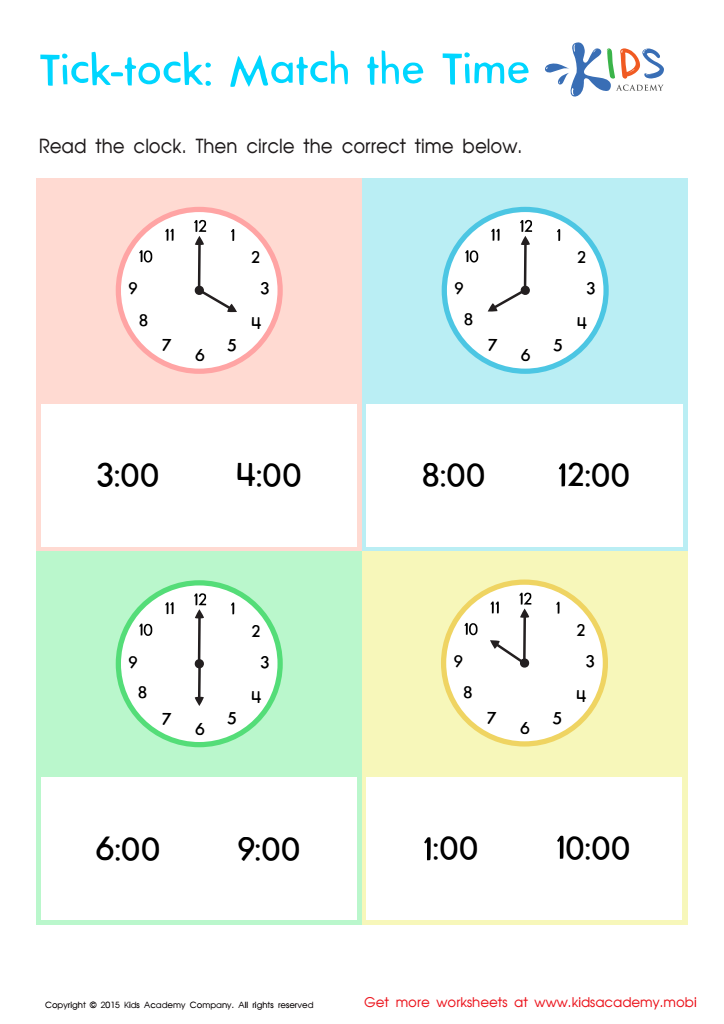
Telling The Time Worksheet: Part 4
Test your skills in telling the time! Circle the right time on 4 analog clock faces.
Telling The Time Worksheet: Part 4
Worksheet
Join Kids Academy for Free
Who is primarily going to use this learning content?








Hand-eye coordination is a crucial developmental skill that supports students’ overall academic success, particularly in tasks requiring precision and accuracy, such as writing and handling mathematical tools. For grade 1 students, enhancing hand-eye coordination through extra challenges in math can also sharpen their cognitive and motor skills. As children engage in activities like drawing shapes, connecting dots, or solving puzzles, they not only grasp mathematical concepts more firmly but also improve their ability to focus and follow through with tasks.
Strong hand-eye coordination can significantly boost a child’s confidence. Being able to correctly position numbers in an addition problem, for example, makes solving math problems more accessible and less frustrating. Coordinated actions are also imperative for proper number formation and legible handwriting, ensuring that students’ work is clear and comprehensible, which can positively impact their academic records and feedback from teachers.
Parents and teachers play a vital role in reinforcing these skills at home and in the classroom. By integrating engaging and developmentally appropriate hand-eye coordination exercises into math lessons, they not only make learning enjoyable but also lay, a solid foundation for future academic pursuits. This proactive approach ultimately helps children become more competent and independent learners, setting them up for success across multiple domains.