Normal Vowels and Consonants Worksheets for Ages 3-7 - Page 2
25 filtered results
-
From - To
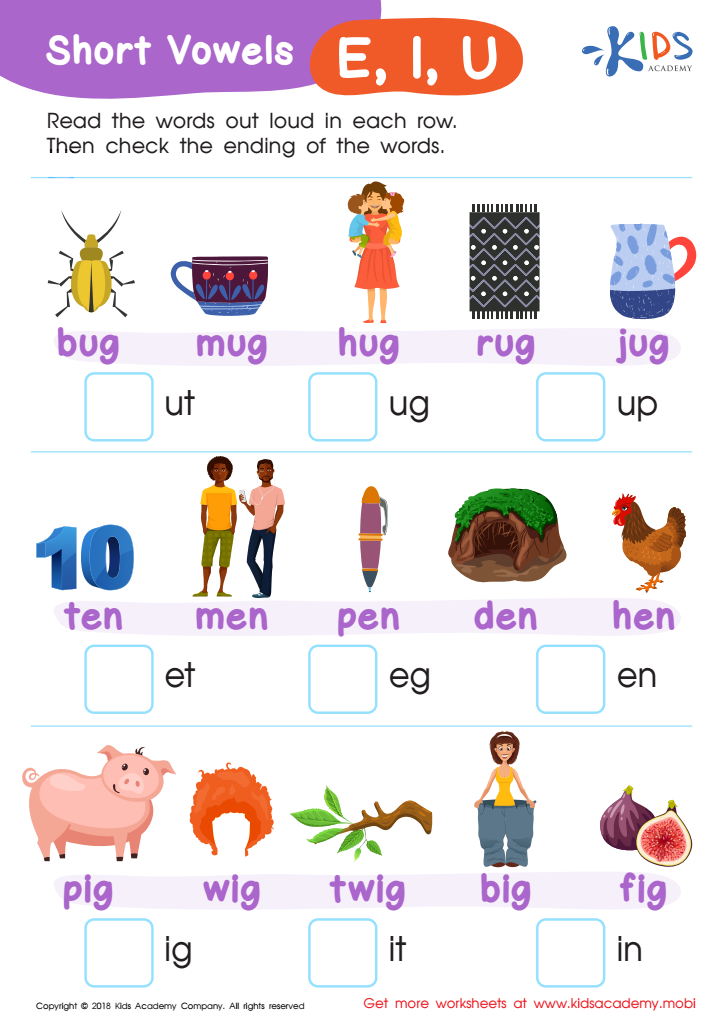
Short Vowels /e/, /i/, and /u/ Worksheet
 Assign to My Students



Understanding normal vowels and consonants is crucial for children aged 3-7, as it forms the foundation of their language and literacy development. At this stage, children are beginning to recognize sounds and manipulate them to create words. Vowels and consonants are the building blocks of spoken and written language, and solidifying this knowledge will lead to improved reading and writing skills.
Teachers and parents play a vital role in this learning process. By engaging children with phonemic awareness activities that focus on vowels and consonants, they help improve sound recognition. This, in turn, enhances vocabulary development and spelling skills. Early mastery of these concepts supports fluent reading, allowing children to tackle more complex texts as they progress in their education.
Furthermore, phonics instruction using normal vowels and consonants promotes confidence in communication. Children who grasp these basic linguistic principles are more likely to engage actively in conversations, express their thoughts clearly, and develop better comprehension skills.
In essence, an understanding of normal vowels and consonants sets the stage for academic success, fostering a love for reading and learning that lasts a lifetime. Parents and teachers' attention to this aspect of language development is essential for nurturing a stronger future for their children.