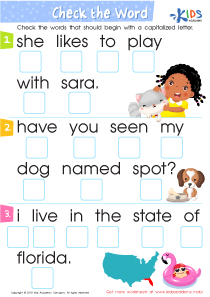
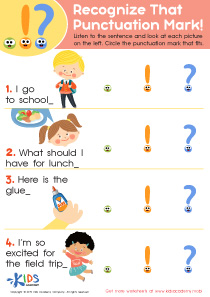
Understanding adjectives Normal Grammar Worksheets for Ages 5-8
3 filtered results
-
From - To
Unlock the magic of words with our "Understanding Adjectives Normal Grammar Worksheets for Ages 5-8." Designed to make learning enjoyable, these worksheets help young learners grasp the concept of adjectives seamlessly. Through engaging exercises and activities, children will learn to identify, use, and understand descriptive words, enhancing their writing and speaking skills. Ideal for both classroom and home settings, these worksheets provide a strong grammar foundation critical for future language success. Foster your child’s love for language with our expertly crafted, age-appropriate materials that make grammar lessons fun and effective. Start exploring today!
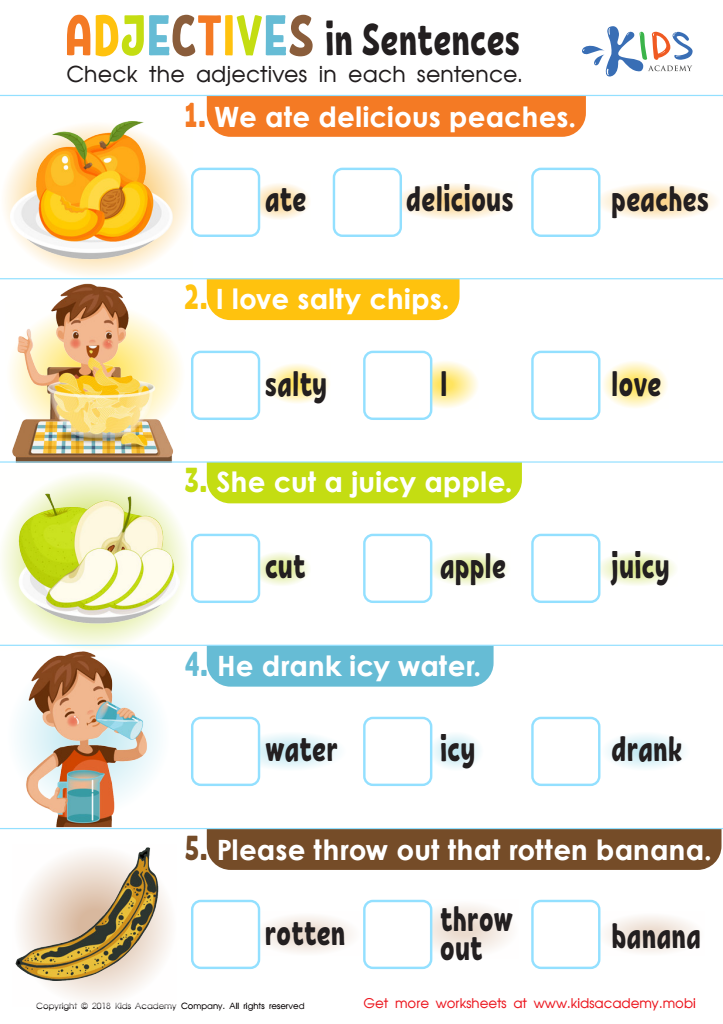
Adjectives in Sentences Worksheet
 Assign to My Students
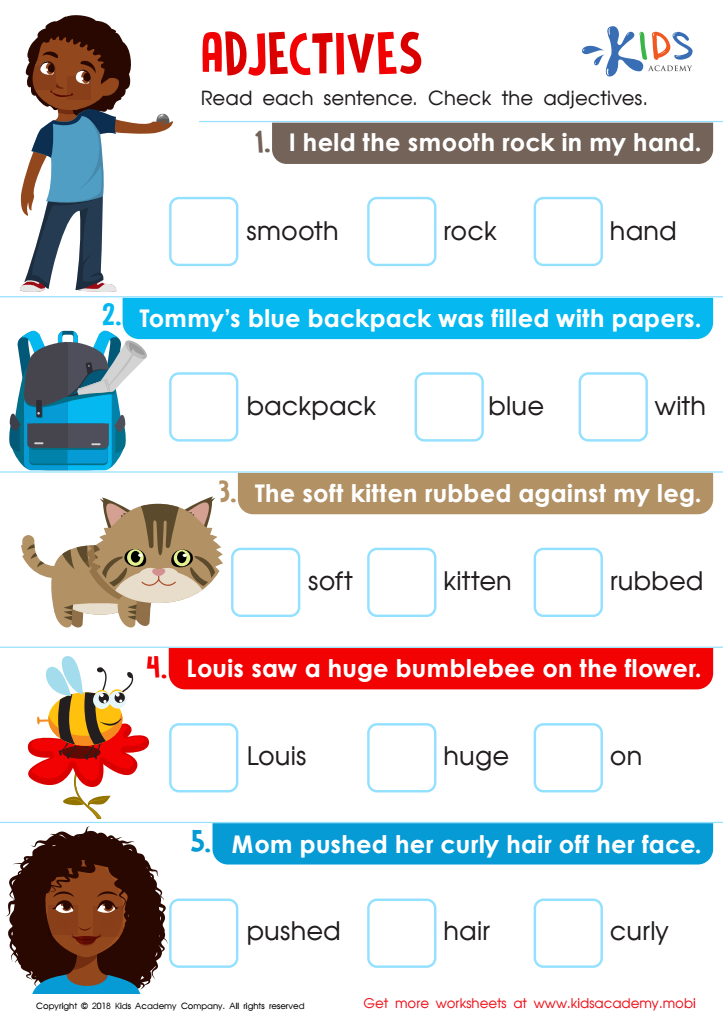
Adjectives Worksheet
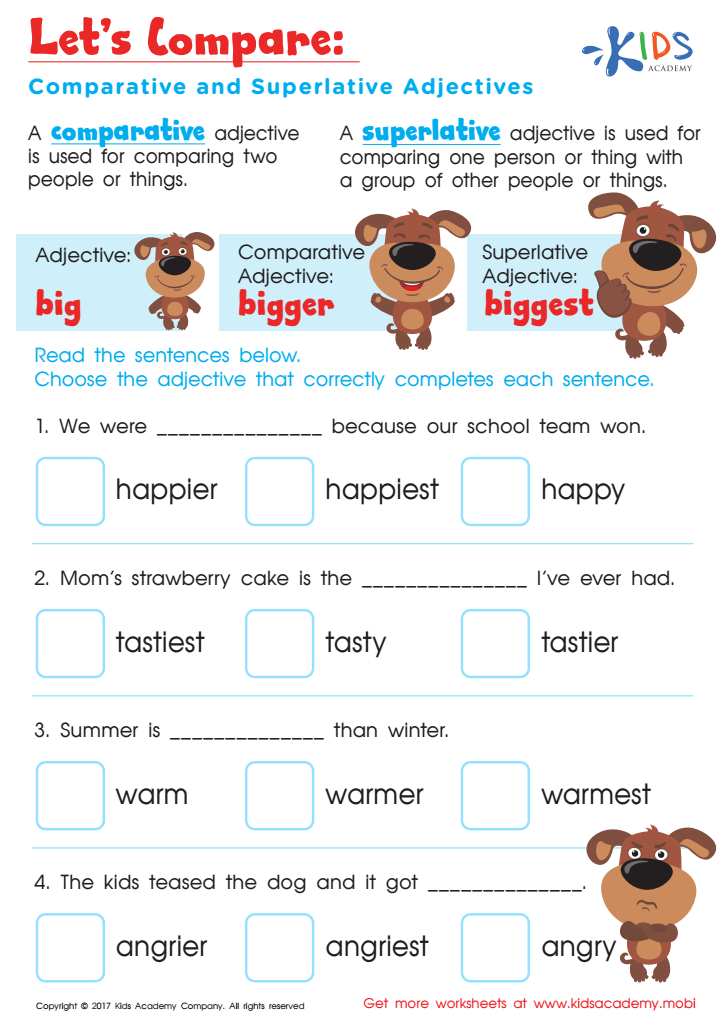
Comparative and Superlative Worksheet



.jpg)
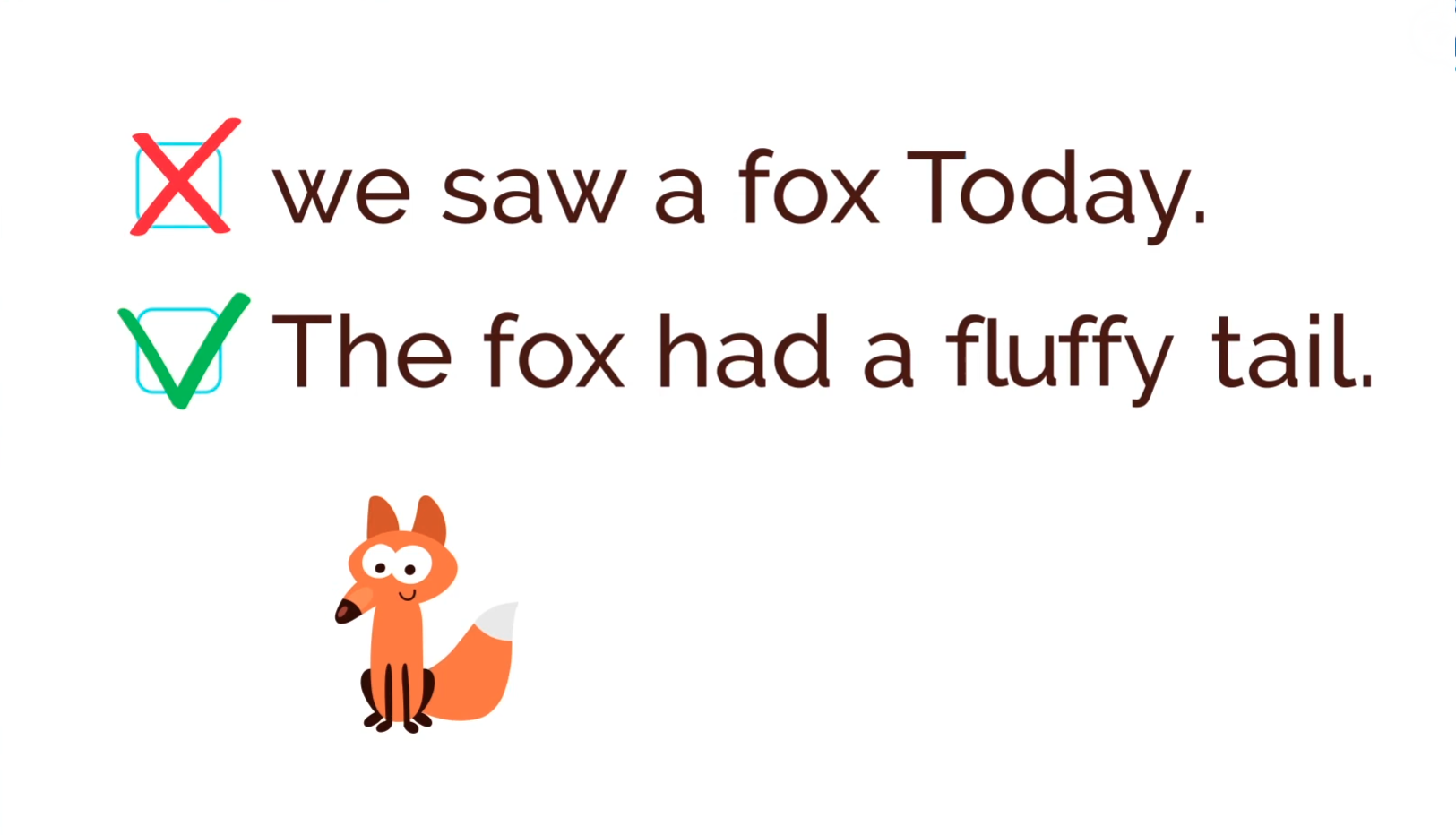
Understanding adjectives and their grammatical role is crucial for children aged 5-8 as it significantly enhances their language development and communication skills. Adjectives help young learners to describe objects, people, and their surroundings with more detail and precision. For instance, instead of saying "the cat," a child can say "the fluffy cat," which provides a clearer image and stimulates imagination.
Moreover, a strong grasp of adjectives supports reading comprehension. When children encounter descriptive words in stories, they can visualize the scenes better, making the reading experience more engaging and enjoyable. This ability to paint mental pictures helps in understanding context and emotions embedded in texts.
Teachers and parents play a pivotal role in nurturing this aspect of language learning. By encouraging the use of adjectives during conversations and storytelling, adults help children expand their vocabulary. Activities such as picture games, descriptive drawing sessions, and adjective hunts in books or surroundings can make learning fun and interactive.
Lastly, frequent practice with adjectives lays a foundational grid for advanced grammatical skills. Understanding simple descriptive words at an early age paves the way for mastering more complex sentence structures as children progress in their education. Hence, comprehending adjectives accounts for an enriched linguistic and academic journey for young learners.