Normal Rhyming Worksheets for Ages 8-9
7 filtered results
-
From - To
Unleash the joy of learning with our Normal Rhyming worksheets, meticulously crafted for Ages 8-9! Each sheet in this vibrant collection is designed to spark creativity and enhance linguistic skills through the magical world of rhymes and sounds. As children explore these engaging worksheets, they'll dive into the rhythm of language, building foundational skills in phonemic awareness, vocabulary development, and reading fluency. Perfect for both classroom use and home practice, our Normal Rhyming worksheets for Ages 8-9 promise not just educational enrichment but a fun, immersive experience that will have young learners eager for more. Embark on a rhyming adventure today and watch your child's language skills blossom!
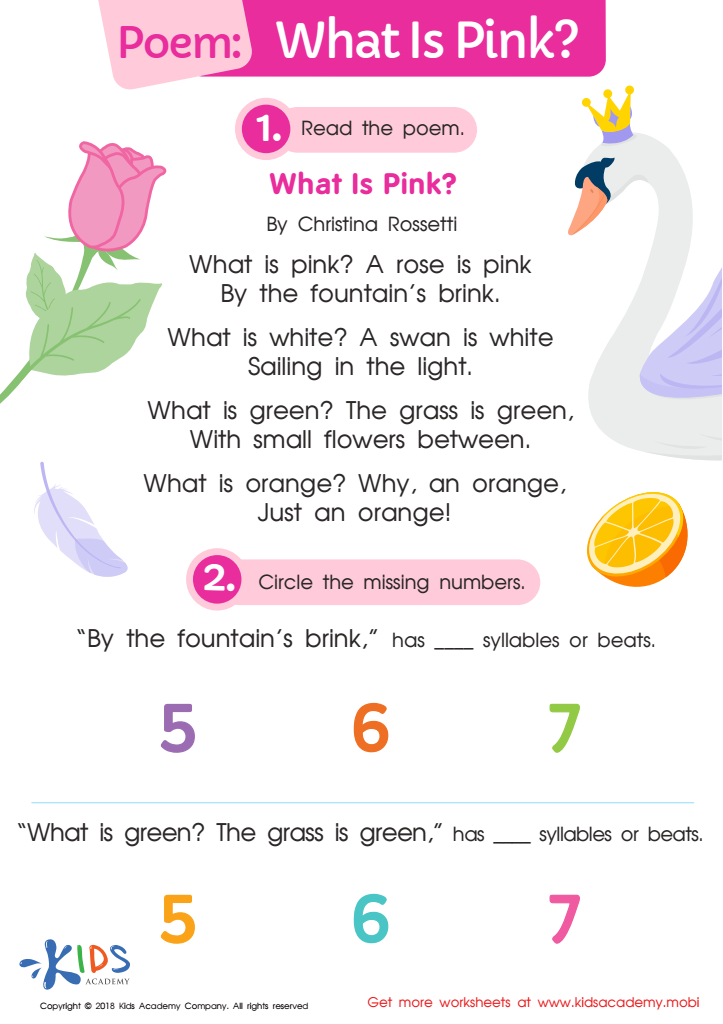
Poem: What Is Pink? Worksheet
 Assign to My Students
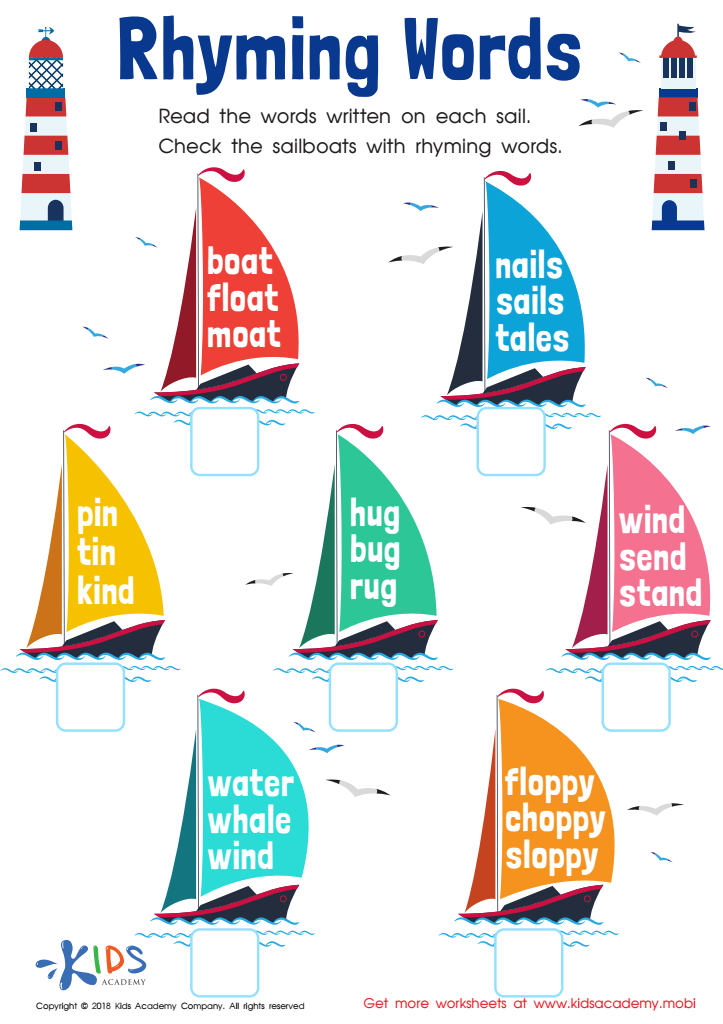
Rhyming Words Worksheet
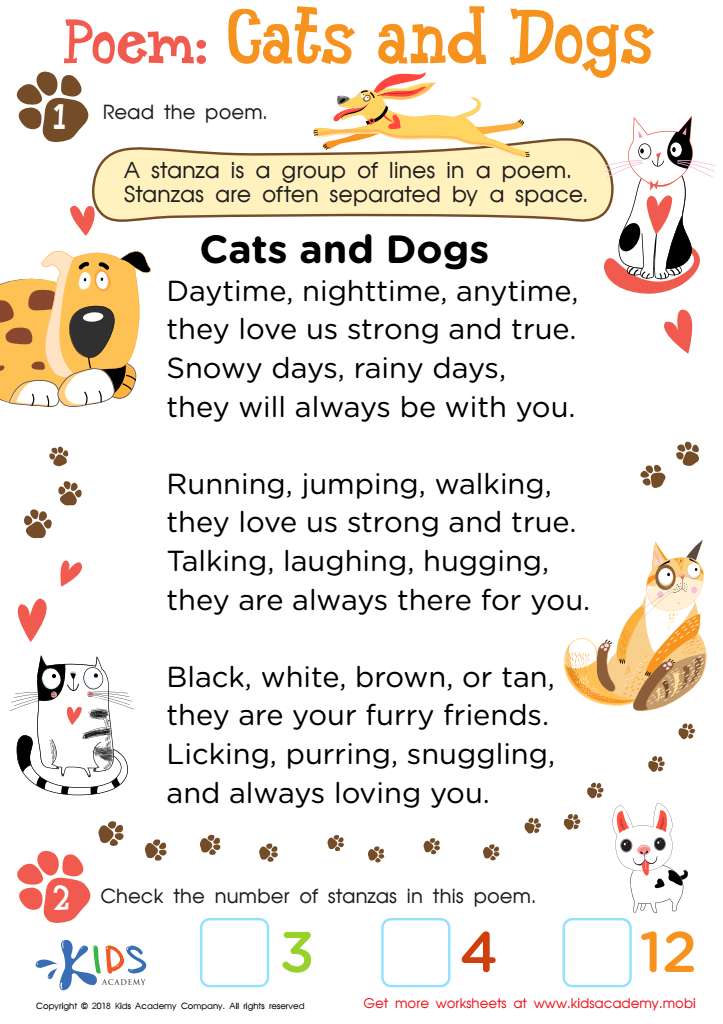
Poem: Cats and Dogs Worksheet
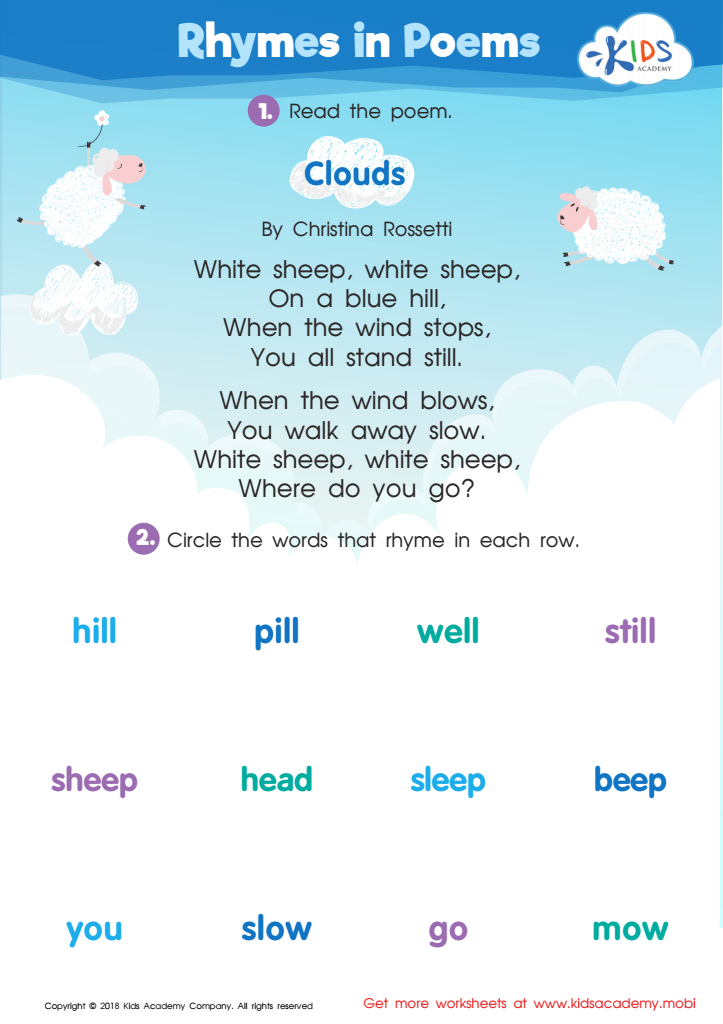
Rhymes in Poems Worksheet
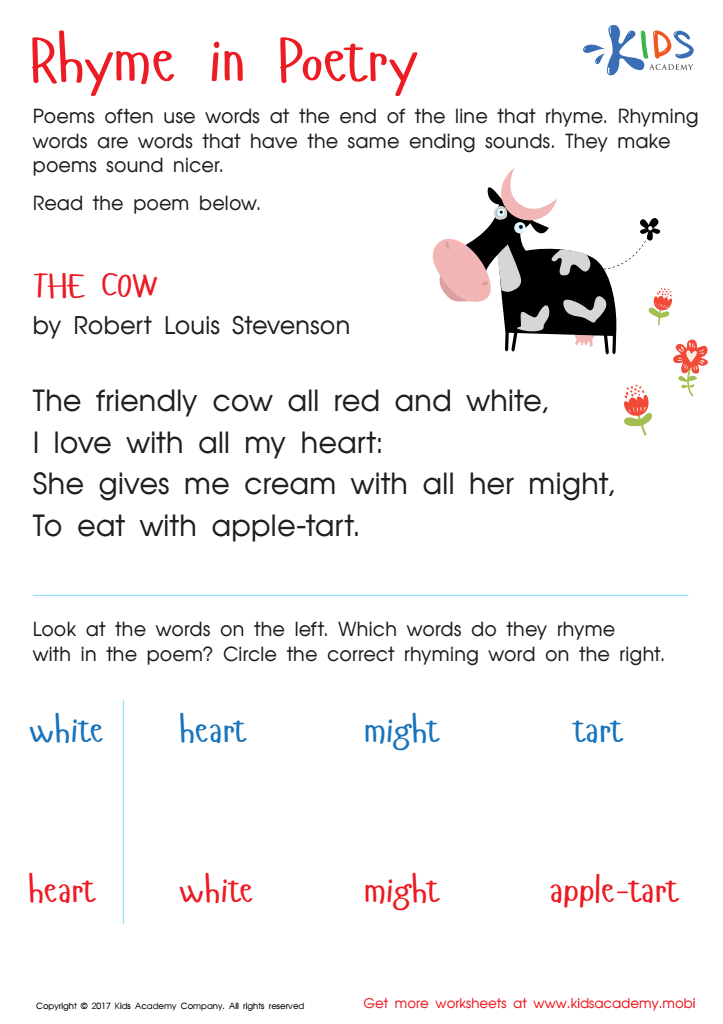
Rhyme In Poetry Worksheet
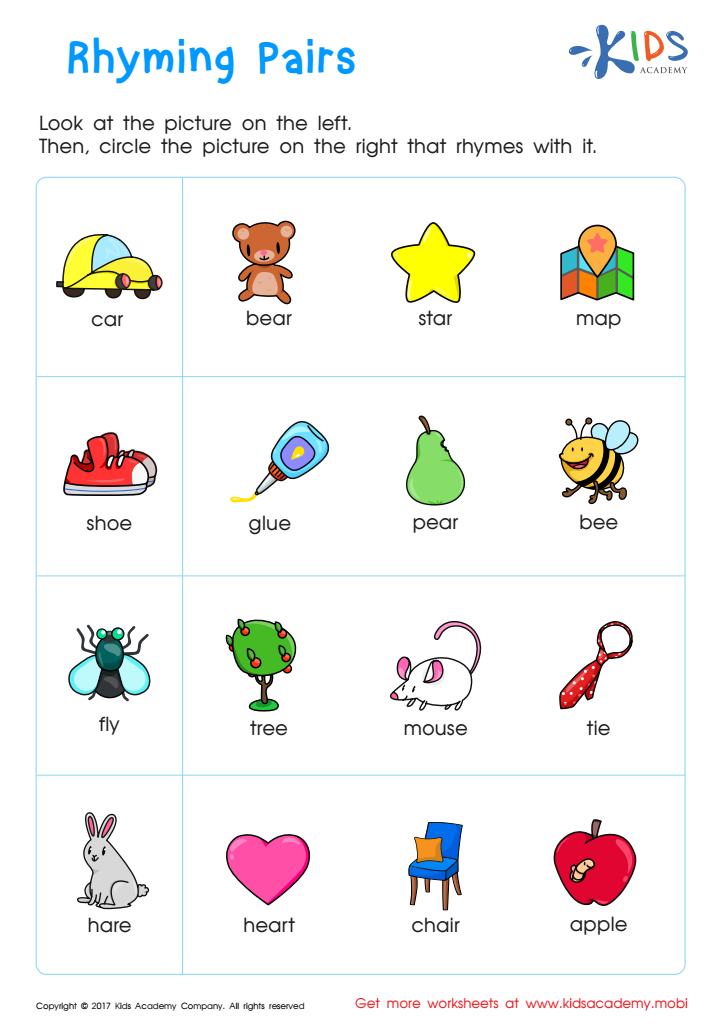
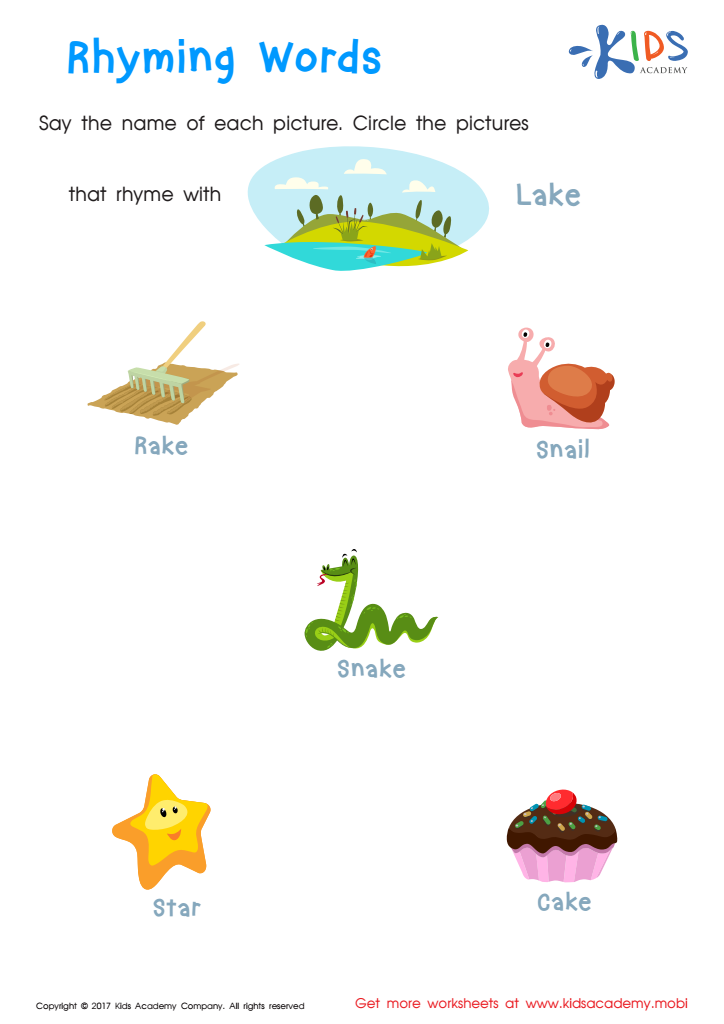
Rhyming Words Rhyming Worksheet








Normal Rhyming worksheets for Ages 8-9 are an essential tool in the developmental journey of children's literacy skills. At this pivotal age, children are not only expanding their vocabulary but are also beginning to understand the nuances of language, making it the perfect time to introduce structured exercises focused on rhyming. These worksheets serve several critical functions in enhancing a child’s learning experience.
Firstly, Normal Rhyming worksheets for Ages 8-9 facilitate phonemic awareness. Through engaging with rhymes, children learn to identify sound patterns, an ability that is foundational for spelling and decoding words. This auditory skill is crucial for reading fluency and comprehension, as it enables children to predict and recognize familiar patterns in new words.
Secondly, these worksheets promote creative thinking and enhance memory. Rhyming encourages children to explore language creatively, thinking outside the box to find words that sound similar. This playful engagement with words not only makes learning fun but also boosts memory through repetition and the formation of associations between sounds and meanings.
Furthermore, Normal Rhyming worksheets for Ages 8-9 foster a love for language. By presenting rhyming in a structured yet entertaining format, children are more likely to develop a positive attitude towards learning and exploring the intricacies of language. This early appreciation for word play and language structure sets a strong foundation for lifelong literacy.
In conclusion, Normal Rhyming worksheets for Ages 8-9 are not just beneficial but essential in supporting children’s linguistic development, offering a blend of phonemic awareness, creative thinking, memory enhancement, and a growing love for language. These worksheets are invaluable tools in shaping competent, creative, and enthusiastic young readers and writers.






