Sound identification Preschool Elementary Phonics Worksheets
4 filtered results
-
From - To
Enhance your preschool and early elementary students' phonics skills with our engaging "Sound Identification Phonics Worksheets." Designed specifically for young learners, these worksheets help children recognize and differentiate sounds, reinforcing their understanding of phonics. Each worksheet focuses on various sounds, featuring vibrant illustrations and interactive activities that make learning fun. By practicing sound identification, children will develop essential early reading skills, boost their vocabulary, and gain confidence in their ability to form connections between letters and their associated sounds. Perfect for individual practice or group activities, our resources are ideal for teachers, parents, and homeschoolers seeking to support phonemic awareness. Start your child’s phonics journey today!
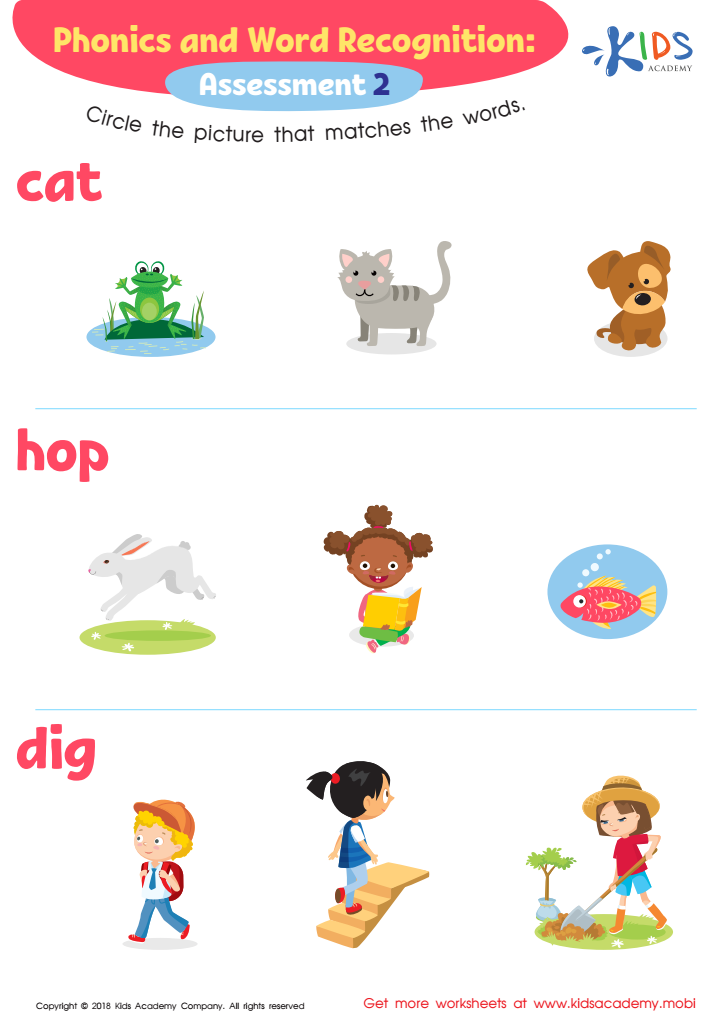
Phonological Awareness: Assessment 2 ELA Worksheet
 Assign to My Students
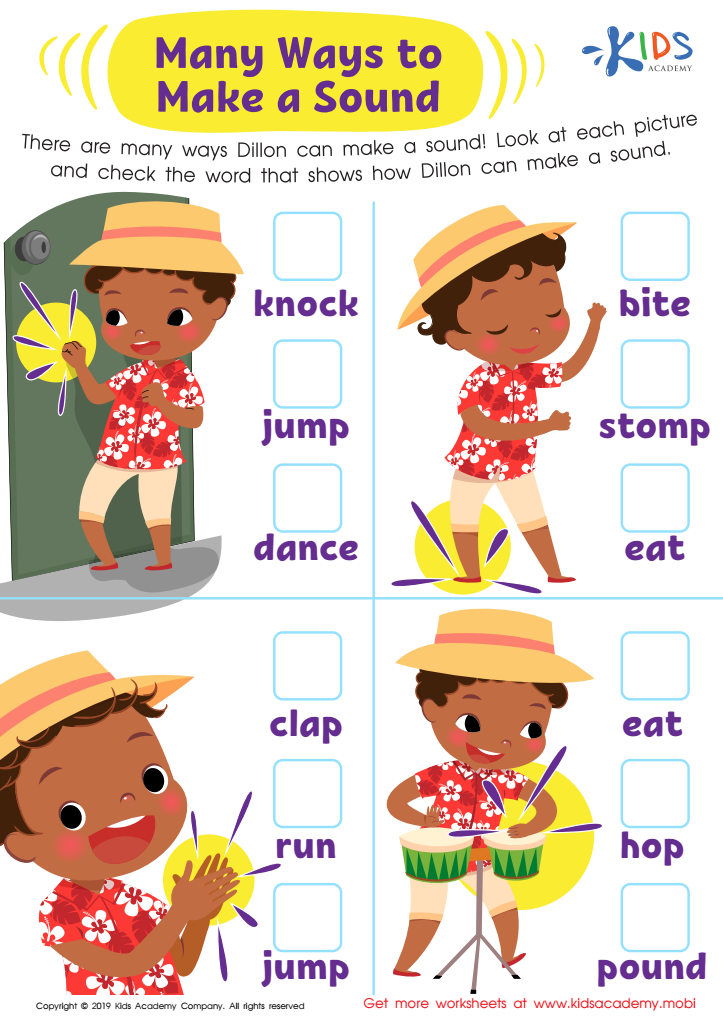
Many Ways to Make a Sound Worksheet
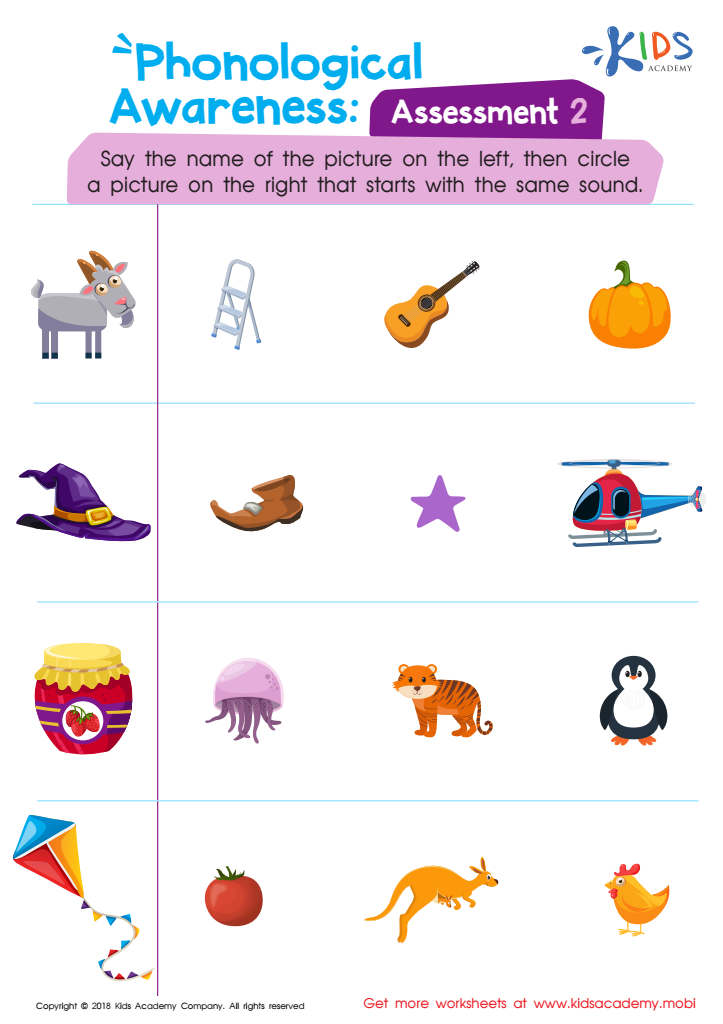
Phonological Awareness: Assessment 2 Worksheet
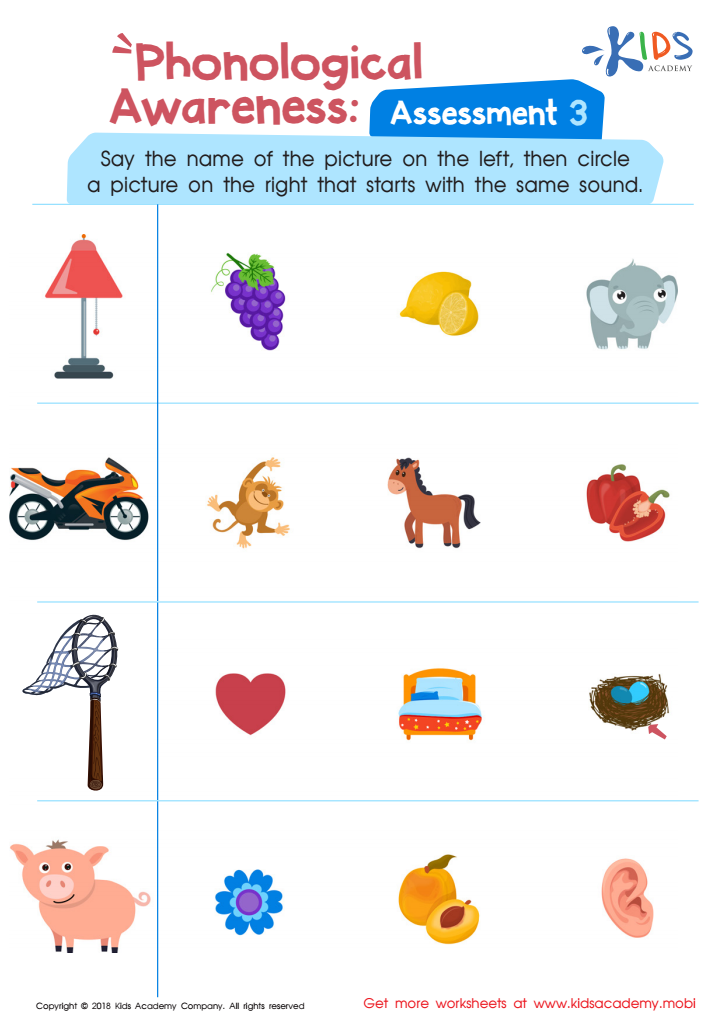
Phonological Awareness: Assessment 3 Worksheet




Sound identification in preschool and elementary phonics is crucial for developing early literacy skills, a foundation that shapes children's reading and writing abilities. Understanding sounds, or phonemes, equips young learners with the tools needed to decode words, allowing them to make connections between letters and their corresponding sounds. This connection is vital for reading fluency and comprehension.
Teachers and parents should be particularly concerned about sound identification because it supports overall language development. Children who can identify sounds are better prepared to tackle more complex literacy concepts and are less likely to struggle with reading later on. Moreover, strong phonics skills boost a child's confidence, enhancing their willingness to engage in reading activities, often leading to increased motivation and a love for learning.
Additionally, sound identification promotes vital skills such as critical thinking, memory retention, and auditory processing. These abilities are not only essential for reading but also lay the groundwork for success in other academic areas. By prioritizing phonics and sound identification, teachers and parents can help provide children with a rich literacy environment that fosters lifelong learning, setting them on a path toward academic achievement and personal growth.






