Fine Motor Skills Preschool Letter Q Worksheets
3 filtered results
-
From - To
Explore our engaging Fine Motor Skills Preschool Letter Q Worksheets, specially designed to help young learners develop essential hand-eye coordination and dexterity. These delightful activities not only focus on the letter Q but also integrate fun and interactive tasks that encourage children to practice tracing, cutting, and coloring. Ideal for preschool classrooms or home learning, these worksheets will keep kids motivated while reinforcing their understanding of the alphabet. Parents and educators can easily print these resources to enhance fine motor development and promote early literacy skills. Discover the joy of learning with our Letter Q worksheets today!
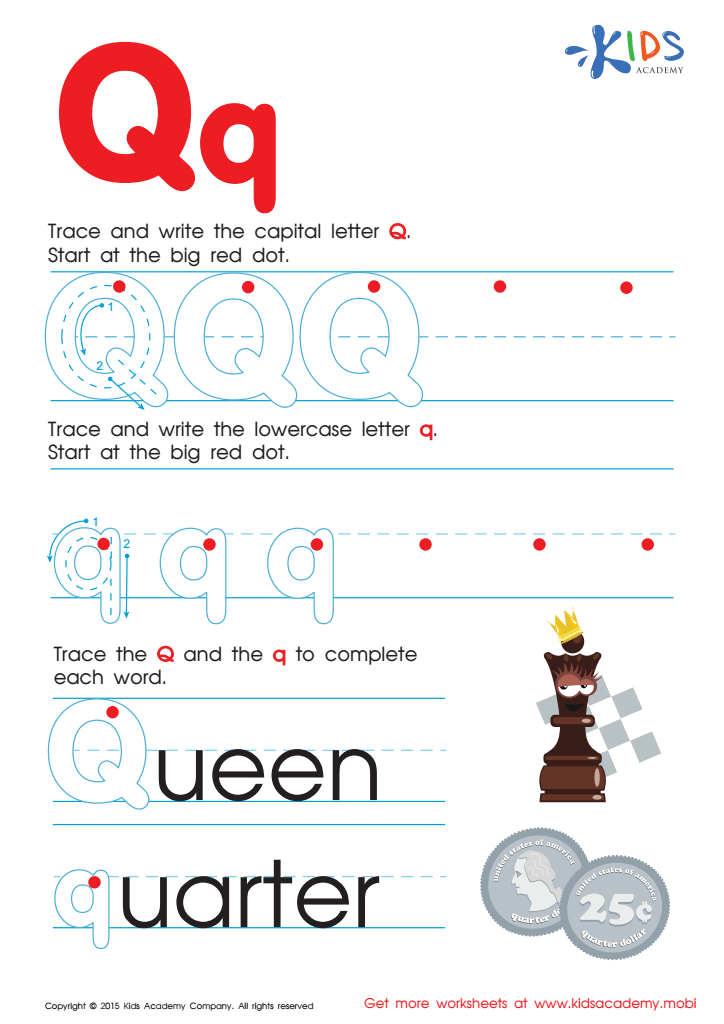
Letter Q Tracing Page
 Assign to My Students
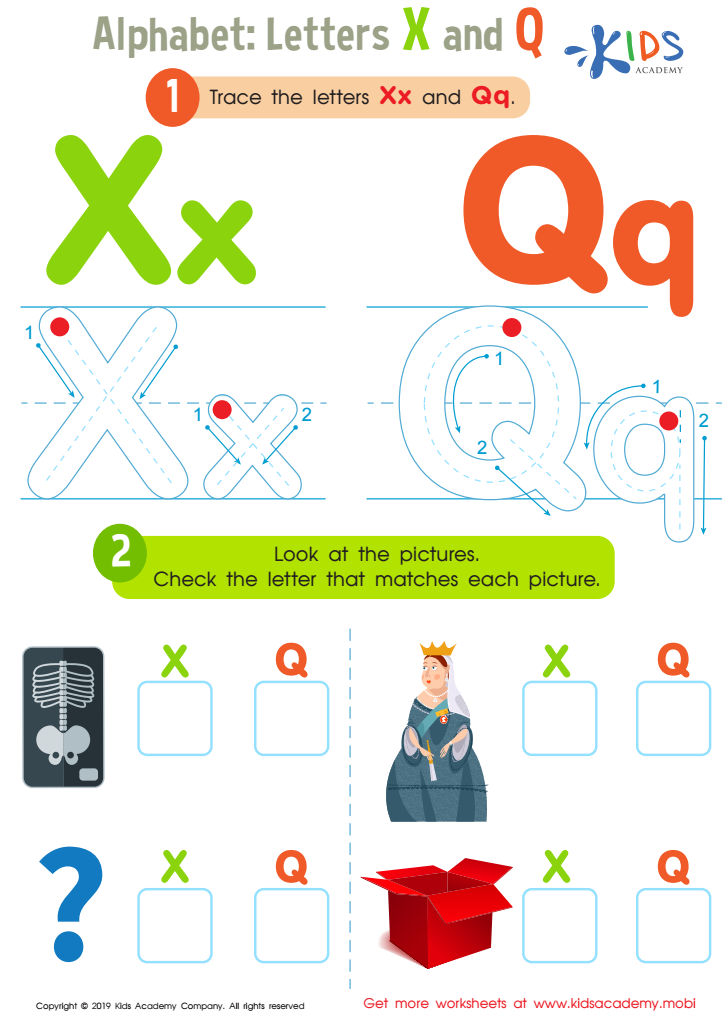
Letters X and Q Tracing Worksheet
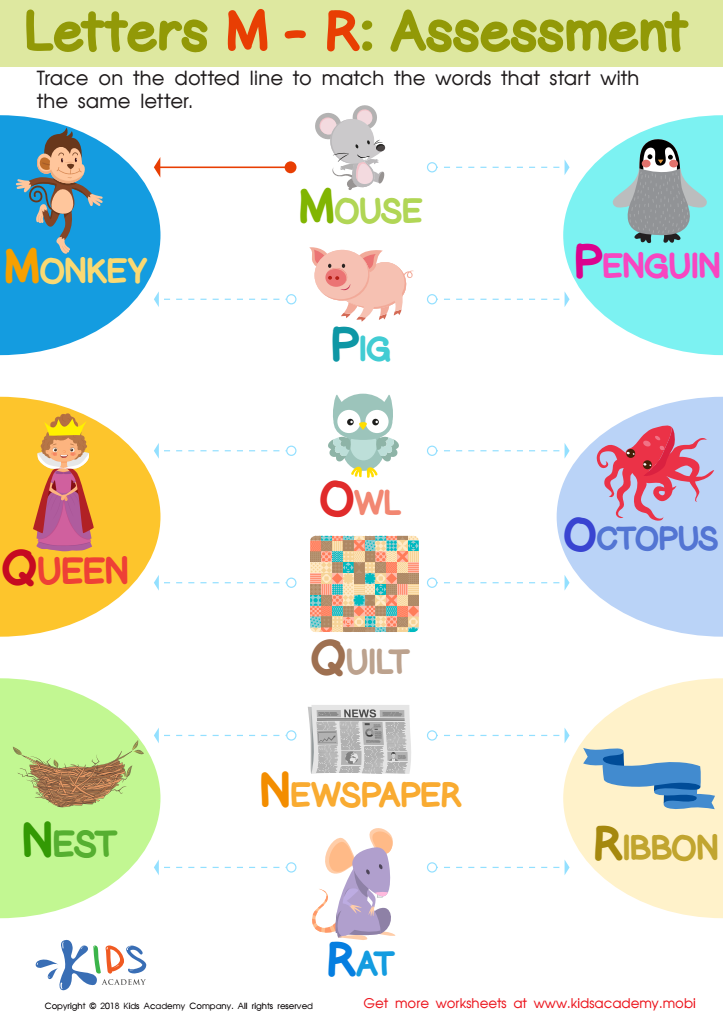
Letters M-R Tracing Worksheet



Fine motor skills are essential developmental skills that involve the coordination of small muscles, particularly in the hands and fingers. For preschoolers, like those learning about the letter Q, fine motor skills are crucial not only for writing but also for everyday tasks such as buttoning clothing or gripping utensils. Focusing on fine motor skills enhances children’s ability to manipulate objects, which builds confidence and independence.
Incorporating the letter Q into fine motor activities can make learning engaging and multi-dimensional. For example, activities like cutting out pictures of animals that start with Q (like queens, quokkas, or quails) or tracing the letter Q encourages children to practice hand-eye coordination as well as letter recognition. These exercises develop dexterity, improving their ability to write letters and form words as they progress in their education.
Parents and teachers should prioritize fine motor skill development because these foundational skills significantly influence academic performance, self-care abilities, and overall motor control. A child who struggles with fine motor tasks may find classroom activities, such as writing or crafting, more challenging, which can affect their confidence and enthusiasm for learning. Thus, by nurturing these skills early on, adults can foster greater academic success and self-sufficiency in children.