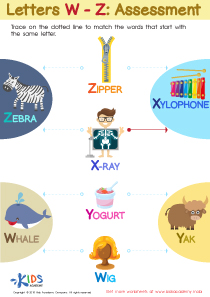
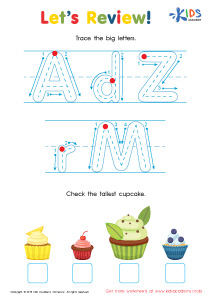
Listening skills Preschool Phonics Worksheets
5 filtered results
Difficulty Level
Grade
Age
-
From - To
Subject
Activity
Standards
Our "Listening Skills Preschool Phonics Worksheets" are thoughtfully crafted to develop young learners' phonemic awareness and auditory discrimination. Focusing on fun and engaging activities, these worksheets help preschoolers recognize sounds, follow oral instructions, and enhance their ability to differentiate between various phonetic elements. By integrating exciting tasks like sound matching, rhyming exercises, and phonics puzzles, we ensure a dynamic learning experience that strengthens foundational listening and phonics skills. Perfect for home or classroom use, these worksheets are designed to make early literacy enjoyable and effective, setting the stage for successful reading and communication development.
Favorites
With answer key
Interactive
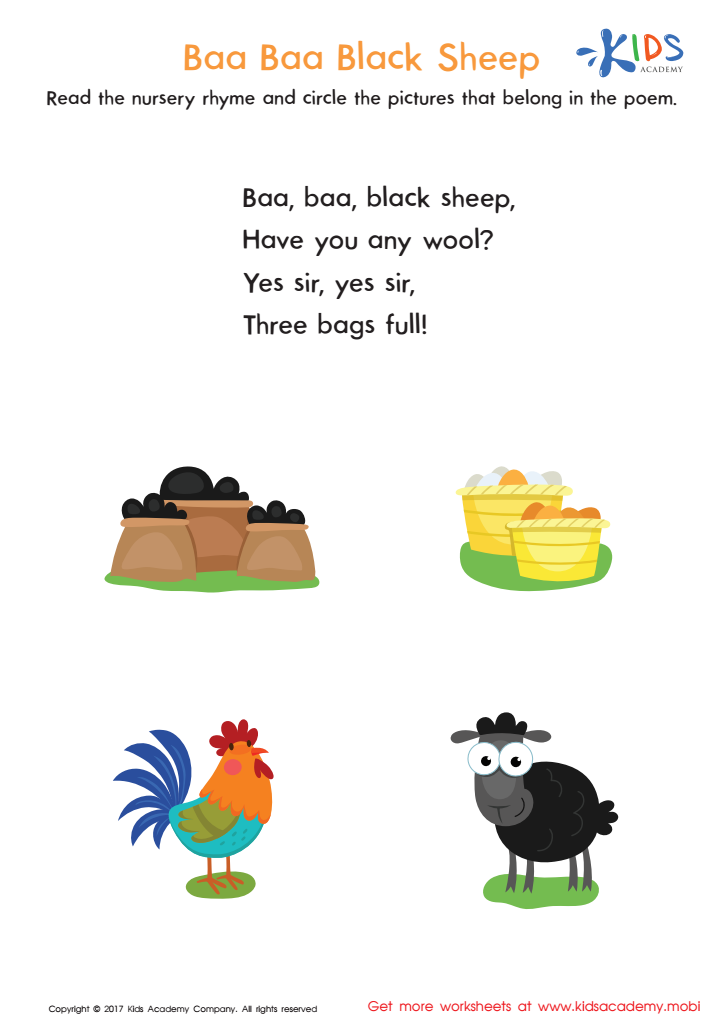
Baa Baa Black Sheep Printable
Jumpstart your child's reading skills with this printable Baa Baa Black Sheep worksheet! Recite the lines with them, then have them select the pictures associated with the poem to test comprehension. Fun and educational!
 Assign to My Students
Baa Baa Black Sheep Printable
Worksheet
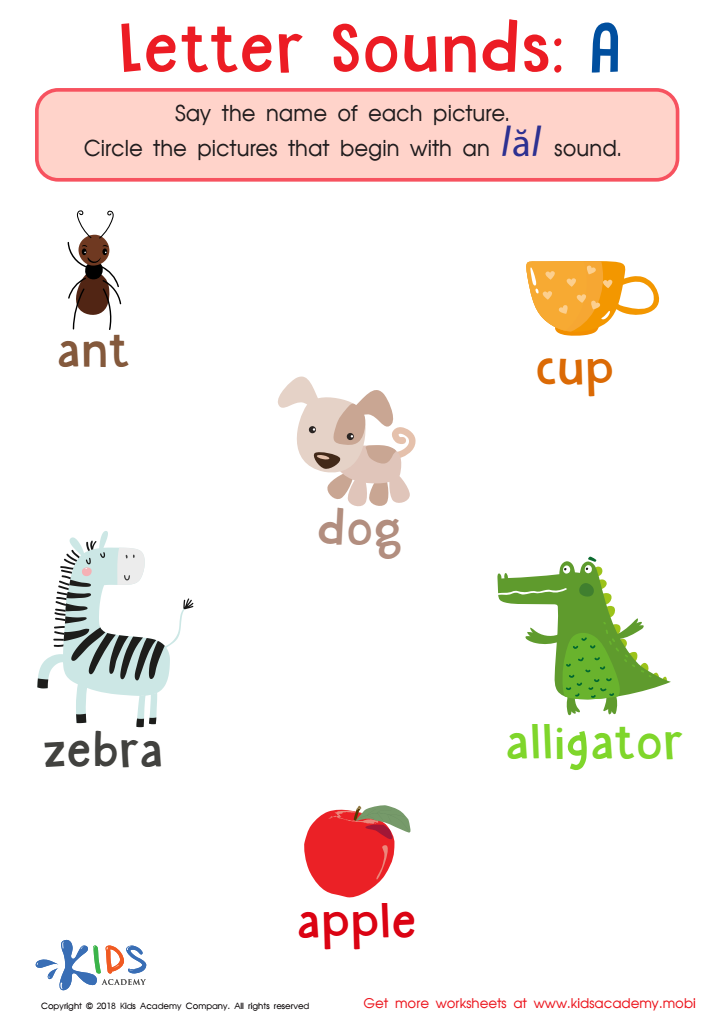
Letter A Sounds Worksheet
Encourage your new reader to practice the «ă» sound with this fun, free PDF worksheet. With the help of picture clues, they'll say the name of each word and trace circles around the items that start with «ă». This worksheet is an effective way to boost beginning sound skills while having fun!
Letter A Sounds Worksheet
Worksheet
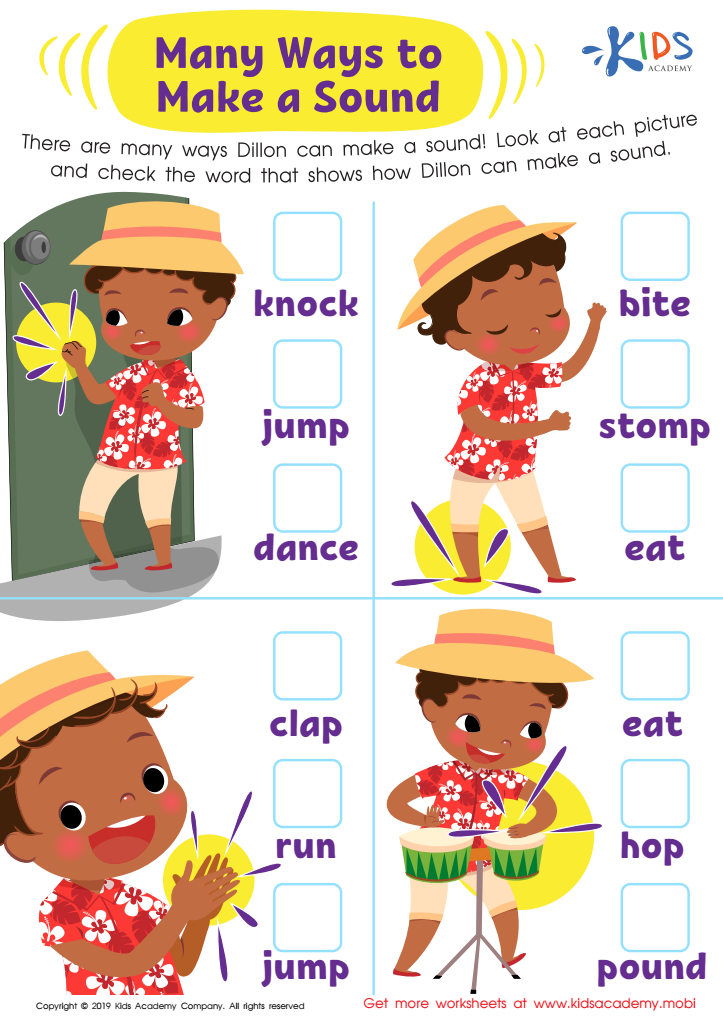
Many Ways to Make a Sound Worksheet
This interactive worksheet encourages creativity and imagination as kids use picture clues to match sound words. It helps them identify the sound methodology and build fine motor skills. Plus, with learning through play, they'll develop stronger vocabularies without even knowing it!
Many Ways to Make a Sound Worksheet
Worksheet
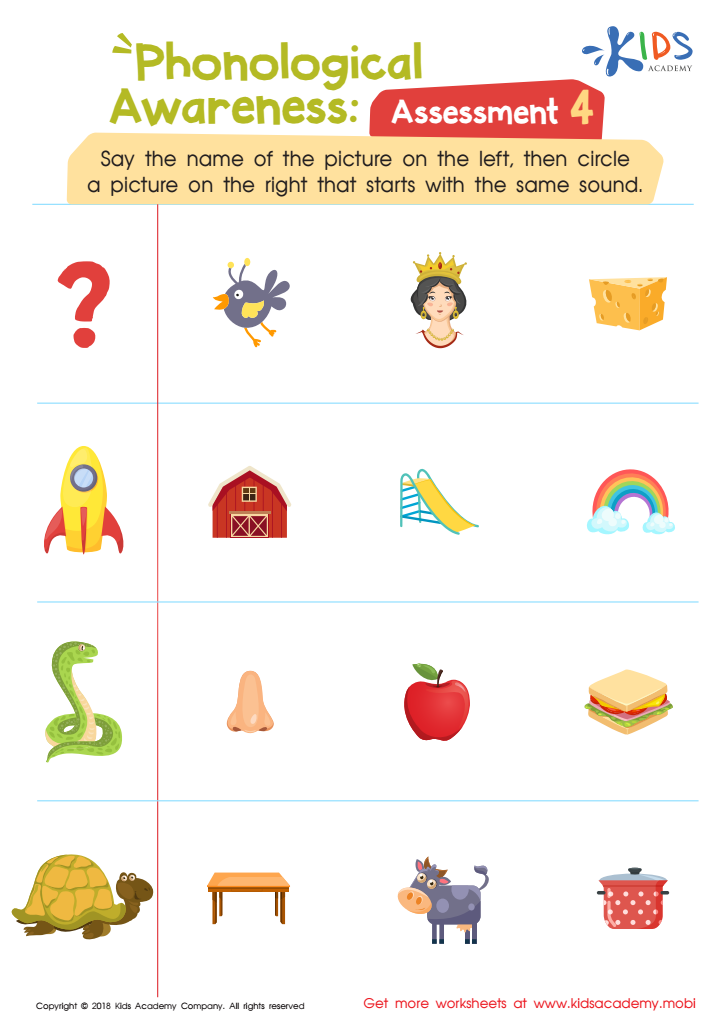
Phonological Awareness: Assessment 4 Worksheet
It can be tricky for young readers to differentiate between sounds in words. Make it fun with this downloadable worksheet! Ask your child to name each picture on the left and match the starting sound with an image on the right. This helps assess their phonics skills and make learning enjoyable.
Phonological Awareness: Assessment 4 Worksheet
Worksheet
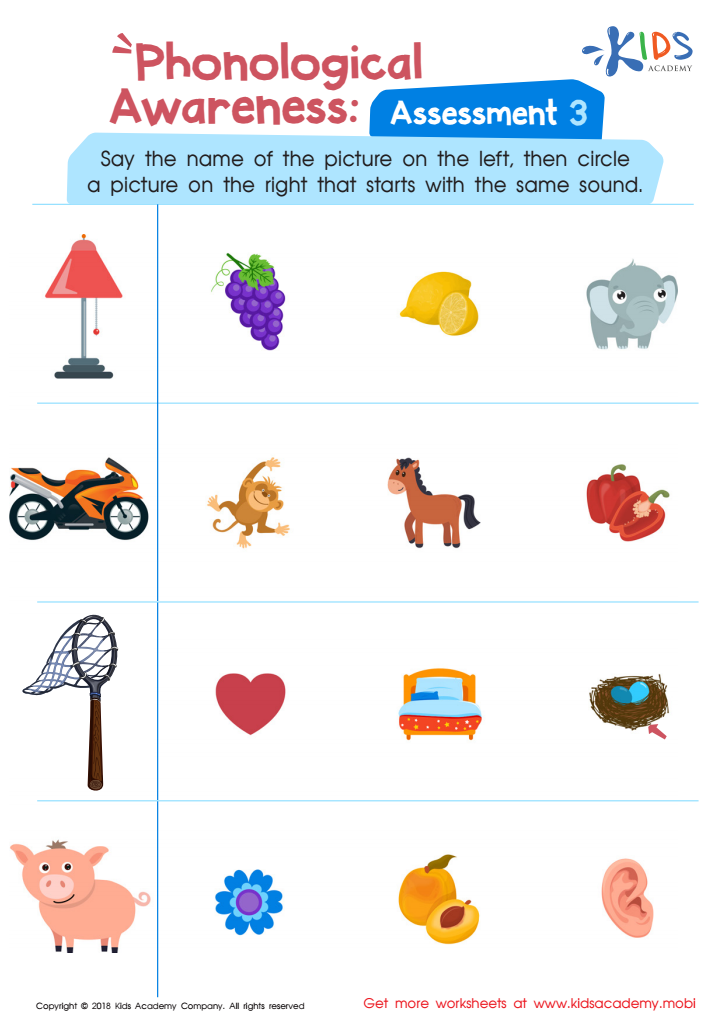
Phonological Awareness: Assessment 3 Worksheet
Test kids' reading readiness with a phonological awareness worksheet! With this PDF exercise, encourage children to name each picture aloud and match left to right. Help them learn to recognize word sounds at the start, middle and end of words. They'll be sure to remember that lamp doesn't sound like elephant!
Phonological Awareness: Assessment 3 Worksheet
Worksheet
Join Kids Academy for Free
Who is primarily going to use this learning content?





Listening skills are crucial in early childhood education, especially when it comes to learning phonics. Phonics, the relationship between sounds and their corresponding letters or groups of letters, forms the foundation of reading and writing. When children develop good listening skills, they can better differentiate between various sounds, making it easier for them to recognize and reproduce those sounds in words. This is fundamental to achieving literacy.
Parents and teachers should care about listening skills because strong listeners are more likely to succeed in phonics instruction. Children who can accurately hear and distinguish phonetic details can more effectively blend and segment sounds, promoting reading fluency and comprehension. Moreover, well-developed listening skills contribute to improved attention spans and the ability to follow complex instructions, enhancing overall classroom learning.
In addition to academic success, strong listening skills cultivate effective communication and social interactions. Young children with refined listening abilities are better equipped to pick up on social cues and understand spoken language, which benefits their interpersonal relationships.
Therefore, investing time and effort into nurturing listening skills in preschool sets a solid groundwork not just for literacy, but for a broad array of cognitive and social competencies that support a child's overall development.