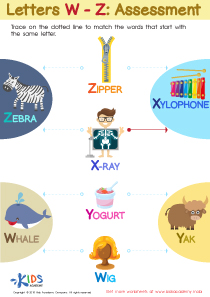
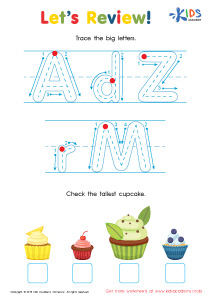
Sound identification Preschool Phonics Worksheets
4 filtered results
-
From - To
Discover the fun of learning with our "Sound Identification Preschool Phonics Worksheets"! Designed for young children, these engaging worksheets help develop essential phonemic awareness by focusing on sound recognition and matching. Each activity encourages kids to identify and associate sounds with corresponding letters and pictures, making learning interactive and enjoyable. Perfect for home or classroom use, our resources promote early literacy skills and enhance vocabulary development. Watch as your little ones build a strong foundation in reading through diverse exercises that foster curiosity and creativity. Start your phonics journey today and empower preschoolers with the skills they need to succeed!
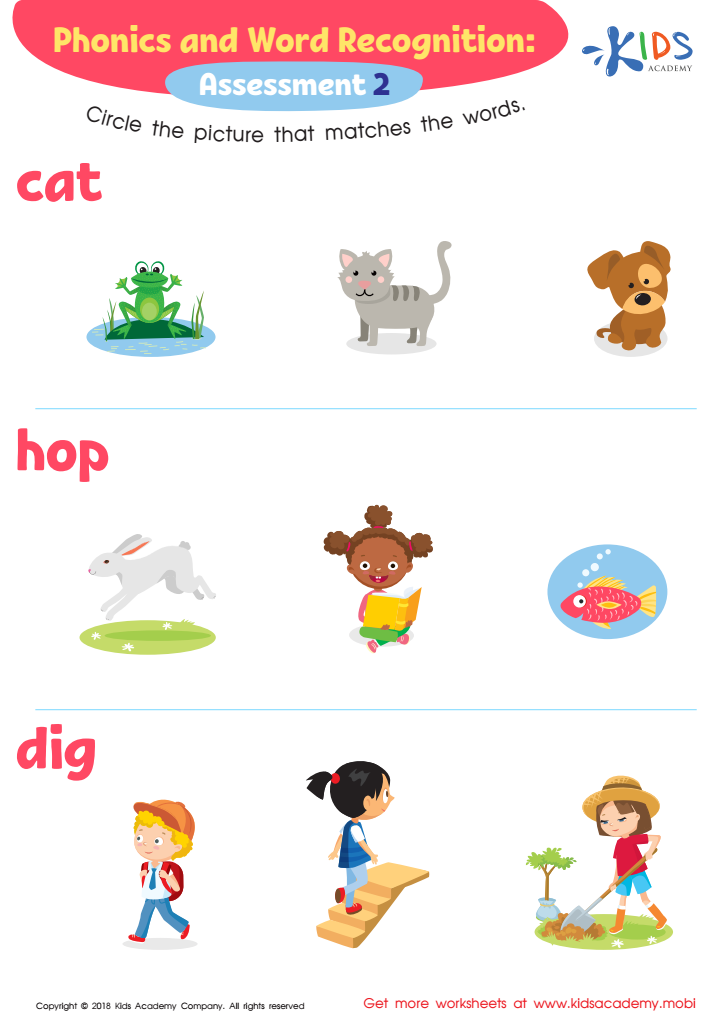
Phonological Awareness: Assessment 2 ELA Worksheet
 Assign to My Students
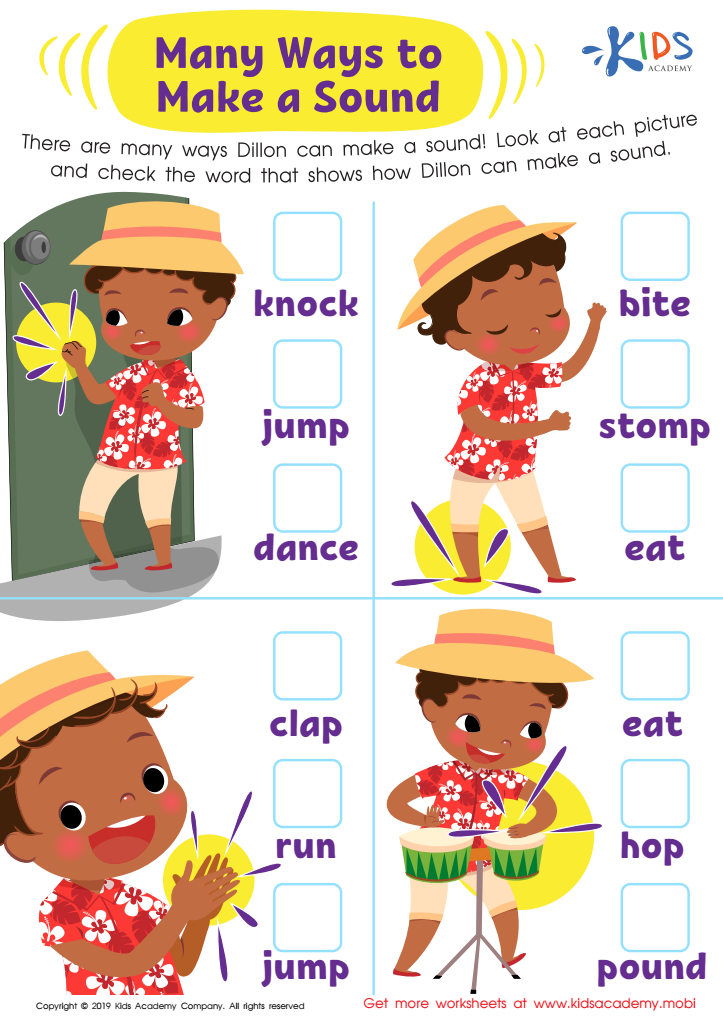
Many Ways to Make a Sound Worksheet
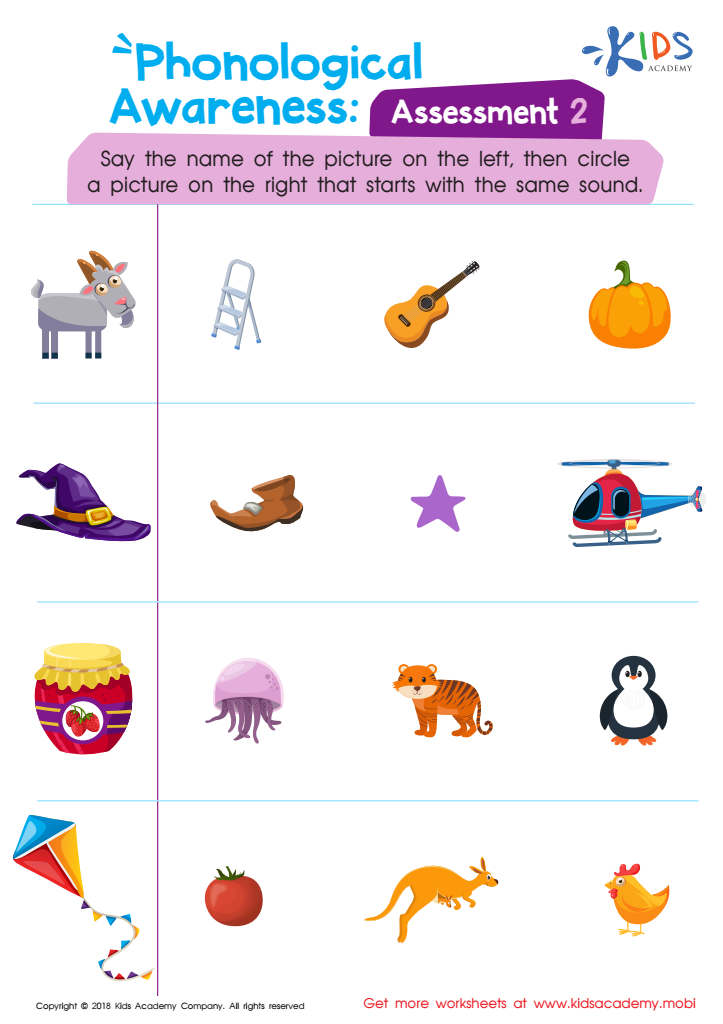
Phonological Awareness: Assessment 2 Worksheet
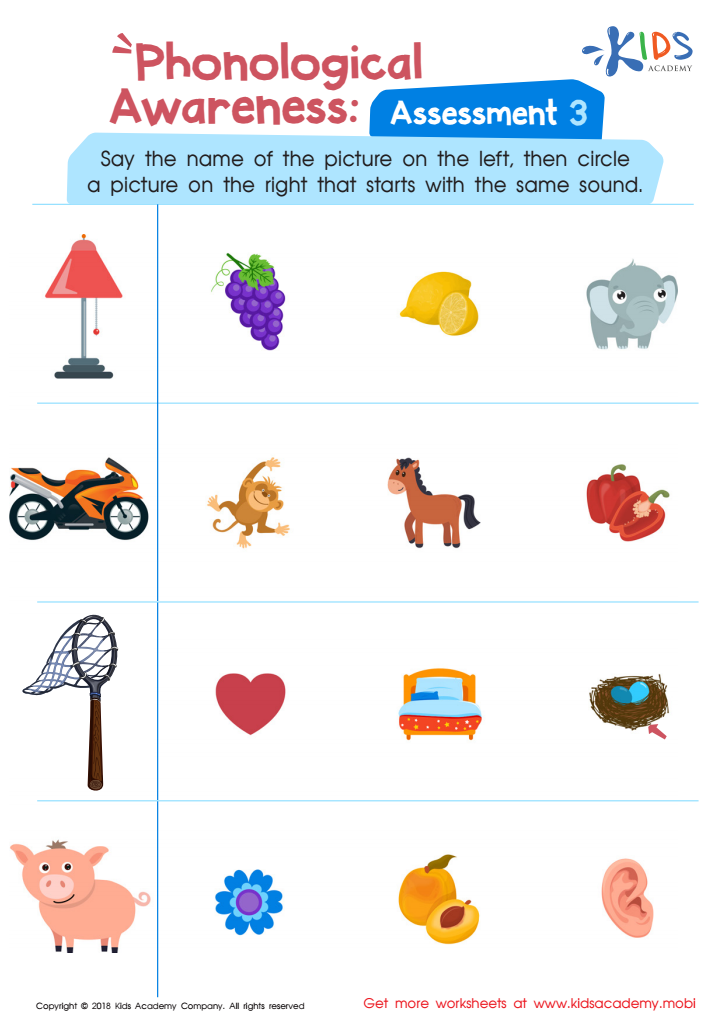
Phonological Awareness: Assessment 3 Worksheet





Sound identification is a crucial component of preschool phonics that lays the foundation for literacy development. Parents and teachers should prioritize this skill for several reasons. First, sound identification helps children understand the relationship between sounds and letters, leading to improved decoding skills when they begin to read. By recognizing individual phonemes, children can blend sounds to form words, which is essential for reading fluency.
Additionally, strong sound identification skills enhance listening and communication abilities. When children can distinguish different sounds, they become more effective listeners, which is vital for following instructions and engaging in discussions. This skill also supports vocabulary development, as children learn to manipulate sounds in different words, broadening their language comprehension.
Furthermore, focusing on sound identification fosters confidence in young learners. When children develop these phonemic awareness skills, they feel more prepared and enthusiastic about learning to read. Parents can reinforce these skills through playful activities, while teachers can implement structured phonics programs in the classroom.
Ultimately, valuing sound identification in preschool phonics not only supports literacy development but also equips children with essential skills that will benefit them throughout their academic journey. By nurturing phonemic awareness, we set the stage for lifelong learning and communication success.