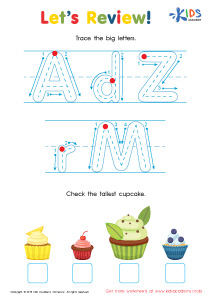
Boost your child's reading skills with our engaging Word Recognition Preschool Phonics Worksheets! Designed for young learners, these worksheets enhance phonemic awareness and help preschoolers recognize common sight words. Featuring vibrant illustrations and interactive activities, each worksheet makes learning fun and captures children's attention. Our resources are aligned with early literacy standards, ensuring kids build a strong foundation for future reading success. Perfect for teachers and parents alike, these printable worksheets promote confidence and independence in recognizing words. Join us in fostering a love for reading through hands-on learning experiences tailored for preschoolers! Explore our collection today and transform reading time into a joyful adventure!

Check out this FREE Preschool Trial Lesson on Phonics!

X

Favorites
With answer key
Interactive
  • Preschool
  • Word Recognition
  • Phonics
Words: Assessment 2 Worksheet

Words: Assessment 2 Worksheet

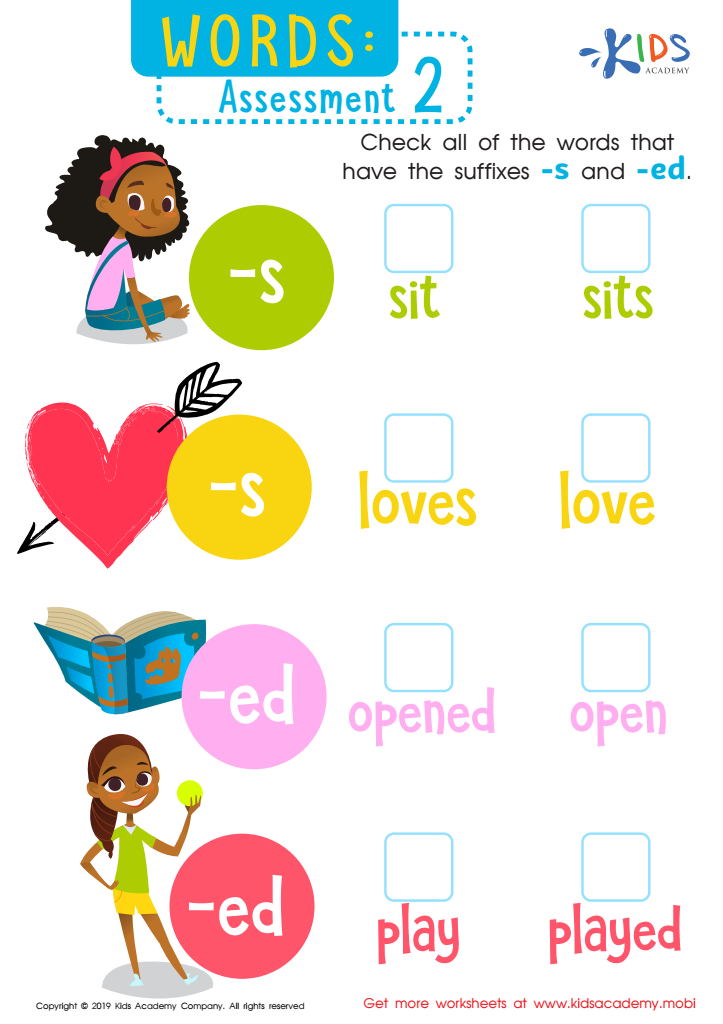
Test your child’s knowledge of -s and -ed word endings with this fun worksheet! They'll look at images and read the words, then choose the correct suffix to finish each one. Vivid illustrations make this an enjoyable learning experience!
Words: Assessment 2 Worksheet
Worksheet
Words: Asessment 3 Worksheet

Words: Asessment 3 Worksheet

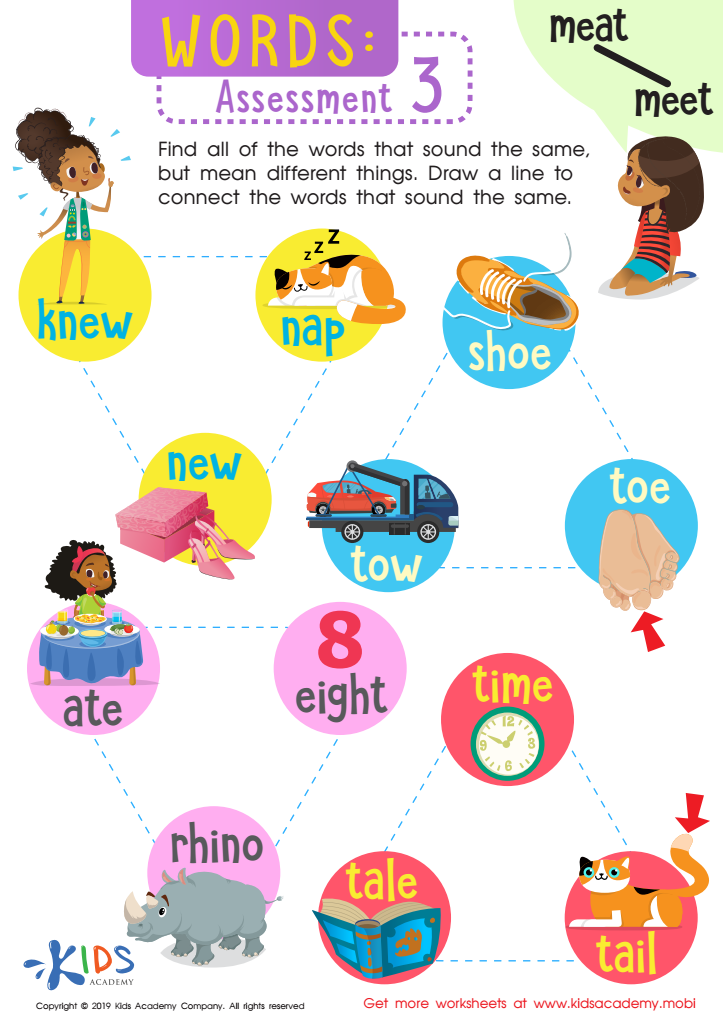
Assess your child's knowledge of homonyms with words like "toe" and "tow". This fun worksheet helps find words that sound the same but have different meanings and spellings. Use it to introduce homographs--words spelled the same with different meanings!
Words: Asessment 3 Worksheet
Worksheet
Words: Assessment 4 Worksheet

Words: Assessment 4 Worksheet

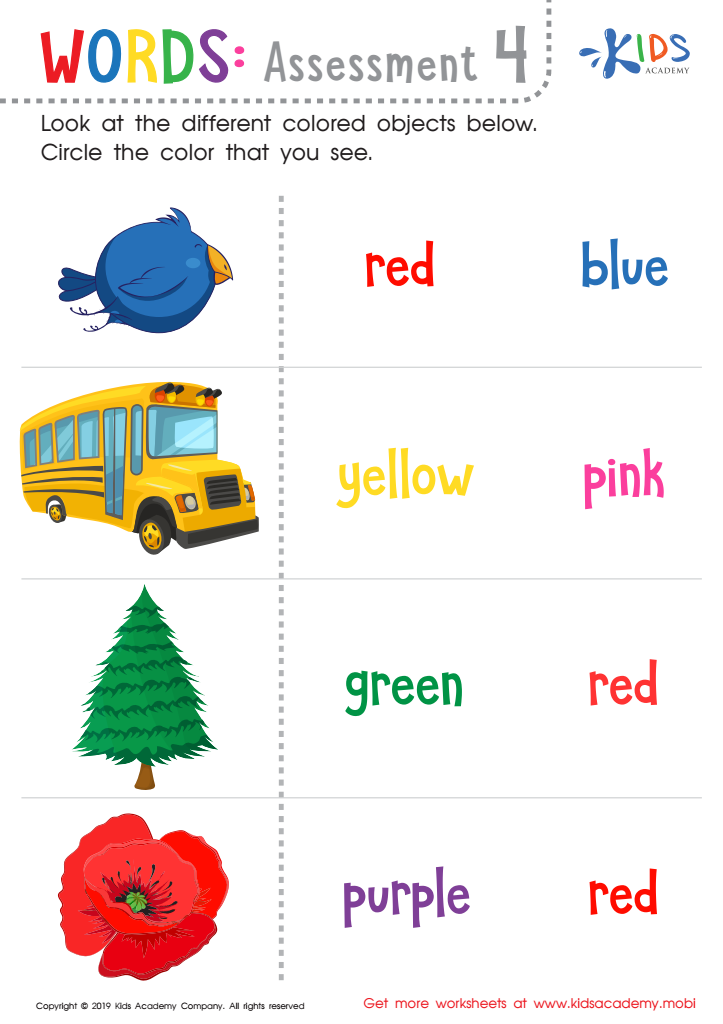
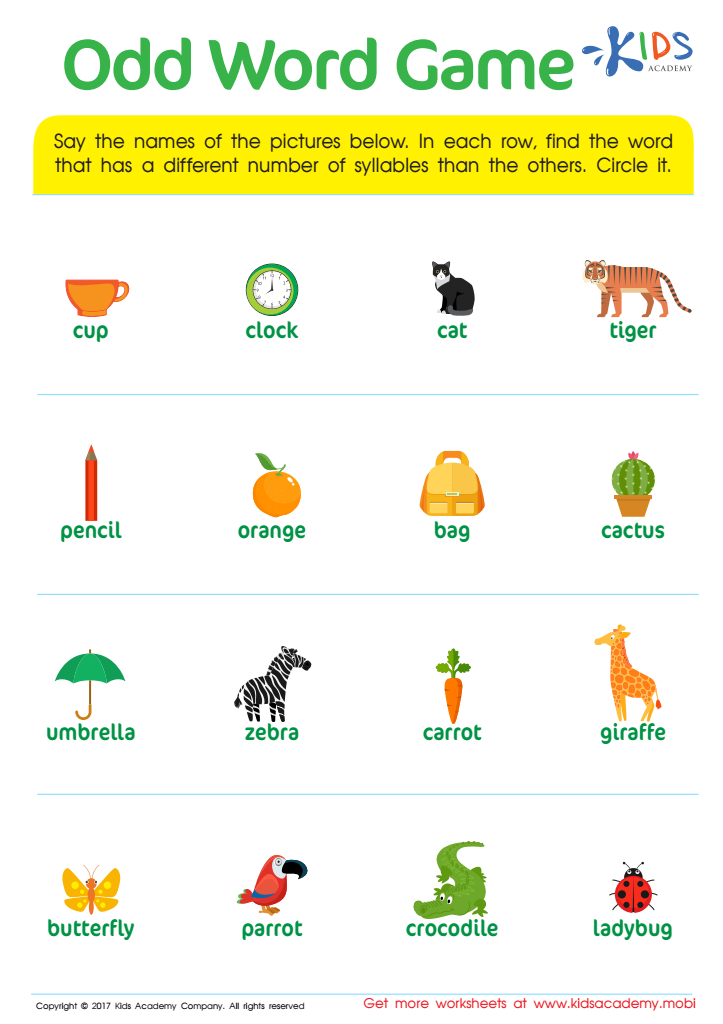
Look at the pictures and have your child circle the color they see. This free worksheet is great for assessing their knowledge of vocabulary words. It offers familiar images with words for kids to read and match with the colors. Help your child build their reading and understanding skills with this fun activity!
Words: Assessment 4 Worksheet
Worksheet
Count Syllables: Odd Word Game Worksheet

Count Syllables: Odd Word Game Worksheet

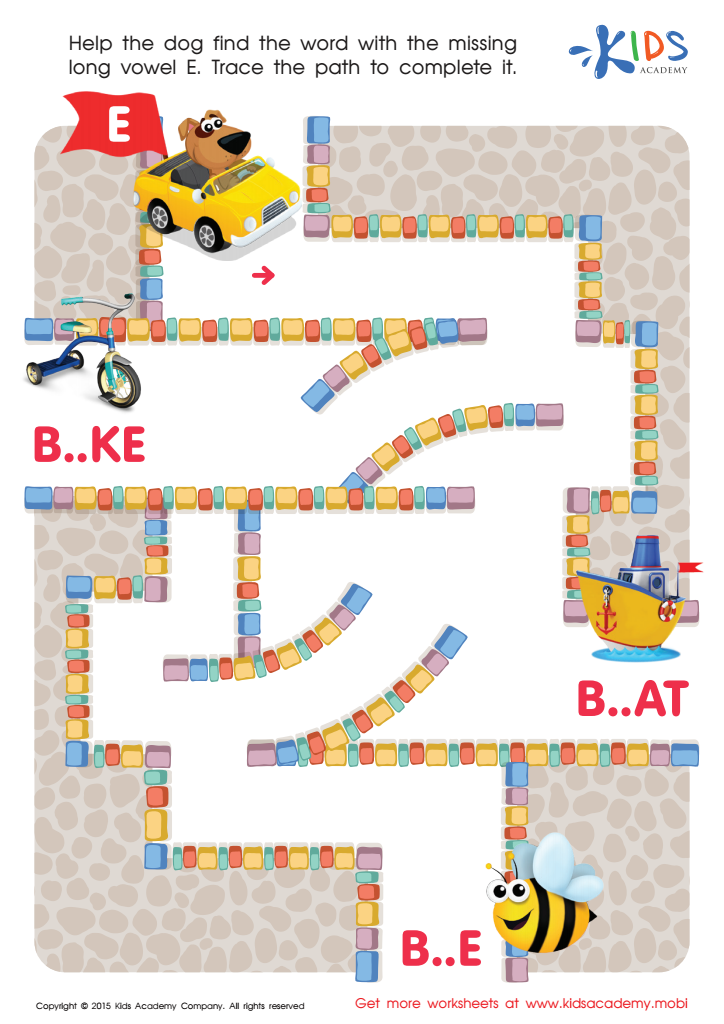
Counting syllables strengthens kids' decoding skills. This printable helps them say common item names and chunk words for fluency and accuracy. They don't even realize they're working on their reading! Bright colors make it fun, so it's a fast and easy way to practice.
Count Syllables: Odd Word Game Worksheet
Worksheet
Phonics for Kids | Long Vowel Sound E | PDF Worksheet 1

Long Vowel Sound E Worksheet

Practice distinguishing long and short vowel sound E with this free printable! Kids must complete the word “bee” by tracing the maze and adding the missing letter E. Remind them to say the word aloud to help sharpen their phonics ear. Get more phonics fun with the vowel sound E here.
Long Vowel Sound E Worksheet
Worksheet
Word Matching Game Worksheet

Word Matching Game Worksheet

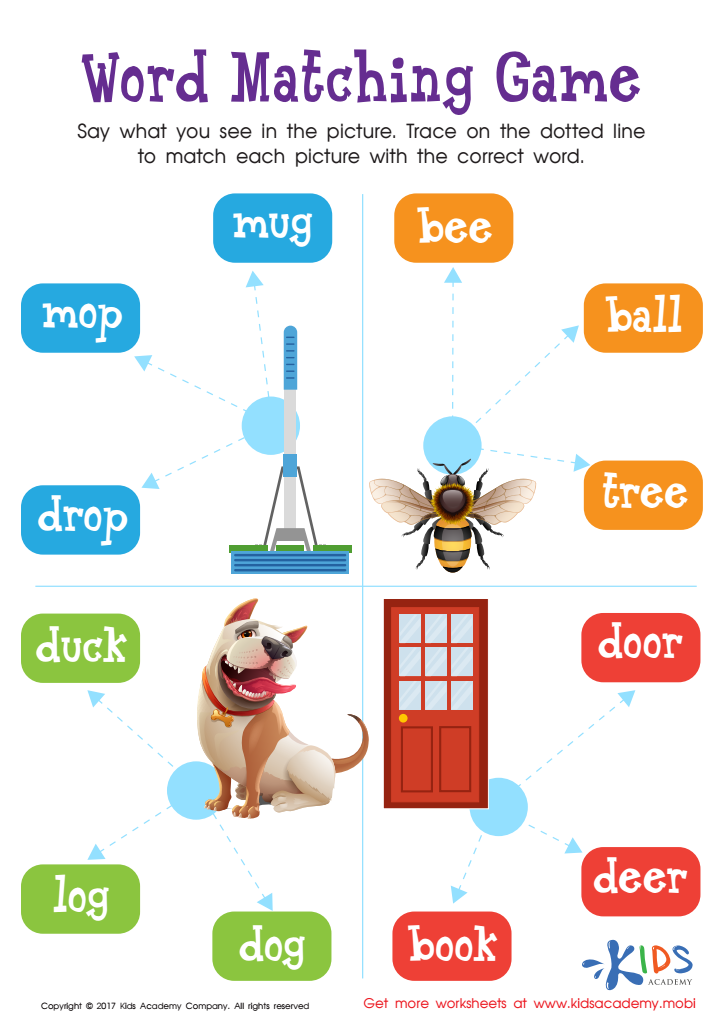
Help your early reader develop prereading skills with this fun matching worksheet! Visual cues help them learn sight words, decode words in word families, and identify phonetic patterns. They'll practice discerning sounds past initial consonants while saying the name of the picture and finding the matching word - and reading at the same time!
Word Matching Game Worksheet
Worksheet
Phonological Awareness: Assessment 3 ELA Worksheet


Phonological Awareness: Assessment 3 ELA Worksheet

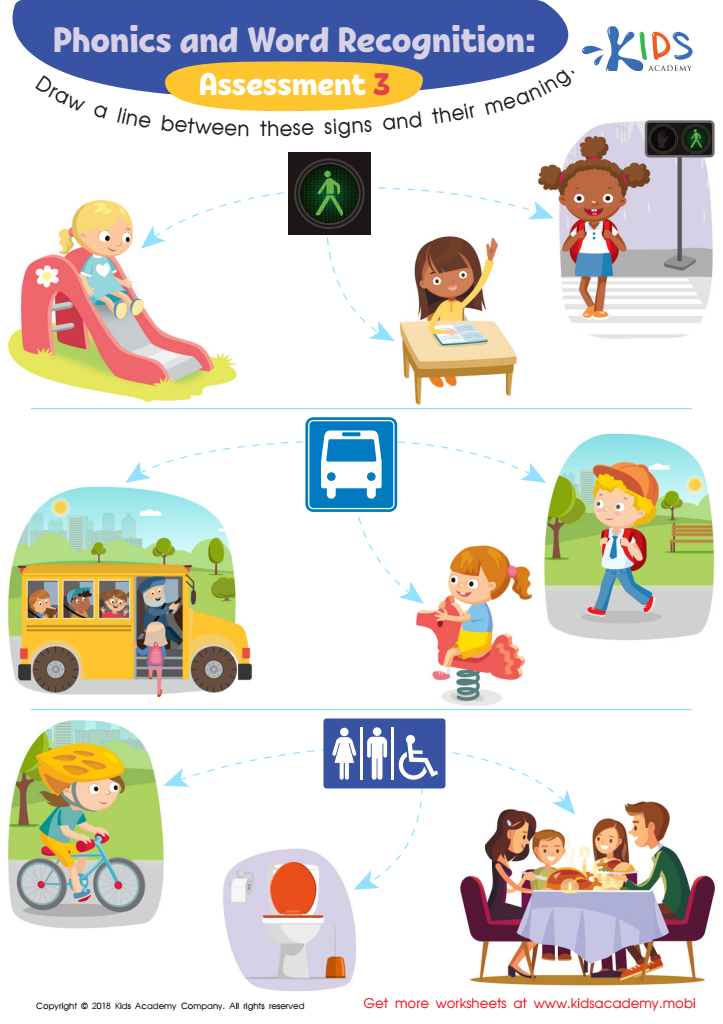
Want to test your preschooler's language skills, phonetic decoding and word recognition? This worksheet uses their knowledge of community helpers to match signs with depictions. It also works on fine motor skills, a key pre-reading skill.
Phonological Awareness: Assessment 3 ELA Worksheet

Worksheet


Word recognition and preschool phonics are foundational components of literacy development that parents and teachers should prioritize for several compelling reasons.

Firstly, word recognition is crucial for developing reading fluency. When young children recognize words automatically, they can focus on understanding the meaning of the text instead of spending their cognitive energy on decoding. This fluency fosters a love for reading and encourages children to engage more with books.

Secondly, preschool phonics lays the groundwork for phonemic awareness, which involves understanding the relationship between sounds and letters. This skill enables children to decode unfamiliar words, making them more confident readers. By building a strong phonics foundation, children are better equipped to tackle challenging texts as they progress through school.

Furthermore, early exposure to word recognition and phonics can lead to improved academic performance. Research indicates that children with strong early reading skills are more likely to excel in all subjects, contributing to overall educational success.

Lastly, understanding the principles behind phonics and word recognition can empower parents and teachers alike to create effective literacy activities at home or in the classroom, fostering a collaborative environment where children thrive. Investing time in these early literacy skills sets the stage for lifelong learning and communication.