Basic measurement concepts Preschool Worksheets
3 filtered results
-
From - To
Welcome to our Basic Measurement Concepts Preschool Worksheets! Designed specifically for young learners, these engaging resources help children develop essential math skills through fun activities. Our worksheets introduce basic measurement concepts like length, weight, and volume, fostering comprehension and confidence. With colorful visuals and simple exercises, children will enjoy measuring everyday objects, comparing sizes, and exploring concepts such as heavier/lighter and more/less. Perfect for preschool settings or at-home learning, these worksheets promote foundational math skills while encouraging hands-on exploration. Start your child's journey into measurement today, and watch them build crucial understanding that will serve them well in future math challenges!
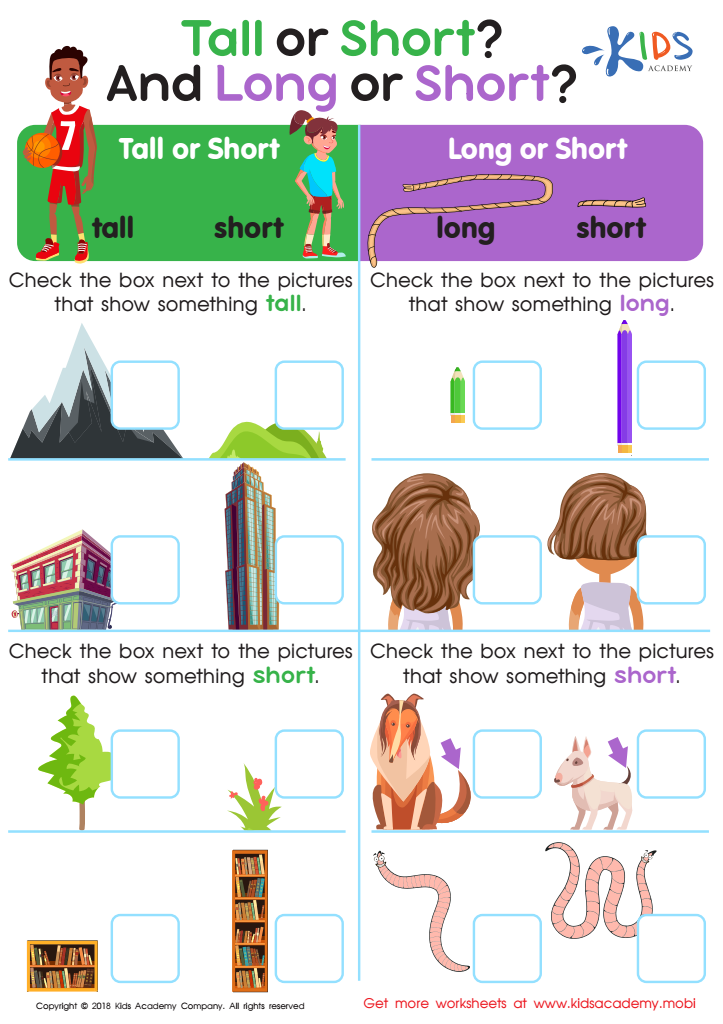
Tall or Short and Long or Short? Worksheet
 Assign to My Students
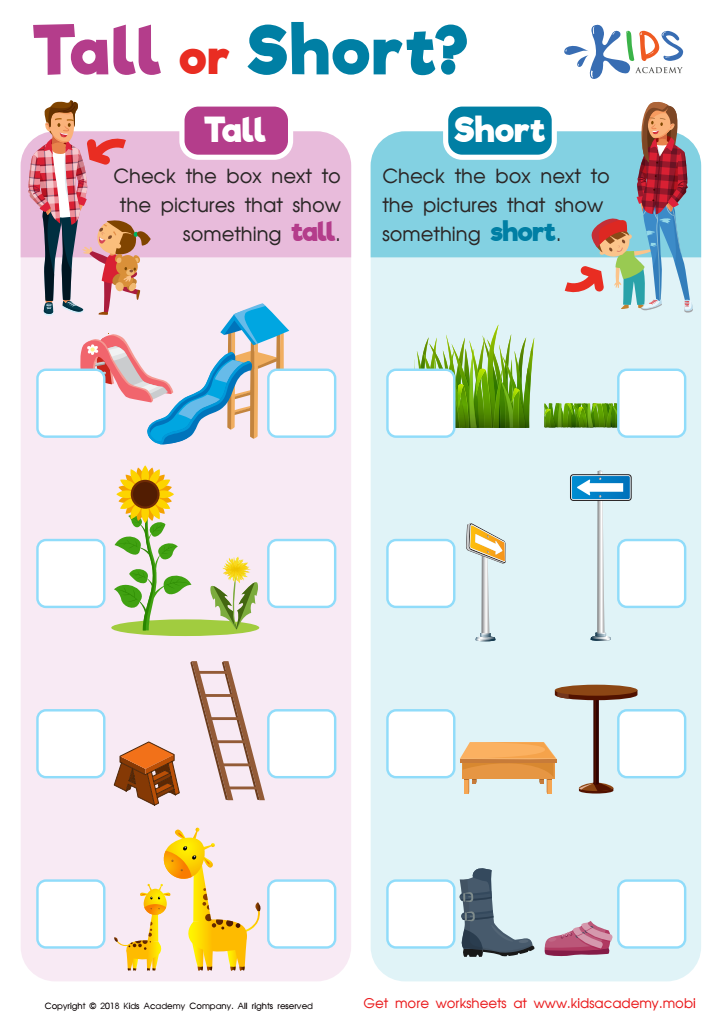
Tall or Short? Worksheet
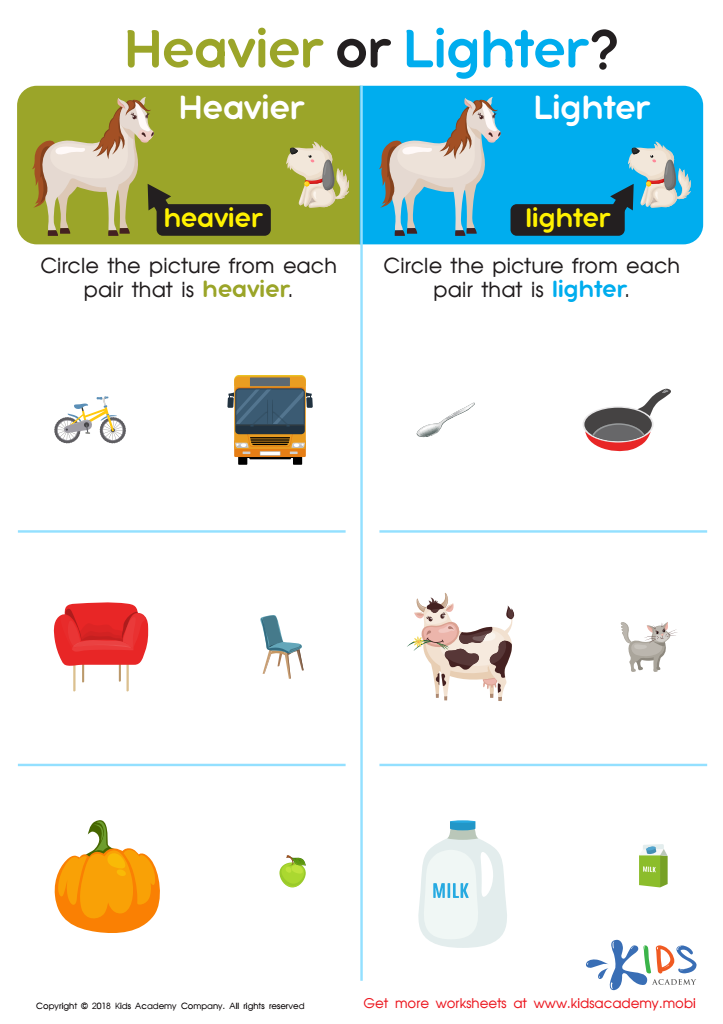
Heavier or Lighter? Worksheet


.jpg)



Understanding basic measurement concepts in preschool is crucial for both parents and teachers as it lays the foundation for children's mathematical thinking and cognitive development. At this age, children are naturally curious and eager to explore their environment, making it an ideal time for introducing measurement concepts such as length, weight, volume, and time.
These concepts help children make sense of the world around them by encouraging comparisons and logical reasoning. For instance, measuring objects with rulers or comparing the weight of different items fosters critical thinking and problem-solving skills. Additionally, engaging in hands-on activities, like pouring water between containers or sorting objects by size, promotes fine motor skills and creativity.
Further, understanding measurement enhances children’s language skills, as they learn to use vocabulary related to these concepts. It aids in their everyday tasks, boosting independence as they start understanding quantities in cooking or sharing.
Moreover, early measurement experiences encourage a positive attitude toward math, reducing anxiety and building confidence for future learning. By integrating measurement concepts into play and learning, parents and teachers can actively support children's overall development, providing essential tools for success in later academic pursuits.