Developing fine motor skills Preschool Worksheets
4 filtered results
Difficulty Level
Grade
Age
-
From - To
Subject
Activity
Standards
Enhance your preschooler's fine motor skills with our engaging worksheets designed specifically for young learners! These printable activities promote essential skills such as hand-eye coordination, grip strength, and dexterity through fun and interactive tasks. Our worksheets feature tracing, cutting, and gripping exercises that make learning enjoyable while fostering creativity and cognitive development. Perfect for home or classroom use, these resources support early childhood education and prepare children for future academic success. Explore our varied collection of fine motor skill worksheets that cater to different ability levels and interests, ensuring that every child can thrive and grow their skills effectively!
Favorites
With answer key
Interactive
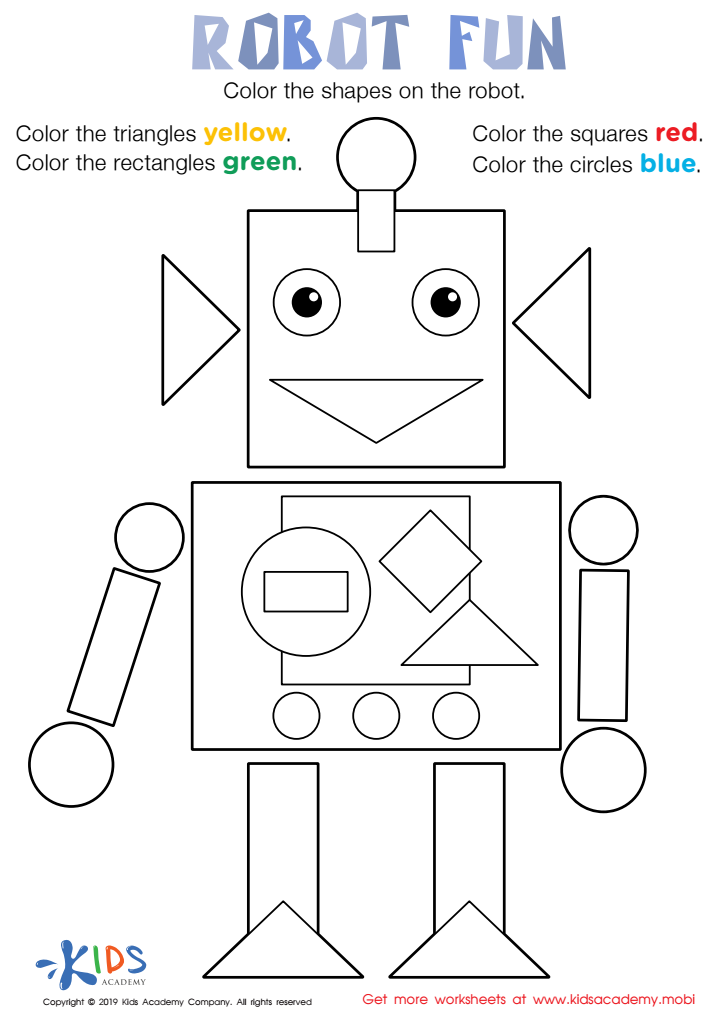
Robot Fun Worksheet
Help your child learn about basic shapes with this fun robot worksheet! Kids practice identifying circles, squares, rectangles and triangles, then color each shape according to directions. Make math practice enjoyable with this coloring page that teaches all four basic shapes - it's an important math skill!
Download (PDF)
 Assign to My Students
Assign to My Students
Robot Fun Worksheet
Worksheet

Join Kids Academy for Free
Who is primarily going to use this learning content?








Developing fine motor skills in preschool is crucial for a child's overall growth and sets the foundation for future learning. These skills involve the coordination of small muscles, particularly in the hands and fingers, enabling children to perform everyday tasks such as holding a pencil, buttoning clothing, or using scissors. Teachers and parents should care about fostering these skills because they play a vital role in a child's academic success and independence.
Strong fine motor skills contribute to a child's ability to write legibly and engage actively in classroom activities. They also promote hand-eye coordination, cognitive development, and problem-solving abilities. Furthermore, fine motor skill development often lays the groundwork for social interactions, as children learn to share tools, collaborate on projects, and participate in group activities that require dexterity.
By incorporating activities like art, playdough, and sorting games into daily routines, caregivers can facilitate this development in a fun and engaging way. Ultimately, nurturing fine motor skills not only enhances a child's physical capabilities but also boosts their confidence and enthusiasm for learning, leading to a more positive educational experience. Recognizing its importance ensures children are well-prepared for the challenges of the classroom and beyond.