Cognitive Development Preschool Adding in the Forest Worksheets
17 filtered results
-
From - To
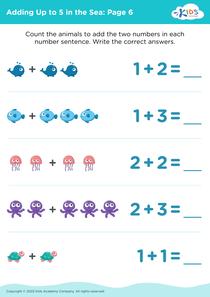
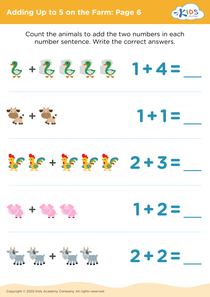
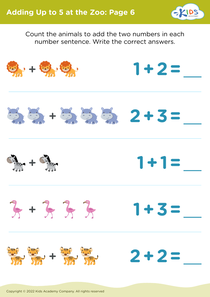
Discover the wonders of nature and enhance cognitive development with our "Cognitive Development Preschool Adding in the Forest Worksheets." Designed for young learners, these engaging activities blend mathematics and forest-themed fun to teach fundamental addition skills. Children will explore beautiful woodland scenes while counting and adding charming forest creatures. These worksheets encourage critical thinking, problem-solving, and early math proficiency in an enjoyable, interactive way. Perfect for preschoolers, each printable is designed to captivate young minds, making early learning a delightful adventure. Foster your child's love for math and nature through our unique and educational worksheets.
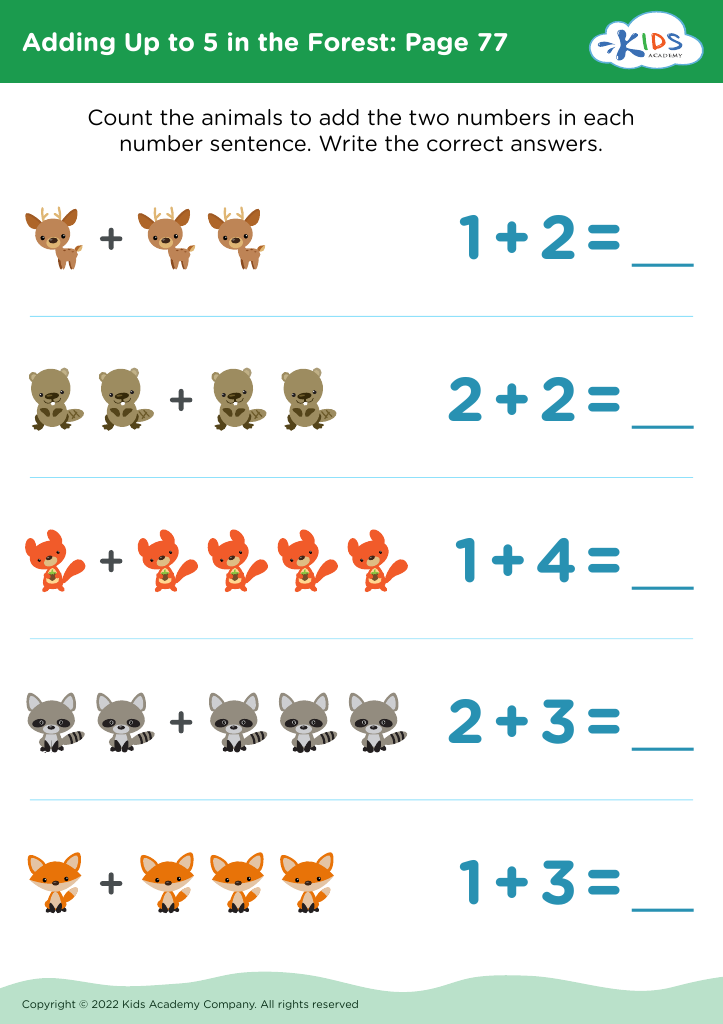
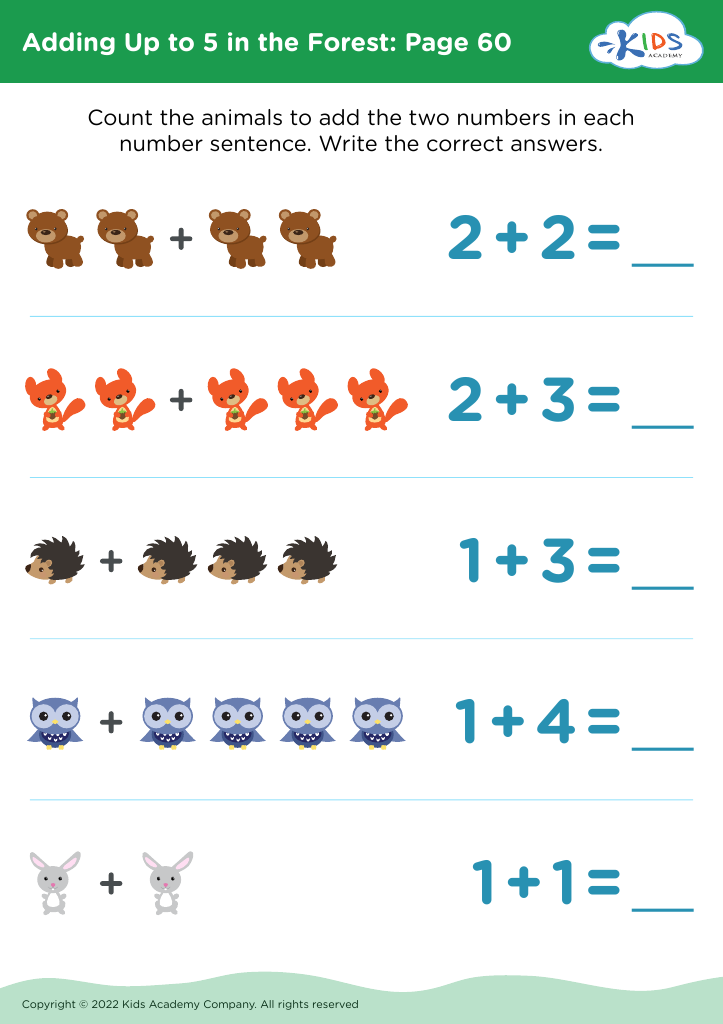
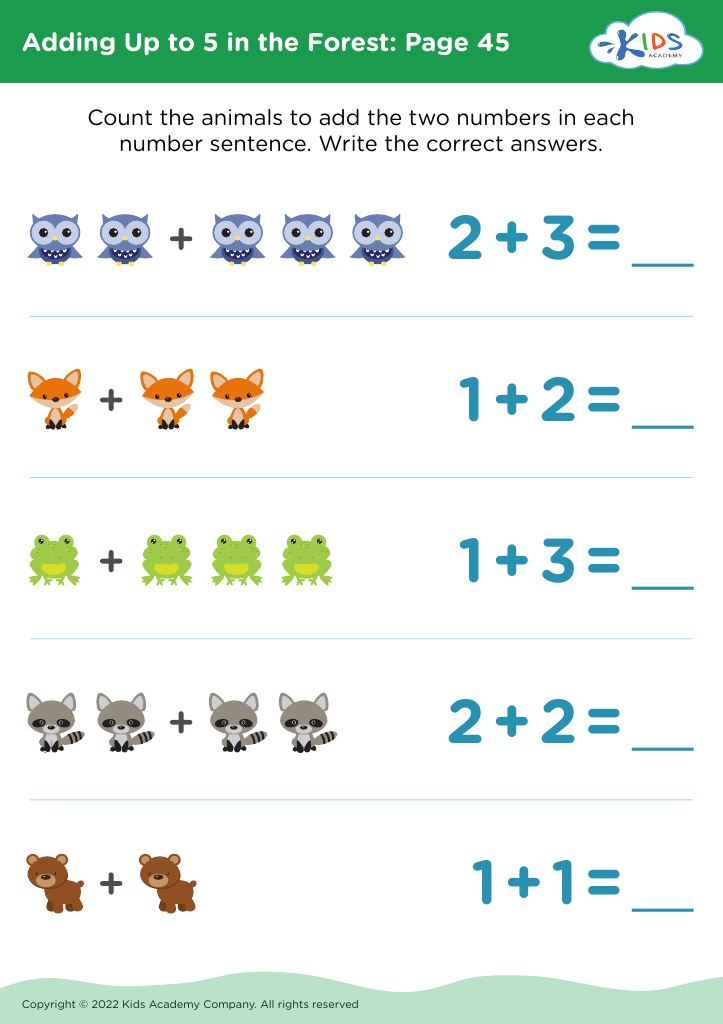
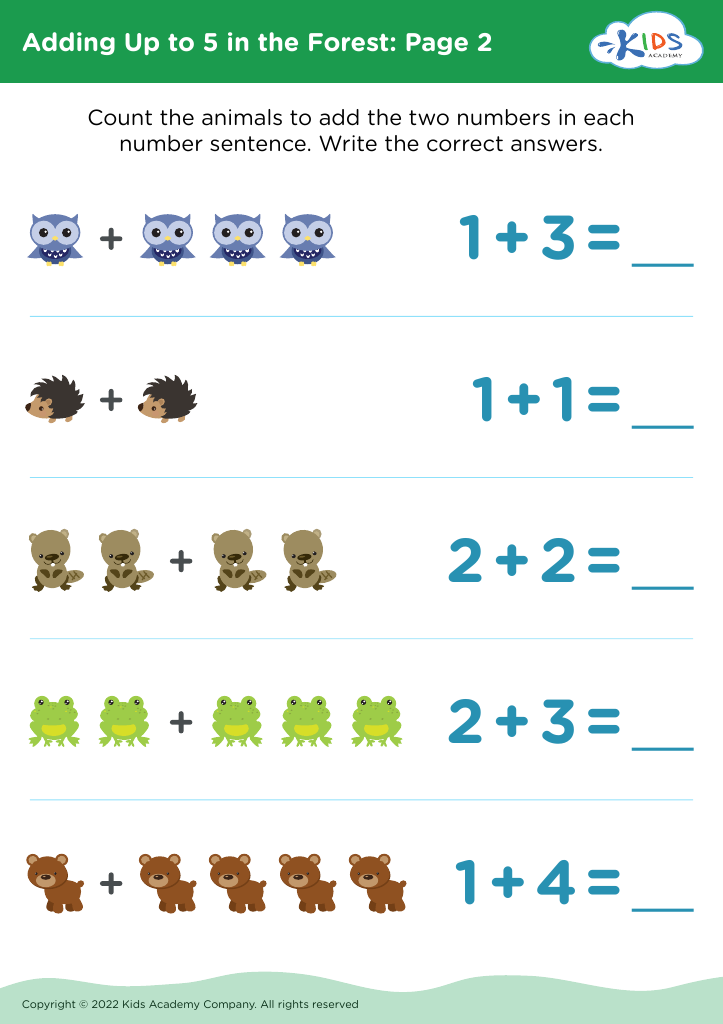
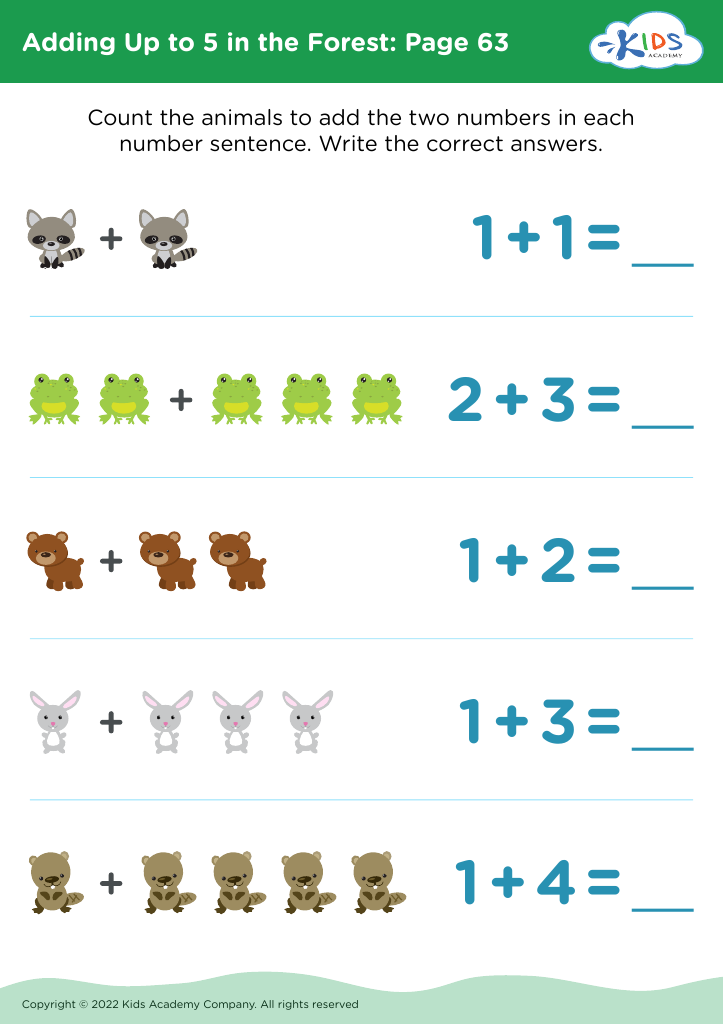
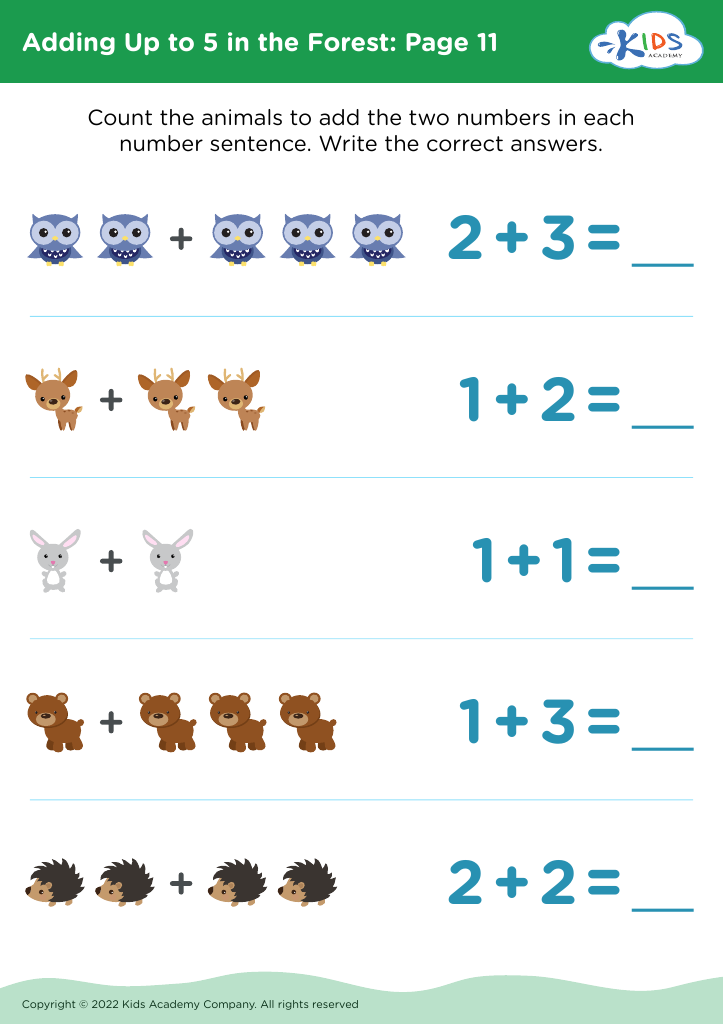
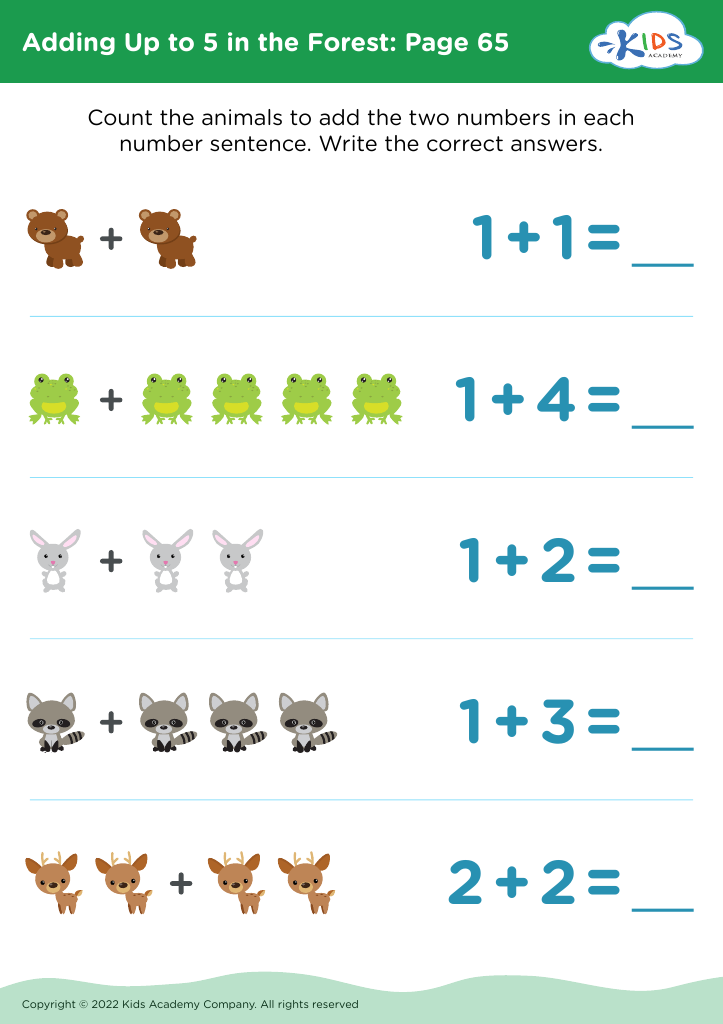
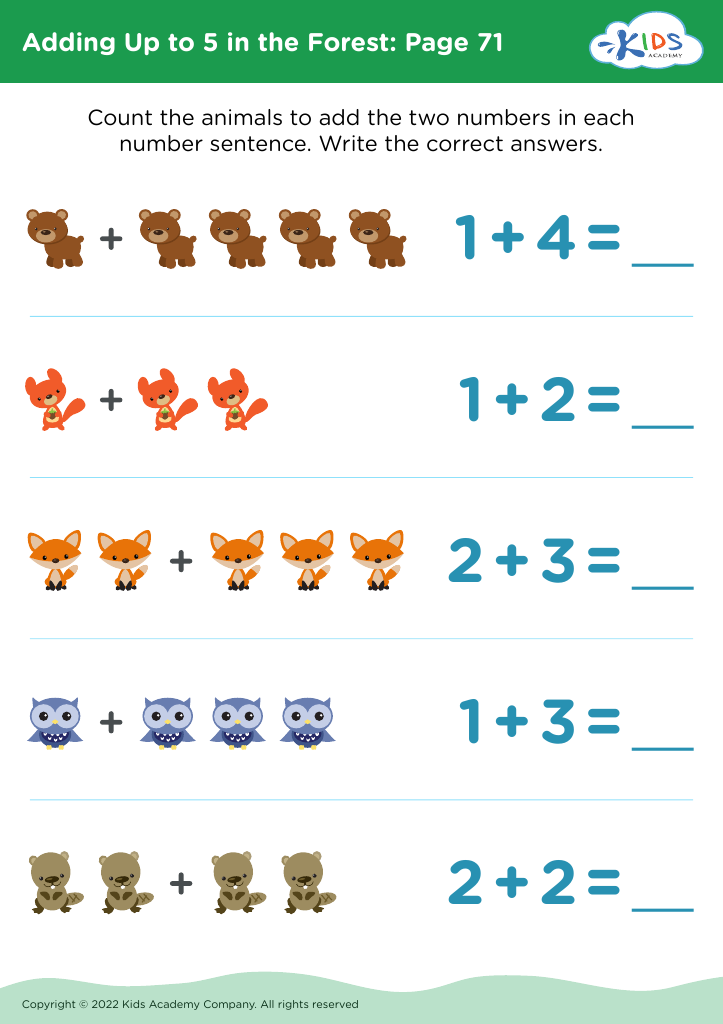
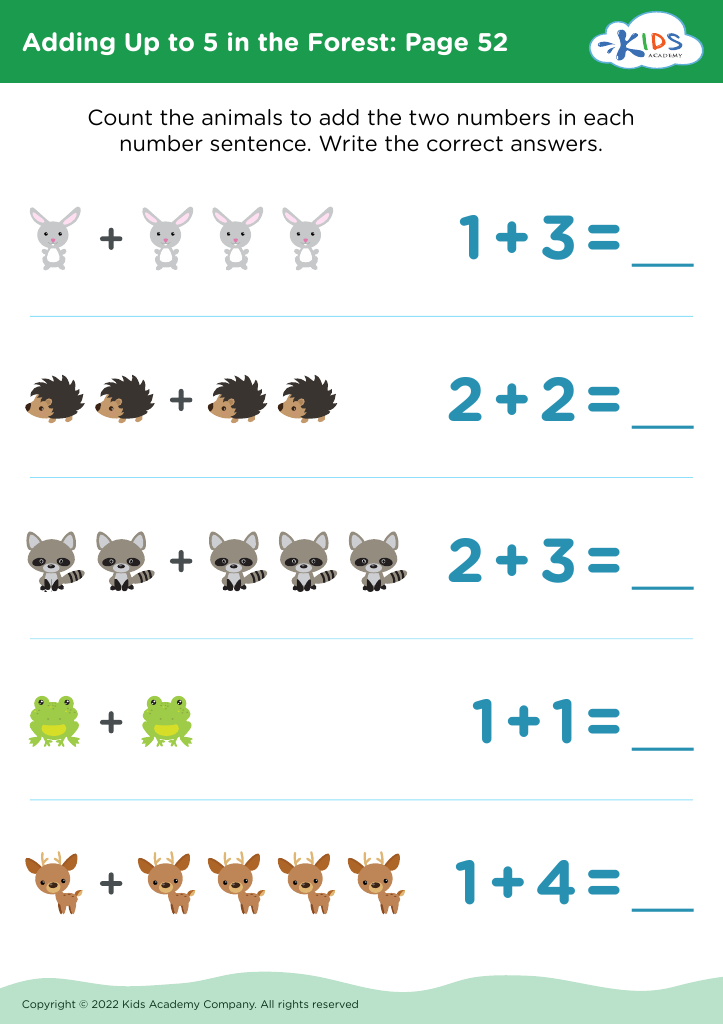
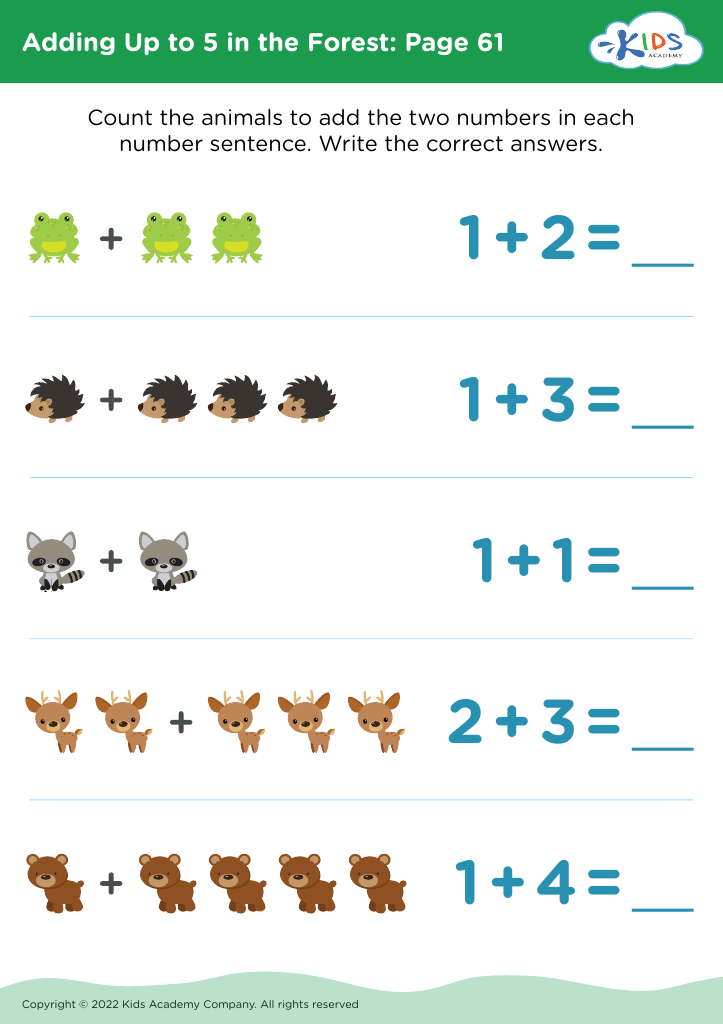
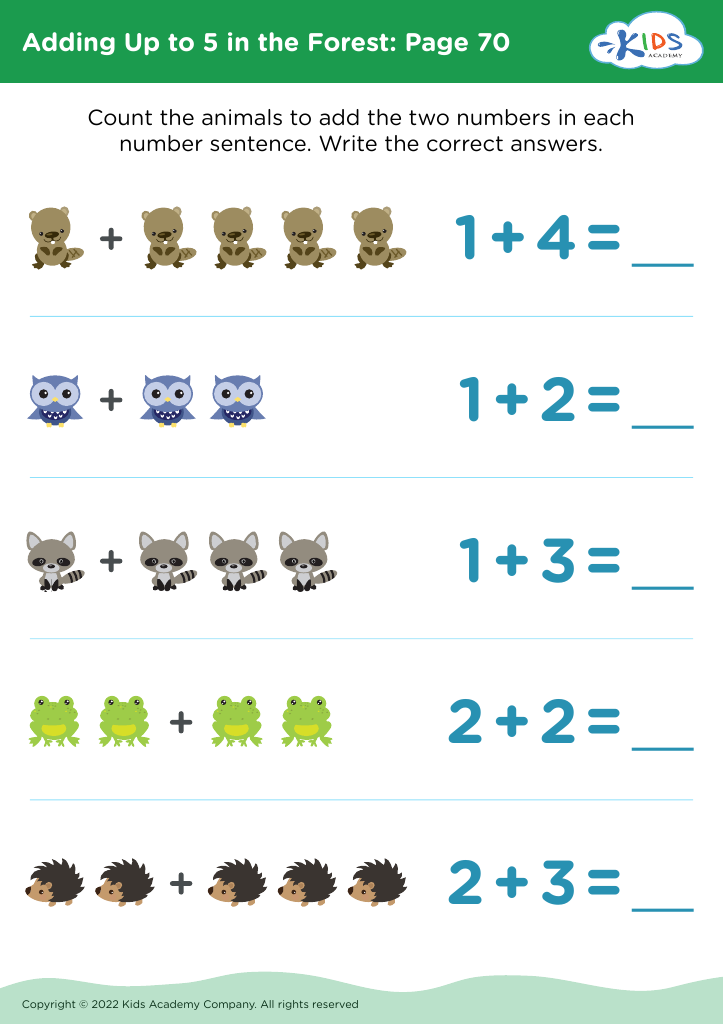
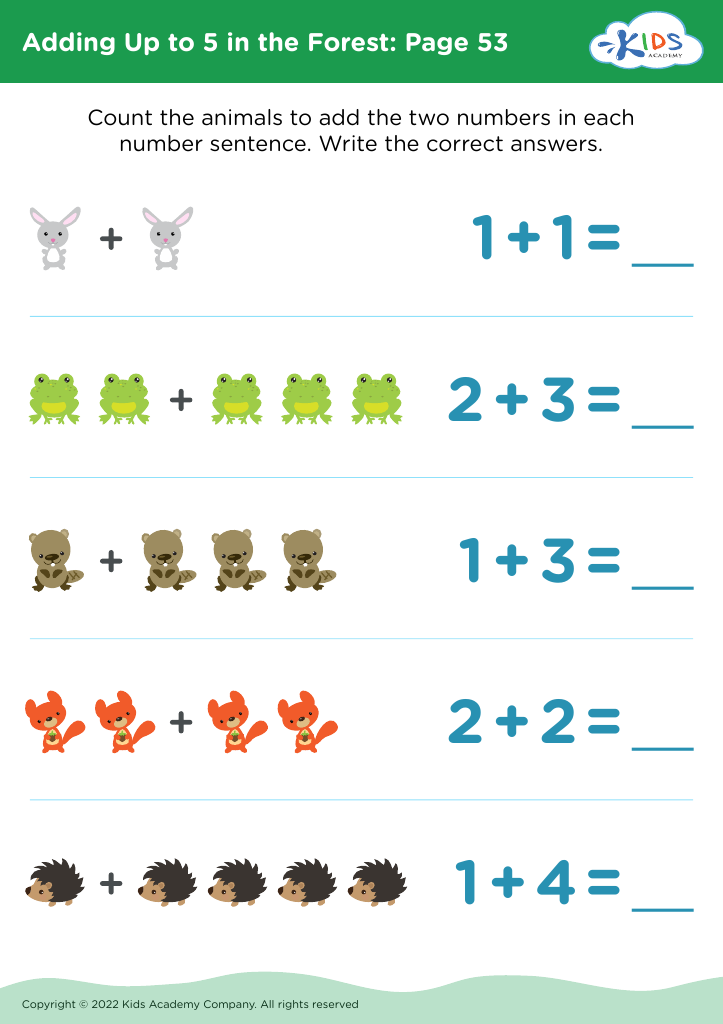
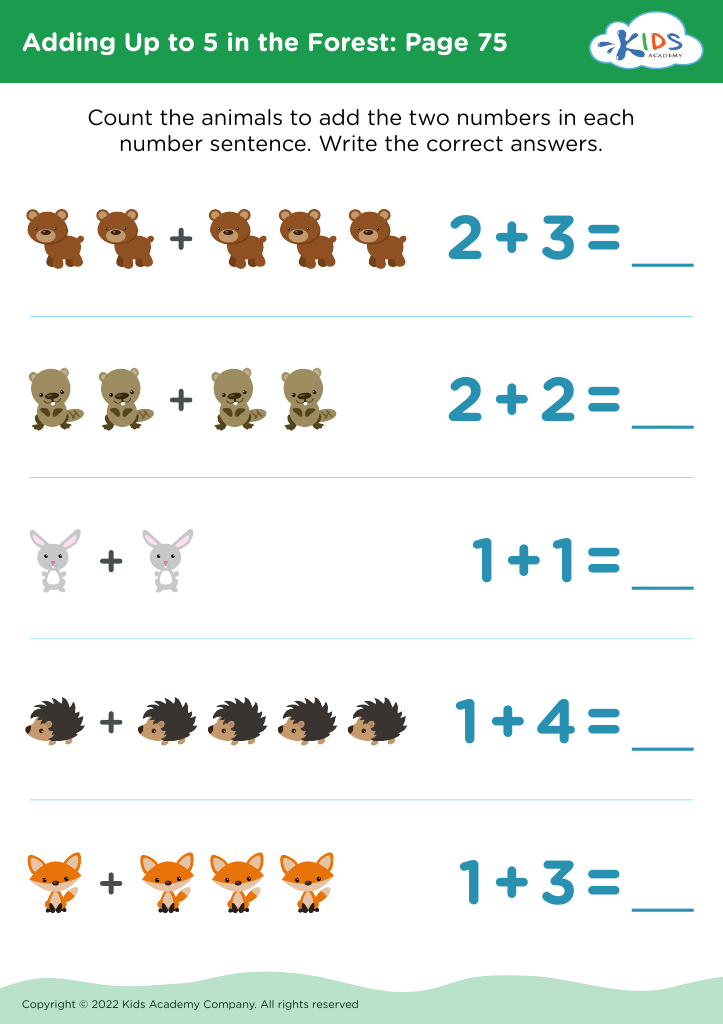
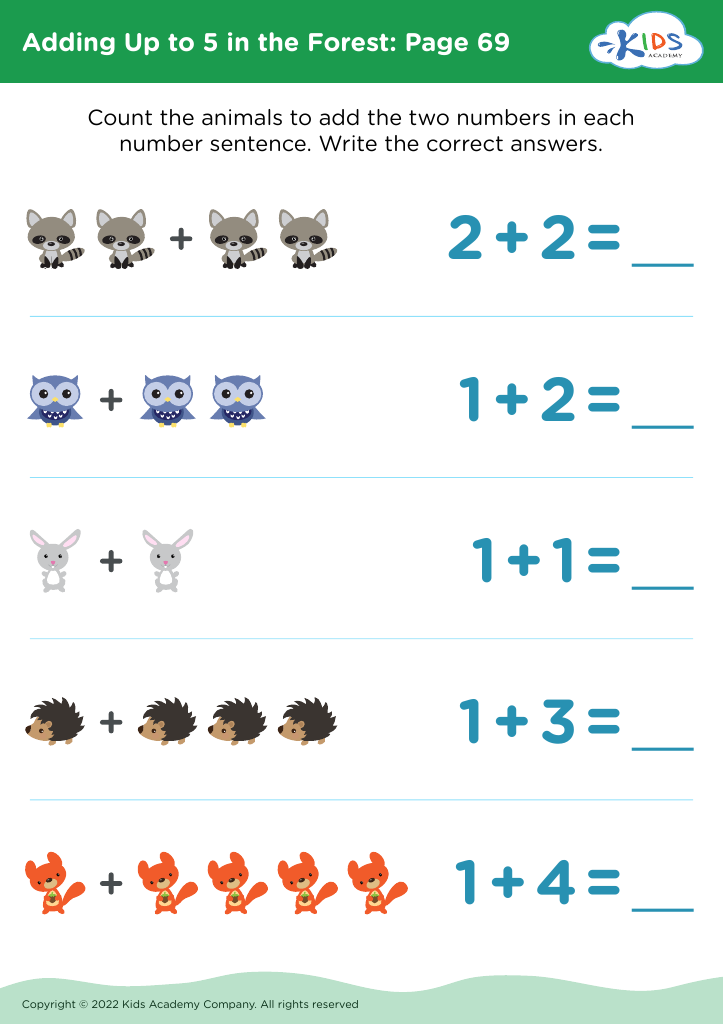
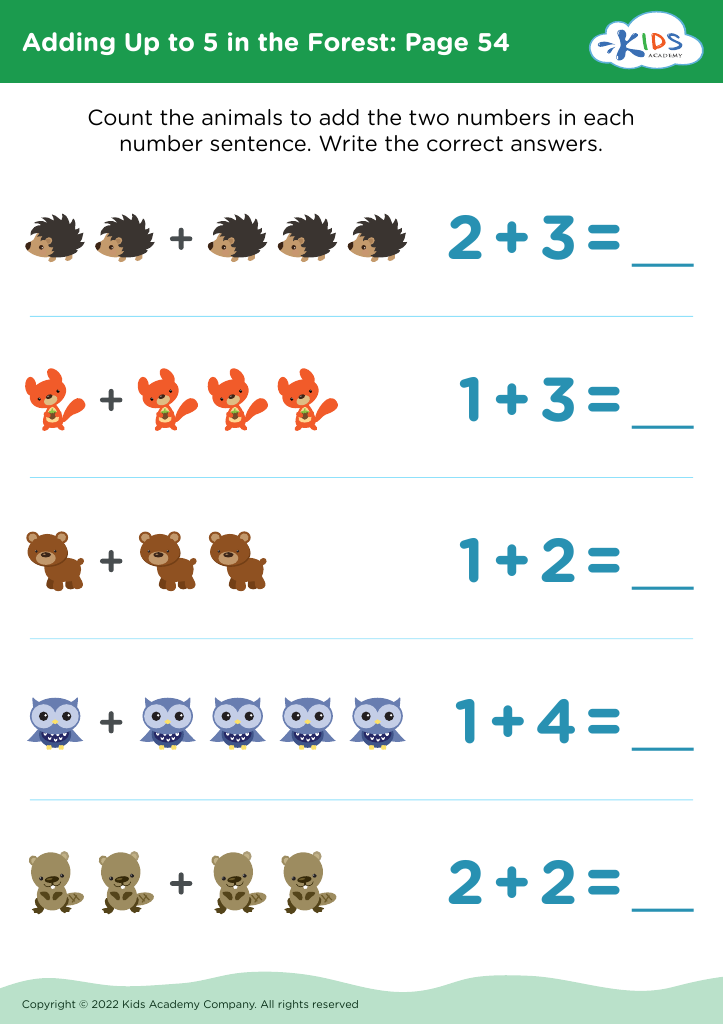
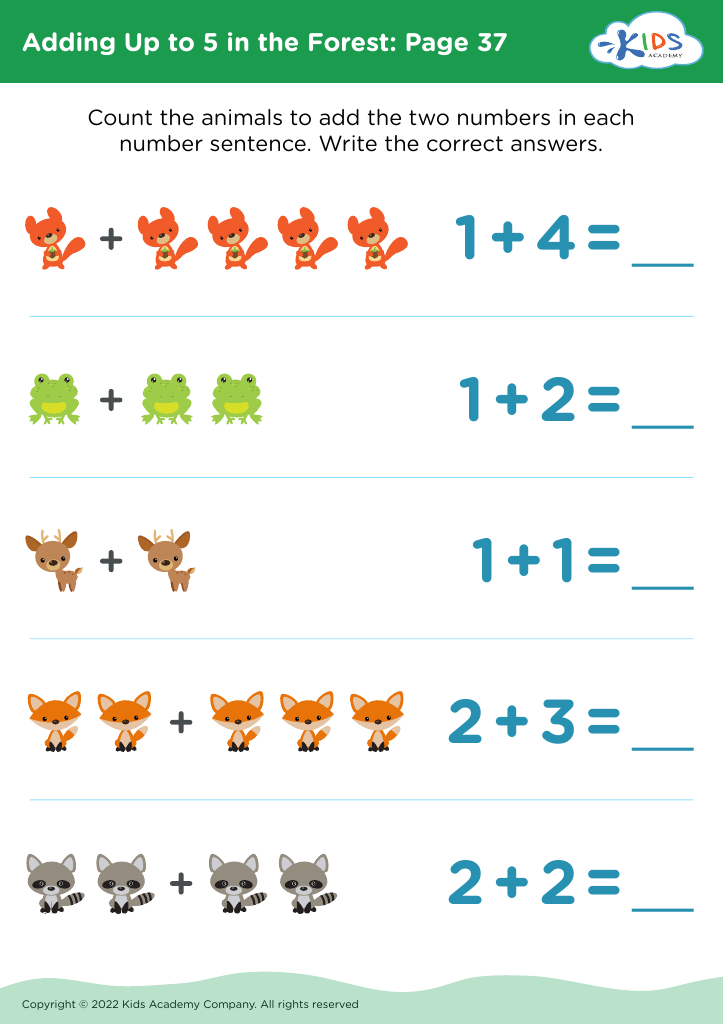
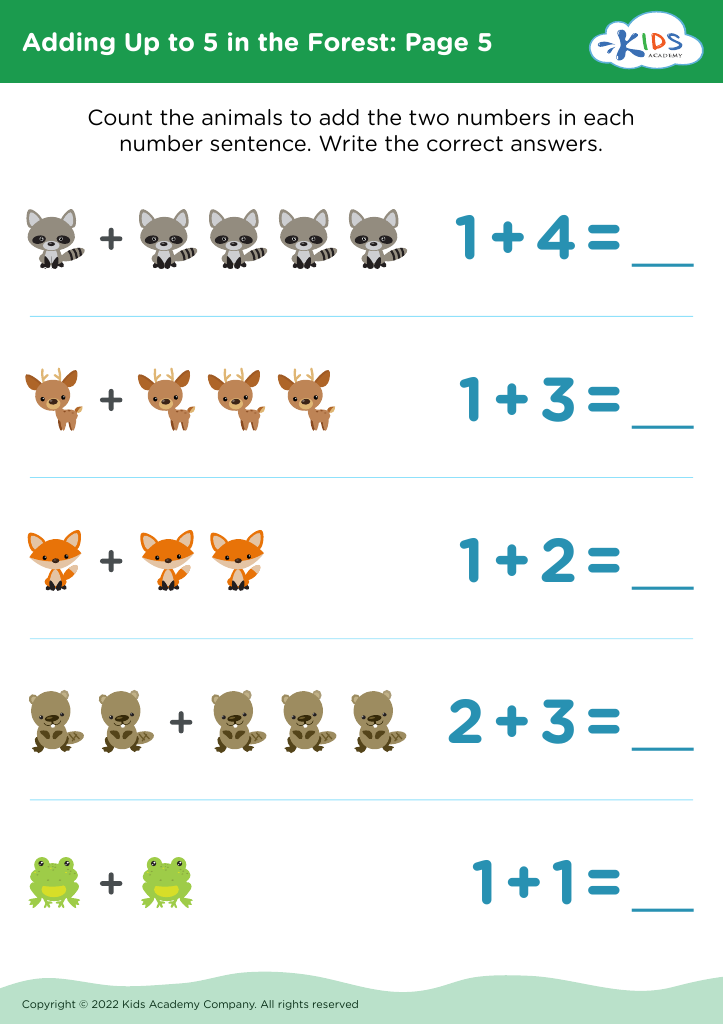


Cognitive development in preschool is foundational for a child's future learning, and engaging activities like "Adding in the Forest" can play a significant role in this process. During early childhood, children's brains are growing rapidly, forming neural connections that lay the groundwork for critical thinking, problem-solving, and understanding concepts such as numbers and patterns. Engaging in activities that incorporate cognitive skills within a playful and natural setting, like a forest, provides a rich environment for young learners to explore and interact with.
"Adding in the Forest" leverages the natural curiosity and explorative instincts of preschoolers. By incorporating elements of nature into mathematical activities, children can develop skills such as counting, addition, and numerical recognition in an experiential manner. This kinesthetic learning helps reinforce concepts through concrete, hands-on experiences, which can be more effective than abstract classroom lessons.
Moreover, nature-based activities also encourage creativity, enhance memory retention, and improve concentration. They foster a love of discovery and an appreciation for the environment, promoting holistic growth. Thus, parents and teachers who prioritize cognitive development through innovative methods like "Adding in the Forest" set children on a path toward academic and life success, nurturing not just mathematicians, but well-rounded individuals.