Filters

70 filtered results

Clear all filters
Favorites
With answer key
Interactive

70 filtered results

Difficulty Level

Grade


Check out this FREE Preschool Trial Lesson on Adding in the Sea!

My Family

Favorites
With answer key
Interactive
  • Preschool
  • Number Recognition
  • Adding in the Sea
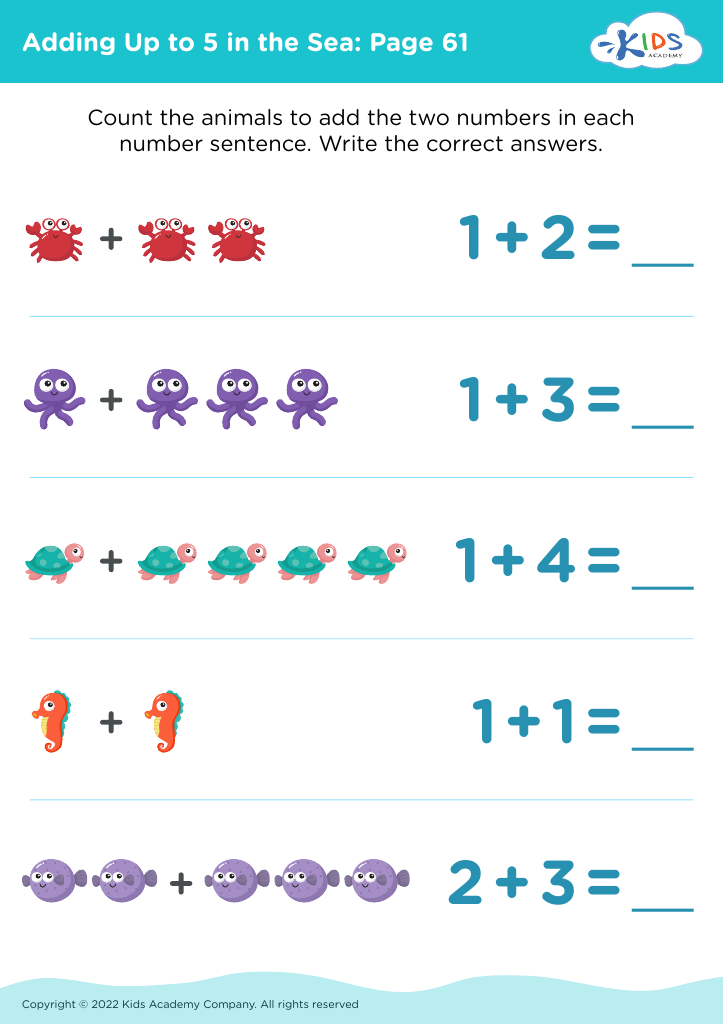
Adding Up to 5 in the Sea: Page 61
Worksheet
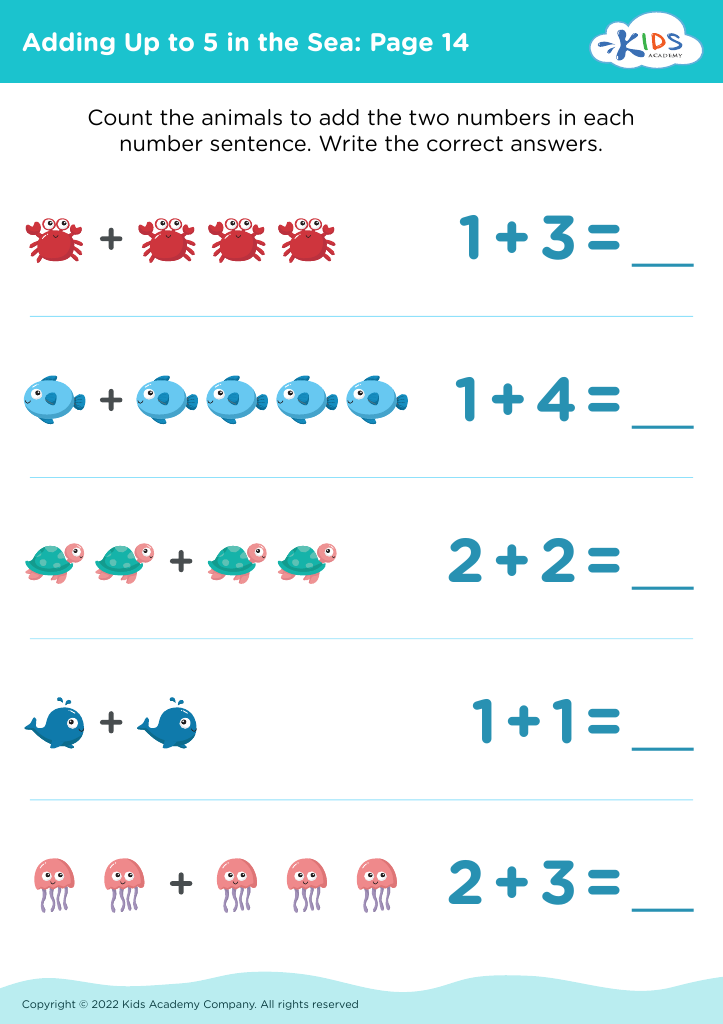
Adding Up to 5 in the Sea: Page 14
Worksheet
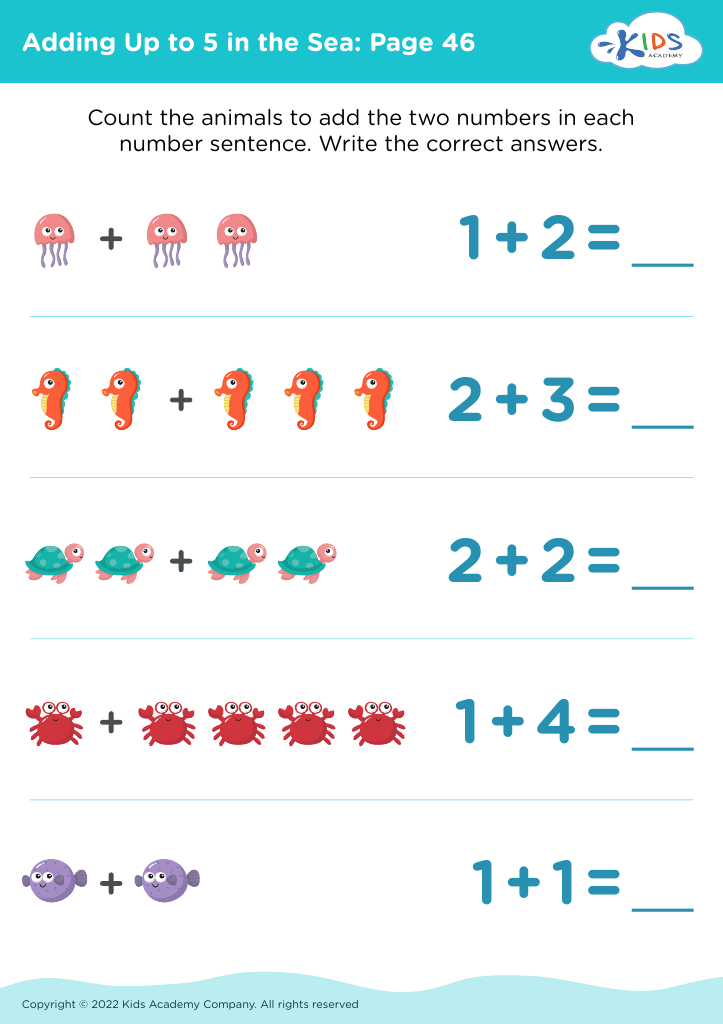
Adding Up to 5 in the Sea: Page 46
Worksheet
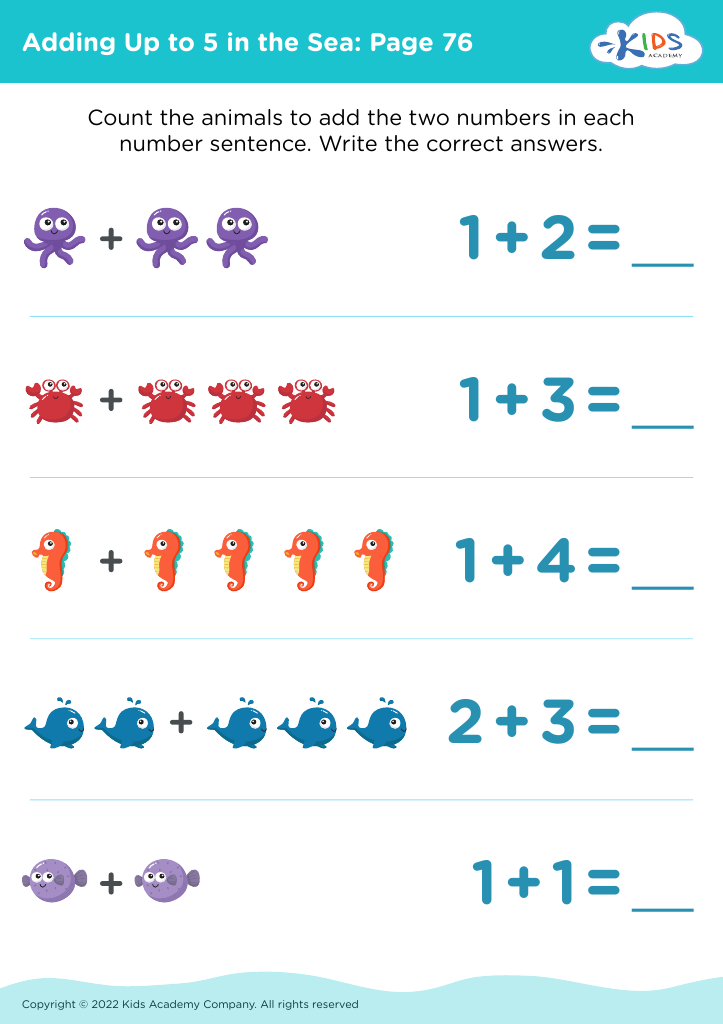
Adding Up to 5 in the Sea: Page 76
Worksheet
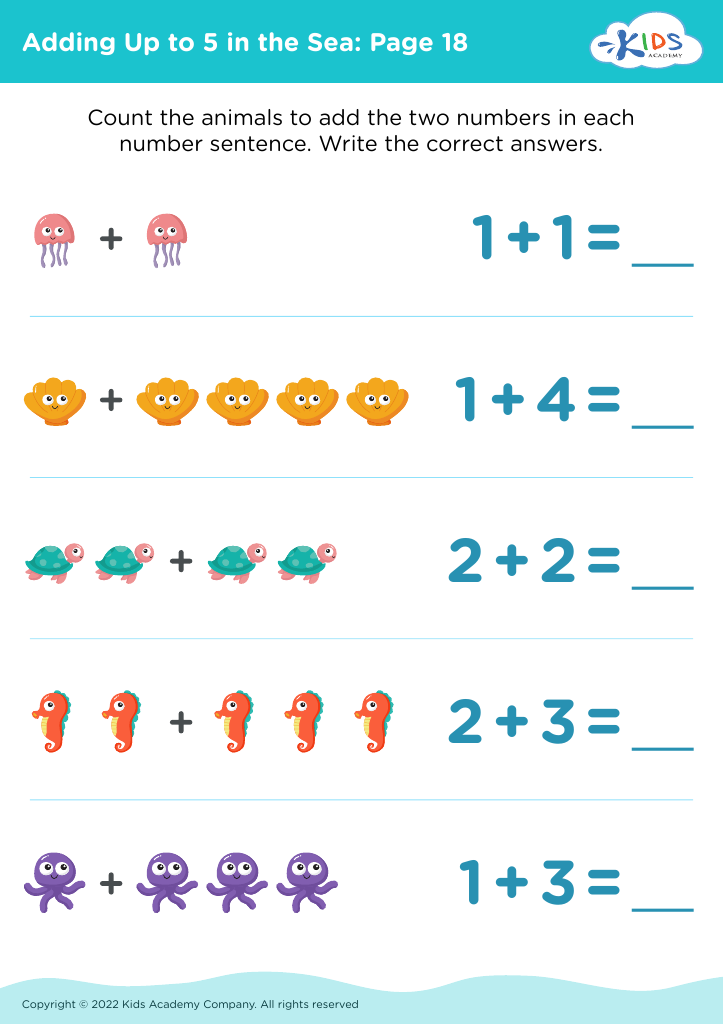
Adding Up to 5 in the Sea: Page 18
Worksheet
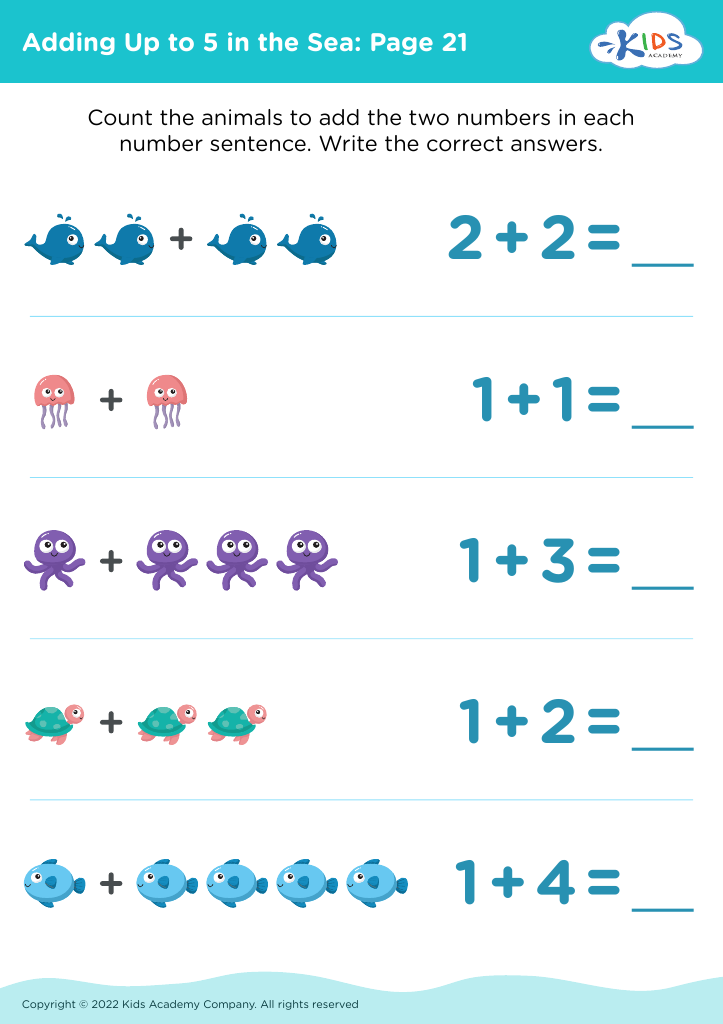
Adding Up to 5 in the Sea: Page 21
Worksheet
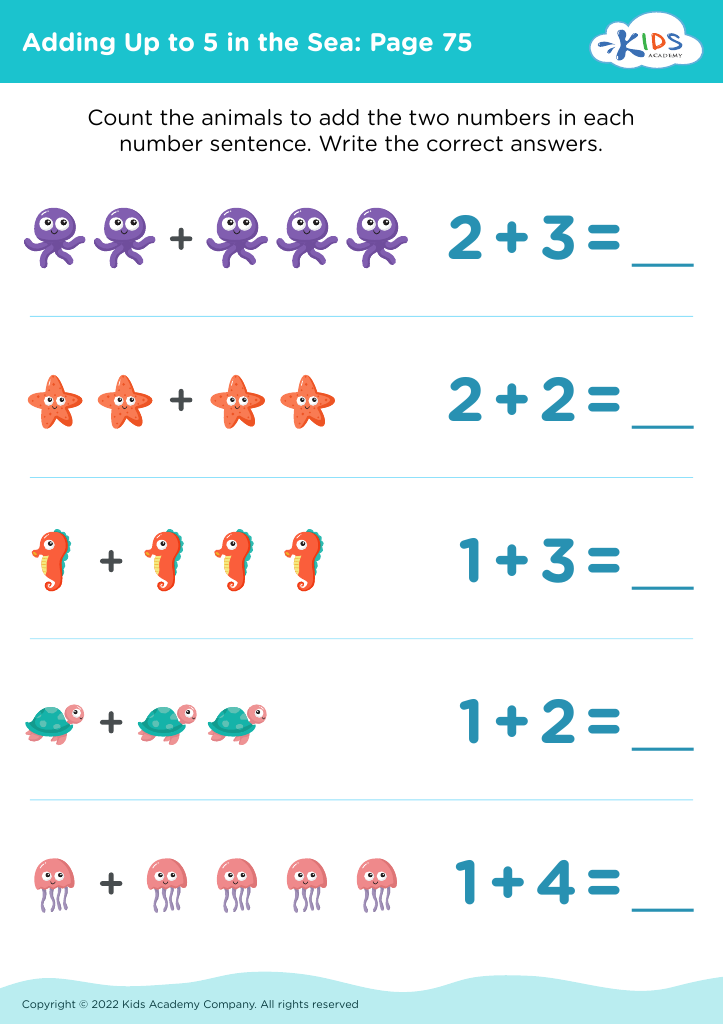
Adding Up to 5 in the Sea: Page 75
Worksheet
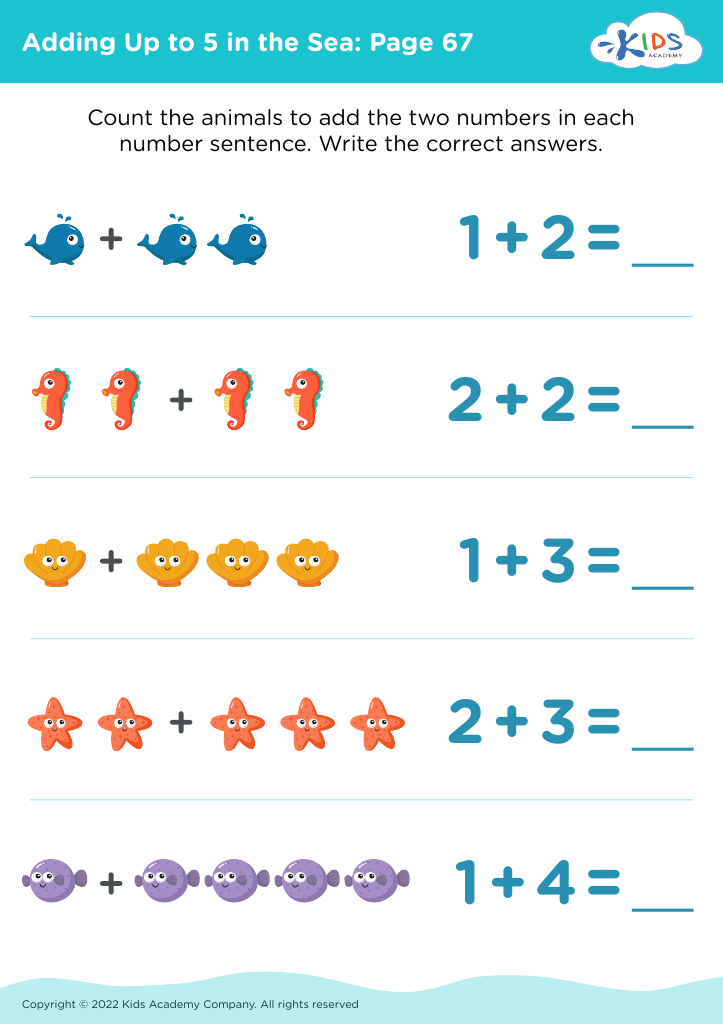
Adding Up to 5 in the Sea: Page 67
Worksheet
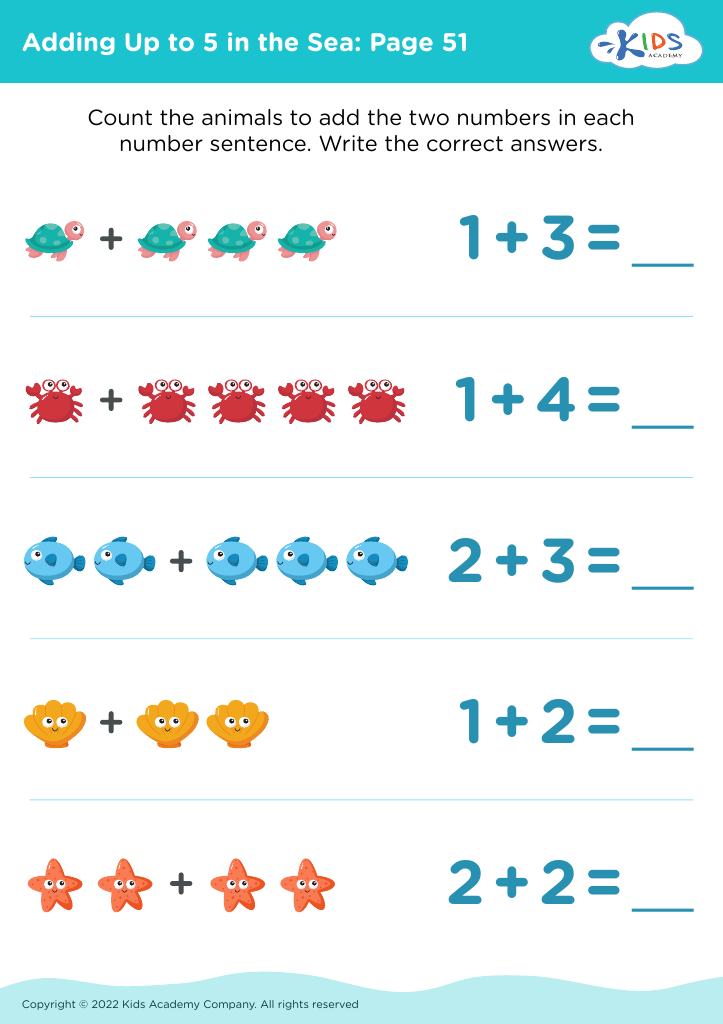
Adding Up to 5 in the Sea: Page 51
Worksheet
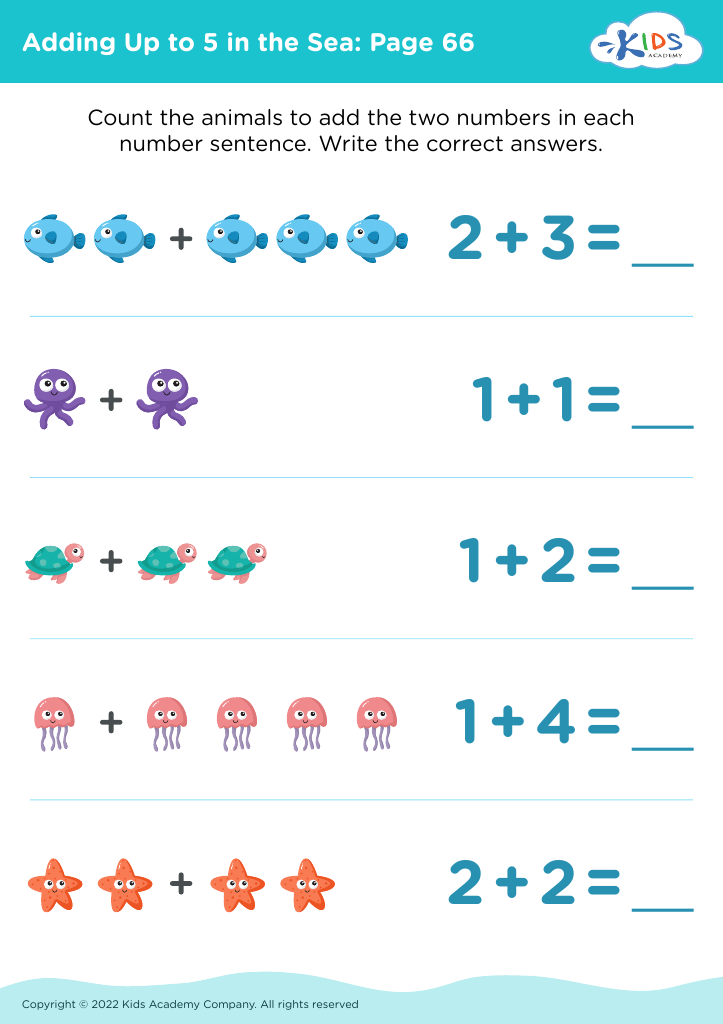
Adding Up to 5 in the Sea: Page 66
Worksheet
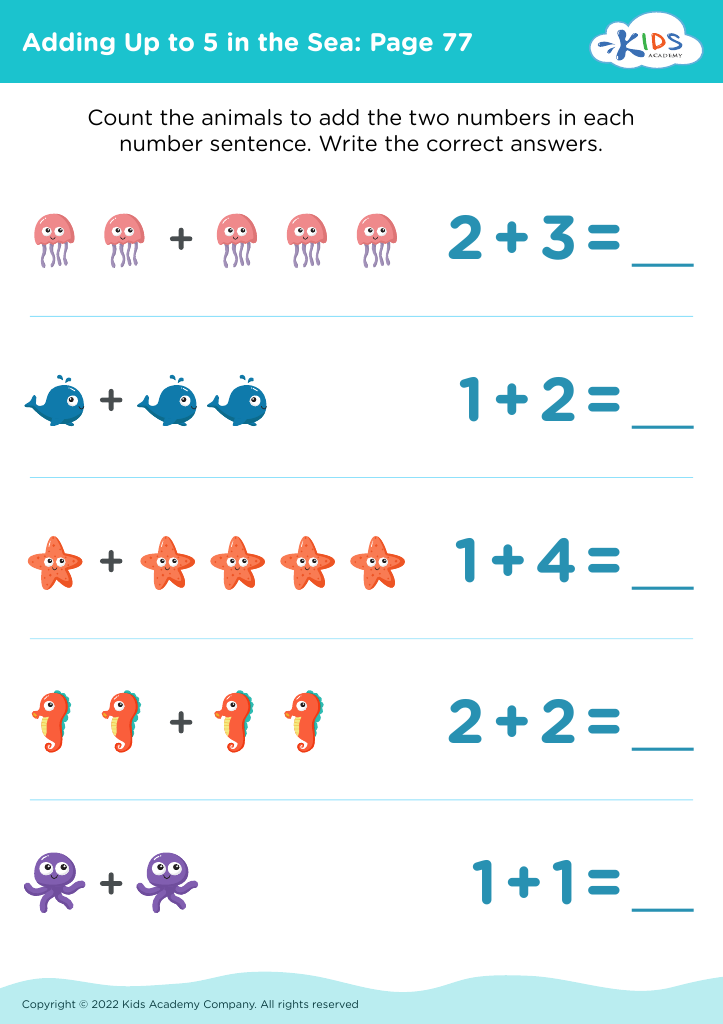
Adding Up to 5 in the Sea: Page 77
Worksheet
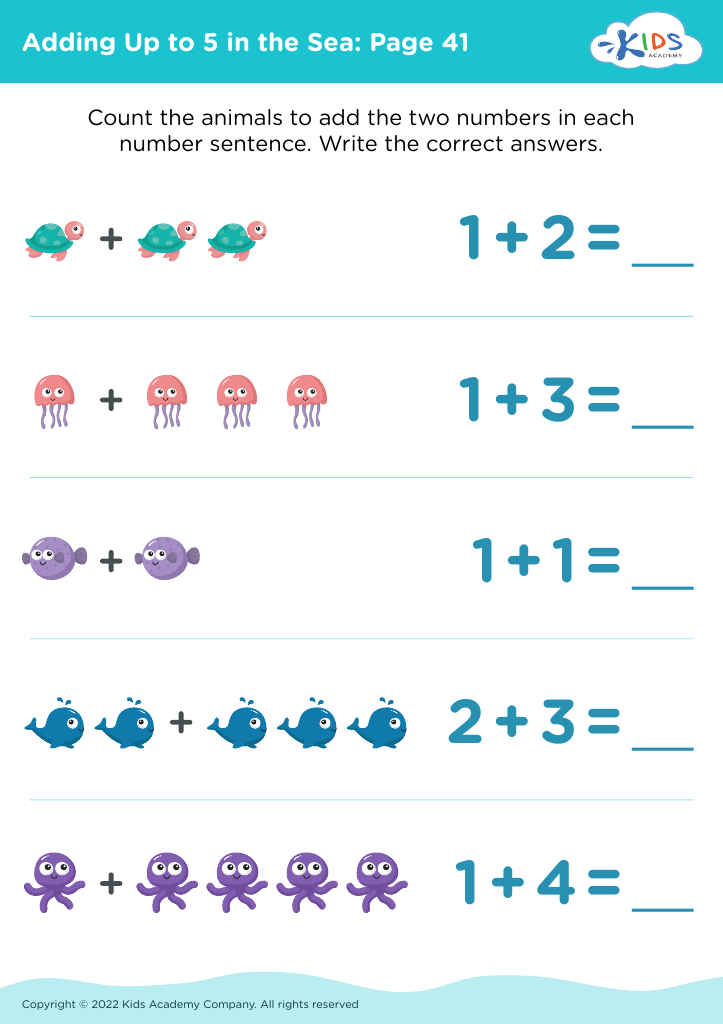
Adding Up to 5 in the Sea: Page 41
Worksheet
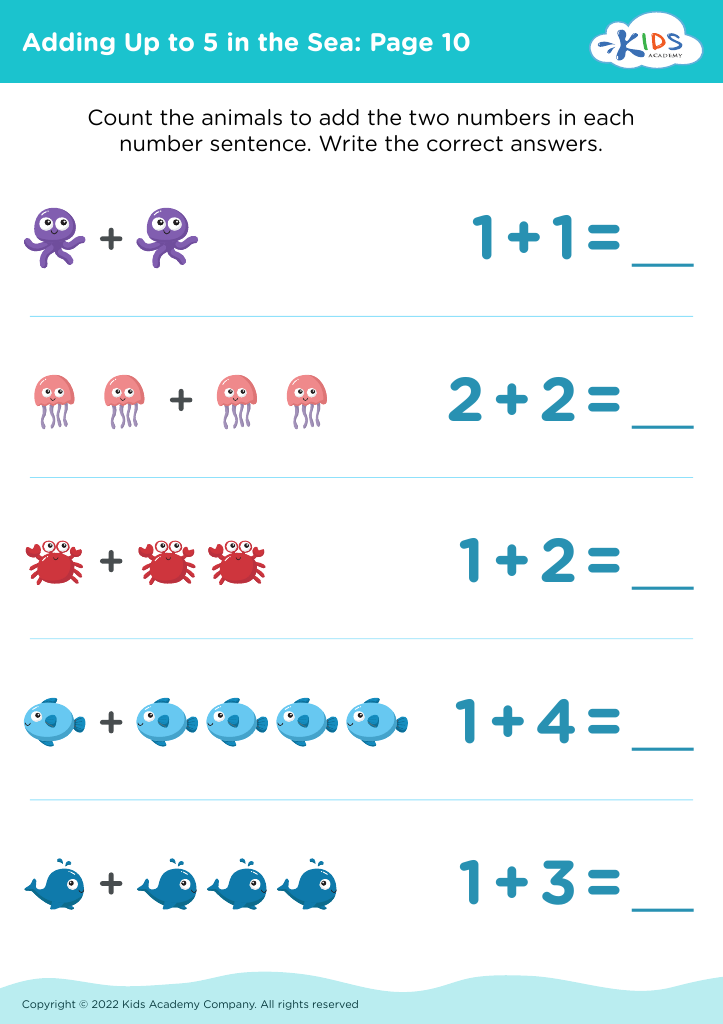
Adding Up to 5 in the Sea: Page 10
Worksheet
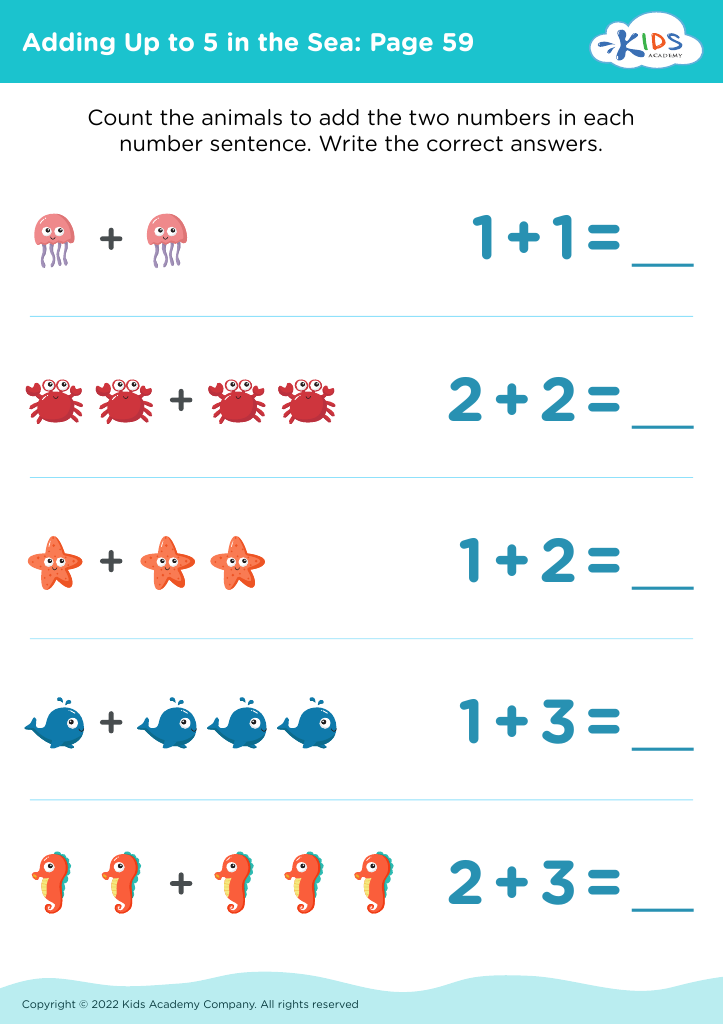
Adding Up to 5 in the Sea: Page 59
Worksheet
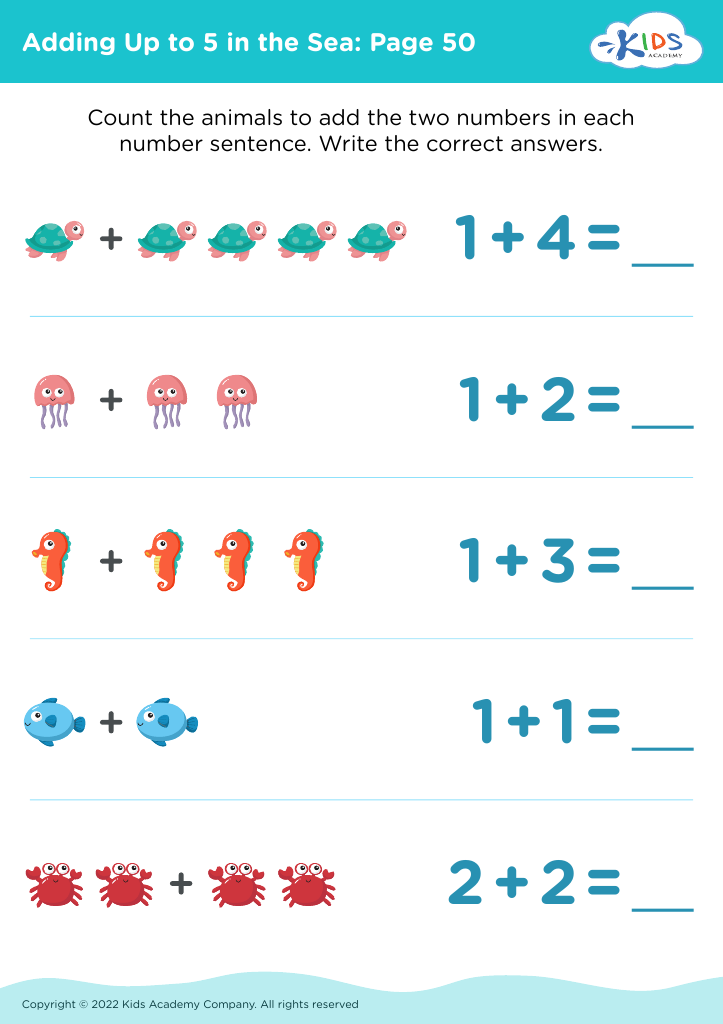
Adding Up to 5 in the Sea: Page 50
Worksheet
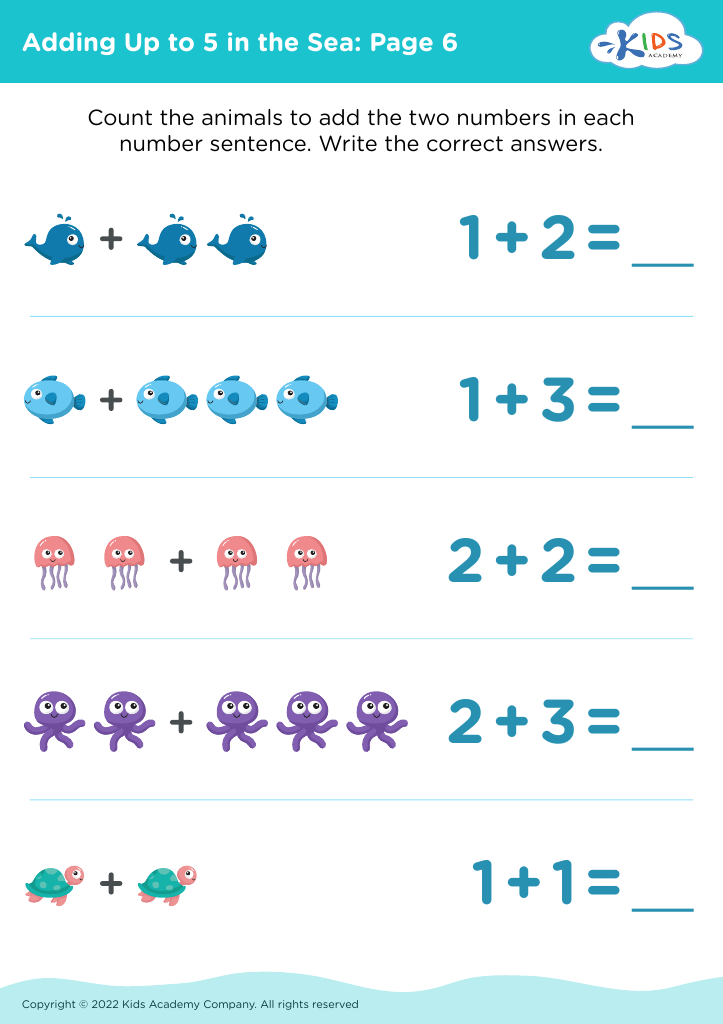
Adding Up to 5 in the Sea: Page 6

Adding Up to 5 in the Sea: Page 6

Adding Up to 5 in the Sea: Page 6
Worksheet
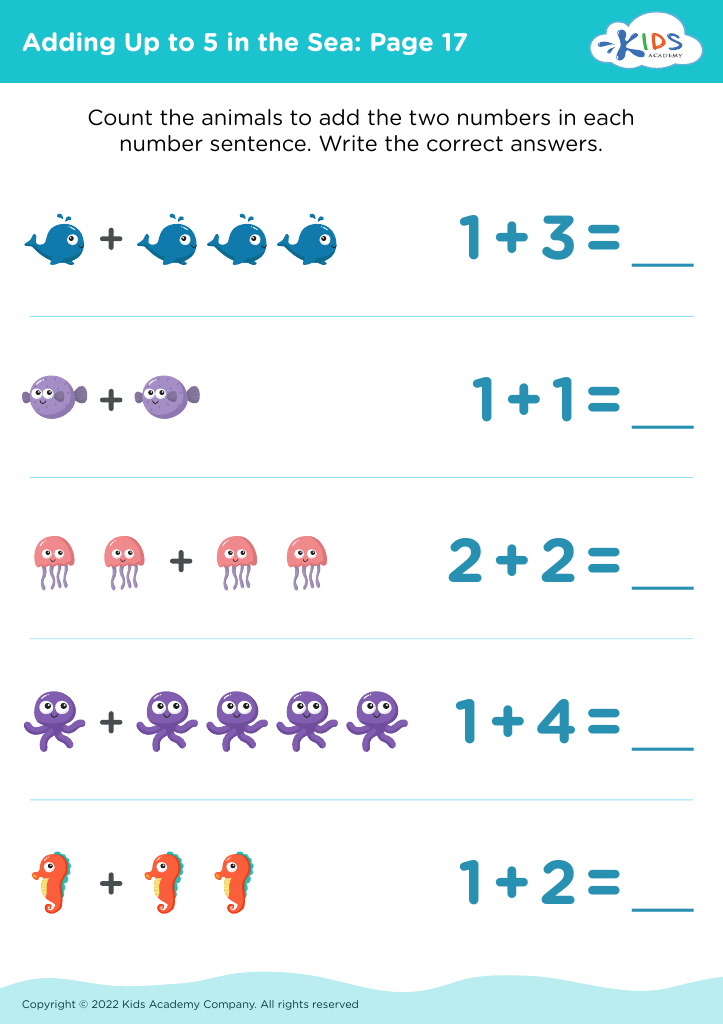
Adding Up to 5 in the Sea: Page 17
Worksheet
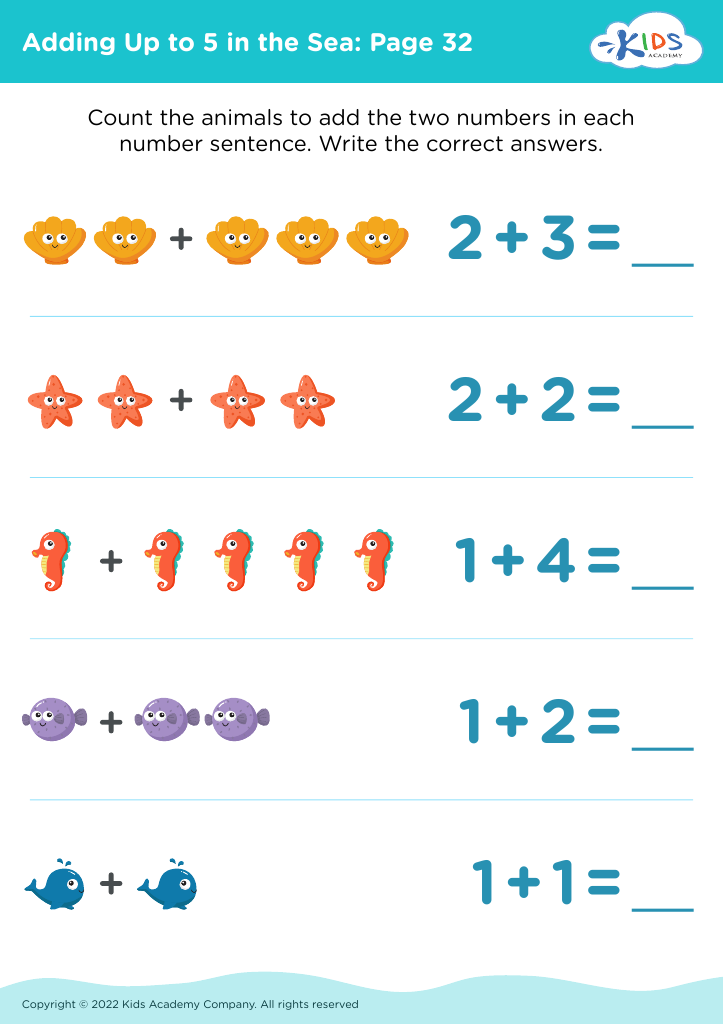
Adding Up to 5 in the Sea: Page 32
Worksheet
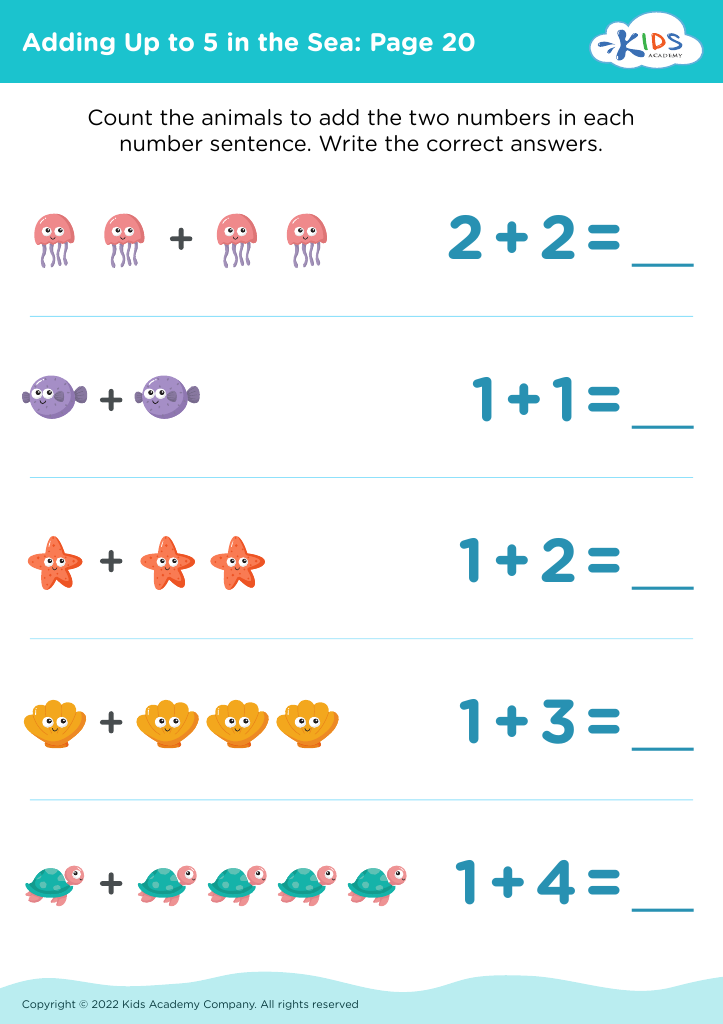
Adding Up to 5 in the Sea: Page 20
Worksheet
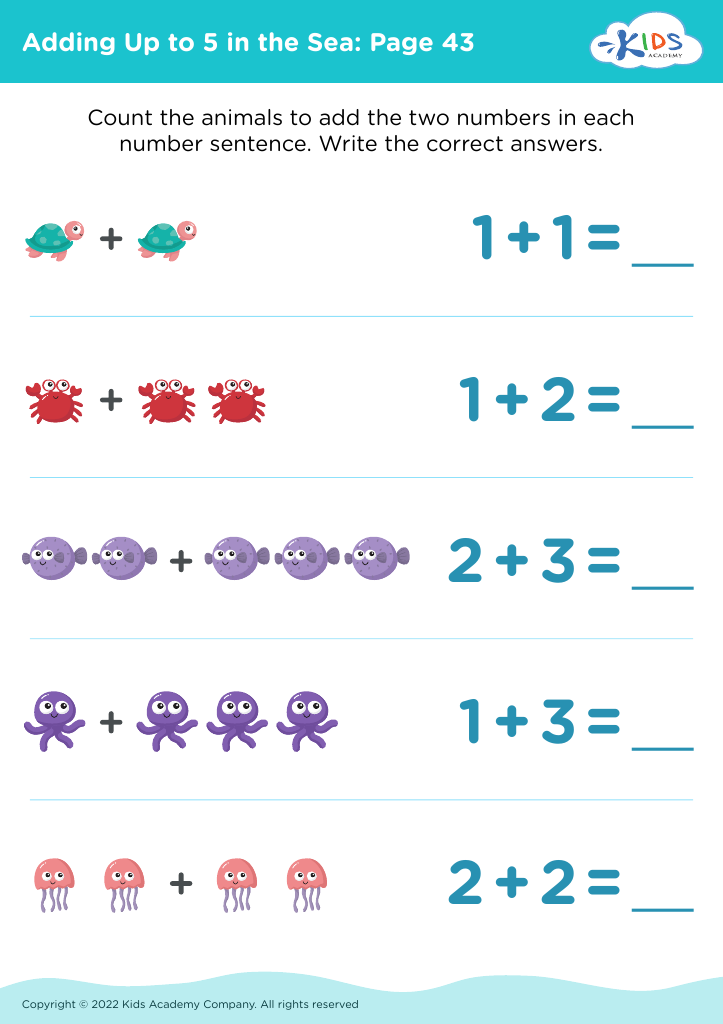
Adding Up to 5 in the Sea: Page 43
Worksheet
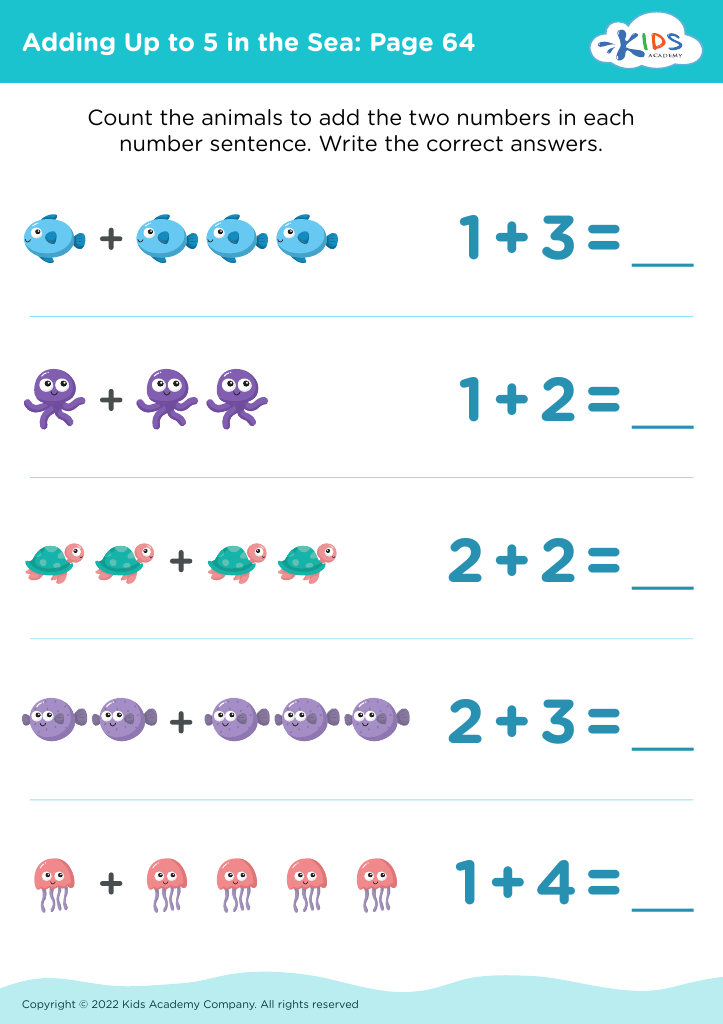
Adding Up to 5 in the Sea: Page 64
Worksheet
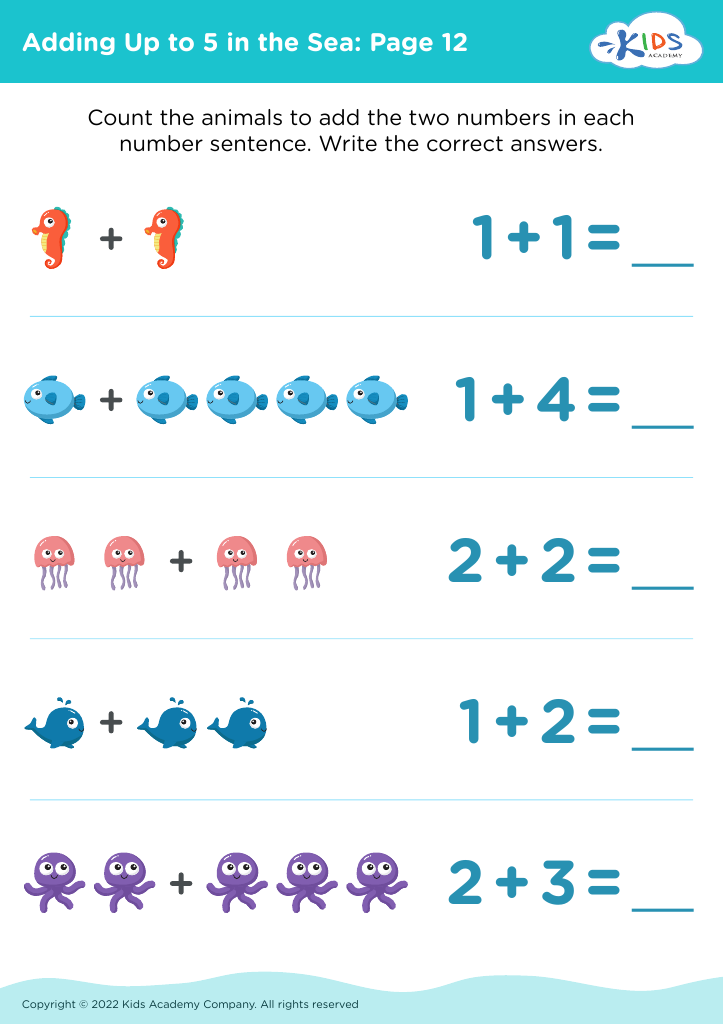
Adding Up to 5 in the Sea: Page 12
Worksheet
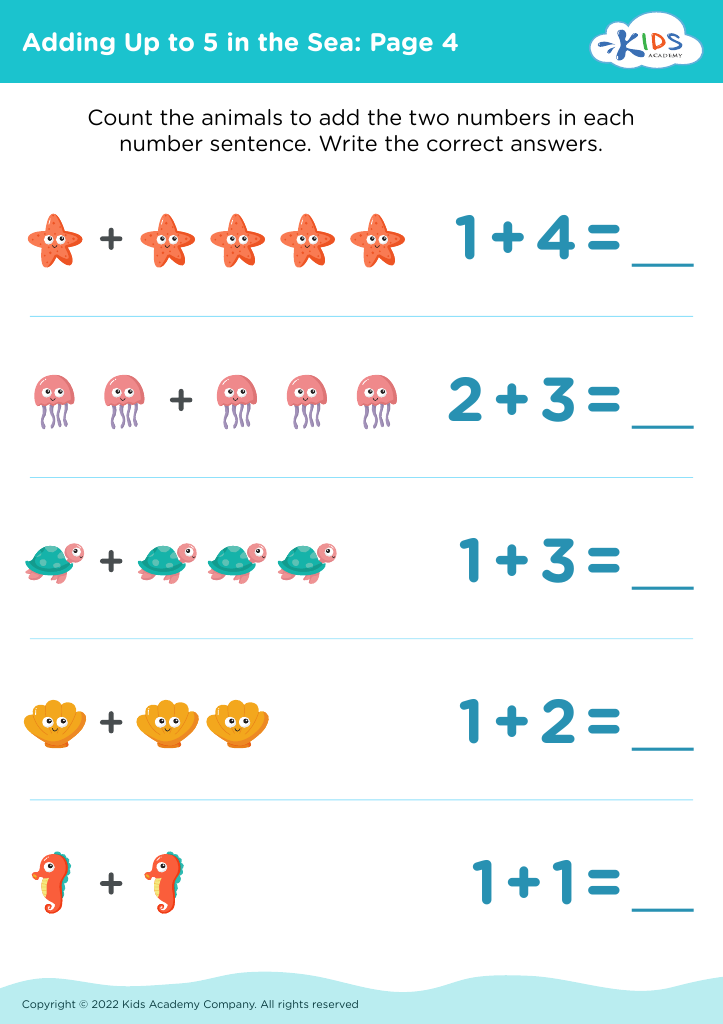
Adding Up to 5 in the Sea: Page 4

Adding Up to 5 in the Sea: Page 4

Adding Up to 5 in the Sea: Page 4
Worksheet
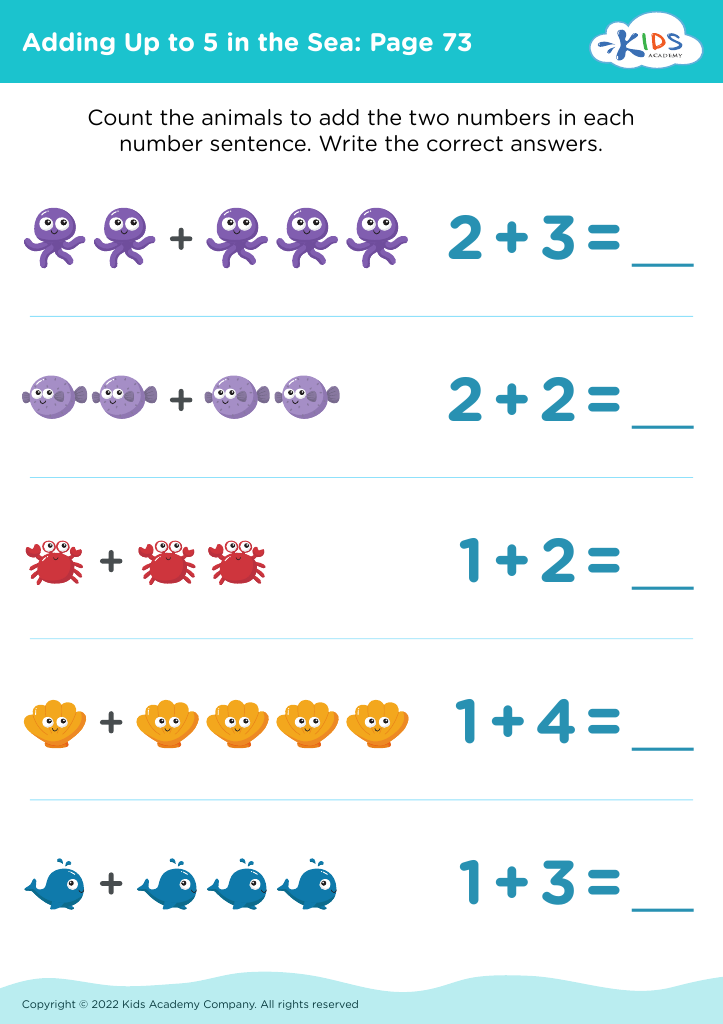
Adding Up to 5 in the Sea: Page 73
Worksheet


Number recognition is a foundational skill in early childhood education that opens the door to mathematical concepts and critical thinking. "Adding in the Sea" is a fun, thematic approach that captures children's imaginations while reinforcing these essential skills. Parents and teachers should care about this learning method for several reasons.

Firstly, it provides an engaging context that makes learning meaningful. Children often find maritime themes exciting; associating numbers with playful sea creatures can enhance their motivation to learn. This imaginative backdrop helps students develop a positive attitude toward mathematics, nurturing a lifelong love for the subject.

Secondly, mastering number recognition and basic addition sets the groundwork for more complex arithmetic. Understanding numbers and how to manipulate them is crucial as children progress to more advanced math concepts in later grades.

Additionally, early number recognition activities cultivate important cognitive skills, such as pattern recognition and problem-solving. Engaging in structured play promotes social-emotional development, as working with peers encourages collaboration and communication.

In summary, activities like "Adding in the Sea" that focus on number recognition combine learning with play. By actively participating in their children's learning journeys, parents and teachers can foster essential skills that support overall academic success.